Feeds:
Posts
Comments

The Landscape Architecture program at UCLA has opened registration for Scientific Illustration and Plant Identification. This class is an elective in the programs for Landscape Architecture and Horticulture and Gardening. It is offered through the UCLA Extension program.

Students will learn how to illustrate plants and identify plant characteristics while learning plant taxonomy and plant terminology. Course includes travel to nurseries and gardens in southern California.

Instructor: David Squires, landscape architect and principal of AROUNDYOU, Inc.

Cost: $485 (before 1/1/14); $534 (after 1/1/14)

Class begins on February 2, 2014 (4 meetings)

View Details/Register

Botany for All

The featured topic for November is Botany for All.

I know I spend a lot of time on botany resources for children. This month I am going to even it out some and bring attention to resources for teenagers, adults and families. We’ll begin the month with three wonderful resources that help children ages 3-8 learn about the life cycle of plants.

Also this month, you’ll notice a slight change to the publishing schedule. It will be lighter than normal and stay this way through December. I will continue to publish the teaching and learning column on Friday and will publish special features and other announcements when they are ready.

Thank you for being such dedicated readers, contributors and supporters of ArtPlantae.

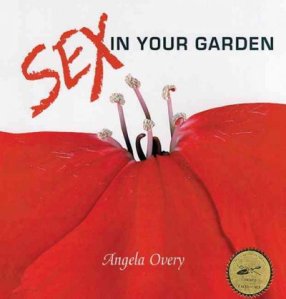
SexInYourGarden Plant reproduction can be as sensitive a topic as human reproduction.

This was made clear to me years ago at the, then, L.A. Garden Show when a gentleman disapproved of me displaying the book, Sex in Your Garden. He shook his head, made the “tisk, tisk, tisk” sounds and told me I shouldn’t have this book out on display. It was the word “sex” in the title that prompted his reaction. If you are unfamiliar with this book, it is a light-hearted and very anthropomorphic look at how plants attract pollinators. It contains text and images drawing similarities between how plants and humans call attention to themselves.

Even though it has been years, I always think of this gentleman when talking about flowers, fruit and reproduction. It is easy to talk about sperm, eggs, ovules and seeds when speaking with adults (although I usually have to give them a few moments to digest the fact that there are ovaries in their fruit bowl).

It is talking about plant reproduction with young audiences that always gets me thinking. What is saying too much?

If you’ve ever felt compelled to launch into an explanation of double fertilization while dissecting flowers with kids (even though you know you shouldn’t), here are some resources that may stop you from going over the cliff.

In How Do Apples Grow?, author Betsy Maestro and illustrator Guilio Maestro provide a comprehensive look at how buds on an apple tree develop, how the buds bloom and how flowers attract bees. They discuss flower anatomy, fruit development and explain what we’re eating when we eat an apple. They explain how apple trees make their own food and close their story where they began it — with flower buds on a bare apple tree. This life cycle book for botanists ages 5-9 addresses some big topics. Here is a list of vocabulary terms and concepts explained in this book:

  • leaf buds
  • flower buds
  • sepals
  • petals
  • stamen
  • pollen grains with male cells
  • pistil
  • ovary with female cells
  • pollination
  • fertilization
  • pollen tube germination
  • fruit development
  • seeds as fertilized female cells
  • photosynthesis
  • apple varieties

Maestro also touches upon seed dispersal and decomposition. The supporting watercolor illustrations by Guilio Maestro are colorful, labeled clearly and are easy to understand. Together Maestro and Maestro do a nice job of making flower development, pollination and fruit development very observable processes.

Just as Maestro makes fruit development observable, Helene J. Jordan brings seed germination and development out into the open in How a Seed Grows. The seed growing activity in her book enables students to see how seeds change beneath the soil and how seedlings grow above ground without investing in those growing chambers with the glass sides. Jordan’s clear instructions are supported by the informative gouache and colored pencil paintings by illustrator Loretta Krupinski. While Jordan’s book was written for children ages 4-8, the seed-growing exercise is appropriate for older children. It helps explain how seeds become plants and brings the life cycle of plants full circle. Plus it really lends itself to exercises related to botanical illustration.

Here is a list of vocabulary terms and concepts introduced in
How a Seed Grows:

  • seed
  • plant
  • tree
  • soil
  • watering for growth
  • writing numbers for identification
  • seed germination
  • roots
  • counting
  • leaves
  • soil
  • water
  • sun
  • photosynthesis

Jordan also includes directions to an experiment children can do to investigate the resources plants need to grow.

We can’t talk about seeds, flowers, pollinators and fruit development without showing how all these things are related. A great book that ties up all the loose ends is The Reason for a Flower by Ruth Heller. She introduces young readers to pollinators they might not normally consider and introduces them to wind pollination too. In her colorful 48-page book, she also introduces readers to seed pods, seed dispersal, herbivores, carnivorous plants, parasitic plants, angiosperms and familiar products derived from plants.

If you ever find yourself wondering “how much is too much?” when preparing an activity for young audiences, browse through children’s books about plants to get ideas about how to teach less, better.


Resources Cited

    • Heller, Ruth. 1999.

The Reason for a Flower

    • . New York: Penguin Putnam.

Jordan, Helen J. 1992. How a Seed Grows. New York: HarperCollins.

Maestro, Betsy. 1992. How Do Apples Grow?. New York: HarperCollins.


Also See

Botanical Illustration & Plant Morphology for Preschoolers

The Trees of “52”

Looking for inspiration as yet another busy year comes to a close?

I recommend going to the Riverside Art Museum to view “52”, an exhibition about an artist’s exploration of the 52 Montezuma Bald Cypress trees at Fairmount Park in downtown Riverside.

Artist Sue Mitchell spent the 52 weeks between October 2012 and October 2013 studying these trees and creating solar etchings that capture their strong and elegant structure and beautifully textured bark. Her 52 etchings are presented in the Bobbie Powell Gallery. In the space next to her finished work, Sue shares her whirlwind year with museum visitors. She saved every piece of paper, rough sketch and many other mementos from her one-year sabbatical and posted them to the walls in chronological order. She even moved her home studio into this space and is working there during museum hours through November 22, 2013.

Sue refers to her sabbatical as her “Third Act” and says she began this journey to satisfy a growing need for a deeper sense of fulfillment and personal exploration, a need she shares with many Baby Boomers. Did you know that about 10,000 people a day will turn 65 during the next 19 years?

If you are looking for your own artistic outlet, visit “52” and talk with Sue about her artistic journey. Then visit the other exhibitions at the museum and be inspired even more.

And if you would like to learn more about the Montezuma Bald Cypress trees and study the beauty of their bark, here is a workshop that might be of interest to you:

    Botanical Drawing Workshop
    Saturday, November 16
    1:00 p.m. – 4:00 p.m.
    Instructor: Tania Marien
    Workshop fee: $30

    Learn more about the Montezuma Bald Cypress trees in Fairmount Park and observe their elegant structure and texture as presented by Sue Mitchell in the exhibition “52″. Transform your observations into a delicate bark drawing to serve as a reminder of Sue’s inspirational 52-week journey. Open to all who would like to take those first steps on a journey of their own.

    Please bring the following supplies with you:
    2-3 sheets of Strathmore Bristol Plate (paper)
    4B, 2B, H, 2H, and 4H drawing pencils

    Drawing Workshop hosted by the Riverside Art Museum.
    Please register for this workshop by calling RAM at 951-684-7111.
    Registration deadline is Wednesday, November 13.

Urban Youth & Nature

An investigation into adolescents’ perceptions and experiences with nature revealed that some urban youth view nature as a threatening place. A place where crimes occur and where trees hide the activities of criminals.

Sound extreme?

Read on.

Arjen E. J. Wals provides extensive background into this observation and others in Nobody Planted it, it Just Grew! Young Adolescents’ Perceptions and Experiences of Nature in the Context of Urban Environmental Education.

The perception that nature is a threatening place was uncovered when Wals interviewed students from four classes at four different middle schools in and around Detroit, Michigan. Wals’ study included students from four different communities. The communities represented in this study include upper-class families whose children attend private schools, middle- and working-class families whose children attend suburban schools, and working-class and “out of work” families whose children attend schools in Detroit (Wals, 1994). The student populations at these schools ranged from almost all-white in the suburban schools to almost all-African-American in the Detroit schools. The locations of the schools ranged from a park-like setting for the private school to “a bunker in an urban war zone” (Wals, 1994) for one of the Detroit schools. The schools shared the same curriculum, however the Detroit schools were not as well equipped, had to spend time on safety issues, had to spend time performing tasks normally completed by parents and guardians and had to spend time teaching basic skills before students dropped out of school (Wals, 1994). This study included students who considered themselves fortunate to be living in safe neighborhoods and students who mostly used the outdoors “to get from one place to another” (Wals, 1994). For more information about the students and the urban environments involved in this project, read Wals (1994).

Arjen Wals created his study to investigate the following:

  • Did nature have a place in the lives of students?
  • How did students interact with nature?
  • Where did students experience nature in their respective urban environments?

Before we get too far along, I need to explain that Wals (1994) is an ethnographic-phenomenological study, not a statistical study. Phenomenological research investigates perceptions and experiences. While students from all four classes participated in the study, interviewed only 32 students. He chose eight students from each class and explains his sampling procedure in his paper.

Throughout the study, Wals was an active participant in classroom events. He observed student reactions to nature experiences, kept a research journal, interviewed students and reviewed their reflective journals (Wals, 1994).

What did he learn about students and their relationship with nature?

Wals (1994) found that students managed to build relationships with nature, regardless of their environment. He found that two themes emerged from student interviews and journals — how students define nature and how they experience nature.

Wals observed that students define nature as: flowers, animals, trees, alive, pure, peaceful, not human-made, freedom, solitude, self-supporting, wild, spontaneous (Wals, 1994).

He also observed that students experience nature as: entertainment, a challenging place, a place where time stands still, a threatening place, a background to other activities, a place for learning, a place to reflect, and as
a threatened place (Wals, 1994).

Excerpts from student interviews supporting the observations above can be reviewed in Wals (1994). Environmental education (EE) teachers will also be interested in the author’s comments about EE programs. Wals discusses his findings and the implications they have on environmental education. At the close of his paper, he suggests nature experiences teachers might want to try in their programs.

Nobody Planted it, it Just Grew! can be read online for free.


Literature Cited

Wals, Arjen E.J. 1994. Nobody planted it, it just grew! Young adolescents’ perceptions and experiences of nature in the context of urban environmental education. Children’s Environments. 11(3): 177-193


Also See

Bird Fest image The Santa Ana Watershed Association will host their annual Fall Festival of Birds next weekend at Chino Creek Wetlands and Educational Park. There will be bird-themed activities, exhibitors and a NestWatch Workshop. Come to the festival to learn more about the NestWatch citizen science program operated by the
Cornell Lab of Ornithology.

2013 Fall Festival of Birds
Saturday, November 2, 2013
10 AM to 2 PM


Directions to Chino Creek Wetlands

Please welcome the ART+BIO Collaborative to Classes Near You > Massachusetts!


ART+BIO Collaborative

www.artbiocollaborative.com
The ART+BIO Collaborative in Cambridge, MA fosters the integration of science, nature, and art through novel collaborations, research, and education. They design innovative art+science curriculum and turn public spaces into interactive learning environments.

    ISLAND LIFE: Tropical Field Studies of Art+Nature in Puerto Rico
    January 10-17, 2014

    Escape the cold winter to the Caribbean in this one-of-a-kind, art+nature immersion experience in Puerto Rico! Join instructors, Stephanie Dowdy-Nava and Saul S. Nava, for an artistic exploration of the diverse tropical wildlife from rainforest, mountain, beach and coastal environments. Through hands-on observation, artistic interpretation and various biological methods, participants will learn to utilize the natural habitat as a studio/lab to make informed art about tropical plants, animals, and nature.

    Cost: $1750 (before November 1, 2013)
    Cost: $1920 (after November 1, 2013)
    Registration Deadline: December 1, 2013

    View Details/Register