Feeds:
Posts
Comments

Opens Next Week!

The viewing of Following in the Bartrams’ Footsteps at the UC Botanical Garden at Berkeley will be the only West Coast showing of this traveling exhibition by the American Society of Botanical Artists. The Garden has planned special programs related to the exhibition. Information about these programs and other learning opportunities in botanical art can be viewed below and at Classes Near You > Northern California.


University of California Botanical Garden at Berkeley

http://botanicalgarden.berkeley.edu
This 34-acre garden was established in 1890 and is now a non-profit research garden and museum. The botanical art classes at UCBG are taught by Lee McCaffree and Catherine Watters. View a detailed schedule and register on the Garden’s website.

    EXHIBITIONS

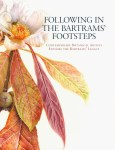
    Following in the Bartrams’ FootstepsBartram_cover_500px
    December 15, 2014 – February 15, 2015
    Open Daily | 10 am – 4 pm
    This major art exhibition includes forty-four original artworks based on the native plant discoveries made by John and William Bartram in their renowned and influential travels throughout the Eastern wilderness between the 1730s and 1790s. The UC Botanical Garden will be the only West Coast showing of this exhibition. On view in the new Julia Morgan Hall.
    Free with Garden Admission

    PLANTS ILLUSTRATED: Following the Garden’s Path
    January 7 –  February 15, 2015
    10 am – 4 pm
    Come view our 6th annual Plants Illustrated exhibition of Botanical Art featuring work by the Northern California Society of Botanical Artists.  This year the pieces will represent plants in the Garden’s collection.
    Free with Garden Admission

    Plants Illustrated: Opening Reception for Garden Members and NCSBA Artists
    Saturday, January 24, 2015
    4:30 pm – 6:30 pm
    Come view our annual exhibition of botanical art, Plants Illustrated at this special members’ event. Meet the artists, sip wine and learn about the Northern California Society of Botanical Artists.  Free; card-holding members only; advance registration is required; space is limited.


    WORKSHOPS

    An Introduction to Botanical Art with Catherine Watters
    Thursday, January 22, 2015 &
    Friday, January 23, 2015
    10 am – 4 pm
    This class will introduce you to the fascinating world of Botanical Art. Catherine Watters will teach you to observe, measure and draw plants in great detail and with botanical accuracy. Students will work with graphite, colored pencil and watercolors.
    All levels are welcome.
    $180 / $170 members

    Botanical Art for Young Adults
    Saturday, February 7, 2015
    1 pm – 3 pm
    Join artist and educator Sally Petru for an afternoon investigation to learn to draw both botanically accurate and artful representations of plants. All levels are welcome and parents/guardians are welcome to register as students alongside their child. $40 / $30 members


    LECTURES

    The Legacy of the Bartrams with Carol Woodin,
    ASBA Exhibitions Director

    Friday, December 19, 2014
    10 am – 11:30 am
    Who were John and William Bartram? Come learn about this fascinating father-son duo and the legacy they’ve had on American botany, horticulture and botanical art. Free with Garden Admission

    The Venus Fly trap and other Amazing Carnivorous Plants
    Saturday, January 10, 2015
    10 am – 11 am
    John Bartram was the first to introduce the Venus Fly Trap into cultivation. Family members of all age are invited to discover some of the fascinating and beautiful plants that can eat insects. Get up close with the amazing leaf adaptations as you learn more
    about them. $15 / $10 members

    A Journey with the Bartrams, Hookers and other Famous Families in Western Botanical Science, Art and Exploration with Dr. Peggy Fiedler
    Saturday, January 31, 2015
    1 pm – 3 pm
    John Bartram and his son, William Bartram, were among the first active, professional American field botanists throughout the Revolutionary era. Father John (1699-1777) was an indefatigable collector of plants and seeds during his travels across eastern North America, eventually establishing arguably the first botanic garden in the New World. His son William (1739-1823) was similarly well-traveled, an avid collector, and an extraordinary artist of both plants and birds. At roughly the same time as the younger Bartram, William Jackson Hooker (1785-1865) was burnishing his credentials as an intrepid English explorer, keen botanist and accomplished illustrator as well as the third director of the Royal Botanic Gardens, Kew. His son, Joseph Dalton Hooker (1817-1911) too followed in his father’s footsteps, becoming one of the greatest British botanists of the 19th century, the 4th director of Kew, and Charles Darwin’s closest friend and confidante. Free with Garden Admission

    Maria Sibylla Merian: A Passion for Plants & Insects
    Thursday, February 5, 2015
    10 am – 11:30 am
    The artist and scientist Maria Sibylla Merian (1647-1717) was born in Frankfurt, Germany, into a middle-class family of publishers and artists. At the age of fifty-two, Merian traveled with her younger daughter to Suriname, a Dutch territory in South America, to paint its exotic insects. She was an adventurous woman way ahead of her time, whose amazing career as an artist, writer and teacher revolutionized botany and zoology. Come learn more about this fascinating woman. $12 / $10 members


Related

Information about the Spring 2015 workshop Botanical Illustration of Desert Flora has been announced. Here is the latest at Classes Near You > Southern California!


UC Riverside Extension Program

www.extension.ucr.edu

Field journals are the most important tool for any biologist. Like artists, field biologists have definite opinions about what their journals should be like. I was taught how to keep a field journal in a 8.5” x 5.5” format. My field journal still has the Celsius/Farenheit temperature conversion chart I taped to it almost 30 years ago, as well as a graph of soil surface temperatures at which foraging occurs in three seed-eating ants (this is from my days of identifying ant heads in lizard scat).

In today’s world, gadgets with touch screens seem to be the new note taking tools while the handwritten journal is presented as more of a novelty. Today we give paper and pencil some well-deserved attention and learn how biologists teach students the value of learning from field journals.


What is the value of old-school style field journals?

This topic is discussed by professors John Farnsworth, Lyn Baldwin and Michelle Bezanson in An Invitation for Engagement: Assigning and Assessing Field Notes to Promote Deeper Levels of Observation. In their paper, the authors explore how their colleagues use field journals in college-level natural history classes. The authors also make a case for the inclusion of creative writing and drawing in science journals.


Within the meditative lines of a landscape drawing or a contour drawing of a plant, the marks on a page can move beyond a visual image to celebration. The science of ecology needs the joy of art.

— John Farnsworth, Lyn Baldwin and Michelle Bezanson


Farnsworth et al. (2014) believe field notebooks should be a component of all natural history courses because they help students pay attention to their surroundings, encourage deeper understanding and provide learners with a place to record their experiences with the natural world.

The authors suggest instructors use a rubric to help assess student journals and offer two examples of scoring rubrics in their paper. One of the rubrics is a straight-forward scoring guide and the second rubric is a scoring guide showing instructors how they can engage students in journaling on a deeper level. This second rubric is especially good and I recommend taking a look at it to see how it may contribute to what you do in your own classrooms or programs.


Natural History is About Connections, Not Memorization

With so much information coming at them, students often resort to memorization to “learn” in their classes. Farnsworth et al. (2014) propose correcting this behavior with field journals so students can better observe Nature’s patterns and processes. To help them provide examples of how journals can be used as tools for more meaningful learning, they contacted colleagues at the Natural History Network and invited them to send examples of journaling assignments and rubrics they use in their own classrooms. Using the materials they received, Farnsworth et al. (2014) created a list of best practices. This list of best practices includes ideas to help students record Nature’s patterns and to interpret what they observe. It also includes suggestions about how to encourage students to write for future generations and how to encourage students to draw what they see.

To read all of the best practices and to view the rubrics described above,
view An Invitation for Engagement online or download a copy. This article is available for free from the Journal of Natural History Education and Experience.


Literature Cited

Farnsworth, J.S., L. Baldwin, and M. Bezanson. 2014. An invitation for engagement: Assigning and assessing field notes to promote deeper levels of observation. Journal of Natural History Education and Experience. 8:12-20


Related

Interested in natural history?

The Field Studies Council offers a wonderful selection of natural history classes each year. The schedule for 2015 is now available. Below are links to courses that may be of interest to you. Be sure to view the complete schedule online.


Field Studies Council

www.field-studies-council.org
Founded in 1943, the Field Studies Council (FSC) provides learning opportunities about the environment for all ages and abilities. Visit their website to learn more about interdisciplinary fieldwork opportunities, classes for individuals and families, publications and profession development courses. Courses are held across the FSC network of UK Centers, from the Scottish Highlands to the south Devon coast. The extensive schedule of classes for 2015 includes:

    Botany Courses – Courses include studies of flowers, trees, grasses and grasslike plants, ferns, freshwater and wetland plants, lichens, fungi, general plants, mosses and liverworts. View Details/Register

    Natural History Courses – Courses include studies of the natural world, birds and other animals, habitats and conservation. View Details/Register

    Art Courses – Courses include painting, drawing, crafts (e.g. bookbinding), traditional skills (e.g., basketry), photography, archeology and botanical illustration. Get information about FSC botanical illustration courses online.

    View all courses for 2015

This information can also be found at Classes Near You > England.


Related

Learning from Field Journals

Get the new collection of botanical art!

Get the new collection of botanical art!

ArtPlantae is having a sale!

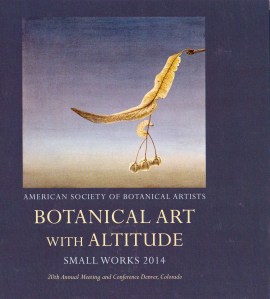
Most of the sale items are discounted catalogs of botanical art that received bumps or scratches during shipping between ASBA venues. Included in the sale is the latest catalog published by the American Society of Botanical Artists (ASBA). The catalog Botanical Art with Altitude: Small Works 2014 features the drawings and paintings of 98 ASBA members who participated in the non-juried Small Works exhibition held during the ASBA’s annual conference in October.

Visit the store to shop for your own library, for a unique host/hostess gift or for that gift exchange at work. A portion of all catalog sales and coloring book sales helps support the ASBA’s mission and each purchase supports ArtPlantae’s InterpretPlants program.

We all thank you for your support!

See What’s on Sale


(Note: The color of the new catalog is more navy blue.)

Artist and educator Lisa Coddington invites you to join her for a botanical art tour in southern France. A summary is included below. Contact Lisa for a detailed itinerary.


Painting Provence: Botanical Painting in Southern France

May 22-29, 2015

Join this memorable week that combines tours of historic villages such as Marseille, Aix de Provence, and Nimes with classes taught by ABSA-awarded artist, Lisa Coddington. Lisa teaches regularly at the University of New Mexico and Santa Fe Community College and offers specialized art workshops. Demonstrations in drawing, watercolor glazing, and composition will support your individual art goals while enjoying this tour of France. Classes are open to both beginners and advanced intermediate artists alike. Tour highlights the architecture, gardens and historic sites in southern France. Leisure time is provided to explore on your own. We look forward to you joining us!

Please contact Lisa Coddington for complete itinerary or call 315-256-8639. Learn more about Lisa and read student testimonials at www.LisaCoddington.com.

To reserve your space we encourage you to send your deposits by December 15, 2014. (deposit refundable if tour does not fill)

Registration Fees:

  • $3,195.00 USD (6 participants)
  • $2,995.00 USD (7-8 participants)
  • $2,795.00 USD (9-11 participants)

Note: All rates are based on shared lodging; limited single supplement costs $285.00 USD.

Contact Harriet Harris of CulturalEncounters.com with all travel questions.
(505) 982-8264

Deposit Deadline: December 15, 2014


This information has also been posted to Classes Near You > New Mexico.

We have explored the topic of plant blindness often in this column and have learned about the many reasons why we need to take this topic seriously. One of these reasons has to do with the management of invasive plant species. Today we learn about an activity introducing students to invasive species and the biology behind how they “invade”.

In A Hitchhiker’s Guide to the Invasive Plant Universe, professor Richard H. Audet presents an activity about “alien invaders” that is based on the 5E learning cycle. This classroom activity requires students to think about seed dispersal and calls upon them to write about (and draw) the relationship between seed form and function.

Audet (2005) includes a list of online resources for teachers in his article. Some of the links he provides have changed over the years, so I looked for the current links. Update the resources in Audet (2005) with these links:

When it comes to drawing the form and function of seeds, Audet (2005) does not offer any guidance. This is okay because together we’ve learned about many drawing, painting and observation techniques from the wonderful guests who have stopped by this site to visit. To browse conversations with past guests, go to the “Featured Guests” section in the righthand column. If you are pressed for time and are looking for resources to use in your classroom or program right away, here are two resources you might want to consider:

Audet’s article and activity about invasive species was published in Science Scope, a journal for middle school science teachers. Audet (2005) can be purchased online at the NSTA Store for 99¢.


Literature Cited

Audet, Richard, H. 2005. A hitchhiker’s guide to the invasive plant universe. Science Scope. 29(1): 42-45


Related

Activities to Investigate Plant Ecology