Feeds:
Posts
Comments

This week the featured article for the Plants, Life, Riverside project is also the featured article for this week's teaching and learning column.

Today we learn about legumes, soil science, a soil science kit for teachers and an affordable guide to drawing science.

Find out how you can download classroom resources by reading the current installment of Plants, Life, Riverside.

Plants, Life, Riverside is an ongoing interpretive project about plants in the bustling urban landscape of Riverside, CA.


Soil is alive.

It may look like dirt and in need of human intervention to become productive and worthwhile, but this is not the case.

Soil is alive with nutrients, minerals, animals, and plants. While we collectively spend most of our time contemplating how to explain why people need plants, the truth is that there wouldn’t be plants if there wasn’t soil. So today we take a moment to address “plant blindness” by addressing another invisible element of our environment — soil.

Pedology is the study of soil. Soil scientists contribute their expertise to many disciplines. They conduct research, manage crop production, advise land managers, design hydrologic plants in urban areas, evaluate water availability, assess environmental hazards, regulate land use, and teach (Soil Science Society of America).

Today we have the opportunity to learn from a botanist at the University of California Riverside who is also a soil scientist.
Camille Wendlandt is currently researching nitrogen deposition in soil and the relationship between legumes and nitrogen-fixing bacteria.

Please join me in welcoming Camille Wendlandt!


Cami, thank you for taking time out of your busy schedule to discuss your research with us. You study the relationship between pollution, legumes and nitrogen-fixing bacteria. Tell us about your work.

I am a second year PhD student in the Department of Botany and Plant Sciences, and I study how air pollution affects the relationship between legumes and nitrogen-fixing bacteria, which are called rhizobia. Rhizobia convert nitrogen gas, which is an inert chemical, to a water-soluble form that plants can use for growth. Many legume species support colonies of rhizobia in their roots, which allows them to pass sugar directly to the rhizobia in exchange for fixed nitrogen.

This intimate relationship is called a “symbiosis,” and many researchers have been interested in the strategies legumes use to keep rhizobia from cheating — that is, from stealing sugar from their host without providing nitrogen in return. Many legume species are able to screen potential rhizobial partners before they infect and to police them after they infect, denying them sugar if they fail to produce nitrogen. Air pollution enters the story because nitrogen-rich chemicals emitted from car exhaust can settle into the soil in urban areas, providing legumes with a very cheap source of nitrogen. I am studying how nitrogen deposition affects the ability of legumes to police their rhizobial partners. On the one hand, legumes with access to a lot of free nitrogen might enforce rhizobial cooperation even more, to ensure that only the best strain make it into their roots. On the other hand, these legumes might stop policing rhizobia at all, if it requires more energy to police rhizobia than they gain from selecting the best strains. We just don’t know.


How did you come to study this relationship?

I was interested in plant biology and environmental science during college, and after working for a few years I knew I wanted to research climate change so that, as a society, we can make better management decisions. The legume-rhizobia symbiosis is also an exciting system because it is extremely important in agriculture (legumes are grown for food and fodder all over the world) but also wide-spread in nature, so research in this area can be very broadly applied.


California is known for its smog and Riverside has had some of the worst smog in the area. Is this a contributing factor to your study of pollution?

Yes, indeed.  Nitrogen oxides from car emissions react to form ozone, which is the primary constituent of smog, and these nitrogen oxides are the same compounds that settle into the soil and become available to plants. Because smog (and therefore nitrogen deposition) is restricted to specific areas by mountain ranges and prevailing wind patterns, I am also interested in how regional differences in air pollution might lead to parallel regional differences in legume policing mechanisms.


What are legumes, exactly? What types of legumes are commonly grown in urban areas?

Legumes are an incredibly diverse family of plants. The most familiar examples are crops like beans, peas, lentils, peanuts, and soybeans, but there are also shrubs and trees in the legume family. Outside my lab there is a legume tree called the Hong Kong orchid tree (Bauhinia blakeana) that puts out gorgeous purple flowers all summer. You can tell that it’s a legume because of its fruits, which look more or less like beans, although they are much woodier. Another legume tree that you’ll see in Riverside are Eastern or Oklahoma redbuds, which stay pretty short and work well as street trees under power lines.


What types of legumes might Riverside residents encounter in natural areas such as Sycamore Canyon Wilderness Park?

You’ll see plenty of herb and shrub legumes out there. My study species is a tiny herb called Lotus strigosus (the common name is “strigose lotus,” which isn’t very helpful, is it?). A larger and prettier species from that genus is Lotus scoparius, commonly called deer weed. It is a perennial shrub with long spires of small yellow flowers. I have seen both Lotus species in Sycamore Canyon Wilderness Park. Another common legume is arroyo lupine (Lupinus succulentus), which has bright blue flowers. One of my favorite legume shrubs, even though it’s not native, is the bird of paradise (Caesalpinia gilliesii), which I have seen in the Box Springs Mountain Park; you can spot it by its yellow flowers with long, red stamens. If you head east beyond Palm Springs, you’ll start to see native woody desert legumes like palo verde (Parkinsonia) and ironwood (Olneya tesota).


Back when I was a very active gardener, I used to rotate my backyard crops and I even planted a cover crop one year. In your research, have you come across resources that may be of particular interest to the urban gardener?

The University of California Cooperative Extension runs Master Gardener programs on a county-by-county basis, and I think this is a great resource for anyone wanting region-specific gardening advice. Since moving to California, I have also become a huge fan of Calflora.org, which is a continuously updated public record of all the plants out in the wild in our state, whether they are native or introduced.  It is a little technical, but if you are a plant nerd already, it’s a lot of fun!  If you’re interested in landscaping with native plants, for example, it’s a great tool for figuring out what species grow in your area.


In your research so far, have you discovered anything you weren’t expecting?

I can tell you what surprised me most as I embarked on this work. I knew that pollution put nitrogenous greenhouse gases into the atmosphere, where they contribute to global warming, but it never occurred to me that these pollutants settled into the soil (by “dry deposition”) and were directly available to plants as a form of fertilizer. I thought the only sources of reactive nitrogen in the soil were biological nitrogen fixation, lightning strikes, synthetic fertilizers, and manure. I was shocked that even natural areas protected from agricultural runoff could still be indiscriminately fertilized as a result of human activity.


Camille’s interesting research brings attention to our ongoing relationship with soil. It is a relationship that the Soil Science Society of America (SSSA) wants to bring attention to as well. This year the SSSA has named 2015 as the International Year of Soils. In commemoration of this year-long outreach event to enhance soil science education, the SSSA created the 2015 International Year of Soils Educator Kit. This kit includes:

  • SOIL! Get the Inside Scoop, a 36-page book written for students in grades 4-5 that explores how soil is a part of our lives.
  • An activity list highlighting SSSA event for 2015.
  • A coloring and activity book for grades K-2.
  • A soil taxonomy poster
  • An overview of how soils sustain life.
  • A poster about careers in soil science
  • I “Heart” Soils ruler
  • A “Know Soil, Know Life” pencil
  • Information about becoming a Friend of Soil Science
  • Information about how educators can receive a free trial membership with SSSA.

This kit of educational materials was sent to teachers earlier this year. Most of these materials are now available as downloads on the SSSA website. Limited quantities of the Careers posters and Soil Taxonomy poster remain. Go to the website of the International Year of Soils to view the resources for teachers.

I would like to send special thanks to Cami for her time and for introducing us to her fascinating research linking botany and soil science with our urban lives.


Literature Cited

Soil Science Society of America. Careers Poster in 2015 International Year of Soils Educator Kit.

Drawing Science – A Resource to Consider
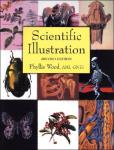
ScientificIllustration

Wood, Phyllis. 1994. Scientific Illustration: A Guide to Biological, Zoological, and Medical Rendering Techniques, Design, Printing, and Display. New York, NY: John Wiley & Sons
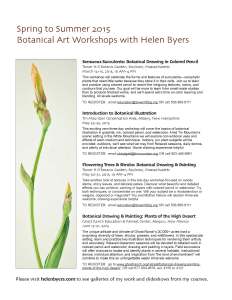
Anne-Marie Evans will teach a two-week course about botanical drawing and composition this Fall. Here’s the latest at Classes Near You > Virginia!


Botanical Artists for Education & The Environment

www.baeecorp.org
The Botanical Artists for Education & The Environment (BAEE) is a non-profit organization in Falls Church, VA created by a dedicated group of botanical artists in the Washington, DC metropolitan area. Members wrote and illustrated American Botanical Paintings: Native Plants of the Mid Atlantic.

    Botanical Watercolor Class By Anne-Marie Evans

    Anne-Marie Evans returns in September 2015 to Falls Church, Virginia, to teach another of her popular classes in botanical art. Class space is limited. Classes expected to fill quickly.

    This two-week class will concentrate first on gaining intimate familiarity with the plant, sketching it from many different aspects while striving for botanical accuracy. Then, students will practice various arrangements using the individual sketches to make an effective composition. Finally, they will proceed to paint application, using Anne-Marie’s six-step method. We regret that we cannot accept registration for a single week.

    This two-week session will be held September 21 – 25, 2015 and September 28  – October 2, 2015 (10 am – 3 pm, daily).

    Location:
    Columbia Baptist Church, Room 100
    103 West Columbia St
    Falls Church, VA 22046

    Fee:    
    $1,100 – Not refundable unless the class is cancelled or someone takes your spot.  
    A $100 deposit will hold your place. Balance due by August 1.

    For more details see Classes page on the BAEE website.
    Questions? Please contact BAEE.

By Bonnie Driggers, BAEE

In early 2014, the Botanical Artists for Education & the Environment (BAEE) published American Botanical Paintings: Native Plants of the Mid Atlantic. The book has met with good success over the past year, particularly among people interested in gardening and the environment as well as in botanical art. It is sold at Monticello; the Lewis Ginter Botanical Garden Shop in Richmond, Virginia; Meadowlark Gardens in Vienna, Virginia;  the New York Botanic Garden; the National Gallery of Art in Washington, D.C.; as well as at other gift and garden shops. 

Don’t wait to get your copy!

The book is available from Amazon and from the publisher at www.starbooks.biz for both retail and wholesale purchases. Please direct all questions about this title to BAEE.


‘American Botanical Paintings’ Wins Awards

baee_USA_awardAmerican Botanical Paintings: Native Plants of the Mid Atlantic is the winner in the Home and Garden category of the 11th Annual USA Best Book Awards. Winners and finalists traversed the publishing landscape: Simon & Schuster, Penguin, John Wiley & Sons, Houghton Mifflin Harcourt, Kensington Books, Harlequin, McGraw-Hill, Llewellyn, Yale University Press, Cornell University Press, University of Missouri Press, White House Historical Association, Wisconsin Historical Society Press, American Bar Association and hundreds of independent houses.


baee_TechAward
The BAEE book, American Botanical Paintings: Native Plants of the Mid Atlantic was awarded a Distinguished Technical Communication award in the 2014 Society for Technical Communication (STC) Washington, DC-Baltimore Chapter’s Summit Competition for Technical Communication.

The BAEE website also won a Distinguished Technical Communication award.

More botanical art news from Virginia today!

Artist Linda C. Miller will teach workshops at Williamsburg Botanical Garden. Linda will also teach at The Elizabethan Gardens in Manteo, NC.


Linda C. Miller

www.lindacmillerbotanicalarttoday.com

Linda is a botanical artist from Virginia and the artist in residence at The Elizabethan Gardens in Manteo, NC. Learn more about this special honor. Linda teaches in North Carolina and in Virginia. Visit Linda’s blog, Botanical Art Today to learn about her classes and upcoming gallery appearances.

    Adult Plein Air Painting and Sketching
    Williamsburg Botanical Garden
    Saturdays in 2015: March 28, June 27 and October 17
    Time:  10 am to 11:30 am
    Bring your chair, an easel, a sketchpad, or a nature journal and get to know the seasons!  Artist Linda Miller will kick off each session with a botany overview for artists.  Then take your gear out to the garden to paint and sketch for an hour or two or even the entire day.  Rain or shine. A $5 donation to WBG is appreciated.
    More about Williamsburg Botanical Garden


    Adult Introduction to Botanical Painting

    Williamsburg Botanical Garden
    Saturday, April 25, 2015 (Rain Date, Saturday May 2)
    9:30 AM – 12:30 PM
    Working with a dogwood bloom drawing created by the artist, participants will learn to mix with primary colors and paint using three key watercolor techniques.  All materials provided by the artist. Limit: 10. Fee: $40. To register, contact Linda Miller.
    More about Williamsburg Botanical Garden


    Spring Botanical Watercolor Workshop

    The Elizabethan Gardens (Manteo, NC)
    April 28-30, 2015
    September 21-23, 2015
    9:30 AM – 3:30 PM
    Use your artistic skills to illustrate and create a botanical portrait working with flora from The Elizabethan Garden’s greenhouses and grounds.  Learn basic drawing skills, observation, and watercolor techniques to create a botanical painting.   Beginner to Advanced welcomed!
    Materials list provided by Linda Miller.
    More about The Elizabethan Gardens

    Cost:
    Two Day Workshop Option: $100.00 member, $120 non-member
    Three Day Workshop:  $150.00 member, $180 non-member
    To register, call The Elizabethan Gardens at (252) 473-3234.


    Children Botanical Sketching Program

    Williamsburg Botanical Garden
    10:00 – 11:30 AM
    Learn how to observe and draw stems, leaves, and flowers from the garden! All materials donated by the artist.  Ages 8-16. Limit: 15. A $5 Donation to WBG is appreciated.  Registration required by May 7, 2015. To register, contact Sherry.


    Private Lessons: Botanical Watercolor

    Williamsburg, VA
    Custom sessions designed for you, your interests and current projects. Limited to four participants per session. Contact
    Linda Miller for more information.

    Half Day Session:
    9:30 AM – 12:30 PM or 12:30-3:30 PM (Fee: $75 per person)

    Full Day Session:
    9:30 AM to 3:30 PM (Fee: $125 per person)

This information has also been posted to Classes Near You > Virginia.

Fallen Fruit returns to Riverside!

This weekend Fallen Fruit returns to Riverside to establish an Urban Fruit Trail in the City’s Eastside neighborhood. This event is part of Riverside Art Make, an ongoing community project hosted by the Riverside Art Museum. If you would like to take part in establishing the Urban Fruit Trail, go to Lincoln Park on Saturday, February 21, 2015. Planting will begin at Noon and continue until 3 PM. The City’s Urban Fruit Trail will begin with twelve trees planted inside the park and then extend into the surrounding neighborhood.

Do you live in the Lincoln Park area? Go to Fallen Fruit’s website to learn how you can become part of the Urban Fruit Trail. Participation is free.

Also happening this weekend is Making Ground: Living Sculpture, a workshop with artist Cynthia Herrera. This installment of Cynthia’s “Making Ground” series will be held at the Farmer’s Market at the Galleria at Tyler, Riverside’s local mall. This event will occur Sunday, February 22, 2015 from 9 AM – 12 PM.

The ART+BIO Collaborative has announced a professional development workshop for educators teaching in formal and informal learning environments. Program participants will have special access to art work from the public and non-public collections of the new Harvard Art Museums, as well as areas not frequently accessed by the public.

Information about the new workshop, plus information about upcoming trips to Puerto Rico and the southwest are listed below. This information has been added to the Classes Near You sections for Massachusetts, Texas and New Mexico.

After reading about the new classes, be sure to move on to the conversation with the instructors of the professional development workshop.


    ART+BIO Collaborative

    www.artbiocollaborative.com
    The ART+BIO Collaborative in Cambridge, MA fosters the integration of science, nature, and art through novel collaborations, research, and education. They design innovative art+science curriculum and turn public spaces into interactive learning environments.


    NEW! Professional Development Workshop for Educators

    Combining Comparative Anatomy & the Visual Arts:
    A Professional Development Workshop for Educators

    Dates: April 20- 22, 2015 from 1-4:30pm

    Location: Harvard Art Museums, 32 Quincy St., Cambridge MA, 02138
    
Fee: $25, Does not include museum admission

    This ART+BIO Collaborative workshop introduces educators to creatively combining visual art and life sciences to engage students in creative art-making and deeper learning of advanced scientific concepts. Working from museum collections and exhibits at the Harvard Art Museums and Harvard Museum of Natural History, participants will use biological illustration to learn about comparative anatomy and evolution. Participants will design creative art+science collaborations for their own classrooms and participate in collaborative art-making.  This workshop is ideal for 6th-12th grade Art and Science teachers, however, all grade levels and informal educators welcome, along with any artists, naturalists or students interested in creative, interdisciplinary teaching and learning approaches. No previous drawing or science experience necessary.  This workshop is part of the 2015 Cambridge Science Festival. 
    Pre-Registration required. Participants will earn 10 Professional Development points.

    Sign-up Today!

    Download flyer, share with friends and colleagues

    Download flyer


    ISLAND LIFE: Tropical Field Studies of Art+Nature in Puerto Rico, March 8-14, 2015- Spring Break

    Embark on an artistic exploration of the diverse tropical wildlife of Puerto Rico, including rainforest, mountain, beach and coastal environments.
    View Details/Register


    DESERT LIFE: Field Studies of Art+Nature in the Southwest
    June 26-July 2, 2015

    Discover the unique beauty of the desert in this one-of-a-kind artistic journey through white sand dunes, black lava rock, desert caves, and mountain landscapes of West Texas and New Mexico.
    View Details/Register


A Conversation with Stephanie Dowdy-Nava and Saul Nava

Stephanie Dowdy-Nava, primary instructor of the professional development (PD) workshop and co-founder of the ART+BIO Collaborative would like to start a conversation with you about science and art. You can join in the conversation by responding to her prompt below. Please respond by typing your comments in the Comment box.

Integrating biology and art helps students understand advanced scientific concepts more deeply and fully engage their creativity through informed, thoughtful artmaking. The PD program focuses on designing creative collaborations between natural history and the visual arts using comparative anatomy and biological illustration.  What are some creative ways you have successfully integrated art and science in your classroom, studio or lab? Share your ideas here and they could become part of our workshop discussion.