Feeds:
Posts
Comments

© Hoffman Media (March/April 2010). All rights reserved ArtPlantae is excited to announce that it is featured in the March/April 2010 issue of Victoria Magazine. We are honored to be in the good company of Boxwoods Gardens & Gifts, Inc., PARASOL, Elderberry Herb Farm, and Kindred Spirits Organics. All are businesses whose botanically-inspired calling cards were chosen to celebrate the Spring season. See the Calling Cards section on page 10.

ArtPlantae’s beautiful calling cards, stationery, note cards, labels, logo, and banners were designed by DB Shaw Studios.

In keeping with the theme of the 2010 Philadelphia International Flower Show, Passport To The World, the Philadelphia Society of Botanical Illustrators (PSBI) has chosen to showcase paintings of plants introduced to the U.S from the far corners of the world by plant hunting expeditions throughout history. This exhibition will be on view February 28 – March 7, 2010.

A little known fact is that illustrators have always been important members of plant expeditions. What surprises many is the fact that many of these early botanical artists, who traveled to some of the most remote and uncivilized places on earth were women! While botanical illustration is by no means an exclusively female occupation, the PSBI would like to dispel the myth that it is a mere “hobby” for the pampered housewife. Botanical artists are still valued today on plant hunting expeditions to illustrate specimens in an accurate and detailed manner that even the most sophisticated camera cannot capture. Our members will educate the public to both the history and techniques of botanical illustration both through continuing demonstrations at our exhibit and an informative brochure describing the role of the botanical artist through history. This year the society will donate a portion of sales of paintings to the Philadelphia-area Living Beyond Breast Cancer organization. This is a cause that is dear to the hearts of many of our members and their families. It’s almost impossible to find someone who hasn’t be touched by this horrific disease on some way.

For more information about this exhibit, please contact:
Joan Frain
joanfstudio@verizon.net
(610) 363-5534


Related info

New at Classes Near You > New York:


Hollengold Farm

www.hollengoldfarm.com

    One-day Drawing Workshops at Hollengold Farm – Spend a day drawing the growing harvest at Hollengold Farm. Select a subject from the farm’s large organic garden. A farm-fresh lunch is include with each workshop. Draw in colored pencil and watercolor pencil. Workshops are held 10 am – 4 pm. Cost per workshop: $90, includes lunch. Register for three workshops: $240, includes lunch. Register for six workshops: $450, includes lunch. Register with Wendy at wendyhollender@gmail.com or register online at DrawingInColor.com.
  • Saturday, May 22
  • Sunday, June 13
  • Sunday, July 18
  • Saturday, August 14
  • Saturday, September 18
  • Saturday, October 16

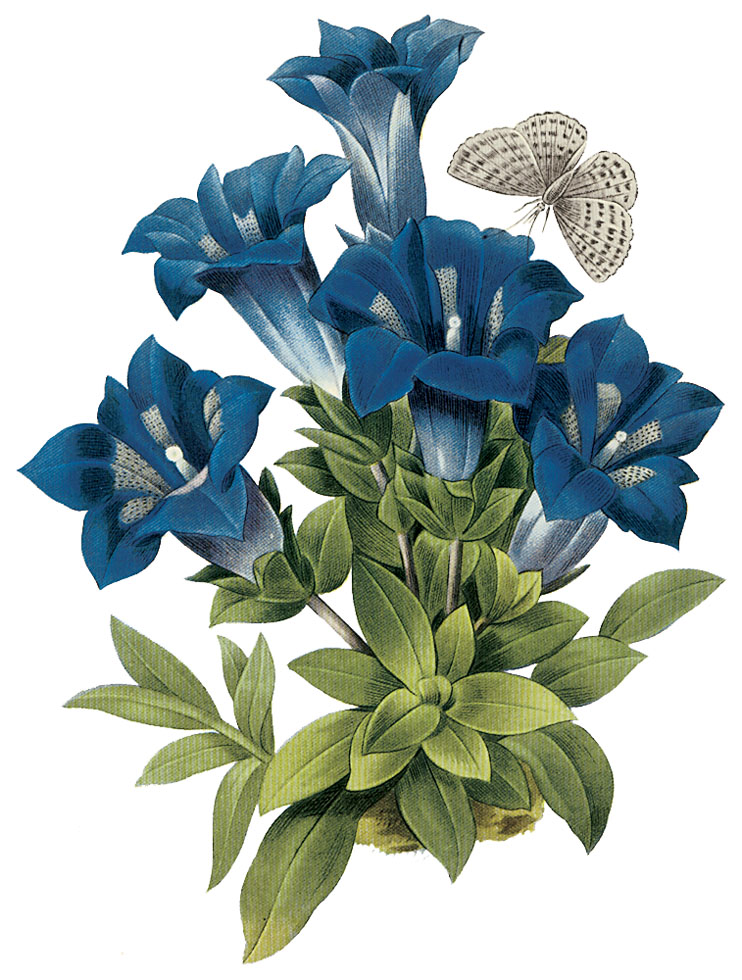
Gentian by Redouté

Botanical artists Juliet Kirby and Linda C. Miller of Williamsburg, VA will speak about the history of botanical art at the Williamsburg Regional Library on Tuesday, March 16, 2010 at 7:30 PM. They will discuss the first prehistoric drawings found in caves, the illustrations in 15th-century herbals, and how today’s contemporary botanical artists are painting and exhibiting new works to help educate the public about endangered plants and pollinators.

Juliet Kirby and Linda C. Miller are members of the American Society of Botanical Artists.


Image Source:
Redouté Flowers and Fruits CD-ROM & Book by Dover Publications.

Grass is a plant?

I was across the room when I overheard a student say this to her study group in a busy non-majors biology lab I taught during grad school. Fifteen years later, I am still not sure what caught me off-guard the most — the surprised tone in which the question was asked or simply the question itself. My first reaction was to wonder how the student could have missed the fact that grasses are plants. Then I thought about it some more and thought about the ways she could not have known that grasses were part of the plant kingdom.

  • What if she had never plucked grass out of the lawn to see its roots?
  • What if she had never had to install sod in her backyard?
  • What if she had never seen her family lawn in an overgrown state and never had the opportunity to see inflorescences form?
  • What if her parents did not take her to nurseries and botanical gardens as often as my parents took me?

I think about this student’s question each time I see someone shrug their shoulders to express their indifference towards plants. I always wonder about the root cause of their indifference. Surely they have had at least one memorable experience involving plants. Haven’t they?

Children & Plants
In 2000 at the annual conference of the British Educational Research Association, Sue Dale Tunnicliffe presented the results of her study addressing children’s learning experiences looking at plants in a botanical garden. Tunnicliffe conducted her research at the Royal Botanical Gardens Kew. Conversations among students (mostly ages 7, 9 and 11), teachers, and other adults were recorded in front of plant exhibits. She observed that children comment on the most noticeable features of a plant and that plant functions (e.g., photosynthesis and seed development) receive very little attention. She also observed that if an animal entered into view, children quickly turned their attention to the animal. Interestingly, Tunnicliffe discovered students learn about plants from their family and that students do not think of school as a place to learn about plants. Students admit to learning little from books, but a lot from daily experiences involving plants.

The intricate results of Tunnicliffe’s work must be read in detail to be appreciated. Science educators and anyone who leads group tours at botanical gardens will find this article to be a helpful resource. By having insight into what students notice about plants, educators can create engaging lessons and memorable interactive experiences.


Literature Cited

Tunnicliffe, Sue Dale. 2000. Talking About Plants: Comments of Primary School Groups Looking at Plants as Exhibits in a Botanical Garden.
Paper presented at the British Educational Research Association Annual Conference, Cardiff University (September 7-10, 2000). Read article

This book is magnificent. It’s California history. It’s botanical art history. It’s botany. It’s one person’s efforts to connect people to plants and fifty-six public gardens in California. It’s the only time I’ve ever said “Wow!” about an oleander.

The serigraphs featured in this book were created in the 1970s by Gene Bauer, who then served as the native flora chairman and the chairman of arboretums and botanical gardens of California Garden Clubs, Incorporated. From 1972-1974, Bauer created The Golden Native series comprised of 27 booklets. The Golden Botanical Gardens series followed, and was comprised of 29 booklets printed from 1976-1978. Each booklet was printed by hand and mailed to officers of the her garden club. Bauer printed about 80 copies of each booklet and used knotted yarn to attach the pages of each booklet. In the book’s introduction, Bauer describes how she makes a serigraph, which is a hand-printed silkscreen image.

Original serigraphs by Gene Bauer are in the permanent collections of The Hunt Institute for Botanical Documentation, The Missouri Botanical Garden, The Frelinghuysen Arboretum, Strybing Arboretum, and The Sherman Library and Gardens.

Botanical Serigraphs: The Gene Bauer Collection is available at your local bookstore.


Related Info
:

ESRI Press provides excerpts from Botanical Serigraphs

The National Parks Service, in conjunction with the Riverside Art Museum, will soon be accepting applications for the Joshua Tree National Park Artist-in-Residence Program. Applications will be accepted through Wednesday July 15, 2010. Applications must be postmarked by July 15th. Artists will be notified of the selections by August 15, 2010.

The Artist-in-Residence (AIR) Program is open to visual, performing, and literary artists. Resident artists will reside at the Lost Horse Ranger Station at Joshua Tree National Park (JTNP) for a period of 2 to 6 weeks and will have the opportunity to create a body of work that promotes a “deeper understanding of and dialogue about the natural, cultural and historical resources of Joshua Tree National Park and the deserts of Southern California.”

Artists interested in the AIR Program also have the option of applying to the Joshua Tree National Park Affiliate Artist Program. Affiliate Artists will have year-round access to the park and access to free camping within the park. Affiliate Artists are not provided with housing and are responsible for all supplies and travel-related expenses.

Complete details and an application can be viewed at JTNP Artist-in-Residence & Affiliate Artist Programs. Take a moment to read about the four artists selected for the 2009/2010 program. The online prospectus for 2010/2011 will be posted by the National Park Service this week.