Feeds:
Posts
Comments

New at Classes Near You > California:


University of California Botanical Garden at Berkeley

http://botanicalgarden.berkeley.edu/
This 34-acre garden was established in 1890 and is now a non-profit research garden and museum. The classes below are taught by Lee McCaffree and Catherine Watters . Download a detailed Fall schedule here.

  • Creating Botanical Art with Native Plants – August 26 & 27, 2010
  • Fall Leaves & Seed Pods – September 9 & 10, 2010
  • Orchids – October 28 & 29, 2010
  • Sketch in the Garden to Begin a Botanical Art Painting – November 13 & 14, 2010
  • Winter Botanicals as Paintings – December 10 & 11, 2010
  • Introduction to Botanical Art – January 29 & 30, 2011

Now at Classes Near You > Pennsylvania:

    Joan Frain Studio
    www.joanfrain.com
    Joan Frain is a professional botanical illustrator and instructor. For over 30 years, Joan has taught in Pennsylvania and in Delaware. Her work can be viewed in galleries and online. Private instruction and pay-as-you-go classes are available. Upcoming classes include:
    Botanical IllustrationJenkins Arboretum, Devon, PA. Fridays, October 15 – November 19, 2010; 9:30 a.m. – 12:30 p.m. Illustrate plants from the arboretum’s gardens, the arboretum greenhouse, or bring your own. Students will be able to ask a horticulturist questions at each meeting. Course emphasis will be on watercolor techniques, however other media may be used. All levels of experience welcome. Please join us!


And coming this Fall to The Delaware Center for Horticulture!

    Joan Frain Solo Exhibition
    Joan Frain will have a solo exhibition of her original botanical watercolors at The Delaware Center for Horticulture. Subjects range from native wildflowers and bulbs, to exotic orchids. Joan’s artwork will be in The Community Gallery during the month of October. You are invited to attend a wine and cheese reception on Friday October 1, 2010 from 5:30 p.m. to 8:00 p.m. Gallery Hours: Monday – Friday, 9:00 a.m. to 5:00 p.m.

Now at Mindy Lighthipe’s Studio 16 at Classes Near You > New Jersey:


Studio 16

www.studio16online.com
Custom classes, individual instruction, art tours, and self-published instructional books can be found at Studio 16, the classroom and art studio of natural science illustrator, Mindy Lighthipe. To register for classes, contact Mindy or call
(908) 769-7417.

  • Painting Butterflies – Tuesday October 19 – Thursday October 21, 2010. McGuire Center for Lepidoptera and Biodiversity at the Florida Museum of Natural History. A very special behind-the-scenes visit to learn about butterflies, the process of metamorphosis, and biodiversity in the order Lepidoptera. Participants will be able to draw and paint specimens from the Center’s collection. Cost: $327, includes admission to the Butterfly Rainforest for 3 days, behind-the-scenes tour, specimen access, and instructor’s fee. Limit: 15 students. Visit Studio 16 for more information and to register.
  • Ten-day Adventure to Costa Rica – January 21-30, 2011. Travel to the south Pacific region of Costa Rica. Learn about chocolate production in Costa Rica, explore the mountain landscape, visit research stations and more! View full itinerary, including links to hotels, here.

New at Classes Near You > California:


Virginia Robinson Gardens, Beverly Hills

www.robinsongardens.org
Read about the Friends of Robinson Garden Botanical Art Group and the Robinson Garden Florilegium here. Download the current class schedule here.

  • Botanical Art Composition I – August 4, 5, 6, 2010.
    How to inject strong eye appeal into a botanical art painting is often challenging from subject to subject, no matter how skilled the artist. Margaret Best will lead students through exercises designed to train the eye on how to plan and create visually appealing and natural compositions. Traditional compositions and contemporary works will be studied to expand the students awareness of how to influence the viewer. The impact of color placement, areas of dark and light, positive and negative spaces will all be covered.
  • How and When to Add Details – September 1-3, 2010. Margaret Best will show you how to build washes to get the right intensity and how to give value to your subject. She will also teach you how to avoid creating muddy colors and how to avoid destroying your paper through overworking.
  • Botanical Art Composition and Final Flower Drawing – October 6, 7, 8, 2010. Final class in a series taught by Margaret Best. Students will apply what they have learned about form, composition, color mixing, and watercolor techniques to create a finished painting.
  • Botanical Painting with Anne-Marie Evans – Session #1: February 21-24, 2011; Session #2: February 28 – March 4, 2011. Anne-Marie will teach her five-step approach to botanical painting using a subject direct from the garden. Students may attend both sessions.
  • Watercolor with Elaine Searle – March 28-31 and April 1, 2011. In this five-day class, Elaine will teach students how to compose a painting and how to capture those inspiring details. Visit PaintBotanical.com to learn more about Elaine.
  • Watercolor on Vellum with Elaine Searle – April 4-5, 2011. Take on the challenge of painting on vellum. Elaine is one of the few artists who teaches how to paint on vellum.

New at Classes Near You > Washington:


University of Washington Professional & Continuing Education

Certificate Program in Natural Science Illustration
This nine-month program is designed for artists, illustrators, and scientists with some art experience. Students will graduate with a portfolio of work suitable for publication and for use in educational exhibits. The instructional fee for this program is $4,074. This excludes certificate program fees, registration fees, and textbooks. The first-term instructional fee of $1,330, plus a $35 nonrefundable registration fee, is due September 22, 2010. Courses scheduled for the 2010-2011 term are:

  • Intro to Natural Science Illustration
  • Mondays, October 11 – December 13, 2010; 6:30 PM – 9:30 PM. This key course is focused on understanding principles related to anatomical, cellular, and physical form and function when rendering illustrations for scientific purposes. Digital illustration techniques will also be taught in a Mac computer lab.

  • Zoological Illustration – Wednesdays, October 13 – December 15, 2010; 6:30 PM – 9:30 PM. Students will develop an understanding of principles and procedures for a systematic approach to the production of scientific illustrations. Life histories and metamorphic stages will be the focus. Digital illustration techniques will also be taught.
  • Vertebrate Illustration – Wednesdays, January 12 – March 16, 2011; 6:30 PM – 9:30 PM. Comparative biomechanics of animal movement is introduced to understand the musculoskeletal system. Students will learn how to depict both internal and external structures. Black & white, color, and digital techniques will be taught.
  • Wildlife Illustration – Mondays, January 10 – March 14, 2011;
    6:30 PM – 9:30 PM. Students will develop field sketches and wildlife drawings based on a firm understanding of ecosystems, biomechanics and adaptation. Includes a field trip to draw birds and wildlife in their natural environment. Digital techniques will be taught.
  • Applied Techniques of Natural Science Illustration – Mondays,
    March 28 – June 6, 2011; 6:30 PM – 9:30 PM. Students will learn techniques to enhance their presentation of finished work. Business issues such as contracts and copyright will be discussed. Digital illustration techniques will be taught.
  • Botanical Illustration – Wednesdays, March 30 – June 1, 2011;
    6:30 PM – 9:30 PM. Students will learn about the classification and identification of plants while continuing to develop their drawing and composition skills. Projects will be completed in pen and ink, watercolor, or gouache.

Detailed information about this program can be viewed on the program’s homepage on the University of Washington website.

If you are interested in learning more about natural science illustration as a career, visit the Guild of Natural Science Illustrators at www.gnsi.org.


Related
:
The Artists Behind Your Elementary School Science Textbooks


Reader Question
:
We learn from scientific illustrators almost daily, even though we may not realize it. Where have you encountered scientific illustrations?

Now Available

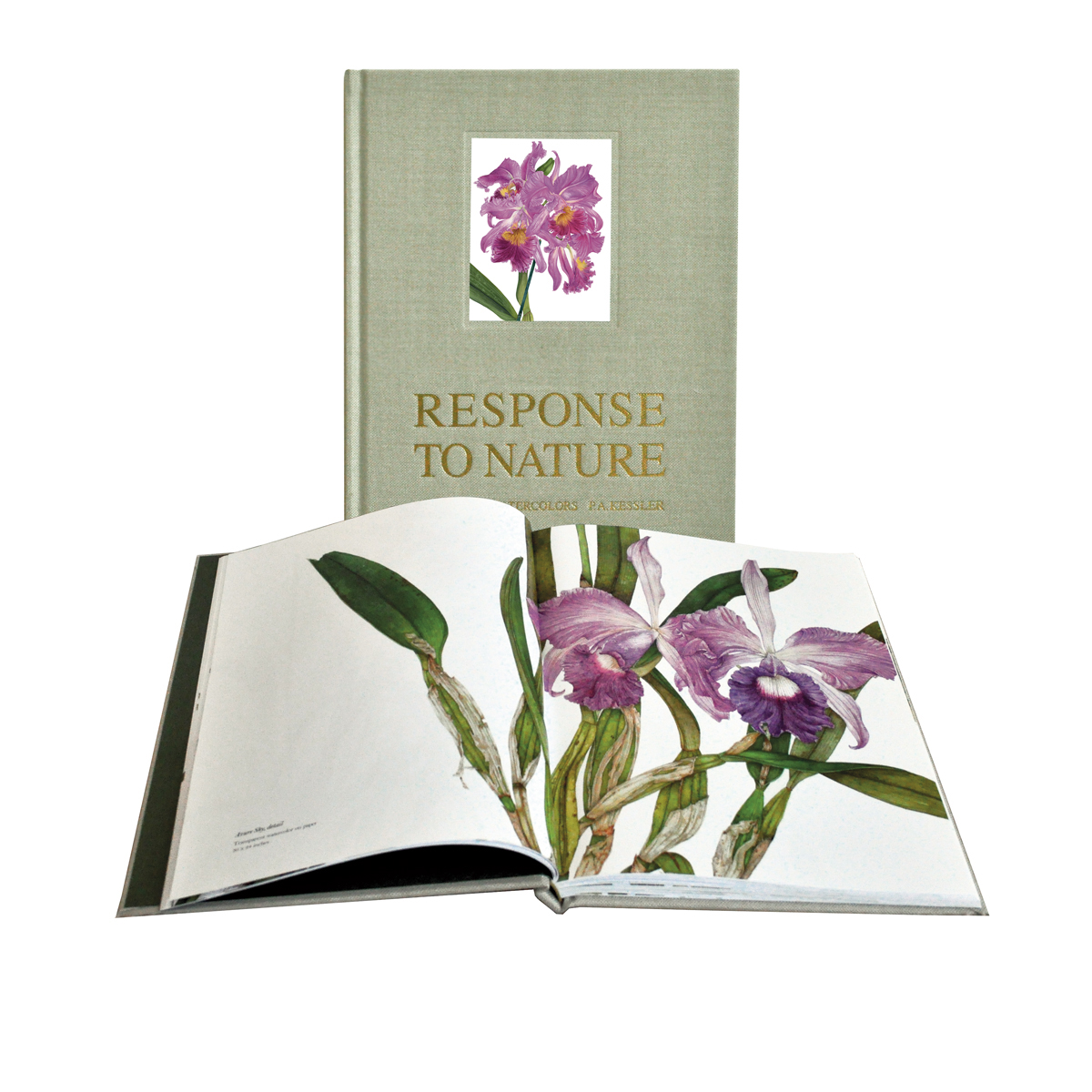
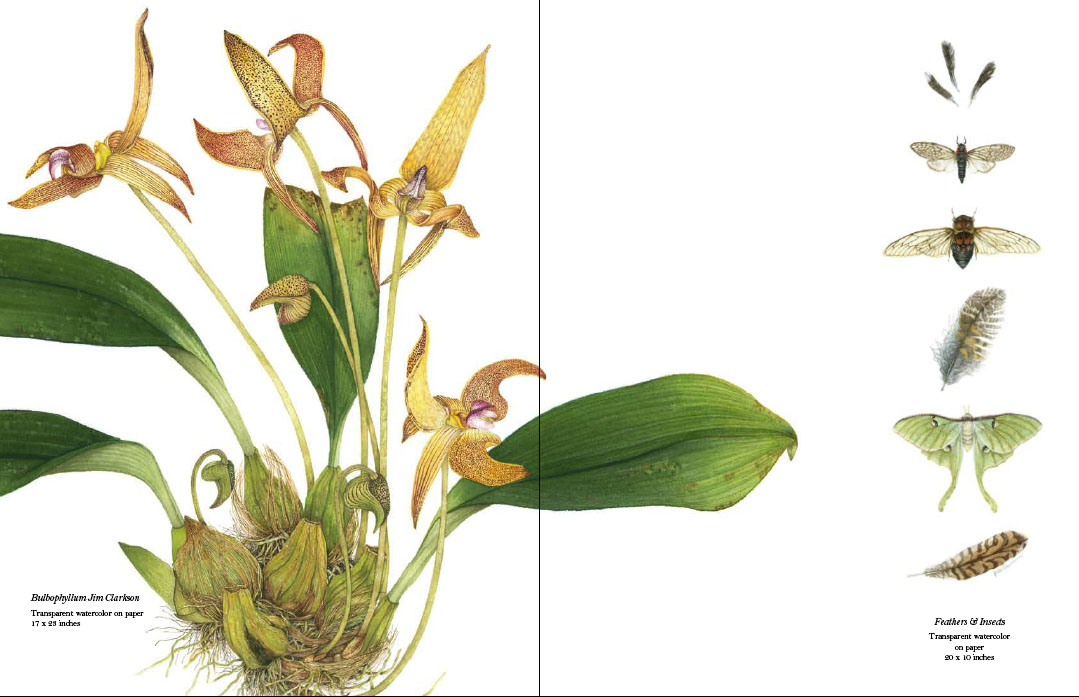
ArtPlantae Books is thrilled to bring you Response to Nature, a collection of P.A. Kessler’s botanical and natural history paintings documenting her career from 1972-2010. This lovely book is now in stock and available for immediate shipping. Each limited edition copy of Response to Nature has been signed and numbered by the author. To order this unique collection for yourself or as a special gift, go to ArtPlantae Books.


You may also enjoy
:
Pam Kessler Shares Her Response to Nature

Reinhild Raistrick returned to her native Tanzania to visit the original locations of the wild African violet. With much excitement, she returned to a country that had been home to her family since 1895. In no time at all, she was once again speaking fluent Kiswahili and Kishambaa and was quickly accepted as a “local”. East African specialists at the Royal Botanic Garden, Kew and an expert of the plant family Gesneriaceae at the Royal Botanic Garden in Edinburgh, provided Reinhild with information about where African violets were known to exist in the East Usambara mountains.

Reinhild painted every known species of African violet growing in the East and West Usambara Mountains and in the “coastal region of Tanga and Pangani Districts.” In her book, African Violets, Reinhild features 29 species of Saintpaulia. Each species was painted in-situ in Tanzania. She includes with each painting, a written description of each plant and where it was found. Separate pen and ink illustrations of the leaf, hairs, and fruit capsule of each species are also included.

The wild African violet species in this unique monograph are: Saintpaulia ionantha, Saintpaulia confusa, Saintpaulia difficilis, Saintpaulia magungensis, Saintpaulia grotei, Saintpaulia magungensis var. occidentalis, Saintpaulia orbiscularis, Saintpaulia tongwensis, Saintpaulia grandifolia, Saintpaulia goetzeana, Saintpaulia diplotricha, Saintpaulia magungensis var. minima, Saintpaulia pendula, Saintpaulia pendula var. kizarae, Saintpaulia intermedia, Saintpaulia tongwensis, Saintpaulia orbicularis var. pupurea, Saintpaulia sp. from Mafi Hills, Saintpaulia shumensis, Saintpaulia velutina, Saintpaulia brevipilosa, Saintpaulia nitida, Saintpaulia rupicola, Saintpaulia teitensis, Saintpaulia sp. Kacharoroni, Saintpaulia sp. Mwachi, Saintpaulia inconspicua, Saintpaulia pusilla, Saintpaulia species (unidentified, found in Uluguru Mountains in 2005).

While in Tanzania, Reinhild also painted 21 other flowering plants growing in the Usambara rainforest and includes these paintings in her book. You may be familiar with some of the species as they are often grown as houseplants (e.g., Impatiens and Begonia) .

Reinhild’s monograph on the genus Saintpaulia is a one-of-a-kind reference. She hopes her book will bring attention to the fragile African violet species growing in the wild and demonstrate the need for a botanical garden in East Africa, Europe or the U.S., to create a complete collection of the wild African violet before all species fall victim to the effects of deforestation.


African Violets
(2006) is available for purchase at ArtPlantae Books. This is a special order title. Availability subject to change.