Feeds:
Posts
Comments

Harm_TrompelOeil_FSBAFlorida Society of Botanical Artists
www.floridasocietyofbotanicalartists.com
A chapter of the American Society of Botanical Artists, the FSBA hosts workshops with visiting instructors and conducts public demonstrations at group exhibitions. Visit their website to learn more.

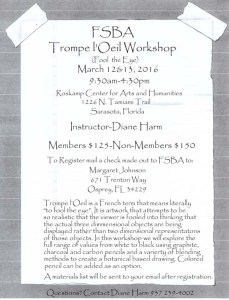
    Trompe l’Oeil Workshop
    Roskamp Center for Arts and Humanities
    March 12-13, 2016
    9:30 am – 4:30 pm

    Trompe l’Oeil is a French term that means “to fool the eye”. Trompe l’Oeil artwork attempts to be so realistic that the viewer is fooled into thinking that the three-dimensional object presented is real instead of being a two-dimensional representation. In this workshop, botanical artist and instructor Diane Harm will introduce botanical artists to this style of work. Participants will explore the full range of values from white to black using graphite, charcoal and carbon pencils. They will also learn a variety of blending methods for use in the creation of a botanical drawing. Colored pencil can be added as an option.

    This workshop is sponsored by the Florida Society of Botanical Artists and will be taught at the Roskamp Center for Arts and Humanities located at 1226 N. Tamiami Trail, Sarasota, FL (view map).

    Cost: Members $125; Non-Members $150

    Registration Info
    Mail your check made out to the FSBA to:

      Florida Society of Botanical Artists
      ATTN: Margaret Johnson
      671 Trenton Way
      Osprey, FL 34229

    This information has also been posted to Classes Near You > Florida.

Click image to register

Click image to register

The Lloyd Library and Museum in Cincinnati will host an entomology workshop in partnership with Meddling with Nature, an organization known for their educational theatrics and hands-on DIY workshops whose specialty is creating opportunities for individuals to experience art within the natural sciences. Guests will be encouraged to “touch with their own hands and see with their own eyes”.  Meddlers big and small, armed with their new-found knowledge, will mount and take home their very own large exotic specimen.

This workshop is a precursor to the Lloyd Library’s Summer 2016 exhibition showcasing Maria Sibylla Merian’s Metamorphosis Insectorum Surinamensium. Meddling with Nature will bring this epic work to life by presenting Surinam native plants and insects alongside the Lloyd Library’s original copies.

Learn about entomology and gain new insight into the work of Maria Sibyl Merian. Register for Meddling with Nature’s entomology workshop. The workshop will be held on Friday, February 19 (7-9 PM). Doors open at 6:30 PM.

General adult ticket: $49 advanced purchase
Additional child ticket: $22

Register Today!


About Meddling with Nature

Meddling with Nature is dedicated to exploring the connection between art and natural science. Starting with a love for medical illustration, Meddling with Nature quickly incorporated naturalistic, artistic, and anthropomorphic taxidermy. Meddling with Nature’s goal includes a mandate to educate the public on both biological and naturalist themes through direct, hands on experience. Meddling with Nature is celebrating its 10th anniversary in 2016 and is producing a number of events throughout the year.
 
About Lloyd Library and Museum
Lloyd Library and Museum is committed to providing engaging public programming through lectures, exhibitions, instructional events (for students of all ages) and symposia, that highlights the breadth and depth of the collection in all new ways.  Offering a collection of botanical, medical, pharmaceutical, scientific books and periodicals, the library offers services and programming that bring science, art, and history to life.

The March 2016 issue of Arts and Activities magazine has an article about shading, ribbons and proportions that made me think of the ribbon and basket weave exercise many of us learned from Anne-Marie Evans.

In “Ribbons and Spheres: An Introduction to Still Life”, art teacher Rebecca Tarman writes about an exercise she uses with high school students. Tarman says the purpose of her lesson is to help students:

  • Draw from life
  • Draw only what they see
  • Learn how to sight proportion
  • Learn how to shade

Tarman describes how she accomplishes these goals by using a still-life model made of ribbon, ornaments and a piece of foam board. She explains how she attaches ribbon to foam boards using T-pins and how she uses ornaments of different sizes to teach students how to sight proportion. Her clever and very portable idea made me think that this would be a good exercise for anyone teaching botanical illustration at multiple venues. It is a good way to introduce first-time botanists and first-time artists to how to look at the growth patterns of tendrils, strap-shaped leaves, lianas, and twisting seed pods.

It also made me think:

  • What if the round ornaments on students’ boards were replaced with fruit, leaves, flowers or inflorescences?
  • How many ways could this lesson be used in a botanical drawing workshop?

Take a look at Tarman’s article and share your thoughts. Her article Ribbons and Spheres is available online for free on the Arts and Activities website.


Literature Cited

Tarman, Rebecca. 2016. Ribbons and spheres: An introduction to still life. Arts and Activities. March. Retrieved from http://artsandactivities.com/ribbons-and-spheres.


Related

Award-winning botanical artist Barbara Oozeerally will teach botanical art workshops this spring and summer in Poland. Three painting meetings are planned. They are:

  • Painting Delicate Spring Flowers & How to Achieve an Interesting Composition (May 8-15, 2016)
  • Summer Greens: Smooth, Shiny, Hairy and Wrinkled and How to Paint Them (August 7-14, 2016)
  • The Brilliant Autumn Colors of Leaves, Fruit and Seedpods (September 4-11, 2016)

All painting meetings will be organized by Welcome Tourist and will be held at a 4-star luxury resort near Krakow, Poland.

For more information, go to Painting Meetings.

By Sarah Maxwell, PSBI

PBSI_nativePlants2016

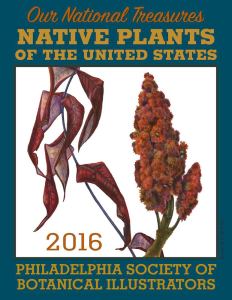
The beautiful and precise botanical paintings of the Philadelphia Society of Botanical Illustrators (PSBI) are on display at the Philadelphia Flower Show from Saturday, March 5th through Sunday, March 13th. The artists will be giving live demonstrations of their illustration techniques each day between 11:30 am and 1:30 pm, as well as between 5:00 pm and 7:00 pm.

In keeping with the Flower Show’s theme of “Explore America: 100 Years of the National Park Service,” the 2016 theme of the botanical artists is “Our National Treasures: Native Plants of the United States.” All the artwork had to be of plants that are native to our country — like oak trees, red buds, and dogwoods as well as trilliums, sunflowers, and black-eyed Susans. A large poster shows the location of these native plants along the Scenic Trail System of the National Parks.

Both the exhibition and the demonstrations are by the 75 members of PSBI. All the botanical art works are originals. PSBI artists spend many hours, weeks, even months to produce each one. They take great care to make certain that the depiction of the specimen is faithful to nature as well as a thing of beauty, something to be passed down with pride to coming generations.

The PSBI artists have been demonstrating the techniques of botanical art at the Philadelphia Flower Show since 1998, one year after PSBI was formed. Their demonstrations are part of the PSBI mission to educate the public on the intricacies of botanical art. It is an art form that is a tradition particularly in the Philadelphia area: in the 18th Century John and William Bartram founded and illustrated North America’s first botanical garden.

For more information, check the PSBI website, follow PSBI on Twitter (@PSBI_artists) or contact Sarah Maxwell.


Carol Woodin

www.carolwoodin.com
Carol is an award-winning freelance artist whose specialties include orchids, rare wildflowers, heirloom fruits and garden plants.

    Painting Glowing Orchids in Watercolor
    April 16-17, 9am – 4:30pm
    US Botanic Garden, Washington, DC

    After an overview of the special botanical characteristics of orchids, and a primer on the unique qualities of vellum, students will learn to combine the two. Creating rich color through multiple layers of watercolor dry brush, artists will capture shaded form and surface qualities such as gloss, veining, and warts so characteristic of orchids. Using vellum’s special surface to its greatest advantage, artists will gain comfort in working with this beautiful and translucent material.

    For more information, contact Carol Woodin.

    This information has also been posted to the Classes Near You sections for New York and Washington, DC.


    Did you know?

    George Washington thought that U.S. capital should have a botanic garden promoting the importance of plants to our young nation?

    Established in 1820, the United States Botanic Garden is one of the oldest gardens in North America.

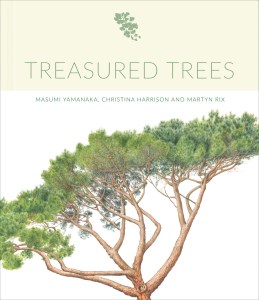
TreasuredTrees Botanical artist Masumi Yamanaka, horticulturist Christina Harrison and botanist Martyn Rix collaborate to write Treasured Trees, an introduction to the tree collection at Royal Botanic Gardens, Kew.

The book begins with Christina Harrison’s interesting story about the history of Kew, a topic she knows well. Harrison wrote a dissertation about the history of Kew’s trees and holds a MA in Garden History. Currently she writes educational material for the Garden and serves as the editor of Kew magazine. In the book’s introduction Harrison writes about the popularity of botany in 16th-century Europe, talks about the tree collectors of this era, and explains how Kew evolved to become the public garden it is today.

Following the introduction is a survey of twenty-two of Kew’s finest trees. Masumi Yamanaka’s illustrations and Martyn Rix’s historical accounts of each tree will prompt you to add a visit to Kew to your bucket list, if it isn’t on this list already.

Below is a list of trees featured in this book, plus small hints of fascinating history as shared by Rix. To learn much more about the history of each tree, pick up a copy of this book at your local independent bookstore.


Kew’s Treasured Trees
:

  • Sweet chestnut (Castanea sativa), a tree once valued for charcoal production.
  • Cedar of Lebanon (Cedrus libani), a tree celebrated for its strength and age.
  • Japanese pagoda tree (Styphnolobium japonicum), one of Kew’s original trees, planted in 1762.
  • Maidenhair tree (Ginkgo biloba), a tree species dating back to the early Jurassic.
  • Black locust tree (Robinia pseudoacacia), a tree grown in England as early as 1634 by John Tradescant.
  • Oriental plane (Platanus orientalis), a tree often depicted in Indian paintings.
  • Lucombe oak (Quercus x hispanica ‘Lucombeana’), a hybrid between the cork oak and the Turkey oak planted in the late 1700s.
  • Tulip tree (Liriodendron tulipifera), a tree once widespread in Europe before the last ice ages.
  • Turner’s oak (Quercus x turneri), the result of a rare cross between a holm oak and an English oak.
  • Corsican pine (Pinus nigra sups. laricio), the source of the rosin applied to bows used by violinists and cellists and the source of turpentine too!
  • Stone pine (Pinus pinea), a tree planted at Kew just as Sir William Hooker began to develop the garden as a scientific collection.
  • Chestnut-leaved oak (Quercus castaneifolia), a rare oak collected in Azerbaijan.
  • Giant sequoia and coast redwood (Sequoiadendron giganteum and Sequoia sempervirens), large impressive temperate trees introduced to England.
  • Armand’s pine (Chinese white pine) (Pinus armandii), a tree discovered by a plant hunter and introduced in cultivation in 1895.
  • Handkerchief tree (dove tree) (Davidia involucrata), a tree whose inflorescences feature large white bracts.
  • Indian horse chestnut (Aesculus indica), a tree Masumi Yamanaka painted in all stages of its life cycle; don’t miss this 9-page spread.
  • Bhutan pine (Pinus wallichiana), native to the Himalayas.
  • Nikko maple (Acer maximowiczianum), named after a Russian botanist who discovered the tree in 1860.
  • Indian bean tree (southern catalpa) (Catalpa bignonioides), native to Alabama and Mississippi, also present in Florida, Georgia and Louisiana.
  • Goat horn tree (Carrierea calycina), produces horn-like fruit.
  • Bogong gum (Eucalyptus chapmaniana), native to New South Wales and Victoria in Australia.
  • Sapphire dragon tree (Paulownia kawakamii), named after the daughter of Czar Paul I of Russia.

Treasured Trees features 40 paintings by Masumi Yamanaka. To view a selection of these paintings, visit the Kew Gallery.


You May Also Like