Feeds:
Posts
Comments

Archive for the ‘teaching & learning’ Category

Do you have a favorite field guide?

Do you use the electronic guides available on the Web?

In Electronic Field Guides and User Communities in the Ecoinformatics Revolution, researchers R.D. Stevenson, William A. Haber and Robert A. Morris review the role of field guides and electronic field guides. They also discuss the history of field guides, who uses field guides and how citizen scientists can contribute to preservation efforts.

If you’ve used a dichotomous key, you have experienced what it is like to read a description of a plant that has nothing to do with the one you are holding in your hand. Identifying species using dichotomous keys can be a slow process for professionals and students alike. This is because keys are loaded with botanical terminology and it is very easy to make a wrong turn working through the couplets. Fortunately, there is an easier way.

Field guides are easier to use and are a reliable alternative to dichotomous keys. Called “browsable picture guides” by Stevenson, et al. (2003), field guides, unlike keys, are more likely to be written by naturalists than scientists and were created in a user-friendly format primarily for public consumption (Stevenson et al., 2003). Field guides work because they call upon the user to make comparisons between what is known about a specimen to images and written descriptions contained within the guide (Stevenson et al., 2003).

According to Stevenson et al. (2003), the first field guide was a guide to birds created by Florence Merriam Bailey in 1889. Last week we learned the first field guide was actually created 86 years earlier in post-Revolutionary France. Today, field guides about birds far out-number field guides about other subjects such as “nonbird vertebrates, plants and mushrooms, invertebrates, habitats and fossils weather and stars” (Stevenson et al., 2003).

In their paper, the authors spend a lot of time discussing electronic field guides (EFG) and the types of electronic guides available on the Web. They focus on EFGs because electronic guides are their specialty. They created the Electronic Field Guide Project to enable researchers to create their own fields guides and to bypass the limitations of published paper field guides — namely their focus on popular taxa, the poor quality of illustrations in regional field guides and the hard-to-find nature of guides produced by small publishers (Stevenson, et al., 2003). Many links to field guides are included in Stevenson et al. (2003). The electronic keys and databases linked to by the authors are worth exploring. Be advised that since this paper was published eight years ago, some of the links are no longer valid.

At the time this paper was written, Stevenson et al. (2003) were looking forward to the day when Personal Digital Assistants (PDAs) containing images for field use would replace paper field guides. Of course, today there is an app for everything and PDAs have been replaced by smartphones and tablets. What a short eight years it has been!

Do you have a favorite Web-based plant identification tool?
Share your favorite tools in the comment section below.


Literature Cited

Stevenson, R.D., William A. Haber and Robert A. Morris. 2003. Electronic field guides and user communities in the ecoinformatics revolution. Conservation Ecology. 7(1):3. Web. <http://www.ecologyandsociety.org/vol7/iss1/art3/>. [accessed 11 August 2011]

Read Full Post »

When we pick up a field guide, we make a lot of assumptions about its accuracy and take for granted it will tell us what we want to know. Even field guides we have never seen before seem familiar because they have that format we’ve come to expect — species names supported by descriptive text, backed up by an image confirming the accuracy of our observation.

Field guides are important tools and now that some come in e-book format, they are even easier to carry into the field.

Historians do not consider field guides to be scholarly texts, so the study of natural history books as identification tools has not been an area of special focus (Scharf, 2009). This makes Identification Keys, the “Natural Method,” and the Development of Plant Identification Manuals by Sara T. Scharf a particularly valuable reference.

It is easy to imagine modern botanical field guides evolving from early herbals, but according to Scharf (2009), herbals did not influence the development of field guides as much as the simpler, sparsely illustrated texts of the 18th century. These early texts lacked the visual appeal of herbals because botanists did not have money to hire illustrators (Scharf, 2009). Images created with woodcuts were too crude for botanists to use and copperplate engravings were too expensive, so Scharf (2009) says botanists had to make a choice — create illustrated books only the wealthy could afford or create instructional books in large quantities for amateurs and students and sell them at an affordable price. Botanists chose to create books for a general audience. What made these books predecessors to modern field guides was how they were organized.

Today we have the luxury of having botanists sort out a way for us to think about plants. But in the 18th century, the same level of organization did not exist. Plants were being discovered and described at a rapid pace and there were conflicting views about how plants should be organized (Scharf, 2009). Should they be organized in a “natural” way by grouping similar plants together or should an “artificial” organization be created by sorting specimens in some other way? Scharf (2009) tells interesting stories about several 18th-century botanists and the identification schemes they created. While these botanists made significant contributions to the field of botany, it was teachers in post-Revolutionary France who created the format of the modern field guide (Scharf, 2009). After the Revolution, botany became a required subject in school and teachers had to sort through existing identification systems to figure out how to satisfy this new requirement and how to teach botany to students who did not know Latin and whose lives had been interrupted by a revolution (Scharf, 2009). Seeing the flaws in each identification system, some teachers took it upon themselves to create books composed of a combination of systems that would be easy for students to use (Scharf, 2009). Their mixing of a dichotomous key (“artificial” system) with a broad grouping of similar plants (“natural” system) and an alphabetical index so users could look things up, laid the groundwork for the field guides we use today (Scharf, 2009).

The French were the first to create field guides for plants, with the first guide being created in 1803 by Canon Francois-Noel-Alexandre Dubois (Scharf, 2009). English botanists did not use field guides for another 20 years (Scharf, 2009). They were faithful to Linnaeus’ classification system and did not combine systems until after the death of Sir James Edward Smith, the President of the Linnaean Society in London and a staunch advocate for Linnaeus’ system (Scharf, 2009). It wasn’t until botanist John Lindley created introductory botany texts for his students that a “field guide” was written in English; they were normally written in Latin (Scharf, 2009). Lindley wrote his chapter about plant systematics using the format of French field guides and included a plant key, a section about plants arranged in the natural method, and an alphabetical index (Scharf, 2009).

To learn much more about the classification systems of 18th-century botanists, how each botanist contributed to the format of modern field guides, and how botanical field guides influenced guides to animals, obtain a copy of Identification Keys, the “Natural Method,” and the Development of Plant Identification Manuals at your local college library or purchase this paper online from the publisher ($34.95).


Literature Cited

Scharf, Sara T. 2009. Identification keys, the “natural method,” and the development of plant identification manuals. Journal of the History of Biology.
42: 73-117


Also See:

Read Full Post »

It starts in childhood and has the potential of being reinforced throughout life.
“It” is an anthropomorphic (human) view of the world.

How students assign value to and classify living things is the focus of Are Animals “More Alive” than Plants? Animistic-Anthropocentric Construction of Life Concept by Nurettin Yorek, Mehmet Sahin and Halil Aydin of Dokuz Eylul University in Turkey.

Yorek et al. (2009) surveyed 193 ninth-grade students to determine the following:

  1. Which living things and concepts do students choose to associate with first in constructing the life concept?
  2. Which criteria (do) students use other than biological classification and which characteristics (do) they take into account when classifying living things?
  3. How do students describe/define the level of importance of living things?

A survey composed of five questions was developed by the researchers and distributed to individuals in the study group. Researchers also conducted interviews with high-school biology teachers and students to obtain additional clarifying information.

When asked to “write down the names of ten living things that come to your mind first” (Yorek et al., 2009), students listed “human” first in most cases. The most common living things to follow “human” were dog, cat and bird in this order (Yorek et al., 2009). Of the students who did include a plant on their list, the plant did not rank higher than 6th place (Yorek et al., 2009). Plants followed animals and based on the results of their research, Yorek et al. (2009) claim that students’ “cognitive construction of the life concept occurs mostly by associating it with animals.”

When researchers asked students to classify all living things into groups, they found themselves with an “only animals” group and a “humans, animals and plants” group (Yorek et al., 2009). In spite of what they learned in school about classification systems, students classified living things according to their own terms, using habitat type and mode of locomotion (Yorek et al., 2009) as factors. Students separated humans from the rest of nature and said humans were the “most advanced” of living things (Yorek et al., 2009). Here are two examples of how students responded to the question, “What do you think about the place of human among all the other living things?”

Human is at the top position…As if we are not revolving with the earth but the earth is revolving for us…Like all natural phenomenon are occurring for us. Since human can think and has skills, he is at the top. – Student II

Human is the most important living being who leads and develops the natural cycle…The most important distinction of human from animals and plants is his ability to think. Besides, everything in nature is created for humans. – Student VII

Even though humans were ranked at the top as being distinct from nature, most students said all living things were important and no living thing could be labeled as being “unimportant”, citing ecological relationships between living things as the reason for their opinion (Yorek et al., 2009). However when Yorek et al. (2009) studied closely what students said about “unimportant” living things, they found references to organisms not normally thought of too highly by the public, specifically insects, snakes and rats. It turns out students assigned the value of “importance” in terms of an organism’s perceived benefit (or harm) to humans (Yorek et al., 2009).

Upon review of the data, three things became clear to Yorek et al. (2009):

  • Students view humans and animals as being more important than other living things.
  • Regardless of what they learn about biological classification in school, students classify the natural world according to a system based on their own observations of nature.
  • Students view humans as being separate from nature.

In light of their research results, Yorek et al. (2009) suggest an emphasis be placed on the “harmony” between all living things and humans in classroom curricula. They also recommend that environmental education programs take a “holistic ecocentric” (nature-centered) approach instead of an anthropomorphic approach. Yorek et al. (2009) visualize their observations in a diagram called the Animistic-Anthropocentric Construction Model of the Life Concept showing the relationship of animals, humans, plants, and other living things against the backdrop of a Life Concept. This diagram and a detailed description of the survey tool used to gather information about students’ conceptual understanding of living things can be viewed in Yorek et al. (2009). This paper is available online for free.


Literature Cited

Yorek, Nurettin, Mehmet Sahin and Halil Aydin. 2009. Are animals “more alive” than plants? Animistic-anthropocentric construction of life concept. Eurasia Journal of Mathematics, Science & Technology Education. 5(4): 369-378. Web. <www.ejmste.com/v5n4/EURASIA_v5n4_Yorek.pdf> [accessed 27 July 2011]

Read Full Post »

Why are plants important?

A teenager asked me this question one day at an environmental education fair. I explained how plants are important because they are our source of food, medicine and clothing and picked examples that might strike a chord with her. I don’t think it worked. All I received in return was a blank stare and a polite nod.

This experience made me realize that I need to prepare a better answer, especially for this age group. It left me feeling compelled to record every encounter with a plant and plant by-product for the rest of my life. Fortunately, I found a wonderful resource that will help me articulate the value of plants to both young audiences and adult audiences alike.

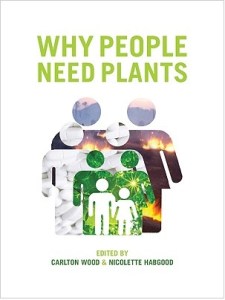
Why People Need Plants by Carlton Wood and Nicolette Habgood (2010) is a thorough reference that is sure to resonate with any audience. Here is what I like about this book:

  • It is written for a general audience and not loaded with statistics and scientific terminology.
  • Instead of saying, “We need plants for food”, Wood & Habgood (2010) provide a historical backdrop beginning with how our dependence upon agriculture began 11,000 years ago. They combine data from research studies with historical accounts to describe the botanical sources of food crops, nutrients and popular drinks such as tea, coffee, cocoa and cola. In their discussion about plants and health, they provide a great visual of “The Eatwell Plate”, the UK’s version of the USDA Food Pyramid that, quite frankly, does a better job at showing how two-thirds of the human diet should come from plants. They also make the excellent point that the dairy products we so enjoy are derived from animals dependent upon plants, reinforcing the role plants play at all levels of the food chain.
  • Instead of saying, “We need plants for wood to build homes”, the authors explain the properties plants possess that make them valuable sources of wood and many other products. For example, they explain how the cellular structure of wood makes it a good insulator, why cork’s properties makes it a good source for flooring and engine gaskets and not just plugs for wine bottles. Wood and Habgood (2010) describe the four sources of fiber found in plants and how fiber has been used to make everything from rope for sailing ships to fishing line to flexible paper for money and tea bags. They even explain how plants are used by Mercedes Benz to make automobile parts.
  • Instead of saying, “We need to save plants just in case they have medicinal value,” Wood & Habgood (2010) confirm the world’s reliance on plants for medicine by beginning their chapter about medicinal plants with a statistic from the World Health Organization indicating that “80% of the world’s population still rely on plants for their primary source of medicines” (Wood & Habgood, 2010). They go on to discuss the history of medicinal plants, the globalization of Chinese medicine, the discovery of aspirin, the discovery of the cancer drug taxol, and take a look at ethnopharmacology — the study of medicinal plants and the ethnic groups who use them — and the implementation of revenue-sharing agreements between drug companies and the communities where source plants are found.
  • Instead of saying, “We need plants for fuel,” Wood and Habgood (2010) describe the types of fuel that can be derived from plants. They explain why grass is a good source for biofuel and explain the differences between biodiesel and bioethanol using easy-to-follow graphics showing how both fuels are produced and used.
  • Wood and Habgood (2010) discuss how plants help forensic botanists solve crimes. Given the apparent popularity of crime shows, the inclusion of this information gives plants a modern edgy look even though the field of forensic botany has existed for 76 years. Pollen profiles, spore profiles and the growth habits of plants can provide valuable information when solving crimes. Broken branches and their “corrective growth” (Wood and Habgood, 2010) can reveal the route taken by criminals, pollen and spores can provide unique snapshots of an area, and plant DNA can be traced to crime scenes.
  • Wood and Habgood (2010) look at the big picture. Interesting and informative chapters about micropropagation, genetically modified plants, methods of natural plant protection, human impacts on the planet, plant conservation, and what the future of plants looks like given the need to feed a growing human population, provide a firm foundation from which to explore each of these topics in greater detail.

Citing stories taken from current news headlines, Why People Need Plants is an invaluable resource providing a succinct and comprehensive look at the relationship humans have with plants.

Why People Need Plants is available at your local independent bookstore.


Related Articles

Read Full Post »

The last student to enroll into a degree program in botany enrolled at the University of Bristol in 2010. In the current directory of the Universities and Colleges Admissions Service (UCAS) (the organization that manages student applications to college courses in the UK), the listing for “Botany Degree” has disappeared. This prompted biologist, Dr. Sinéad Drea of the University of Leicester to write the essay, The End of the Botany Degree in the UK.

Dr. Drea explains that in recent years, the University of Reading and the University of Bristol were the only universities offering a degree in botany. The University of Reading, however, dropped their degree program three years ago and the last group of botany students graduated from the University of Reading this summer (Drea, 2011).

Why is this happening?

Dr. Drea reports that enrollment in plant science courses has decreased. She shares 2009 UCAS data showing that, out of a pool of 37,000 students, only 19 enrolled in botany courses, compared to the 15,000 who enrolled in psychology courses and the 1,400 who enrolled in zoology courses. Research suggests that course titles containing the words agriculture and plant may be part of the problem as they appear to have negative effects on enrollment (Stagg, et al. (2009), as cited in Drea, 2011). It has come to the point where Dr. Drea has contemplated baiting students using the words “genes”, “mutants” and “developmental mechanisms” in course titles instead of using “the ‘p’ word” (Drea, 2011). Low enrollment figures leads to fewer students taking Ph.D. positions in botany (Drea, 2011).

Another contributing factor may be the way botanists are labeled. Dr. Drea makes the excellent point that the label “taxonomist” does not provide any indication of the many disciplines to which botanists can contribute. Botanists do more than study ecology and conserve species, even though their job description usually makes reference only to these two fields (Stagg, et al. (2009), as cited in Drea, 2011).

Vocation or lucrative career? It could be that careers in conservation are seen more as vocations than money-making careers (Drea, 2011). The preoccupation college students have with employability may cause students to assume that a “botany degree is more risky” (Drea, 2011). Becoming a medical doctor has more appeal than becoming a doctor of plants and this line of thinking has data to support it. Drea (2011) cites the ROSE study (Jenkins and Pell, 2006), a science education study completed in the UK. ROSE researchers inquired about popular biology topics and found that 15 year-old girls rated curing cancer as a top topic, while placing plant-related subjects in their list of the Top 3 Least Popular Topics (Jenkins and Pell (2006) as cited in Drea, 2011). Boys placed plant-related subjects in their Top 10 list of least popular topics (Jenkins and Pell (2006) as cited in Drea, 2011).

Then, of course, there is the issue that people do not seem to be interested in plants. More can be read about this issue in previous articles about plant blindness and the long-term impacts of this condition.

To address the growing issue surrounding the decline of courses in plant science, Drea (2011) cites the need to incorporate plants as often as possible in units about general biology, to use more plant examples in class, and to emphasize the impact plants have on human survival.

Dr. Drea’s paper is available online for free. Click on the link below.


Literature Cited

  • Drea, Sinéad. 2011. The end of the botany degree in the UK. Bioscience Education. Volume 17 (June 2011). Web. http://www.bioscience.heacademy.ac.uk/journal/vol17/beej-17-2.pdf. [accessed 15 July 2011]
  • Stagg, P., M. Wahlberg, A. Laczik and P. Huddleston. 2009. The Uptake of Plant Sciences in the UK> A Research Project for the Gatsby Charitable Foundation. The Centre for Education and Industry, University of Warwick.
  • Jenkins, E.W. and R.G. Pell. 2006. The Relevance of Science Education Project (ROSE) in England: A Summary of Key Findings. Centre for Studies in Science and Mathematics Education, University of Leeds.


You May Also Like:

Why People Need Plants by Carlton Wood and Nicolette Habgood (2010).

    .

Read Full Post »

What do botanical paintings make you do?

What is your first reaction?

Do you think about the information in the image or do you tilt your head and think, “I wonder how long that took them!”

I suppose it depends on where you’re coming from and your disposition at the time. Let’s pick another example. Let’s pretend the image before you comes from an area of science that has nothing to do with plants.

When you see an image relaying information about a topic you know nothing about, what is your first reaction?

The role images play in science communication is the subject of Eye on Biology by Maura Flannery (1988). In her article, Flannery (1988) discusses the visual aspects of biology and makes a case for incorporating visual experiences in biology to enhance student learning. She cites the work of biologists, psychologists and other scholars who believe that learning in biology requires time for both visual and mental reflection.

When I read Flannery’s article, what resonated with me the most is the notion of “thought styles”. Flannery (1988) writes that biologist Ludwig Fleck, who coined this phrase, agreed with the other scholars that images “influence thought”, but he then went on to say that images also reflect “the ‘thought style’ of the science at that time” (Flannery, 1988).

“Thought style” is a discipline’s way of presenting itself based on the “intellectual mood” (Flannery, 1988) of its members. This notion of “thought styles” made me think of Niki Simpson’s composite illustrations. Could her images be a new “mood” in botanical art?

Flannery (1988) quotes artist, Gyorgy Kepes who, when discussing the latest in imaging technology (c.1956) stated:

This new range of perception will bring us more than factual information, it will bring us new sensory experiences, enriching our vision… helping us to dissipate old ways of seeing by lifting the visual barrier between inside and outside.

Couldn’t the same be said about the “new range of perception” generated by Niki Simpson’s digitally created botanical illustrations?

Many of you read Niki’s interview during this past holiday week, so I thought it a great opportunity to ask…

  • What type of sensory experiences do Niki’s images provoke?
  • Do they enrich your vision of plants?
  • Do they help you understand plants?
  • Could the work of Niki Simpson be a new “thought style” in botanical art or is it just photography?

Tell us what you’re thinking.


Literature Cited

    Flannery, Maura. 1988. Eye on biology. The American Biology Teacher. 50(5): 300-303.

To obtain a copy of Eye on Biology, locate a library near you or purchase this article online for $14.

Read Full Post »

Niki Simpson is an artist who has been awarded many medals from the Royal Horticultural Society (four for photography and four for watercolor). In 2003, she developed a technique to create composite botanical illustrations. Simpson’s digital composite images challenge the current thinking about botanical painting’s superiority over photography. Her objective is to present “new possibilities for the future of botanical illustration” (Simpson & Barnes, 2008).

Niki studied botany for three years at university as part of her BSc degree in environmental science. She lives in the south-east of England, near the RHS Garden at Wisley. She has worked, in collaboration with botanist Peter Barnes, as a freelance botanical illustrator since leaving the RHS in 2008.

Posts about Niki’s botanical plates (Simpson and Barnes, 2008) and her use of botanical symbols (Simpson, 2010) have been featured here before. Today I am thrilled to introduce you to Niki Simpson, our Feature Artist for July.


ArtPlantae
: What is a “digitally created composite illustration”?

Niki Simpson: A digitally created composite illustration is much the same as a traditional one, in being a scientific plant portrait showing the diagnostic and characteristic features of the taxon on a white background and composed in a botanically logical, yet attractive, composition with all parts shown to an appropriate scale. Only the tools required to create it have changed. My digital illustrations are largely, but not necessarily solely, based on digital photography. Since digital versions of other illustrative material can easily be included, a digital composite illustration can be of mixed media – incorporating any combination of photographs, manipulated photographs, photomicrographs, scanning electron micrographs, digital line drawings and artwork created using a digital pen and tablet, line work created digitally from photographs, direct flatbed scans of plant material, as well as scanned versions of traditional line or watercolour work.

Working digitally means that I have control over any text component required, such as the title block, lettering of parts, scale bars, and other information relating to the taxon. In my illustrations further information includes botanical symbols, a time bar and a colour key. Of immense benefit is the flexibility that working digitally allows – I can almost endlessly re-arrange and refine my compositions until I am completely happy and, perhaps best of all, if I find a mistake, I don’t have to start the entire illustration all over again.


AP
: In 1998, you received a RHS Gold Medal for botanical watercolor. In 2003, you began to develop your composite photographic techniques. What motivated you to focus on photography?

NS: In the 1990’s I was working in the Botany Department of the Royal Horticultural Society, managing the RHS horticultural database but at the same time doing some freelance botanical painting for The New Plantsman. Working on a PC, using word processing software, databases and spreadsheets, and then turning round to pick up a paintbrush, began to seem a little incongruous and it became obvious that digital botanical illustration was a logical development. Although it seemed somewhat futuristic at the time, I thought it must be possible, although no-one seemed to be talking about it, let alone trying it. So I thought I’d have a go, though I have to say that at that point I was imagining myself drawing and painting onscreen using a digital pen and tablet. The funding I received from the Queen Elizabeth Scholarship Trust in 2003 for my experimental project, specifically included a morning’s basic photographic tuition. I had included this, because for a long time, I had wanted to be able to take better plant photographs for reference purposes. It was only when someone kindly offered to digitize a few of the resulting photographs for me and I was then able to view them onscreen, that it dawned on me that in trying to “paint” on screen I was simply trying to create what a camera could do in an instant and far better. At the time I didn’t even have a digital camera, or indeed any thoughts of getting one, and so developing my own digital photographic techniques for botanical illustration purposes since then has been a steep learning curve.


AP
: You have received many medals from the RHS for your photography. Have all your photographic entries been composite illustrations? Do you do landscapes or nature photography?

NS: Yes, the medals have all been for my digital composite images based largely on photographs. However, I do take photographs of landscapes and nature in general, but only for pleasure. I also enjoy architectural photography.


AP
: The complementary nature of digital images and traditional botanical illustrations is obvious. Yet in Simpson & Barnes (2008), you mention that some people are not comfortable combining digital media and botanical illustration in the same category. What do these individuals object to specifically?

NS: Well it’s difficult for me to say, as I am not told explicitly why, other than in general terms that digital work is “unacceptable” to them – though over the years there have been hints of digital work being inferior in some way, that using photography is cheating and taking the quick way out, and even that by working digitally I am a threat to traditional painting, at which many people have worked hard at to promote in recent years.

Whatever the reason or reasons, the fact remains that my digitally created images have not been, and are still not, generally welcome within botanical painting circles, and my work has been rejected from exhibitions of botanical art in the UK, the only reason being given being its digital nature. It was noticeable that after my first attempts to exhibit, places such as the Society of Botanical Artists, the American Society of Botanical Artists and the Hunt Botanical Institute of Botanical Documentation, began to change the wording of their submission guidelines in a way to specifically exclude digital and photographic work. In the UK, the RHS continues to keep photography and traditional botanical art separated into different shows.

Exhibiting a new genre of artwork is bound to raise some issues and obviously I have been disappointed, but perhaps things will change in the future. I look forward, as I did back in 2005, to the day when digital botanical illustrations of this kind can be at least displayed, if not judged, alongside the traditional botanical artwork to which it is the most closely allied.

I would like to point out that photographic-based work really isn’t the quick and easy option that some painters seem to think it is – each of these illustrations takes me weeks, or even months, to create. Perhaps it is simply resistance to change. To me, there seems little difference, as my images are inspired by, and are heavily based on, the values of accuracy and detail found in traditional botanical art. To me, it is the information conveyed by the image that is important, rather than the medium in which it is created.

On the other hand, I must say that I have also received some wonderfully appreciative and supportive comments from a few eminent botanical artists, and I have had requests from botanical painters asking me if I would send them my photos for reference use. One artist commented that my work is proving valuable to other botanical artists by showing them what plant parts to paint, which is flattering.


AP
: In Simpson & Barnes (2008), you discuss combining field sketches and color photographs of plant parts on one botanical plate as in Iris ‘Prophetic Message’. You also discuss adding hypertext links to botanical plates that take viewers to related data and images. Your digital techniques lay the foundation for a truly interactive, information-rich online herbarium. Do you have plans to create such an herbarium? It would be a fantastic resource if you did.

NS: Yes, my composite images lend themselves to, and indeed were originally designed for, onscreen viewing and interactive use. When magnification tools in the software are used, otherwise hidden features within the image can be revealed to the viewer – in a way that is simply not possible with a watercolour painting. If a painting is enlarged, it is simply the brushstrokes of the artist that are exposed to the viewer, while enlarging a photographic detail of a plant part can reveal all sorts of botanical detail such as hairs and other microcharacters, which may or may not be diagnostic.

I have been very interested in developing my work this way since 2006, when my first attempt was a virtual book which I produced as part of my exhibition in Berlin. This was a touch-and-turn book in which the viewer could turn the pages, pick up a virtual magnifying glass and enlarge the images, check for foreign common names, etc. However I am currently working on making my information-rich images truly interactive in another way – though I don’t want to say any more just at the moment. But I will let you know when it is ready!

My sort of images can be used as “image specimens” to supplement the dried herbarium specimen of the same plant and any photographs of habitat. Given I have pressed a voucher specimen for each of the plants I have illustrated – yes, I have frequently considered creating an interactive online herbarium of my work. However, the problem is simply a lack of funding.


AP
: Your online gallery lists 62 completed plates and 21 plates-in-progress. I assume you have to wait out entire field seasons to collect and photograph all of the elements you need for any given plate. Do botanists bring specimens to you or do you spend a lot of time in the field?

NS: My online gallery now lists 64 completed plates, which have been created over the last five years. I have 3 more now ready to be added to this list- and I am in the process of finalizing a further 2 images.

Sometimes it takes me 2 years to source, obtain written permissions, and collect all the parts I require throughout the year. Mostly I collect all the specimens myself, though sometimes others help in providing material – especially Peter Barnes and some of my old colleagues at the RHS Wisley. Peter has contributed in many ways – botanical advice, help with photomicrographs, image and caption checking, technical input, and in the creation of my website.


AP
: Many years ago, I purchased the 2001 RHS Colour Chart because I was looking for a way to categorize colors without hassling with water and paint. I read with great interest, your article, Colour and Contemporary Digital Botanical Illustration (Simpson, 2011) in which you discuss color and how digital botanical illustrations can include more color information than traditional methods of color documentation. In this article you discuss traditional ways color has been described, as well as the RHS Colour Chart and your own digital color code system.

You propose that color is as important an identifying feature in plants as are other structural characteristics — especially the inclusion of all color changes a plant experiences over the course of one year. How are you progressing with your efforts to convince those in the scientific community that your composite illustrations are valuable additions to dried, pressed (and colorless) herbarium specimens?

NS: I don’t propose it – colour has always been an important identifying feature in cultivated plants and field guides for identifying wild flowers have been arranged by colour for many years. What I have proposed is the inclusion of a colour key within this sort of composite image, in which the notable colours are referenced to a standard colour chart.

As for convincing the scientific community, I have received numerous complimentary and supportive emails about my work from botanists around the world and my images have been published in scientific/serious books and journals. Some images have been commissioned by botanists and examples of my work are now held in scientific public collections, such as the Royal Botanic Garden Kew’s picture archive, the RHS Lindley Library, and the Linnean Society of London’s image collection. However, I haven’t started a major campaign – I hope that the images speak for themselves.


AP
: You are no doubt aware of the issue of “plant blindness”. Do you introduce your work to public audiences (i.e., to audiences beyond art galleries and academia)? If you do, where do you present your work? How does the public respond to seeing the world of plants laid out for them in such a comprehensive, yet digestible format?

NS: I am aware of the issue, but I had not heard of the term, so thank you for making me aware of it – and sending the link to your ArtPlantae post, which I read with interest.

As I have said in several of my exhibitions over the years, my underlying interest is in using the power of images to attract and inform and so raise awareness of, and communicate information about, plants. So really my digital images are my way to address this issue of “plant blindness”. Highly informative scientific images are able to convey complex botanical information to the viewer, and, being largely independent of language, they can be understood by readers around the world as well as being accessible to viewers of a wide range of interest and age.

Judging from comments written by visitors to my exhibitions, the public response has been overwhelmingly positive. And I do have a new website already designed and planned…


I would like to thank Niki for discussing her award-winning digital technique with us today and for sharing an example of her beautiful and informative digital work in the header above.

In closing, Niki stated:

Digital illustration is now well-established in all other fields of scientific illustration and so for me, the future of botanical illustration lies in continuing to explore the potential of interactivity and the digital workspace. My interest is in developing botanical images for the future, to work alongside and supplement current botanical research, and especially for educational purposes.

What do you think of this new dimension to botanical illustration?

Post your comments below.


Literature Cited

  • Simpson, Niki and Peter G. Barnes. 2008. Photography and contemporary botanical illustration. Curtis’s Botanical Magazine. 25(3): 258-280.
  • Simpson, Niki. 2010. Botanical symbols: a new symbol set for new images. Botanical Journal of the Linnean Society. 162: 117-129.
  • Simpson, Niki. 2011. Colour and contemporary digital botanical illustration. Optics & Laser Technology. 42: 330-336.


UPDATE: Also see Niki at Visual Botany. (March 3, 2015)

Read Full Post »
« Newer Posts - Older Posts »