Feeds:
Posts
Comments

Archive for the ‘teaching and learning’ Category

Writer, producer, photographer, and educator, Anna Laurent, connects people with plants through her writing, research, and design work.

A native of New England and Harvard graduate, Anna moved to Los Angeles four years ago. Soon after, she became
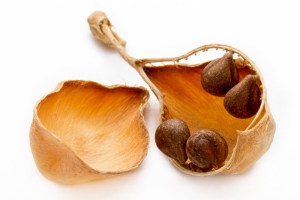
Isomeris arborea (Bladderpod). © Anna Laurent. All rights reserved

fascinated with the diversity of plants that could be found in California. Anna says it took moving to L.A. for her to notice plants.

And notice plants she has!

In 2008, Anna launched a personal project in which she began to collect seed pods (seeds and fruits) in her Hollywood neighborhood. Curious observers would occasionally ask her what she was doing. As Anna explained the seed pods she was collecting, she developed an interest in their diverse forms and universal functions. Her audience always appreciated the information she shared with them. That same year, Anna was approached by Print magazine to write a column. She chose to write a column about the form and function of seed pods and the role they play in a plant’s life cycle. She named the column Botany Blueprint and published articles about seed pods from September 2010 through June 2012. Her seed pod articles are now published on her website. Anna’s goal is to tell the stories of 100 seed pods and then publish this information, plus much more, in her new book, The Form and Function of Seed Pods (expected in 2013). The project’s geographic range has grown as she’s been partnering with botanic gardens and arboretums across the country, including Harvard’s Arnold Arboretum, Genna Walska’s Lotusland, the Hawaii Tropical Botanic Garden, and Queens Botanical Garden.

Increasing public knowledge about plants is at the heart of everything Anna does. In addition to collecting seed pods and writing for Botany Blueprint, Anna writes two weekly columns for Garden Design magazine. Her Art + Botany column focuses on plant-related art themes and her Botanic Notables column brings attention to a wide range of interesting stories about plants. Other projects she’s pursuing include a digital field guide to botanical gardens that gardens can use to teach visitors about plants and their respective collections.

I recently had the opportunity to speak with Anna about how she educates the public about plants through her creative projects.


ARTPLANTAE
: How did you come to realize that botanical literacy was something you wanted to dedicate yourself to?

ANNA LAURENT: My projects now are a culmination of my previous work. I studied literature and biological anthropology in college, in particular, evolutionary mechanisms and behaviors. I spent the next years photographing, writing, and working on documentary media projects. Finally, when I moved to L.A., my interest in the natural world returned.
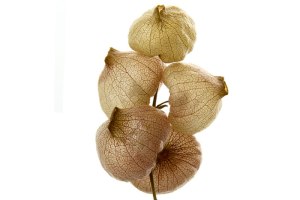
Salazaria mexicana (Paperbag Bush). © Anna Laurent. All rights reserved

The diversity of plant life in southern California — species native to tropical, desert, temperate, and riparian (water) regions – blew my mind. I realized how little I knew about the plants around me, and that didn’t seem right. So I began taking lots of walks and hikes and just looking at plants. I was fascinated by the diversity of structures — flowers and seed pods — that work in different ways to accomplish the same ends; namely, attracting pollinators, repelling predators, and dispersing seeds. I also observed the way they interact with our built environment, and with each other. One of my favorite relationships was in front of my apartment – a wisteria vine embedded around a fig tree. They were battling it out through a gap in the pavement; neither had been planted by human hand. Both plants are really strong, which was fascinating, and appropriate. It was a tableau of botanic heavyweights. Plants are quiet and slow, so finding the drama requires a bit of patience, but it’s there. Botanic gardens are a fantastic place to learn about plants, of course, and I also love observing plants in the wild – observing species that make their way through sidewalk cracks, that populate disturbed areas, that crawl over fences in abandoned spaces. It’s so thrilling when you begin to notice it all.


AP
: In what ways do you hope to promote botanical literacy?

AL: Every plant has a story, and I hope to encourage people to ask questions that begin to unravel that story. How did this individual plant happen to germinate at this particular location (e.g. Did the seed float by on a breeze?, Was it carried by an unwitting animal?)? When were the seeds of the species introduced into the region? What behaviors and structures has the plant evolved in its native habitat? What are the plant’s ethnobotanical uses? How has the plant been culturally referenced — have authors employed it as a metaphor, have countries adopted it as a national symbol?

Learning about plants offers a unifying perspective on history and space.
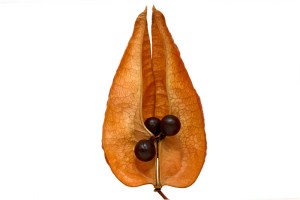
Koelreuteria paniculata (Golden Rain Tree). @Anna Laurent. All rights reserved

By following the historical arc of a plant’s evolution, and its cultural associations, we build unity between the modern era and our past. And plants also unify our disparate geographies. When I traveled to Iraqi Kurdistan last year, it was fascinating to see hollyhocks and oleander — plants I associate with southern California gardens — growing wild in the mountains and to learn about how people perceive them. Kurdistan is a pastoral region, which means that human settlements have evolved closely with plants. Knowledge is passed through generations, and plants are deeply embedded in the culture. I was told that the First Lady of Iraq was named for the hollyhock, and I heard a folk story about an early village that wielded oleander poison to defend against invasion. The oleander is still highly regarded today.

In the United States, there is a luxurious buffer between people and plants. We generally live amidst cultivated plants that don’t pose a significant threat, and we have pharmacies and markets that have packaged our plant-derived plants, so botanical literacy isn’t all that necessary for survival. At the same time, plants are nonetheless embedded in our lives, and it’s so important to understand how they behave, and what stories they carry with them.

Acacia podalyriifolia (Pearl-Wattle). @Anna Laurent. All rights reserved

In my seed pod project, I examine seeds and fruits, asking questions such as: Why is this seed red? (Often because birds are the plant’s preferred dispersal agent), Why does the seed pod stay attached to the parent plant for so long? (This often occurs in vines and plants that tend to grow on sloping areas, so when the seeds mature, they have a little momentum when they hit the ground, and will travel farther). After I collect the specimens, I photograph them and write about their form and function. I am thrilled to have partnered with botanic gardens, receiving permission to collect at their gardens. I then put together an exhibit of the photographs to promote the garden’s collection and educational mission.


AP
: Your mobile field guide app project is very interesting. Can you describe briefly what you would like to accomplish with your guide?

AL: I wanted people to have access to the stories behind each plant. When you visit a botanical garden, you see a plant in a single cycle of its life,
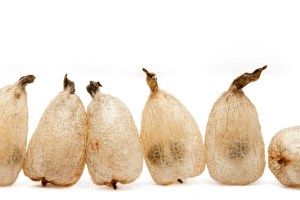
Astragalus fasciculifolius (Milkvetch). © Anna Laurent. All rights reserved

and there is rarely room for more than a name label. The digital field guide will enable visitors to view all aspects of a plant’s life cycle and to learn more about the plant. Plants can be identified through a map of the garden, but the app can also be used off-site to browse plant profiles. I find botanic field guides to be lovely bedtime reading.


AP
: How did you get started in journalism?

AL: I’ve always been a writer, and writing has been a significant component of everything I’ve worked on — companion content for photojournalism essays, grants for documentary films, typeface reviews for Print magazine. My writing now is really no different, I am just doing a lot more of it, and I am able to focus on one broad topic that I love. I’m really enjoying figuring out how to describe plants in new ways, and the process of writing about them inevitably gives me a greater appreciation of the species in particular and the plant world in general.


AP
: What have you been working on lately?

AL: For the past year, I’ve been working on a documentary media project, The Iraqi Seed Project. Looking at the agricultural landscape in modern-day Iraq and Kurdistan, it asks why farming is disappearing in the land where it was born. We bring into focus the region’s botanic legacies and current efforts to restore the Fertile Crescent. We just launched a website with clips from three years of filming. The video player is poised over a farm with seeds of the region’s historically major crops. We call the site a collective garden; every time a video is watched, a plant grows a little bit. The idea is that by learning about Iraq’s farmers and plants, we are helping their crops grow anew. It’s a nice metaphor.

Aristolochia fimbriata (White-Veined-Dutchman’s-Pipevine). © Anna Laurent. All rights reserved


Links updated 8/22/19

In Memoriam – Anna Laurent (1979 – 2024)
https://www.instagram.com/anna__laurent/

Read Full Post »

To bring attention to the shapes of leaves, flowers, and the types of fruit a plant produces is a fairly straightforward process. The usual approach is to point, name and label.

But how do you teach people to see color?

This week we look at an activity that goes beyond asking, “What color is it?”

The key question today is, “Can you find this color?”

In Nature’s Palette, authors and educators, Brooke B. McBride and Carol A. Brewer describe how they turn students into explorers in search of color.

Using the color cards readily available in the paint aisle at home improvement stores, McBride and Brewer (2010) create field cards for students to use in outdoor investigations. With these cards in hand, students are assigned the task of looking for natural objects matching the colors on their respective cards.

What makes this activity more than one requiring students look for green, red and yellow, is that McBride and Brewer (2010) do not create cards with predictable color schemes. Instead, they collect a broad range of colors from the paint aisle. To make sure they collect a broad selection, they pull “every fifth or tenth paint chip” as they work their way down the aisle. When they pull a chip containing many shades of color, McBride and Brewer (2010) simply cut the cards to separate the shades.

To make the reference cards their students use in the field, McBride and Brewer (2010) cut the poster board down to a size that is easily transported. They then paste 5-10 colors on each sheet of poster board. One board is then given to each group of 2-4 students. To get students excited about their investigation, McBride & Brewer (2010) engage students in conversations about where they may find the range of colors before them and encourage students to match the colors as best they can. They also remind students to collect only natural items, not manmade items, and remind students that what they collect has to fit on their piece of poster board. The reason for this is that when their investigation ends, students must present their posters and their observations to their classmates.

McBride and Brewer (2010) have found that students need only 25 minutes to conduct successful color searches and to collect specimens matching the colors on their assigned color card. They go on to say the number of natural objects students find in 25 minutes has been “mind-boggling and far surpassed” their expectations.

During the poster presentations, McBride & Brewer (2010) ask the following types of questions to help guide student discussions:

  • Which color did you observe the most? Which color did you observe the least often? What was the most unusual color you found?
  • Which of your senses did you have to rely on during your search? How did you find the objects you collected?
  • What is the most interesting object your group found? What makes it so interesting? What do you think it is?

The authors have found these questions, and this activity, helps students “focus and observe with a purpose” (McBride & Brewer, 2010).

Readers, how do you help others see nature’s colors?
Share your stories in the Comment box below.


Literature Cited

McBride, Brooke B. and Carol A. Brewer. 2010. Nature’s palette. Science and Children. 48(2): 40-43.

Visit your local college library to get a copy of this article or purchase a copy online (99¢).

Read Full Post »

Know your veggies.
Eat your veggies.
Draw your veggies.

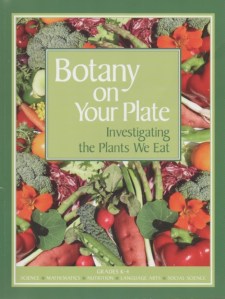
Making vegetables and plants irresistibly interesting to the next generation is the goal of Botany on Your Plate: Investigating the Plants We Eat, a ready-to-use curriculum written by Katharine D. Barrett, Jennifer M. White and Christine Manoux.

The eight interdisciplinary lessons in this book written for K-4 students are based on the Grocery Store Botany program taught at the UC Botanical Garden Berkeley. Each lesson includes a materials list and instruction on how to lead students to an understanding of plants through inquiry. Drawing is an essential part of each lesson and clearly enhances student observation skills and student understanding of plants and how they grow. Here is a summary of each lesson:

  • Lesson 1: Let’s Become Botanists! – During this lesson, teachers will determine students’ prior knowledge about plants and learn about the plants their students eat. Students create the botany journal they will use throughout the unit and learn about the “plant snack process”. A recurring feature, the “plant snack” activity encourages students to “taste and describe” the fruit and vegetables they are learning about.
  • Lesson 2: Roots – Students learn about roots and their function through observation, dissection and drawing. Suggestions about how to relate this lesson to math, nutrition, cooking, social science, language arts and plant propagation are provided.
  • Lesson 3: Stems – Students learn about stems and how water and nutrients travel through plants while dissecting and drawing stems. Students learn about the scientific process while conducting an experiment and learn about products made from stems. Suggestions about how to relate this lesson to math, nutrition, cooking, social science and language arts are provided.
  • Lesson 4: Leaves – Leaf structure and photosynthesis are the focus of this lesson. Dissection and drawing again play an integral role. Suggestions about how to relate this lesson to math, nutrition, social studies and language arts are provided.
  • Lesson 5: Flowers – Students study flowers and learn about pollinators while dissecting flowers and drawing floral structures in their botany journals. Suggestions about how to relate this lesson to math, nutrition, pollination ecology, cooking, social science and language arts are provided.
  • Lesson 6: Fruit – A study of two types of fruit leads to discussion about seeds and seed dispersal. Suggestions about how to relate this lesson to math, nutrition, ethnobotany, social science, cooking and language arts are provided.
  • Lesson 7: Seeds – In this lesson, students explore seeds in more detail. They learn about a seed’s function through dissection and drawing. Suggestions about how to relate this lesson to math, nutrition, cooking, gardening, social science, and language arts are provided.
  • Lesson 8: Plants – Top to Bottom – A recap of the many elements in this unit, students end the eight-lesson series drawing and writing about plants in their journals.

Background information about plant biology is provided for teachers, as are copies of the handouts required for each lesson. A helpful glossary is also included.

Botany on Your Plate: Investigating the Plants We Eat is an invaluable resource that should be in every classroom or at least in every school library.


Literature Cited

Barrett, Katharine D. and Jennifer M. White and Christine Manoux. 2008. Botany on Your Plate: Investigating the Plants We Eat. Burlington, VT: National Gardening Association.


Related Topics

Read Full Post »

Visit The Botany Studio

Kandis Elliot is the Senior Artist at the Botany Studio at the University of Wisconsin, Madison (UW). Kandis creates the stimulating educational posters The Studio publishes and distributes to educators all over the world. The poster Introduction to Fungi by Kandis and colleague Dr. Mo Fayyaz was recently awarded First Place for Informational Graphics in the eighth annual International Science & Engineering Visualization Challenge 2010 sponsored by the journal Science and the National Science Foundation.

Prior to her current position as Senior Artist, Kandis earned her BA (1970) and MS (1980) degrees at the UW, and worked as a faculty assistant in the Biology Core Curriculum, prepping labs and helping to teach courses in zoology, botany, physiology and other biological subjects. During those years, Kandis (one of those “artsy” kids in grade school) was often called on to illustrate lab manuals — thus giving her experience in, and a taste for, scientific illustration.

In 1988 Kandis earned an Associate Degree of Applied Arts at Madison’s tech school, where she developed skills in preparing graphics and text for publication. When Botany’s illustrator position opened, Kandis applied for the job at once, knowing that the computer age was dawning for scientific illustration, even though she did not yet use a computer for graphics. When she was hired as the new Senior Artist, Kandis marched into the Macintosh lab at UW-computing, held up a $100 bill and yelled, “who wants to teach me this stuff?” Four hours later she had the basics of Adobe Illustrator and the rest is history.

Kandis now specializes in scientific illustration, typesetting and design. She uses her computer savvy to create educational posters, brochures, books, journal figures and information graphics for professors, students, and the occasional private client.

Please welcome March Feature Artist, Kandis Elliot!


ARTPLANTAE: When was the Botany Studio established?

KANDIS ELLIOT: I gave the studio its name when I began working here in 1988. The UW was founded in 1848, when all “natural history” departments in higher-education institutions had artists on staff. Back then, illustrations were done in pen and ink. Now illustrations are done on a Mac using a Wacom tablet and photography is done with a digital camera.


AP: Are the posters created for a specific class on campus or are they always created for a broader audience?

KE: They are created primarily for our departmental use, but work for a general audience as well. When Dr. Mo Fayyaz, the UW-Botany Greenhouses and Garden Director, wanted signage he could use with school groups and that could also be used in the college classroom, we were off and running with colorful visual posters that had a bit of botany tucked in.

We only produce about one or two posters per year because we work on these projects on our free time. The posters are printed in the studio when ordered via our website. They are printed on heavy semigloss 260-lb. paper using archival pigmented inks. Since earning First Place for Informational Graphics, we have been swamped with orders. The Botany Studio is now setting up a credit-card webstore to get past the snailmail bottleneck.


AP: The Botany Studio posts an hourly rate for non-departmental projects. Does this mean instructors from outside the University of Wisconsin can work with the Botany Studio?

KE: Yes. We have done work for our Department of Natural Resources — our “fish and game” environmental agency. We’ve also done work for wildlife groups, prairie enthusiasts, and parents of Girl Scouts. All of these projects are done on our own time or the rare free time.


AP: How many hours of free time do you set aside for the posters?

KE: About one day per week. I work four days (I’m a part-time employee) and then spend one day working on outreach projects.


AP: How long does it take to take a poster from concept to finished product?

KE: The easy ones only take a month. “Fungi” took nearly 6 months, including my crash course in fungology.


AP: How do you make a scientific illustration?

KE: When dealing with living or preserved material, we start with digital photos and/or scans. These are either retouched for clarity or completely “repainted” in Photoshop to create a more stylized figure. Often I need to make a diagram or “cartoon” with copious labels to accompany the image so that parts of, say, a micrograph, can be identified. If I don’t have excellent reference material, I take some mind-reading pills and go the science fiction route. Of course, this sort of mojo has to be fussed up to; scientific journals will not accept photos adulterated in any way unless they are send as an “illustrative concept figure.”


AP: You compose books in the Botany Lab. What types of books do you create?

KE: Textbooks, field guides and more. For example, we created a field guide for the spring woodland wildflowers for the UW-Arboretum, going out and digitizing all the flowers as they came into bloom (what a way to make a living!). We went on to make a much larger guide to prairie plants. These books are sprinkled with nifty extra tidbits about various species and esoteric but cool stories known by our faculty and staff that are normally shared only with botany students.


AP: Which software programs do you use to create the posters?

KE: I use all Adobe products–industry standard, and required by the publishers with whom we work.


AP: Do you paint or draw in your spare time?

KE: What’s “spare time?” No, seriously, I used to paint portraits of folk’s pets in the 1960’s and charge $25 per painting. It helped pay my tuition back in those knee-jerk reactionary hippy days. Over the years my vision slowly circled the drain (I was stabbed in the eye with a busted bottle when I was a kid) and could do less and less handwork. However, a giant monitor and the Wacom tablet let me keep illustrating.


AP: Do you have any advice for botanical artists who want to learn how to draw on the computer?

KE: Learn the same way I did. Glom on to someone who does it and get a couple hours of basics. Then play with Photoshop — press all the buttons, see how long it takes to crash the computer, that sort of fun. When you get a little experience, a one-day class is useful for filling in the gaps.


AP: How does working on a tablet differ from working on pen and paper? What are botanical artists most likely to notice during the first two hours of working on a tablet?

KE:

  • You don’t need to apply nearly as much pressure with a stylus.
  • Lots of gee-whiz feedback. The look and color of a digital drawing are the same or better, given the millions of colors available, and the multitude of effects you can do.
  • You don’t experience the texture of a paper or canvas surface. You are able to draw on a tablet with your pen floating above the surface of the tablet.
  • You have to get used to working without turning your tablet like you may be accustomed to turning your paper.
  • Digital painting creates flat prints. The image may look great, but the physical texture of paper, canvas, paint gobs, etc., are absent. On the other hand, if you wish you had stopped painting 25 strokes ago, you can undo these 25 strokes in your History Palette. And let’s sing the praises of that “forgiveness of sins” button (CMD-Z or CTRL-Z)!
  • You have more options with a digitizing tablet. You are not stuck with a static drawing. Working with a digitizing tablet is much more satisfying for artists who want to work quickly, not inhale fumes, and like to try several variations without losing any of the stages.
  • And keep buying those lottery tickets so you can afford the loaded computer, tablet, camera and quality printer you’ll need for the perfect digital graphics experience.


Get Your Posters!

The Botany Studio has created ten beautiful and informative posters. Enlarged images of each poster can be viewed on the Studio’s website.


Ask The Artist with Kandis Elliot

Kandis will hold office hours this month. She will respond to readers’ questions and comments on March 4, 11, and 25. You are invited to post your questions in the comment box below and to follow the conversation as it progresses.

As always, you do not need to leave your full name. Your first name or a username will do.


What would you like to learn from Kandis?


Read Full Post »

« Newer Posts