Feeds:
Posts
Comments

Archive for the ‘Special Events’ Category

Take advantage of the opportunity to ask Anna questions and to learn from this award-winning artist and teacher. You have read my interview with Anna, now it’s your turn to ask Anna questions.

Submit your questions to us this week and Anna’s replies will be posted on
August 22, 2011. Please send your question(s) to education@artplantae.com.

All questions are due by Friday August 12, 2011.

We look forward to hearing from you!

Read Full Post »

Stephen Joseph, Herbarium Print. California Polypod, Polypodium californicum. Polypodiaceae. Hab. Sierra Nevada, California. Collected by John Muir. 1875

The Oakland Museum of California (OMCA) presents A Walk in the Wild: Continuing John Muir’s Journey, on view August 6, 2011, through January 22, 2012, in the Museum’s Great Hall. In this provocative new exhibition, OMCA celebrates the legendary naturalist’s life, work, and legacy in California and beyond. Told through OMCA’s collections of art, history, and natural science, as well as interactive digital technology and extensive loans―Muir’s journals, manuscripts, original drawings and plant collections―the exhibition pays tribute to the “Father of the National Parks,” whose legacy continues to inspire environmental stewardship in California today.

Through interactive, multisensory displays, A Walk in the Wild invites visitors to explore the vast natural environment of California and experience the sights, sounds, and smells that Muir encountered during his explorations. Through video and interactive technology, visitors will be able to meet “Modern Day Muirs” and learn about their work and motivations. The featured Modern Day Muirs include: Shelton Johnson, Yosemite National Park ranger; John Wehausen, wildlife biologist; Dune Lankard, Alaskan environmental activist/fisherman; Rick Deutsch, Half Dome hiker/author; Jean Krejca, cave explorer; Greg Stock, Yosemite National Park geologist; Steve Sillett, redwood canopy researcher; Tori Seher, Yosemite National Park bear biologist and Alcatraz bird biologist; and Kemba Shakur, tree planter for Oakland Relief.

“This exhibition is filled with wonder and discovery,” says guest curator Dorris Welch. “We all have many things to learn from John Muir’s legacy. To be able to honor and bring John Muir’s legacy into a modern-day light is an extremely important thing,” Welch says of the OMCA-exclusive show.

A Walk in the Wild: Continuing John Muir’s Journey is made possible by generous support from the Oakland Museum Women’s Board, The Bernard Osher Foundation, the J.M. Long Foundation and the University of the Pacific Library, John Muir Papers, Holt Atherton Collections/Muir-Hanna Trust.

The museum is located one block from the Lake Merritt BART station on the corner of 10th Street and Oak Street. The accessibility ramp is located at the new 1000 Oak Street main entrance. Daily hours and admission information are available online at the OMCA website.
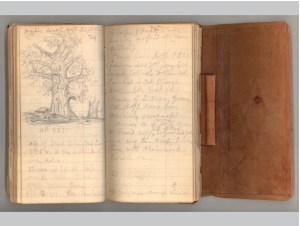
Journal. Yosemite Journal, 1872. John Muir Papers, Holt-Anderson Special Collections, University of the Pacific Library. ©1984, Muir-Hanna Trust.

Read Full Post »
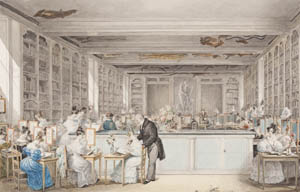
Julie Ribault (1799-c.1839) Redoute's school of botanical drawing in the Salle Buffon of the Jardin des Plantes, Paris, watercolour over graphite © The Fitzwilliam Museum

The “Raphael of flowers”, Pierre-Joseph Redouté (1759-1840), internationally famous for his prints of roses and lilies, was the finest botanical draughtsman of his age. In France he had a prestigious reputation in his own time, working for the Royal court both for Queen Marie-Antoinette and then for the Empress Joséphine following the French Revolution.


Flower Drawings: Redouté and his Pupils
is a collection of work from the Fitzwilliam Museum’s prestigious Broughton collection of flower paintings and drawings showing the legacy of Redouté as an artist and teacher through a dual display of his work and works by some of his most accomplished students. Redouté had over 80 pupils, most of them women, enrolled in his school of botanical drawing. Many of his students became professional painters of flowers. The exhibition will also celebrate the recent acquisition of a watercolour by artist Julie Ribault (see above). Painted in 1830, Redouté’s school of botanical drawing in the Salle Buffon of the Jardin des Plantes has not been exhibited since it was first shown at the Paris Salon of 1831.

Director of The Fitzwilliam Museum Dr Timothy Potts commented: “We are delighted to be showing this wonderful exhibition of flower drawings by Redouté and his pupils. Thanks to the bequests of collector and outstanding maker of gardens Major Henry Broughton in 1966 and on his death in 1973, the Fitzwilliam has one of the most splendid collections of flower paintings and drawings of any Museum in the country and the most important collection of Redouté drawings in the UK. The Fitzwilliam mounts an exhibition of the more delicate works on paper from the Broughton collection every three years, and we hope all will enjoy this charming and varied selection of flower drawings.”


Flower Drawings: Redouté and his Pupils

The Fitzwilliam Museum
Shiba Gallery
Hours: 10 AM – 5 PM (Tues – Sat); 12 – 5 PM (Sunday & Bank Holiday Mondays)
ADMISSION FREE

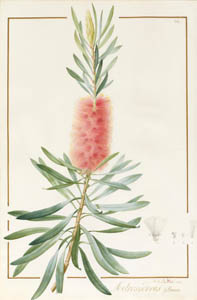
Pierre-Joseph Redoute. Metrosyderos glauca (1812). Drawing (watercolor & bodycolor over graphite on vellum, margins ruled in red and gold ink). © The Fitzwilliam Museum

Read Full Post »

The following tours and lectures will be offered during The Hunt’s 50th anniversary celebration. Learn more about this special event by reading, Botany and History Entwined: Rachel Hunt’s Legacy.


Hunt Institute for Botanical Documentation

http://huntbot.andrew.cmu.edu
The Hunt Institute for Botanical Documentation, a research division of Carnegie Mellon University, specializes in the history of botany and all aspects of plant science and serves the international scientific community through research and documentation. To this end, the Institute acquires and maintains authoritative collections of books, plant images, manuscripts, portraits and data files, and provides publications and other modes of information service. The Institute meets the reference needs of botanists, biologists, historians, conservationists, librarians, bibliographers and the public at large, especially those concerned with any aspect of the North American flora.

  • USDA Botanist B.Y. Morrison and His Forward-thinking Secretary, May Blaine – Sunday, September 18, 2011; 2:00 PM. Archivist Angela Todd will present Morrison’s sketches and ink drawings of private and public gardens in Asia dating back to 1915 when he received a travel fellowship from Harvard. His lively drawings exist today because of the encouragement of his secretary, May Blaine. As women entered colleges and universities but did not rise to the ranks of scientists, those degreed women taught high school botany and worked as secretaries, lab assistants and wives. The women in the USDA secretarial pool all had post-secondary schooling, including Blaine. She was secretary to the head of the Department of Plant Exploration and Introduction from 1918 to 1955, serving eight different heads, including Morrison. Blaine not only sent her private correspondence with and short biographies of USDA explorers and botanists to Hunt Botanical Library but also convinced Morrison, who saw no need to preserve his legacy, to send his drawings, too.
  • Gallery Tour of the Reading Room’s Antique Furniture – During Carnegie Mellon’s Cèilidh Weekend, Curatorial Assistant Catherine Hammond will give a gallery tour on Saturday, October 29, 2011 (2:00 PM), and Publication and Marketing Manager Scarlett Townsend will give a tour on Sunday, October 30, 2011 (2:00 PM), of the antique furniture in the reading room which was designed to capture the essence of Rachel Hunt’s personal library. The herbals, the autograph letters and the Redouté paintings were important elements of her original collection, but equally important to her was the setting in which these items were enjoyed. She did not want her new library to look common or commercial. With the help of Harold LeBaron, her longtime interior decorator, and George H. M. Lawrence, our founding director, she chose items reflecting her tastes and personality.
  • Pierre-Joseph Redouté and His Collaboration with Botanists – Sunday, November 6, 2011; 2:00 PM. Curator of Art Lugene Bruno will discuss the work of Pierre-Joseph Redouté (1759–1840) who is considered to be the most famous flower painter of the 19th century. Redouté exhibited his floral bouquets in the Paris Salon and illustrated some of the most beautiful color-plate folios ever produced. What is less known is the work that Redouté created for many important botanists of his era. This talk will include his work for Charles Louis L’Heritier (1746–1800), who was the first to recognize that Redouté’s talent could be channeled into creating scientific illustrations that would compliment botanical texts, which helped to launch Redouté’s multi-faceted career. Prints by Redouté from a selection of publications will be on temporary display during the talk.
  • At the Center of the Network: Dutch Botanist Carolus Clusius (1526-1609) – Sunday, December 4, 2011; 2:00 PM. Librarian Charlotte Tancin will lead a discussion about botanist, traveler, writer, correspondent and exotic plant and animal enthusiast, Clusius, who used his vast personal network to gain and spread information, exchange seeds and plants, and advance knowledge of the natural world. His career touched all four subject areas of our 50th anniversary exhibition: herbals, gardens, botany and travel and exploration. His stature and legacy made him a major figure in the history of botany and plant introduction and thus a natural subject of interest for Rachel Hunt.

This information has been added to Classes Near You > Pennsylvania.

Read Full Post »

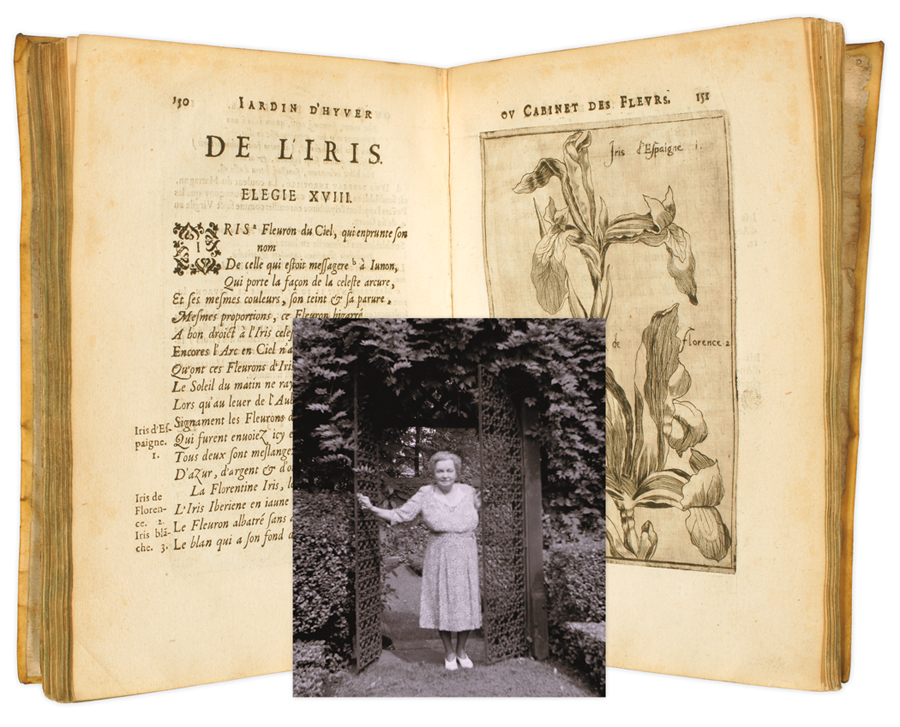
Bouquet of flowers, watercolor on vellum by Pierre-Joseph Redouté (1759–1840). This bouquet was painted by Pierre-Joseph Redouté in his final year and was acquired by Rachel Hunt in the last year of her life, capping a history of collecting Redouté items one at a time over decades, including portraits and handwritten letters. © Hunt Institute

In celebration of their 50th anniversary, the Hunt Institute for Botanical Documentation will present rare gems from the original collection of founder, Rachel McMasters Miller Hunt (1882–1963). Hunt’s early love of nature and books grew into a lifelong pursuit of rare or historical works about plants, gardens and botany. She became fascinated by the people associated with these books and also collected their portraits, letters, manuscripts and original artworks.

Dedicated in 1961, the Rachel McMasters Miller Hunt Botanical Library was envisioned as a research center focusing on the history of botany and the history of botanical publication and as a repository where her collections would be preserved, curated, augmented and made accessible to researchers. By 1971 the organization had so diversified that it was renamed Hunt Institute for Botanical Documentation with four programmatic departments of Archives, Art, Bibliography and the Library. In the last fifty years Rachel Hunt’s original collection has been substantially augmented in all four departments. In accordance with the Hunts’ original vision of a living collection with public availability, the Institute maintains a regular exhibition and publication program and accessibility for research on a variety of scientific and cultural subjects related to the plant sciences.

Beginning with Rachel Hunt’s early interest in books, bookbinding and collecting, the materials on display in this exhibition are divided by subject and reflect her interests in the history of the herbal, the development of gardens and garden plants, the foundation of botany as a science and the botanical discoveries made through travel and exploration. The exhibition concludes with the foundation of the Hunt Botanical Library, its evolution to Hunt Institute for Botanical Documentation and descriptions of key aspects of the four departments. A color-illustrated catalogue will accompany the exhibition.

Inset, Rachel Hunt standing at her garden gate at Elmhurt. Rachel Hunt purchased this early gardening manual at the first book sale that she attended. © Hunt Institute


Botany and History Entwined
Rachel Hunt’s Legacy

September 16 – December 15, 2011
Hunt Library,Carnegie Mellon University (5th floor)

Hours: Monday–Friday, 9 a.m.–noon and 1–5 p.m.; Sunday, 1–4 p.m. (except 20 and 24–27 November).

Admission: Free

(Note: Hours of operation are occasionally subject to change, please call or email before your visit to confirm their hours. For further information, contact the Hunt Institute at 412-268-2434.)

Read Full Post »

Today I write to you from the annual meeting of the Guild of Natural Science Illustrators (GNSI). Illustrators and biologists have gathered in Olympia, Washington to learn about new techniques, new research and to catch-up with old friends. I have had the wonderful opportunity to meet people with whom I have an established email history. How nice it has been to finally meet them in person!

While only 24 hours have transpired on this very quick visit, I have been inspired several times over and have learned so much. My conference experience began with the Portfolio Sharing session. During this type of a session, illustrators open up their portfolios and discuss their work with others. On view are items such as educational posters, botanical illustrations, medical illustrations, textbook illustrations, instructions about how to use medical equipment, and other images representing the many ways scientific information is presented visually to the public. This session reminds you of how much of what we know and understand about the world is because a scientific illustrator helped us see it and understand it. Look around you. What did you learn from a scientific illustrator today?

As with any conference, there are so many learning opportunities and not nearly enough time. I have learned about the art, science and cultural connections between people and crows from Dr. David P. Craig, humpback whales from Dr. Fred Sharpe, aquatic insects from Dr. Carri J. LeRoy and the art of papercutting from artist, Nikki McClure. At the Techniques Showcase I saw demonstrations about lettering in pen & ink by Trudy Nicholson, how to work with Denril vellum by Alice Tangerini, pen & ink techniques by Marjorie Leggitt, and the art of scrimshaw by Captain Suzan Wallace. I also saw examples of colored pencil illustrations on coquille paper by Scott Rawlins, spoke with Kristie Bruzenak the conference chair of the 2012 GNSI Conference and created a card with a linoleum stamp created by printmaker, Sylvia Portillo.

All of this was followed by yet another heavy dose of inspiration at the opening reception of the annual GNSI exhibition.

Today, I go back for more.

Read Full Post »

Picturing Science: Museum Scientists and Imaging Technologies
American Museum Natural History
June 25, 2011 – June 24, 2012

This exhibition brings attention to several areas of research conducted at the American Museum of Natural History. Curator Mark Siddall, from the Division of Invertebrate Zoology, has collected 20 large-format images showcasing the types of optical tools museum scientists use to view their subjects in new and exciting ways. View selected images and watch an interview with Siddall at Picturing Science: Museum Scientists and Imaging Technologies.

While on the museum’s website, also read Science Illustration at the Museum, an article published last week about traditional science illustration techniques.

Read Full Post »

« Newer Posts - Older Posts »