Feeds:
Posts
Comments

Archive for the ‘Special Events’ Category

Asclepias tuberosa (Butterfly Weed). © Shawn Sheehy. All rights reserved

Say the phrase “pop-up book” to people and often the first thing to pop (pun intended) into people’s minds are children’s books with animal characters, pull tabs and that creaky noise pop-up books tend to make.

However pop-up books are not just for children. In fact, the earliest form of this book was created for adults, not children (Van Dyk et al., 2010). And while we may like to think that pop-ups are a modern-day invention, this format has been in existence for 800 years (Van Dyk et al., 2010).

Shawn Sheehy is an environmental educator and a book artist whose specialty is pop-up books about the environment. Through his work, Shawn brings attention to ecosystems and ecological topics such as population dynamics, resource allocation and speciation.

Shawn has a degree in education and a Masters of Fine Art in Book and Paper Arts. He has taught English to second graders in Mexico, environmental studies at YMCA camp, and various community-level arts and crafts classes.

Shawn began teaching classes in the book arts while in grad school. Over the years, he gradually shifted the focus of his classes to paper engineering because he likes the challenge of teaching this subject.

Shawn’s next workshop will occur on September 27 in Salt Lake City. His workshop will precede the meeting of the Moveable Book Society. In this workshop, Shawn says he will “focus on integrating pop-up structures with movable structures, with the goal of creating a sense of animation in the pop-ups.”

Shawn will also teach two classes about vegetable pop-up cards on October 26 and November 2 at the Chicago Botanic Garden. Then in April 2013, he will teach his wildflower workshop at the Chicago Botanic Garden. Information about these learning opportunities can be viewed in Shawn’s listing at Classes Near You > Illinois.

Join me in welcoming Shawn Sheehy, our featured guest for September!


Literature Cited

Van Dyk, Stephen, Elizabeth Broman, Ellen G. K. Rubin, Ann Montanaro and Elizabeth Periale. 2010. Paper Engineering: Fold, Pull, Pop and Turn. Brochure. The Smithsonian Libraries Exhibition Gallery, National Museum of American History. Washington, DC. June 2010 – October 2011. Web. http://www.sil.si.edu/pdf/FPPT_brochure.pdf [accessed 31 August 2012]
Read Full Post »

Drawing is not about making pictures, but it is about learning to see through drawing.

— Ila Crawford

In Art Instruction in Botany Lab, Lyn Baldwin and Ila Crawford investigated how drawing changed the way botany students learned in a traditional botany lab. This year, they are investigating the reverse — how students in a traditional art class will react to the study of botany.

In a recent article, Does the Science of Botany Need Art? Does Art Need the Science of Botany?, Baldwin and Crawford write about how the disciplines of art and botany can benefit from each other. To make their points, Baldwin (a quantitative field botanist) explains why “the science of botany needs the joy of art” and Crawford (a visual art instructor with 20 years experience) explains the reasons why plants have a “legitimate place in art education.” Their article is a must-read if you’re interested in how drawing can be used to encourage an interest in plants.

Written as a backdrop for their current research about incorporating botany into art class, it also serves as an announcement for an exciting new exhibition for which Baldwin and Crawford are the curators. The exhibition they have created explores the idea that “art inhabits the teaching and practice of botany, and conversely botanical subjects and scientific methods have a legitimate place in teaching and practicing art.”

Lyn Baldwin and Ila Crawford have announced the call for entries for this exhibition and they would like to invite you to participate. The wonderful thing about this exhbition is that it is open to not only artists, but to botanists as well!

Here is a summary:

Art and Science: Drawing and Botany
Canadian Botanical Association
June 5-25, 2013

Invited: Artists, botanists, and groups of artists and botanists working on special projects (10 or more individuals)

Submissions: Three maximum for individuals; one per member for group submissions. Only original work will be accepted, no reproductions. Sketchbooks will be accepted. Only digital images will be accepted for the jurying process.

Entry Fee: $10 per registration ($10 covers up to three works)

Deadlines: Individual submissions (March 29, 2013), Project-based submissions (January 15, 2013)

For additional information about digital submissions, artist’s statements, insurance and more, visit Art and Science: Drawing and Botany.


Literature Cited

Baldwin, Lyn and Ila Crawford. 2012. Does the science of botany need art? Does art need the science of botany? Canadian Botanical Association / L’Association Botanique du Canada. CBA/ABC Bulletin. 45(1): 10-13. Web. http://www.tru.ca/cba-abc/art.html [accessed 16 August 2012]

Read Full Post »

Natural History Journals

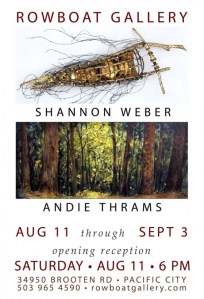
Folded books by artist Andie Thrams are on view at the Rowboat Gallery in Oregon. The collection on view was inspired by Andie’s field studies and creative projects.

Also on view are the rattan forms of basket maker and mixed media artist, Shannon Weber.

Both exhibitions can be enjoyed through September 3, 2012.

Information about Andie’s workshops, travel tours and personal creativity coaching can be viewed at Classes Near You > Northern California.

Read Full Post »

It is the beginning of a new school year. Today I asked Linda Ann Vorobik if she had any advice about how K-12 teachers can make their lesson plans about plants more exciting for students.

Here is her reply
.


What do you think?

Read Full Post »

Today the conversation turns to freelance illustration. I asked Linda Ann Vorobik if she had any professional advice for individuals entering the field of botanical illustration or natural science illustration. She replied:

Keep your day job. OR, if you are impassioned, know that you may be “suffering, if you want to sing the blues”. I was fortunate in that I followed my passion during a time when there were finances that allowed me to do so. My first job after college was supported by a grant (I worked as a technician transcribing rare plant data for The Nature Conservancy). The work was still work, but it allowed me to think about my intellectual love: botany. Later I received a fellowship that supported my graduate work. Granted I still worked half-time during my schooling, and WORKED to get my PhD, but I think it is a tougher world out there now for young people. And although I have been busy, I have never acquired an income that comes close to supporting a comfortable life. I have an interesting life, and am very grateful for it.

Another bit of advice: couple your training as a natural science illustrator with some complementary training, for example, in the sciences (like what I did), or graphic arts. Or, there is always marrying well!


Do you have any insights to share about life as a freelance illustrator?

Share your thoughts here…

Read Full Post »

New Jersey State MuseumBotanica Magnifica:
Photographs by Jonathan Singer

New Jersey State Museum
April 21 – August 26, 2012

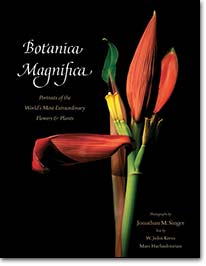
Inspired by the work of both early and contemporary botanical artists, photographer Jonathan Singer set out to develop a digital photography technique that would capture a viewer’s emotions through lighting and detail, and surpass “the capability of brush and paint” (Singer et al., 2009). In 2009, Singer’s now-famous photographs were published in Botanica Magnifica: Portraits of the World’s Most Extraordinary Flowers & Plants.

Selections from the five-volume, baby elephant folio-sized Botanica Magnifica are now on view at the New Jersey State Museum. Launched earlier this year, Botanical Magnifica: Photographs by Jonathan Singer has been presented as a two-part exhibition. This approach enabled the museum to display more pieces from Singer’s collection. On view since January 28, the exhibition is now in its last three weeks and will close on August 26, 2012.

To view the spectacular photography of Jonathan Singer, whom many refer to as a modern-day John James Audubon, visit the New Jersey State Museum in Trenton, NJ Tuesday through Saturday from 9:00 AM – 4:45 PM.

Botanical Magnifica: Photographs by Jonathan Singer is curated by guest curator, Dr. Karen Reeds, a Harvard-trained historian of science and medicine and an independent exhibition curator. Reeds is also the author of When the Botanist Can’t Draw: The Case of Linnaeus, an article that was featured in the teaching and learning column last year. In her article, Dr. Reeds discusses Linnaeus’ preference for descriptive text over botanical illustrations. In November, Dr. Reeds will present Mark Catesby and his Botanical Forerunners at a special symposium celebrating the contributions made by this 18th-century artist and naturalist.


Literature Cited

Singer, Jonathan M. and W. John Kress, Marc Hachadourian. 2009. Botanica Magnifica: Portraits of the World’s Most Extraordinary Flowers & Plants. New York: Abbeville Press.

Read Full Post »

Botany is a discipline heavy with terminology. It is also a boring subject to many people. How can botany become more a more palatable subject for the non-botanist?

I asked featured guest Linda Ann Vorobik how she teaches botany to people who are learning about plants for the first time.

Here is what she had to say…

Read Full Post »

« Newer Posts - Older Posts »