Feeds:
Posts
Comments

Archive for the ‘Special Articles & Interviews’ Category

Updated 5/27/08

We are pleased to announce that twenty-five contributors to Today’s Botanical Artists will participate in the Ask the Artist Q&A on June 24, 2008. The artists who will be answering your questions are:

Bobbi Angell
Margaret Best
Olivia Marie Braida Chiusano
Bruce Lyndon Cunningham
Beverly Duncan
Jean Emmons
Carol E. Hamilton

Wendy Hollender
Kathy J. Imel
Sally Jacobs
Robin Jess
Mindy Lighthipe
Michael Maskarinec
Julie Sims Messenger
Sherry Mitchell
Rose Pellicano
Linda Petchnick
Rayma Kempinsky Peterson
Dick Rauh
Scott Rawlins
Janet Rieck
Susan Rubin
Dolores R. Santoliquido
Louise Smith
Wendy Smith

Do you have questions about artwork you’ve viewed in Today’s Botanical Artists?

Do you have any questions about botanical art and illustration?

Now is the time to ask!

Submit your questions now thru June 13, 2008 to AskTheArtist@artplantae.com

Questions will be distributed among artists on the panel.

Read Full Post »

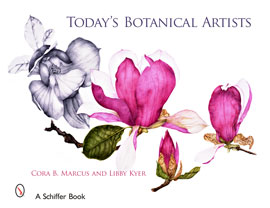
ArtPlantae Books is excited to announce that the book event for May/June will feature the new book, Today’s Botanical Artists. Beginning next week, you can drop in to learn more about this new book, its authors Cora B. Marcus and Libby Kyer, and the 65 North American artists who contributed to this publication. Please make note of the following dates on your calendar:

  • Tuesday, May 20th – Book event for May/June is announced
  • Tuesday, May 27th – Book Review posted on ArtPlantae Today
  • Tuesday, June 3rd – An Interview with co-author, Libby Kyer
  • Tuesday, June 10th – An Interview with contributor, Gilly Shaeffer
  • Friday, June 13th – Last day for readers to submit “Ask the Artist” questions
  • Tuesday, June 17th – “Ask the Artist” reminder
  • Tuesday, June 24th – “Ask the Artist” Q&A is posted on ArtPlantae Today

Several of the contributors to this beautiful collection of contemporary botanical art will be participating in the “Ask the Artist” session. Check back next week to learn more!

Today’s Botanical Artist is available at ArtPlantae Books for $39.95, plus S&H.

Read Full Post »

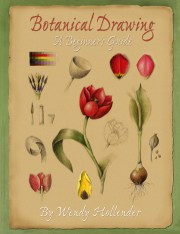
It is clear that Botanical Drawing: A Beginner’s Guide has inspired you to draw plants. Wendy is very appreciative of your interest in her new book and thinks the questions you submitted last week are excellent! Wendy’s responses to your comments and questions follows:

Thanks for taking the time to answer questions! I have just begun the workbook, but love it so far.
I am glad to hear that you are actually using the workbook and enjoying the process! This is what it is all about. Practice and enjoyment will certainly lead to good results.

In general, for the deep shadows on the green leaves, do you use various shades of gray pencil or do you use the complementary color — a shade of red?
I usually work first with an underlayer of a dark sepia pencil which is the equivalent of a graphite pencil shade. It is a brownish, grayish color that can go from very dark to very light. I do my drawing and toning first with this to about 20 percent coverage, then I start to feed-in green tones, which blend together. I add lighter tones and more yellowish greens in my light areas as well. I use the complement when I want to dull a color. If my green feels too bright, I will layer in some red or orange.

When you are drawing/painting white flowers (letting the white paper be the basis for the white flower) are you using just grays for the shadows/modeling on the petals/sepals or are you using other “cool” colors?
I model white petals with either tones of cool gray or sometimes-even warmer grays. It is important to still have very dark areas to define the structure, but then the transition to lighter tones happens quicker on white flowers. Sometimes there might be a hint of lavender in the grays. The most important element is always defining the structure of the flower and the light source using the right range of tones.

When I have photographed my colored pencil drawings, the white background tends to come out a shade of gray in the digital print. How can I correct this without resorting to trying to correct it with Photoshop?
I prefer to scan my original artwork rather than photograph the work. The resolution is much better and so are the colors. That said, even with this method, white backgrounds can be a problem. Sometimes using the magic wand tool in Photoshop can easily remove the background, but often it is necessary to select the entire background for the purpose of changing the tone with several different techniques. The sharper your edges are, the easier the process of separating out the background, but it still has to be done in Photoshop. Otherwise, you will be adjusting all the colors in your artwork which you may not want to do. One idea is to try and adjust contrast on the whole drawing. Unfortunately, I have not found a technique that doesn’t require some work. Changing and removing backgrounds is not too difficult once you find a technique that works well for your work.

Do you sketch at botanic gardens much or do you usually have a plant in front of you at your studio/home to work from?
I often work on location at botanic gardens, in the rain forest, other tropical locations, and at local parks in my neighborhood. My favorite method is to have a table and chair set up somewhere close to where the plant is growing so I can work comfortably. I take a cutting to study closely, is possible, but I will refer back to the plant as it grows for more information on how it looks naturally. I do bring plants back to work in my studio, but if I can capture the plant in it’s natural setting before it is wilted or dramatically changed, I prefer that method.

How much of your work (estimated) is done in colored pencil?
When I first started doing botanical work I used colored pencil primarily for note taking and for quick samples of the colors in the specimen. As I developed my technique more and more, I started using colored pencil in finished drawings and paintings. Now I would estimate that 80 – 90 % of my work is in colored pencil. I sometimes use watercolor as undertones and for backgrounds, but do all my detail in colored pencil.

Do you get commissioned to draw botanical subjects?
I do get commissions for botanical subjects from a variety of individuals
and for commercial purposes as well. I have been commissioned to illustrate plants growing in a particular garden or park, as well as illustrations for use on botanical labels or for magazines and other publications. Commissions also come in the form of, “Can you draw a daisy for my mother’s birthday, it is her favorite flower?” I also take my finished drawings and design silk scarves from them. I have them digitally printed on silk. The results are very close to the original drawings.

How do you paint two very dark flowers, for example, one behind the other and distinguish between the two of them?
Even when rendering a dark flower there still needs to be a range of tones from very dark to very light. I will often make the flower that is in front lighter on the edge that is closest to the flower behind for contrast. I will also make the flower behind darker, as it is most likely in shadow. Bright highlights will be reserved for the flower in front.

The edges of my flowers tend to be messy. I can’t get clean lines. How do you achieve your clean edges?
I achieve clean edges towards the end of a drawing by switching to the Verithin pencils by Prismacolor. They are a harder pencil and can fill in the rough edges quite nicely. I also sharpen all my pencils often so I can get clean sharp edges, but it is important not to outline! Outlines tend to flatten form, whereas a dark edge turning lighter as it describes the form heading towards the light will look 3-dimensional.

I don’t know where to start when the plant (or flower) I am drawing has lots of leaves or petals. After a while I seem to lose track of where I am at. What is the best way to draw them?
I like to draw the simple shape of the flower or plant first, defining a center axis where the petals and leaves will radiate from. I will also “prune” a plant while planning a composition, eliminating some leaves that I don’t feel contribute to the drawing. On a complex flower, I draw the center vein of each petal first, then attach it to the form, and build up my flower this way. It is more important to draw the petals radiating correctly from the stem, than to copy each petal exactly as it is on your particular flower. I tell my students, “This is not a crime scene.” It is more important to show an overall understanding of a plant’s structure than to describe each and every petal exactly as it is on that one particular flower. A trick is to study the edges of the petals closely so you can draw them accurately, but you don’t have to study every petal to do this!

What is your approach to keeping your work looking “fresh” and “bright”?
Good contrast in lights and darks helps to make a drawing look bright and in focus. A clear light source is important as well. It is always about tone and form first for me, and color second, even though in the end it is the color that we notice. I try to match my colors exactly from nature for the local color of the specimen, but then I do whatever I need to in the shadow areas and highlighted areas to describe the 3-dimensional quality of the form.

How do you achieve true values in watercolor, rather than a pastel-y watered down look?
To achieve true values and good contrast in watercolor it is necessary to work in layers and use enough dry brush and opaque paint towards the end for sufficient contrast.

Have you tried using your book with children?
The lessons in my workbook were developed over several years of working with many groups of students. I have worked with students of all ages including young children. This past fall I did some classes with third and fourth graders in a Brooklyn Public school. I was describing light source on crab apples and demonstrating my technique to the group. When I described the light source and the highlighted area a little boy shouted out, “Oh, that is where the sun is hitting the apple.” It was clear that he understood exactly what I was trying to demonstrate. My technique for teaching is the same, regardless of the age or ability of the student. I try to teach step-by-step lessons that build on skills one at a time, from a simple concept to a more complex one, allowing students to work at their own pace and moving on only after they understand the basic concept.

_____

ArtPlantae Books would like to thank Wendy for taking the time to chat with us and for signing copies of her new workbook. Special thanks go out to you, our readers, whose participation in this event has created a learning environment from which many can benefit.

Visit Wendy Hollender’s website at DrawingInColor.com. Wendy’s paintings can also be viewed in the recently published book, Today’s Botanical Artists by Cora Marcus and Libby Kyer.


UPDATE 2015
:
Wendy’s second book, Botanical Drawing in Color: A Basic Guide to Mastering Realistic Form and Naturalistic Color can be purchased online.

Read Full Post »

Congratulations on the publication of your new workbook! It contains just the right amount of information for beginners who are studying botanical illustration on their own. Budding botanical artists will no doubt appreciate the easily digestible bite-sized pieces of information you provide for them. Alternating pages of written and visual instruction with pages of drawing paper differentiates your book from other botanical art books. How did you decide upon this format?

I have often found art instruction books difficult to use as a step-by-step guide. There is usually lots of helpful information and wonderful artwork, but these books seem overwhelming to use when trying to learn on your own. I want my workbook to be as easy to use as possible. I have included drawing paper right next to each lesson. Students can work on one lesson at a time, and not have to figure out what paper to use and where to buy it.

The first edition of your book was published in January 2008. This first edition contains Fabriano 140 lb hot-press paper in addition to Strathmore 400 Series drawing paper. You do not discuss painting in this book at all. Why did you include Fabriano watercolor paper in the first edition?

Fabriano hot pressed watercolor paper is excellent for using colored pencils with the techniques I teach in my workbook. I like to achieve intense rich colors with good contrast from light to dark. This paper helps to blend the colors and saturate the paper to create color that can often look like blended paint as well as drawn with pencil. For the more advanced student, using this paper allows for laying down layers of watercolor as well and makes the paper appropriate for exhibition. I offer refills of this paper if your customers are interested.

One of the strongest attributes of your workbook is that your instruction for blending colors in colored pencil is easy to understand. Students often become bored with creating tones in graphite and become anxious about adding color. In your book, you begin your conversation about color almost right away (on page 6). Was this out of necessity because of the book’s format or do you normally introduce color immediately after discussing how to create tonal values in graphite? In the classes you teach, how much time do your students spend working in graphite before they are introduced to working in color?

It is very important to understand tone first and color second when rendering three-dimensional forms. No matter how long students work in graphite on tonal scales and tonal drawings, they often forget the importance of tone when first starting to work in color. By introducing color techniques along with toning in graphite I am trying to emphasize the importance of the ability to see and draw tones regardless of the medium you are using. In other words, it is important to be thinking of tones in graphite and in color. My experience in teaching both advanced and beginner students showed me that students have this problem regardless of their experience. Everyone forgets about color having tonal value because they are all too often seduced by the beautiful colors.


Another plus about your workbook is that you include the transitional phases of a drawing, from line drawing to a drawing in full color. You even include the “ugly phase” – the phase during which one is most likely to think that their drawing is not going to become anything. In this phase, a drawing feels as much like a pencil drawing as it does a picture out of a coloring book. How do you assist students who are stumbling their way through the “ugly phase”?

I actually don’t feel there is necessarily an ugly phase in a drawing that is well drawn. By being well drawn, I mean that the drawing is progressing with purpose from a light sketch that is defining the shapes and perspective first, understanding the structure of the plant being drawn next, and then adding in light source to help define the tones. Finally, a good drawing understands the overlapping elements in a composition and strives to make these areas have dimension as well. The technique I teach in this workbook does not require the student to re-draw their work when beginning to turn the drawing into a work in color. Tracing and re-drawing often lead to this “ugly phase” in a drawing, one that looks like a hard over-simplified outline of forms. The color in this workbook goes right over the initial drawing, retaining the delicacy and subtleties that are all too often lost when transferring a drawing.

As a member of the Colored Pencil Society of America, you are aware of the lightfastness standards created by this organization. Are the colors in your colored pencil palette lightfast? Is lightfastness a concern of yours, regardless of the color medium in which you are working? Why or why not?

I initially learned to use colored pencil with Prismacolor pencils. I liked their smooth buttery laydown and intense colors. When I began to think about exhibiting my work, I became very interested in lightfast issues. Many of my favorite Prismacolor colors had extremely poor lightfast ratings. I was forced to try other brands and found that the Faber-Castell Polychrome pencils I use in this workbook have excellent properties in addition to having good lightfast ratings. They are a more stable pencil, do not create a lot of pigment crumbs on the paper, and work well for fine lines and details.

You have 20 years of experience in textile design. How has your experience in surface design enhanced the process you use to create botanical art?

I always loved drawing and painting flowers in my textile designs. I could copy an old botanical illustration, but I could not draw from nature directly. Exposure to old botanical documents in textile design gave me the desire to learn the techniques used by these talented artists over the centuries. Having been a professional textile designer helped me approach botanical art as a profession and not just a passion. I knew how to find a client and fulfill their needs, as well as satisfy my desire to create botanical art.

Consider these three titles: botanical artist, botanical illustrator, scientific illustrator. Which title best describes who you are? Why?

This is a great question. I am often not sure what to call myself and often each of these titles can describe what I do. My work varies, so that really sometimes I am illustrating for a commercial purpose such as a label design or for scientific use. I always consider myself an artist first, because the artistic side of a piece is always the most important for me, regardless of its end use.

Briefly describe what you do in your role as Coordinator of Botanical Art and Illustration at the New York Botanical Garden.

I work with the continuing education department at the garden on developing new classes, improving existing ones and eliminating those that are outdated. I work directly with students on their own personal needs and advise them on a program that will best serve their goals. I help students that need additional help, making sure they learn techniques that may be a struggle for them. Most importantly, I try to keep the garden current on the botanical world today and how we can continue to offer an exciting and sought-after program. I strive to increase the feeling of community among our students and the botanical world at large.

You teach classes both in a classroom setting at botanical gardens and on-location at exotic destinations. Describe the general format of the classes you teach currently in Trinidad, Block Island, and Hawaii.

I usually hold a class in one location that I think will not only provide inspiration in the form of plants and flowers to draw from but will be the kind of environment that students will want to stay in for 5 days at a time. These are not traveling workshops, where we drive somewhere each day touring, looking, and squeezing in time to draw. We are settled in one location that often provides not only lodging, but meals, and lots of trails to walk on to find specimens. I like to work in an outdoor environment but possibly with a roof so we can stay outside if it rains or if the sunlight is too bright. The daily schedule is typically like this:

  • Breakfast as a group
  • Three-hour drawing workshop in the morning, including a demonstration each day on a different technique
  • Lunch as a group
  • Three-hour afternoon workshop (sometimes a group critique where we share each other’s work)
  • Free time, to swim, explore the area or stay and continue to draw unsupervised
  • Sometimes we have a group afternoon excursion
  • Dinner, usually as a group sometimes at a restaurant, or sometimes we cook together from the local produce available
  • Free time, believe it or not, some students continue to draw, even by flashlight!
  • Bedtime- lights out at 10 pm (just kidding!)

What do you hope to accomplish through the publication and distribution of your workbook?

My hope is to have provided a workbook that will actually be used by students and not end up sitting on a shelf after it is read. I want to take away some of the confusion in drawing by making it a step-by-step approach that builds and reinforces with each skill taught. I want a guide that students could use on their own and actually work in. The guide is for people who have studied with me, but also for those who have never taken a botanical drawing class or any drawing class. It is also a good refresher for the more advanced student.

What question about your art or artistic process have you never been asked? State this question and then answer it.

What do you think sets your work apart from the countless talented botanical artists throughout time?

My work is driven by my love of exploring nature close up and having the opportunity to study a plant’s detail. The drawing that I create just documents this process. It is the process that is most important to me. I am always amazed by nature’s perfection in the arrangement of color and form. I want my work to be an exploration of that and not a stiff depiction of a plant. The drawing has to convey my delight in the process.

Wendy’s new botanical art workbook for beginners can be purchased at ArtPlantae Books. Select Art, then Drawing.


Also See
:
Wendy Hollender Answers Your Questions About Botanical Drawing

“Botanical Drawing in Color” is a Comprehensive Guide to Botanical Illustration

Read Full Post »

By Sally Jacobs

An exhibit of my latest botanical paintings will be at the TAG Gallery from February 27 to March 22, 2008. The Opening Reception is Saturday, March 8 from 5-8 pm; there is an Artist’s Talk on Wednesday, March 19 at 7 pm. TAG is located at 2903 Santa Monica Blvd, in Santa Monica. The Gallery’s normal hours are Wed – Sat, 11am-5pm. You can learn more about the Gallery at www.taggallery.net.

My subjects for this exhibit come primarily from the Hollywood Farmers Market, where I go each Sunday to shop for inspiration (and the week’s groceries!). While remaining true to my subjects, I think I’ve given my new work a real dramatic twist.

I’ve had a great time in botanical art during the last eight years — taking classes at Otis College of Art and Design and the New York Botanical Garden, and week-long workshops with all the wonderful master artists who have visited Los Angeles. I’ve also taught at Otis, the Los Angeles Arboretum, and lately at the Getty Center, and I’ve been in juried competitions all over the country. I was honored to be selected as a panel member to review grant applications for the National Endowment for the Arts and had my work featured on a CNNfn segment about the “new collectibles.” Even after all these years I still look forward to having a quick breakfast, maybe some time on the treadmill, and then heading straight to my studio.

____________________________________________________________
Learn more about Sally Jacobs at www.SallyJacobs.com.

Read Full Post »

Earlier I noted that sometimes there are flowers that go unnoticed on a daily basis because we have seen them so many times before. We stop paying attention to them because they have become merely background noise. Today I have a prime example of what can happen if we all keep our observational skills up.

In May 2006, Kay Madore, a docent at the Santa Rosa Plateau Ecological Reserve located just east of Murrieta in Riverside County, CA, noticed something that was a bit out of the ordinary when looking at the same old patch of Brodiaea (bro-dih-ee-uh) flowers. Mind you, what was slightly out of the ordinary was just that…only slightly out of the ordinary. You see, within the patch of Brodiaea, there were a few flowers that stood out slightly as they we a bit larger than their lilac-hued Brodiaea neighbors.

With her curiosity peaked, Kay showed the plants to fellow docents Tom Chester and Wayne Armstrong who have been researching the brodiaeas at the Reserve for the past four years. Chester and Armstrong researched the plant, measured it, wrote about it and submitted their findings to experts. The experts agreed with Chester and Armstrong that what Madore had observed was in fact a brand new species of Brodiaea.

If it were not for Kay’s curiosity and her observant eye, none of us would have ever known that within the more common flora, there were jewels to be found. This new species has been named the Santa Rosa Basalt Brodiaea (Brodiaea santarosae).

Visit the Field Guide to the Santa Rosa Plateau to learn more about this newest “addition” to the Santa Rosa Plateau Ecological Reserve.

Read Full Post »

The conservation of rare, threatened and endangered flora typically requires the protection of these species from the general population. There have been many instances in which these species have been inadvertently destroyed. Because of this, most of the information on the location of these precious flora has been kept secret by conservation agencies.

If you are willing to make the effort to illustrate these species in their natural environment, here are some reliable sources of information about the general locations of protected plants. The following resources will be of particular interest to conservation-minded artists in southern California:

1. Center for Plant Conservation (http://www.centerforplantconservation.org)
2. California Department of Fish and Game (http://www.dfg.ca.gov)
3. Western Riverside Multiple Species Habitat Conservation Plan (http://ecoregion.ucr.edu/list_head.asp)

Exploring these websites will help you narrow down your search for these species so that you can find them in their natural habitat and illustrate them as they occur naturally. Please use this information responsibly and remember that you should never impact these species or their habitats during your search or while you are drawing them in you sketchbooks.

Read Full Post »

« Newer Posts - Older Posts »