Feeds:
Posts
Comments

Archive for the ‘Special Articles & Interviews’ Category

Botanical drawings and paintings are favorites among collectors, according to journalist James Cockington of the Sydney Morning Herald. In his article, “Drawn to Nature’s Bounty,” Cockington discusses the appeal of botanical art and provides information from recent sales of both antique and contemporary paintings. He also conducts a wonderful interview with Australian botanical artist, Jenny Phillips.

Click here to read this article before it is removed from the newspaper’s website. This article was published on August 20, 2008.

Read Full Post »

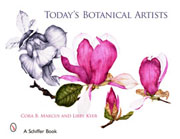
Cover, Today's Botanical Artists Thirteen questions were submitted by readers and these questions were distributed among members of the panel. A heartfelt Thank You to members of the panel for sharing their thoughts, knowledge, and experience with us. And thank you to the hungry minds who submitted questions. Great job!

Click on any of the topics below to begin your review of this “Ask The Artist” session. Grab yourself something cool to drink, you’ll be here for a while. Enjoy!

  1. Digital Painting
  2. Photorealism
  3. Framing
  4. Watercolor
  5. Color Matching
  6. Certificate Programs
  7. Composition
  8. Drawing from photographs
  9. Drawing Branches
  10. Paper
  11. Drawing Veins
  12. Arranging Your Watercolor Palette
  13. Mixed Media

Read Full Post »

1) Why choose digital painting over watercolor? What attracts you to digital painting?

Michael Maskarinec:
Please let me start by saying that I love all types of botanical painting and illustration. For me, it is a constant and consistent form of observation in an ever-changing world. My career is that of an art director/creative director for publishing and advertising. As computers became an invaluable tool in my profession, the delivery of images and how those images were made suddenly created new venues for artists. I was exploring the new software as a creative tool for work during the day, and experimenting at night with a new look for my botanical paintings. I was also trying to find a way to interest a younger audience, my peer group, in botanical art. This new, fresh looking, graphic approach seemed to help bridge that gap for me and a new audience. This also helped me gain many of my early commissions from Garden Design magazine and Rodale Press, whose art directors welcomed a new look at botanical images. For me, along with drawing and traditional painting, it is another tool that allows me experiment and create the art that I love, only it’s digital painting.

Continue to Photorealism

Return to Index

Read Full Post »

2) Photorealism looks like it takes a really long time. On average, how long does a painting take you?

Sherry Mitchell:
It’s difficult to say how long, ON AVERAGE, a photorealistic painting takes, as every painting is so completely different. However, for the examples in the book, a painting like the Himalayan Blackberries took approximately 50 hours.

Return to Digital Painting

Continue to Framing


Back to Index

Read Full Post »


3) Do you do your own framing or do you use commercial frames?

  • I do my own framing = 6
  • I use commercial frames (i.e., store bought) or a commercial framer = 9
  • I use a private framer = 7

Additional comments:

Bobbi Angell: I order frames and glass from a commercial frame shop and assemble them myself. The same frame shop will also cut the openings on mats when I have measured and marked them according to what I need, for a couple of dollars an opening.

Olivia Marie Braida Chiusano: I use a private wholesale framer.

Bruce Lyndon Cunningham: I build all of my frames, if you go to my web site you will see. Also if (my painting) is of a tree species, the frame will be made out of that wood of the tree.

Beverly Duncan: Generally I use a professional/commercial framer for my work. Occasionally, for small and local shows I might purchase frames from an online site and frame myself. I float the work, using plastic risers purchased for this use.

Jean Emmons: Though I do my own framing for gicleé prints, I like to use a private framer for originals. I get too close to my work to see it in an unbiased way, and a framer with a good aesthetic sense can really help present one’s work to its best advantage.

Carol E. Hamilton: I order mats, frames, backing and Plexiglass on line and assemble them myself.

Kathy J. Imel: Used to use private framer; have started doing the framing myself using commercial frames.

Robin Jess: I use a private framer who charges reasonable rates. It is important to present your work professionally to really show it off. Sometimes I will purchase a ready-made frame if I find one that looks good for a particular purpose, but I never cut my own mats. If I have that much time, I would rather use my time to create the art and let someone else make the mat and frame. I am better at the art – and they are better at the framing!

Libby Kyer: I will build my own frames at a nearby frame-it-yourself store. I always select my own frames, mats and other necessities (filets, etc.). However, I recently found a commercial framer with an amazing array of sticks (frame materials), so will probably be using her for important pieces in the future.

Mindy Lighthipe: I do my own matting and framing. I have a wholesale account with several vendors and standardize my sizes so I can swap paintings at a moments notice. This reduces my inventory of frames and expenses.

Sherry Mitchell: I use commercial frames, but assemble them at home. Having a reasonable mat cutter is a benefit, as is a knowledge of framing techniques and a good background in colour, design and museum quality framing.

Rose Pellicano: I use commercial frames and sometimes a private framer depending on the specifications for certain exhibitions or if the size of my painting is not a standard size.

Rayma Kempinsky Peterson: I usually order frame parts from Opus in Vancouver. Then I assemble them myself.

Scott Rawlins: All of my frames are purchased ready made (I make sure my drawings are suited to standard size mats & frames), or made specifically for the work(s). I used to cut all of my own mats, but when double mats are needed, I arrange to have the framer supply these as well.

Susan Rubin:
I do all my own framing. Several years ago I realized that the amount of framing I needed annually (25-45 pieces) was costing me too much! A professional framer trained me in the necessary skills to cut mats and glass and assemble conservation-quality framing and I opened and account with a wholesale framing supply. There was a lot of trial and error resulting in the waste of some expensive materials, but I am now quite competent and find that I am less apt to limit my framing choices by cost.

Dolores R. Santoliquido : I use a private framer.
(Although) I am capable of framing my own artwork, the framer I use is better able to frame my art in a manner that truly compliments the artwork. If the work is slated to go in a show with specific requirements I use commercial frames with Plexiglass.

Wendy Smith: I generally do my own or have a skilled friend do my framing if
circumstances allow it. A trade in services is great if possible, otherwise commercial framing can be very expensive.

Return to Photorealism

Continue to Watercolor

Back to Index

Read Full Post »

4) Once you really learned watercolor, did you ever go back to graphite, ink, or colored pencil?

Olivia Marie Braida Chiusano: Yes. I do quite a bit of graphite work for clients and professional commercial assignments. The same for pen-and-ink. I also use both for fine art pieces. As for colored pencil, I only Prismacolor pencils for color studies in preparation for my large watercolor paintings.

Bruce Lyndon Cunningham: I don’t understand the question. I am an artist. I will use any media I want.

Jean Emmons: Yes, absolutely. Also, I’ve studied egg tempera and oil painting. These two media have really helped my watercolors on vellum, as vellum can accept egg tempera hatching techniques (while using watercolor paints) and oil painting glazing techniques (using watercolor paints) in a similar way. Because the watercolor paint doesn’t absorb into the vellum, the way it does paper, the paint has more “body,” more presence.

Carol E. Hamilton: Yes. The subject matter often dictates media choices. Having command of a range of media can be extremely useful.

Wendy Hollender: Yes, I eventually fell in love with colored pencil and use that mostly.

Kathy J. Imel: Yes, all the time.

Robin Jess: From 1972 to 1981, I worked exclusively in black and white, except for a semester in oil painting and a semester of color theory which used designer’s gouache. I used graphite, graphite powder, charcoal, etching and for scientific illustration, pen and ink, preferring Koh-I-Noor Rapidograph or Rotring technical pens. I really feel this gave me a great ability to see tone and value, which has helped my watercolor work. I did pen and ink at the same time I was beginning to learn watercolor (on my own – I never took a class in watercolor, except for the workshop I mention below). I first started using watercolor in 1980 to hand color my etchings. I thought the palest wash was very garish! Over about five years, I gradually did more and more watercolor, never really being happy with the results. In the mid-80’s, one of the first things I did as Coordinator of the New York Botanical Garden’s Botanical Illustration Certificate program (then called the Biological Art Certificate Program) was to bring out Kevin Nicolay from Seattle, an artist whose work I had admired in Horticulture Magazine. He did a three-day workshop, if I remember correctly, of which I attended two days, and I was amazed by the very little amount of water he used, and how much his technique was like drawing. After that, I began painting in the style I still use, drawing with the brush, and am happy with the results. After that, I only did watercolor, but recently have been inspired by several ASBA artists to pick up a graphite pencil again. My schedule now doesn’t allow much painting or drawing, but if I were to begin now, I would do about 85% watercolor and 15% graphite.

Libby Kyer: Yes! I use all media, sometimes combined, but my absolute favorite is colored pencil. In the end, watercolor is my least favorite medium, but I have recently learned some amazing techniques from Jean Emmons, and am working a bit more in watercolor than in previous years.

Mindy Lighthipe: Yes. I love both mediums and continue to use them alone and occasionally combine them with watercolor.

Julie Sims Messenger: No, I love losing myself in creating color and the challenge of making the most of watercolor’s luminosity never ends.

Sherry Mitchell: Yes. I do children’s book illustrating, and coloured pencil is my favourite medium. As well, both graphite and ink continue to challenge me, and I enjoy using both of them for different projects.

Rose Pellicano: I paint only in watercolor. I have not used colored pencil.

Scott Rawlins : Yes. The truth is, I work more frequently in colored pencil and other dry media, but have recently considered going back to watercolor.

Susan Rubin: I learned watercolor along with other media. It was never the right medium for me and I gravitated away from the brush and back to the pointy pencils (graphite and color) immediately!

Dolores R. Santoliquido : Yes. Watercolor is a medium I use, but I prefer to use mixed media acrylic and color pencil. This mixed media technique gives me versatility in color selection, pigments that do not rewet and therefore remain stable when I am glazing layers of color and a final product that had to date proven to be consistently lightfast.

Wendy Smith: Yes. Each medium is a skill in itself and can be used as a tool with
another medium to achieve an end product or used alone as a finished artwork. For example, you may use a graphite sketch to establish a composition to be completed in another medium, include it in a way that the mixed media are apparent or complete the entire artwork in graphite, ink or colored pencil. There are many levels of skill that can be achieved in each medium in the course of a lifetime.

Return to Frames

Continue to Matching Colors

Back to Index

Read Full Post »
5) How do you match your colors? Do you achieve this by glazing or do you mix your colors in a palette?

Julie Sims Messenger:
I use glazing technique to achieve form and color. Starting with studying the subject, I choose lots of pigments, cool/warm, transparent and opaque, and then I begin with the thinnest of glaze and work from back to front. I work intuitively and every couple of hours have to stop and come back to reassess the work for color correcting. After the form is apparent, I start working drier gradually. It is very slow work. I also feel free to keep over-glazing all or part of the work as I go along to keep color correcting and to soften hard edges. I just feel this way works for me to keep the nuances of color and light reflection alive in the work.

Rose Pellicano:
Through study and experience, I know which colors to mix to achieve a close match. I begin by applying a light wash of color, I then place the appropriate color and I dip my brush in water and move the color to achieve appropriate values. I intensify the color by glazing or by applying tiny brush strokes.

Louise Smith:
My paintings contain both glazing and colors mixed in the palette. This can go back and forth.

Wendy Smith: This can be done both ways and each artist has their own opinion and preference. Some feel that glazing allows a purity of color and light to show through in the paint. I’ve tried both and generally prefer mixing the color on my palette before applying it to the working surface. I like to see the color on a white porcelain surface first in order to match colors; however, in some instances I use glazing to enhance details, shadows or highlights, especially if I’m using an opaque medium.

Return to Watercolor

Continue to Certificate Programs

Back to Index

Read Full Post »

« Newer Posts - Older Posts »