Feeds:
Posts
Comments

Archive for the ‘Special Articles & Interviews’ Category

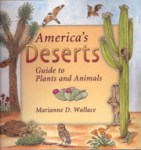
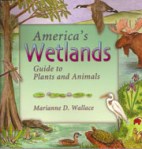
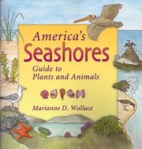
Marianne Wallace is a natural science educator, illustrator, and author. Her illustrations have been published in over thirty books. She is the author and illustrator of a series of guides to North America’s deserts, forests, mountains, seashores, wetlands, prairies, and grasslands. Marianne has taught science to elementary school children and nature drawing to science teachers, librarians, and children’s book writers. She taught botanical illustration classes at the L.A. County Arboretum & Botanic Garden in the 1970s, taught illustration classes for kids at the Los Angeles County Museum of Art, and taught a workshop about teaching botanical art to children at the annual meeting of the American Society of Botanical Artists held in Pasadena, CA in 2008.

This conversation is a continuation of a conversation I had with Marianne in 2004 when I interviewed her for The Southern California Botanical Artist. This time we begin with the question, How did you come to write the America’s books? Marianne explains:

On family trips I noticed there were few books about birds and butterflies west of the Mississippi. I thought, how could a book about North American birds not include common western birds like the Scrub Jay? Of the books that were in print at the time, I did not care for their cartoon-like illustrations. So I decided to write a book to fill this void.

My initial idea was to focus on desert habitats. However deserts are found in only certain states and I did not want to focus on specific states. I soon realized it would be better to take a broader approach and to create a book that also served as a learning tool. Since plants and animals know no boundaries, I decided to focus on specific habitats in North America.

It was important to me that the books show nature is cool, vibrant and still present. I wanted to get kids excited and thought if I created a fun book for kids, they would share it with their parents. I emphasize the “nature outside your door” and do not include humans in my books intentionally. I may mention human impacts as they pertain to native plants, but you will not see humans in my books.

The most common plants and animals of each habitat are what I focus on in my books. The specific attention given to common plants and animals came about because I observed that kids were not even aware of the most common species. I also observed that kids had no sense of geography. This made me determined to present the distribution of plants and animals in an understandable way.

The America’s books I wrote were written specifically for readers between 8 to 12 years old because I noticed there were natural history books for younger kids, nothing for 8-12 year olds, and then a jump to adult field guides.

The Search for a Publisher

Armed with an idea and a solid concept, Marianne needed a publisher. She researched her options and created a shortlist of ten publishers who would allow authors to illustrate books and who generally had good nature books. She wanted a publisher who valued information as much as she did. She knew that those who only do fiction may not be into information as much as they are into the story.

Marianne approached the Sierra Club first, then Harcourt Publishing. Upon contacting Harcourt, Marianne learned they only published nature books with photographs, so she scratched them off the list. She then contacted Fulcrum Books after reading information about what Fulcrum looks for in non-fiction books. At the time, Fulcrum was in the process of launching a natural science category and a children’s book division. Marianne was signed by Fulcrum and her Deserts book was one of the first books to be published in the new natural science category. Marianne says the great thing about small publishers is that authors receive more personal attention than they would at one of the big publishing houses.

When her Deserts book was published in 1996, creative non-fiction was not as prevalent as it is now. Marianne says the problem with this category today is that these books are often not written by biologists and, unfortunately, this makes the dissemination of misinformation more of a possibility. Marianne checks all of her scientific names and checks her facts very carefully to ensure the information in her books is as accurate as possible. In spite of one’s best efforts, though, mistakes are part of the business and when a mistake is found, both Fulcrum and Marianne take note. Reader feedback is filed and becomes part of the editing process each time a book is reissued.

These days, Marianne shops for publishers on Amazon.com. She looks for books she likes and jots down the names of publishers.


Including The Necessities

The books in the America’s series are as comprehensive as they are because they equip the reader will all he/she needs. We’re not talking just content here, we’re talking tools to enhance understanding. Simple tools too. Think rulers and maps. Marianne felt strongly that rulers and maps be included in her books. Rulers are important to Marianne because they enable readers to make comparisons between species and record accurate information. Maps are important to Marianne because she wants kids to understand how species are distributed and where habitat is located.

Another necessity was the inclusion of scientific names. Marianne felt it was important to passively educate people about the use of common names and scientific names. She wants people to understand the difference between common names and scientific names. The example she provides addresses how “puma”, “cougar”, and “mountain lion” are three common names for the same animal. These animals share one common name and this is Puma concolor. The same situation occurs with “peccary” and “javelina” – two common names, one animal (Pecari tajacu).


The Big Picture on Two Pages

The landmark features in every book in the series are the two-page spreads featuring the common plants and animals within a given habitat. To create the spreads in each book, Marianne asked people what to include. She asked educators and nature guides what people ask about the most. She researched the primary literature and spoke to experts. She also traveled a lot because she felt it was important to visit the places she wrote about. If a not-so-common species made it onto a two-page spread, it was included specifically to engage kids (e.g., an animal with warning colors accompanied by a cautionary tale). And Marianne admits, if she became really excited about a species, this served as a clue she may need to include it in the book.


Creating The Big Picture

When you’re the author and illustrator of a book, which comes first, the words or the illustrations? For Marianne, neither the words or the illustrations came first. Both were created simultaneously. The spreads in the America’s books were the most difficult illustrations to plan and create. Each two-page spread contains anywhere from 35 to 50 species of plants and animals. To create each two-page spread, Marianne completed the line art first in pen-and-ink. She then photographed the line art and added color (gouache). The plants and animals that were going to be on each spread for sure, were placed on the spread first. They served as place holders. Other sketches were added as necessary. Rocks and other features were added last. Imagine the time it took to repeat this process for each of the six spreads in a book!

As for the illustrations to be placed in other areas of each book, they came with their own set of instructions. Because the publisher prints 4-over-1 (full color on the front and B&W on the back) and alternates color pages with black & white pages, not every plant and animal was printed in color. In fact, certain rules were in place about which illustrations are created in color and which illustrations are not. The lizards, amphibians, trees, and mammals in Marianne’s books did not get color. Flowers and insects always received color.

When the illustrations for a book were completed, Marianne gave them to the publisher. At this point, how her artwork was recreated was beyond her control. If the publisher wants to punch up a color, then this is what they do even if it makes a plant or an animal a different hue than originally intended. Over time, Marianne learned to accept how her work is printed. She says authors and illustrators have to learn they can’t be in control of everything.


An Author’s Dream Realized

Amidst the busy planning of each book’s content, creating the detailed two-page spreads, talking with experts, and writing, Marianne never lost sight of what she wanted most. She wanted people to use her books. She made the conscious decision to publish the America’s series only as a paperback. The drawback to having her books published only in softcover is that they are not considered for awards. Also libraries, as a rule, do not buy paperback books. Even so, the America’s books are widely read and each title in the series has been reissued. The Deserts book is the most popular among readers. Marianne found out her books are also used in social studies classrooms because they cover all of North America and address regional topics discussed in social studies class.

Marianne’s books resonate with adult naturalists, homeschoolers, adults who aren’t naturalists, and grandparents who buy books for family members living in other areas of the country.


Current Projects…

Marianne is currently taking a break from writing nonfiction. She wants to create a story grandparents can read to their grandchildren. She also wants to take a break from doing research. She is working on several ideas for picture books, including:

  • A counting book written from the viewpoint of a tarantula. This story will take place in the Mojave Desert.
  • A fictional story about a barn owl. The backdrop of the story is based on accurate natural history facts about birds.
  • Regional books for specific areas.
Read Full Post »

National Environmental Education Week begins today!

Meet natural science illustrator, Christine Elder, whose specialty is teaching children about nature. She will be holding office hours this week at ArtPlantae Today and will be answering questions from readers. Read more about Christine in the following post.

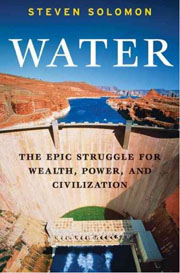
The theme for EE Week is Be Water and Energy Wise. There is no better way to begin this week than with telling you about Shane Burckle the force behind local outreach programs designed to educate the public about our global water crisis. The book, Water: The Epic Struggle for Wealth, Power, and Civilization, comes with Shane’s enthusiastic recommendation.

On behalf of all contributors to EE Week at the national level and here at ArtPlantae, thank you for your attention and for your participation in our collective efforts to increase environmental literacy.


UPDATE:
Feature Articles & Interviews Posted During EE Week 2010

Read Full Post »

Newport Beach is a bustling beach town in idyllic southern California. It satisfies the TV stereotypes associated with living life in the “OC” (Orange County). Large homes, expensive cars, high-end shopping malls, surfboards, flip flops, shorts, and scantily clad suntans on Pacific Coast Highway really do exist. Newport Beach is also the last stop before urban water runoff hits the ocean. Newport Beach, like other oceanside cities, has to pay attention to what travels through its city streets on its way to the ocean. Like many cities nationwide, it works tirelessly to educate residents about water conservation and how water use (and misuse) impacts the environment. The city does a really good job delivering its message. How do they do it? They have a high-energy, forward-thinking Water Conservation Coordinator.

Shane Burckle has been the city’s Water Conservation Coordinator for over 2.5 years. As the year-round coordinator of this program, he creates outreach programs for Newport Beach and partners with interest groups to create public service announcements and special events such as the WaterMiser Workshop. The goal of the WaterMiser Workshop is to encourage Newport Beach residents to use native plants or “California Friendly” plants in their home gardens. To make this transition as easy as possible, renowned nursery Rogers Gardens provides the plants and the guidance necessary to help residents with their new approach to gardening. The WaterMiser event allows residents to learn about conservation from guest speakers and to connect with vendors specializing in products such as water harvesting tools, smart sprinkler systems, and how to wash your car without water. The first WaterMiser Workshop was held in 2009 and it was a huge success. Eighty people sent in RSVPs and 200 people showed up. This year, 120 people accepted the city’s invitation.

The city’s outreach programs also include:

  • A WaterMiser Video filmed bimonthly and streamed on to the water district’s website at www.WaterSmartNewport.org.
  • Public service announcements that are played in all Newport Beach movie theaters.
  • Water Innovation Now, a program created in conjunction with the Orange County Department of Education challenging K-12 students to create solutions addressing the Earth’s water crisis. Students are required to present their solution in a digital presentation.
  • Leaders in Environmental Action Films (LEAF) is a program targeted towards high school students challenging them to create 30-60 second “ecommercials” to raise environmental awareness about a topic of their choice.
  • The creation of a demonstration garden at city hall to enable residents to see water conservation principles applied to an urban landscape. The demonstration garden will be completed in 2012.

The city of Newport Beach serves 30,000 homes and approximately 50,000 people. As a municipal water provider that is run and managed by the city’s own Utilities department, the city functions independently from the Municipal Water District (MWD). Years ago, the city invested in ground water basins and this enables the city to use a ground water system. This makes the city less dependent on the MWD. It used to be that 78% of the water provided to Newport Beach residents came from the ground. However, now this amount has dropped to 63% because of ongoing drought conditions. Managing water use for 50,000 people with 50,000 different opinions about water conservation is a difficult task. You know what they say about bringing a horse to water.

Fortunately, the Newport Beach water district has made a plethora of educational resources available to residents. The district’s website contains tools for educators, programs for children, and many resources to encourage residents to look beyond their front door to see how the water crisis in southern California is really a worldwide water crisis. Burckle has observed that people don’t know how to conserve water and therefore do not bother to do it. The information in the Resources section of the city’s website is a step towards eliminating these barriers to action.


Question for EE Week Readers
:
What do you do to conserve water on a daily basis?


(Readers: You are invited to comment on any question presented to you this week. Look for questions at the end of most articles.)


Suggested Reading
:

Publisher Comments: Far more than oil, the control of water wealth throughout history has been pivotal to the rise and fall of great powers, the achievements of civilization, the transformations of society’s vital habitats, and the quality of ordinary daily lives. In Water, Steven Solomon offers the first-ever narrative portrait of the power struggles, personalities, and breakthroughs that have shaped humanity from antiquity’s earliest civilizations, the Roman Empire, medieval China, and Islam’s golden age to Europe’s rise, the steam-powered Industrial Revolution, and America’s century. Today, freshwater scarcity is one of the twenty-first century’s decisive, looming challenges and is driving the new political, economic, and environmental realities across the globe.

Read Full Post »

National Environmental Education Week begins on Sunday, April 11th. Special articles and learning opportunities will be coming your way. Please tell friends, students, teachers, and your favorite naturalist about the activities here at ArtPlantae and at EEWeek.org.

Here are more hints about what is to come during EE Week at ArtPlantae:

  • Contemporary botanical artists follow in the footsteps of their predecessors and document plants for future generations.
  • What’s happening at the 10th largest herbarium in the United States?
  • See what a rain garden is doing for a major public garden.
  • How did an East Coast artist capture California’s desert plants?
  • A scientific illustrator provides suggestions and answers your questions about connecting kids with nature through drawing.

Have you signed up to the RSS feed to receive daily updates during EE Week?

EE Week at ArtPlantae begins to materialize on Thursday. See you then!

Download this flyer

Read Full Post »

What’s the value of an image?

Is a picture really worth a thousand words?

Today we value the use of illustrations to convey scientific information. But in early 19th-century Britain, the use of pictures in science education was a hot topic of debate. In her article Botany on a Plate: Pleasure and the Power of Pictures in Promoting Early Nineteenth-Century Scientific Knowledge, Anne Secord reviews the debate in detail. Secord’s research focused on botanists specifically and their use of illustrations because early botanists recognized the importance of providing pleasure (appealing imagery) to their audience while imparting scientific knowledge. Secord’s research brings attention to “the role of pleasure in intellectual pursuits.”

In the 1800s, the “Diffusers of Knowledge” (i.e., experts in any given field) networked with only one objective in mind — to encourage people with an interest in nature to begin formalized study so they can become experts. The recruiters for botany took advantage of the public’s interest in color botanical plates to establish their own following of “admirers.” Botanists knew that to be successful at turning admirers into future botanists, they needed to maintain a balance between making botany an attractive science and keeping it a serious discipline. As a naturalist in 1838 proclaimed:

I conceive that the presentation of an allurement to the study of any science, is both a justifiable and a legitimate mode of procedure.

The use of illustrations as a teaching tool was a controversial topic back then because there were two schools of thought. One school felt it was perfectly legitimate to use illustrations that appealed to their audience. They recognized the need to engage their audience in conversation and the need to form a relationship with their audience. The other school, however, disagreed with this approach. They felt that by using illustrations and paintings to appeal to amateur naturalists, botanists were not really addressing the discipline of botany. According to the botanists in this second group, botany is best learned by studying written descriptions of plants and by studying actual specimens, not by looking at pictures. They felt color plates were “harmful” and merely provided “easy access” to the discipline instead of “sound knowledge” and “rational instruction.”

Let’s revisit the 1838 debate about the use of illustrations to teach natural history. Here’s a question for you…

Do color plates encourage beginners to study botany or do color plates encourage a superficial appreciation of nature?


Literature Cited
:

    Secord, Anne. 2002. Botany on a plate: Pleasure and the power of pictures in promoting early nineteenth-century scientific knowledge. ISIS. 93:28-57


Related
:

Read Full Post »

© Hoffman Media (March/April 2010). All rights reserved ArtPlantae is excited to announce that it is featured in the March/April 2010 issue of Victoria Magazine. We are honored to be in the good company of Boxwoods Gardens & Gifts, Inc., PARASOL, Elderberry Herb Farm, and Kindred Spirits Organics. All are businesses whose botanically-inspired calling cards were chosen to celebrate the Spring season. See the Calling Cards section on page 10.

ArtPlantae’s beautiful calling cards, stationery, note cards, labels, logo, and banners were designed by DB Shaw Studios.

Read Full Post »

I was across the room when I overheard a student say this to her study group in a busy non-majors biology lab I taught during grad school. Fifteen years later, I am still not sure what caught me off-guard the most — the surprised tone in which the question was asked or simply the question itself. My first reaction was to wonder how the student could have missed the fact that grasses are plants. Then I thought about it some more and thought about the ways she could not have known that grasses were part of the plant kingdom.

  • What if she had never plucked grass out of the lawn to see its roots?
  • What if she had never had to install sod in her backyard?
  • What if she had never seen her family lawn in an overgrown state and never had the opportunity to see inflorescences form?
  • What if her parents did not take her to nurseries and botanical gardens as often as my parents took me?

I think about this student’s question each time I see someone shrug their shoulders to express their indifference towards plants. I always wonder about the root cause of their indifference. Surely they have had at least one memorable experience involving plants. Haven’t they?

Children & Plants
In 2000 at the annual conference of the British Educational Research Association, Sue Dale Tunnicliffe presented the results of her study addressing children’s learning experiences looking at plants in a botanical garden. Tunnicliffe conducted her research at the Royal Botanical Gardens Kew. Conversations among students (mostly ages 7, 9 and 11), teachers, and other adults were recorded in front of plant exhibits. She observed that children comment on the most noticeable features of a plant and that plant functions (e.g., photosynthesis and seed development) receive very little attention. She also observed that if an animal entered into view, children quickly turned their attention to the animal. Interestingly, Tunnicliffe discovered students learn about plants from their family and that students do not think of school as a place to learn about plants. Students admit to learning little from books, but a lot from daily experiences involving plants.

The intricate results of Tunnicliffe’s work must be read in detail to be appreciated. Science educators and anyone who leads group tours at botanical gardens will find this article to be a helpful resource. By having insight into what students notice about plants, educators can create engaging lessons and memorable interactive experiences.


Literature Cited

Tunnicliffe, Sue Dale. 2000. Talking About Plants: Comments of Primary School Groups Looking at Plants as Exhibits in a Botanical Garden.
Paper presented at the British Educational Research Association Annual Conference, Cardiff University (September 7-10, 2000). Read article

Read Full Post »

« Newer Posts - Older Posts »