Feeds:
Posts
Comments

Archive for the ‘Sketching & Journaling’ Category

New at Classes Near You > Texas and Classes Near You > Guatemala:


Cynthia Padilla, Dallas

http://fruitflowerinsect.blogspot.com
Cynthia Padilla teaches painting and drawing classes at prestigious universities, major museums, arboreta, art societies across the US, Canada, Central America and internationally. She curates exhibitions, serves as a juror of exhibitions, lectures and conducts demonstrations, and leads painting retreats worldwide.

    Botanical Arts/ Nature Sketching the Tropical Flora and Fauna of Guatemala with Cynthia Padilla – March 31 – April 9, 2011. Central America, Guatamala – Antiqua. Join popular instructor Cynthia Padilla for a week submerged in the beauty of the tropical flora and fauna of Guatemala. Spend unhurried time, workingmen en plein air, lulled by the gentle breezes of “the land of eternal spring.” Days begin with an introduction to materials and demonstration of technique. Participants are welcome to document whatever catches their eye and imagination….ancient structures, tropical landscapes, colorful markets.

    Class will be based in lovely Antigua, a delightful bougainvillea-draped town with an international ambiance of internet cafes, art galleries, artisan crafts and warmhearted, welcoming people.

    Participants will also head into the highlands where volcanoes rise out of early morning mist and spend 3 days on Lake Atitlan.

    Begin a lifelong habit of journaling in nature and return home with a collection of sketches, tiny vignettes, notes & notations, measurements and musings, and frameable works of art in breathtaking detail. All media and all levels welcome.

    Registration/Information: Liza Fourré, Director, Art Workshops in Guatemala, call 612-825-0747 or contact Liza Fourré, Director.

Read Full Post »

© Jane LaFazio. All rights reserved

Jane LaFazio responds to questions about style, drawing, creativity, and sketchbooks!

1. How does one tease out their “signature style”. This is a piece of advice I’ve been given in order to establish myself as an artist and for people to recognize my work (much like Georgia O’Keefe, Stephen Quiller, etc.). They have recognizable styles unique to them. They are clear and consistent, and even though they experiment and explore, one still recognizes their work/style. I love so many things (some of which I’ve learned from Jane :) that I’m finding it difficult to get clear on my unique style. Any insight on this would be very much appreciated.

In some ways, I’m the wrong person to ask this question! I have so many interests and go in so many directions! I love learning new techniques and exploring new styles and directions. I like to think that when I’m influenced by an artist I like, and try some of her technique or style, that very soon it becomes my work, as I integrate the new things into my existing style. I’ve been told, that even though I work in many different media, that my work is somehow recognizable. The colors, the feeling remain consistent whether it’s watercolor, cloth or mixed media. More and more I find myself working in a series (albeit a small, short series!) and that really helps my voice come through my art.


2. Doing your art in more than one medium, how do you organize your studio and your time? My word is “focus” this year and I think organized is linked to focus.

My time is a combination of studio work and teaching and marketing. I need to do all three to make a living as an artist, and I’m fortunate that I enjoy all three equally. My teaching is scheduled and I fit in chunks of studio time where I can, and I do work in the evening, hand stitching. Marketing (aka computer time) is usually done first thing in the morning.


3. Why do you use pencil first instead of going directly to ink? Seems like it would be easier.

With the pencil I can quickly sketch the object, getting the placement and organize the shapes. Then I can confidently use the pen to draw and capture the details. Using a pencil first takes the stress out of drawing, for me, and I’ve learned to do the pencil sketch quickly. I do enjoy ‘straight to pen’ drawings, and they can be delightfully wonky.


4. It sounds like you typically sketch “from life” rather than from photographs. Can you give any tips for capturing moving objects such as birds, children, dogs, etc. quickly? For example, are there certain aspects of a moving subject you sketch first? Are there certain things you always omit? Thanks!

When I draw a moving object, I start in pencil and as the animal moves, I draw a new drawing of that new pose, on the same page. I may have 4 or 5 or 6 drawings on the page. Eventually, most animals will return to a certain pose again, and then I’ll jump to that sketched pose. A horse in a pen, for example will stay within range and move, but return to a pose. When drawing, say koi in a pond, I use the same technique and end up with a composite drawing to create single koi, drawn from the other koi in the pond. Once I have a good pencil sketch, then ink and watercolor.


5. When you recommend creative resources to fellow artists, which resources do you usually direct them to when it comes to: Art Websites? Books? Blogs?

I always recommend Danny Gregory’s books and his blog. There are sooo many wonderful artists out there, that I occasionally do a blog post about someone I’m particularly interested in.


6. Sketchbook art and journaling is becoming increasingly popular. Why do you think this is? Or is this merely an artifact of the Web connecting all sketchbook enthusiasts?

It’s true. I really think 2011 is the year of the sketchbook! Word does spread, like wildfire, online. But I also think people are realizing that everyone can do a sketchbook/visual journal. There are so many ways to approach it, and so many playful ways to make art, that a sketchbook is a great and easy way to get creative.


7. Here are my questions for Jane. I am an avid reader of her blog…..

    Where do you get all your energy? Are you the ultimate multitasker?
    I’m blessed with a lot of energy and a very supportive husband. I work small. I stitch at night, while watching TV with my husband. I think I have a lot of drive, and feel a great sense of accomplishment when I’m making art.

    Do you take the time to set goals and plan a schedule around them?
    I don’t set specific goals. I plan my art making and life around my teaching schedule, as I mentioned above. I try to say yes to things that will forward my art career AND make me happy. I take risks, I say yes to things I’ve never done before.

    How do you stay motivated?
    It’s a natural state for me. And to be perfectly honest, teaching and blogging and sharing what I do is very motivating to me. I like feedback, I like to inspire others to make art and be creative.


8. I was wondering if you are self taught in watercolor or if you took some instruction? I really love your work.

Thanks! I have a degree in graphic design, and did a little watercolor in college. Since 1992, I’ve taken many watercolor classes from community center classes to classes with the pros. Since I began my watercolor journal, I’ve really simplified my approach to make it quick and spontaneous.


9. Are there any exercises one can do to “loosen up” when painting? I started painting botanicals and want to change my style but have a hard time “loosening up”. Also, how do you get in the mood to paint? Sometimes there is time but I am not in the mood to paint and sometimes I feel creative and motivated but have no time to paint.

One of my favorite things to do is draw directly in pen doing a continuous line drawing. You can look at the object you’re drawing and at your paper, but you can’t pick up your pen. It’s fun and great practice. If you use a water soluble pen, you can add a little water for shading. You’d be amazed how well you can do, and it definitely makes for loose, wonky drawings.

In the mood. For me, I can always pick up a pencil (or water soluble pen) and start drawing something I see. It can be quick or more lengthy. Doodling is also great, especially for a background in a journal.


10. Do you have a favorite brand or type of journal or do you bind your own?

I’ve used the larger watercolor Moleskine for years, and have recently gone to 5″ x 7″ individual hot press watercolor paper pages. Then I can create a portfolio or paper box for my sketches. I have done book binding, but I prefer a simple accordion fold with a long strip of watercolor paper, when I do “make” my own journals.


Thank you, Jane!

Thank you for sharing your work and so much of yourself with us this month. You have definitely taught us many different ways to observe and to create.

Readers should know that Jane is one of the hosts of The Sketchbook Challenge. If one of your New Year resolutions had anything to do with allowing yourself to live a more creative life, look no further than The Sketchbook Challenge and its hosts for your daily dose of inspiration. The Challenge began on January 1st and will continue throughout the year. A new theme will be announced each month, so be sure to visit to see how Jane and her fellow hosts tackle each challenge.

Looking for your own adventure in creativity? See the sketching classes & mixed media classes Jane teaches online and at various venues across the nation!


Also See…

Jane LaFazio Channels Passion Into a Career & Successful Outreach Program for Kids

Read Full Post »

Get your walking shoes and backpack!
See what’s new at Classes Near You > Australia:


Holiday Sketching with Leonie Norton

http://www.holidaysketching.com.au
Australian botanical artist, Leonie Norton, teaches workshops in Australia and leads international tours. Leonie is the author of Women of Flowers: Botanical Art in Australia From the 1830s to the 1960s. Her botanical art website can be viewed at www.botanicalart.com.au. Her travel service website can be viewed at Holiday Sketching with Leonie Norton.

  • South India Tour – January 22 – 30, 2011. Sketch Indian villages, floating markets, and take a botanical drawing workshop among rice, spice, and tea plantations. View all tour details here.
  • New Zealand South Island Tour – April 9 – 17, 2011. Experience autumn in the South Island Lakes District. Visit Aoraki-Mount Cook National Park. See the dramatic landscape of New Zealand.
    View all tour details here.
  • Kimberley Western Australia Tour – June 26 – July 4, 2011. Pristine beaches, Purnululu National Park and sunset at Chamberlain Gorge.
    View all tour details here.
  • Bali Tour – August 1 – 8, 2011. Day trips to the monkey forest, Batur volcano, and Batur Lake. Visit Balinese villages and learn to make traditional Indonesian food. View all tour details here.
  • Fiji Tour – August 27 – September 3, 2010. Sketch Fijian villages, geothermal hot springs, and the tropical rainforest. Learn to make books and journals for your sketches. View all tour details here.
  • Winterless Northland New Zealand Tour
    September 24 – October 4, 2011.

Read Full Post »

New travel opportunity at Classes Near You > California:


Kathy Dunham Studios

www.kathydunham.com
Kathy is an award-winning artist and the author of Artist’s Projects You Can Paint: 10 Floral Watercolors published by International Artist Publishing. She leads workshops in drawing, watercolor, plein air painting, and sketching for both nature journals and travel journals. Kathy teaches weekly in the Palm Springs area and leads workshops throughout southern California, the desert Southwest, France, Italy, Spain, and Portugal. Stop by Kathy’s blog to learn more about this popular instructor.

  • Plein Air Watercolor – February 5, 2011; 9:00 AM – 4:00 PM.
    Learn how to compose a painting outdoors and learn about the intricacies of painting with watercolor outside. Morning lecture followed by time to paint. Students will receive individual attention. Complete details available at The Living Desert. Cost: $68 member / $88 non-member
  • Beginning & Intermediate Watercolor La Quinta Senior Center. Information: 760-564-0096. Thursdays (9:00 AM – 12:00 PM)
  • Sketching and Drawing La Quinta Senior Center.
    Information: 760-564-0096. Wednesdays (9:00 AM – 12:00 PM)
  • Creative Photography La Quinta Senior Center.
    Information: 760-564-0096. Wednesdays (1:00 PM – 2:30 PM)
  • Dynamic Floral Watercolors – August 8 – 12, 2011. Art in the Mountains. Bend, Oregon. Unleash your potential as you learn about highlights, shadows, and how colors interact. Learn how to create energetic watercolor paintings. Beginning to advanced painters. Complete details and class schedule can be viewed here. Cost: $595
  • Spain & Portugal in Depth – October 6 – 20, 2011. A painting and sketching workshop for all levels of artists. Improve your artistic and photographic skills on your 15-day journey through Spain and Portugal. Grand Circle Tours. Download color brochure

Read Full Post »

Now at Classes Near You>California:


Jane LaFazio, Plain Jane Studio

www.plainjanestudio.com
Jane is a mixed media artist and a member of the San Diego Sketchcrawl group. In addition to the sketching classes below, Jane teaches workshops in collage, mixed media, and quilting. A detailed class schedule can be viewed on her blog.

  • Sketching & Watercolor: Journal Style (Online) – This online course begins October 14, 2010. Register for this class at Joggles.com. Register for Jane’s classes here.
  • Sketching & Watercolor: Journal Style – December 2-3, 2010. San Diego Watercolor Society. Learn how to record your life, a special trip, or daily experiences in a loose, quick journal-style format. Students will sketch, journal, and incorporate watercolor techniques to create 5″ x 7″ sketchbook pages.
    Register Here

Read Full Post »

Now at Classes Near You > Colorado:


Marjorie Leggitt, Leggitt Design & Illustration

http://www.science-art.com/leggitt

  • The COLORADO CHAUTAUQUA: Architecture in the Landscape – Saturday, June 26 & Sunday, June 27 (2 days); 9 a.m.–3:30 p.m. Chautauqua Park, 900 Baseline Road, Boulder, CO. Cost $185. www.chautauqua.com
    At the foot of the picturesque Flatirons in Boulder, Colorado, Chautauqua Park offers one of the most spectacular landscapes on the Front Range! In addition, 40 acres of landscaped parks, historic cottages, and century old buildings provide the perfect setting for a 2-day workshop on linear perspective. Starting from the ground up, and using a few simple tools, students learn how to draw both one and 2-point perspective by sketching simple structures and architectural features on location, out-of-doors. Additional instruction and demonstrations provide guidance for including various landscape features and plants into the sketch. A final assignment, provides students with the knowledge to take their new skills of linear perspective with them where ever they go! This is a MUST workshop for the local and world traveler alike!
  • BACK TO BASICS: Drawing with ConfidenceALMOST FULL. Tuesday, July 6 – Friday, July 9 (4 days); 9 a.m.– 2:30 p.m. (half-hour lunch). Volunteers for Outdoor Colorado (VOC), Dos Chappell Room, Washington Park, Denver, CO. Cost: $380
    You draw the “subjects” for your artwork, but it’s slow, you avoid difficult views, and still, you’re not sure it’s quite right. Have no fear! Whether your topic is a favorite lighthouse on Martha’s Vineyard, Aunt Millie’s pet dog, or a vase of autumn perennials for a still-life painting you plan to enter in an exhibit in Chicago, this back-to-basics drawing course will help you achieve your goal. In this fun four-day workshop, you will return to the drawing basics of Line, Shading, Perspective, and Composition to bolster your drawing skills and boost your confidence. Marjorie Leggitt and Susan Rubin will guide you through specific steps to better drawing. Understand how to “see” like an artist and turn on your artistic intuition to draw line correctly the first time. Revisit the principles of light, form, and depth to flesh out compositions both big and small. Practice linear and aerial perspective to accurately portray physical and atmospheric depth. Develop composition strategies to create dynamic artwork. We’ll look at subjects large and small, indoors and out. Instruction, exercises, practice, and individual guidance will assure that in just four days you’ll solidify those shaky skills and draw anything better and faster every time.
  • POSTCARDS FROM….Fairplay, Colorado: A Watercolorist’s Best Kept Secret – Thursday, August 26 – Sunday, August 29 (4 days). Workshop begins at 10 a.m., Thursday and ends at 2:30 p.m., Sunday. Location: Fairplay, Colorado. Price: $825 per person/double occupancy (Includes: instruction, handouts, double occupancy lodging, breakfast and lunch, a custom watercolor travel kit). Single Room Supplement for 3 nights: $175.00. Additional nights of lodging available upon request for an additional fee. Instructors Marjorie Leggitt and Leon Loughridge in one of the most intriguing and beautiful landscapes in Colorado, this 4 day painting workshop explores hidden lanes and spectacular high elevation scenery while students acquire the skills required to paint plein air landscapes with transparent watercolors. The first morning provides a discussion of the fundamentals for making good compositions. Teacher demos, and student exercises include finding compositions, and making value thumbnails to capture the lines, patterns, and shape within the landscape. After lunch the focus of the workshop turns to painting. Starting with a composition selected and demoed by the instructor, students soon discover the advantage of a limited color palette. Instruction details the step-by-step process from simple value washes, to 2-color “snapshots”, to layered mini “vignettes”, to larger paintings. Each day builds upon the previous day’s lessons while offering new painting locations – from vast plains and historic architecture to spectacular mountain settings. One-on-one critiques provide personal attention and help painters move to the next level. Daily group instruction, demos, critiques, and evening slide presentations provide multiple opportunities to observe and learn from the group.

Read Full Post »

By Irene Brady

I love giving workshops. It is a real high to help people discover that they’re unimaginably good artists, or share with them “aha!” tricks and tips that I’ve been using throughout my 40-year art career. But when the economy tanked, I had to stop giving workshops due to low enrollment in this non-urban area.

An important part of my workshops were the heavily illustrated workbooks I designed for my students to take home, filled with advice to keep them going once the workshop was over. So I’ve spent the last few months writing, re-writing, and illustrating tutorials and step-by-step exercises to make those workbooks into stand-alone lessons – then putting them up on my Workshop Workbook web page for download. I’m not done yet, but here’s what I have so far:

    Nature Sketching Basics (Special! $9.95) – A right-brain guide to teach you how to sketch what you actually see. This is the foundation book, and since all the others build upon the right-brain skill of transferring what you see to the paper, I recommend it to anyone wanting to draw realistically. There’s a lot in its 26 pages, from an introduction to right-brain techniques, to exercises in free-hand drawing of leaves, shells and pinecones, ways to create left-brain templates to allow the two sides of your brain to work together, then shading, blending, and 3-dimensional effects. The book includes a tutorial on drawing a turkey feather, with step-by-step instructions, and it ends with advice on how to critique your own work.

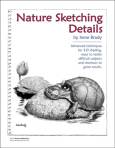
    Nature Sketching Details (Special! $9.95) – Advanced techniques for 3-D shading, ways to tackle difficult subjects, and shortcuts to great effects. This workbook starts where the Basics workbook leaves off, with ways to draw textures, symmetrical subjects, and shade white objects. There are several tutorials: drawing a cattail (with life-size cattail photos), tricky ways to create fine white lines against a in dark background (think “cat’s whiskers” or “leaf veins”), lizard and snake scales, and my own invention of “drawing” white on black (and not with white pencils, either).

    Sketching Wildlife Basics (Special! $9.95) – Wildlife sketching techniques and time-tested tips for every situation. In this workbook, I show you ways to develop left and right-brain templates to help you draw moving animals, how to use several models to draw a single sketch, or one model to draw several concurrent sketches. You’ll learn to develop your “visual snapshot” skills, then apply your pencil to get the tonal values you need to create fur and feathers. You’ll learn how to draw an eye with speed and skill, and the principles of drawing and shading fur, nestling down, and hair. There is a tutorial on sketching moving birds in the field, and techniques for drawing and shading realistic feathers. Find out what to do with birds that hit your window (sketch them, of course!), and ways to use your camera as a backup when sketching. Making useful labels and notes is discussed, as well as paper weight, electric erasers, and using a ballpoint pen when sketching. There’s even a tutorial on how to attach a pencil loop to your sketchbook!

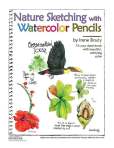
    Nature Sketching With Watercolor Pencils (Special! $9.95) – Fill your sketchbook with beautiful, satisfying color. Adding color to your sketches is incredibly satisfying (and a bit scary to some). This workbook takes all the fear out of it, introducing the waterbrush and its care and watering, and the skills you need to work like a pro. There’s a lovely color wheel exercise, instructions for making color charts if you want to, EIGHT ways to get the color onto the paper, a tutorial on applying a mask, and a tutorial on how to hold and use the paintbrush effectively for different results. This is not a sketching book – it concentrates on using color. So there are lots of sketches on which you to try out step-by-step instructions: a bobcat kitten, a mountain scene, trees and shrubbery, hemlock cones, a fawn, a skull, and a conch shell. There is a full-blown tutorial for painting an orchid, from delicate shading and bold spots on the petals to a striking background that you could use anywhere. I’ve also included a tutorial by Susie Short on how to paint raindrops or dewdrops, because she says it perfectly. This workbook will have you applying color in no time at all.

    Observing Nature ($24.95) – A journal sketching guide to discovering your natural environment. If you would like to encourage your kids to go out and sketch/journal, you can jump-start the process with this curriculum developed in conjunction with three nature centers to use with students from middle school through high school. If you go out with them to sketch, you’ll get as much enjoyment as they do. Purchasing this download gives you permission to print out as many as you want for your students. The course emphasizes quiet observation, developing curiosity, improving drawing skills, honing interpretive skills, practicing writing and descriptive skills, and developing self-confidence, self-reliance and independence. Kids absolutely love this course. See also the Teacher’s Manual.

    Observing Nature Teacher’s Manual ($24.95) – Teaching children to develop observational, writing and drawing skills as they discover the natural environment through sketching and journaling. This is extremely useful tool to help you implement the course for children, even if it’s only your own kids. It features creating Observation Boxes filled with natural items to examine, draw, and journal about: acorns, leaves, seedpods, and whatever natural curiosities you find in your area. This manual also has a class plan and everything you need if you decide to try your hand at teaching a group of children these skills in a more formal setting. This goes with the Observing Nature book described above. Buy Now

    Workbooks In-Preparation: Drawing Raptors (almost ready), Basic Landscape Sketching, Travel and Nature Journaling. Additional titles to be announced.


Question for EE Week Readers
:
Do you use drawing as a learning tool? If so, how do you incorporate drawing into your activities?


Related
:

Read Full Post »

« Newer Posts - Older Posts »