Feeds:
Posts
Comments

Archive for the ‘Sketching & Journaling’ Category


Jane LaFazio, Plain Jane Studio, San Diego

www.plainjanestudio.com
Jane is a mixed media artist and a member of the San Diego Sketchcrawl group. Jane teaches at conferences across the U.S. and leads classes in Italy too. In addition to the sketching classes, Jane teaches workshops in collage, mixed media, and quilting. A detailed class schedule can be viewed on her blog. Also see an interview with Jane and her Ask The Artist Q&A with readers.

  • Sketching & Watercolor: Journal Style (online)
    Begins January 24, 2012. Record sights, sounds and adventures in 2012. Jane will show you how! This six-week class is offered through Joggles.com. Cost: $75. View Details/Register
  • Sketching & Watercolor in a Mixed Media Journal
    January 24 – February 28, 2012; 9 AM – 12 PM. Learn how to draw a single object from many viewpoints and how to create creative backgrounds to enhance your work. This class will be taught at the
    San Diego/Park Blvd Studio of the Athenaeum’s School of the Arts.
    View Details/Register
  • Sketching & Watercolor: Mixed Media Journal (online)
    Begins February 28, 2012. Jane will teach you her quick and intuitive method to drawing and watercolor. Did you know Jane creates a sketch, paints it and posts it to her blog within a one-hour time frame? This six-week class is offered through Joggles.com. Cost: $75.
    View Details/Register
  • Watercolor Sketchbook: Designs from Life (online)
    Begins March 29, 2012. Learn how to create original designs to use as surface design on paper or cloth. Participants will learn how to transform their drawings of flowers, vegetables, leaves and other subjects into new graphic, stylized images. This six-week class is offered through Joggles.com. Cost: $75. View Details/Register
  • Sketching & Watercolor: On Location (online)
    Begins April 6, 2012. During this six-week class, students will learn how to draw and paint on location, often in public. Capture the sights and sounds at your local museum, your favorite bakery or a nearby botanical garden. This class is offered through Joggles.com. Cost: $75.
    View Details/Register
  • Lavender Sage Art Retreats: Mixed Media with Jane LaFazio and Pamela Underwood – April 19-23, 2012. Learn about collage, printmaking, mixed media techniques, drawing, poetry, journaling and site-specific land art. See some examples of the type of art that will be created in this course. Cost: $950, includes shared lodging, excursions, most meals and supplies. View Details/Register
  • Bella Italia: Orvieto Sketchbook – May 20-26, 2012. Create an illustrated travel journal while exploring the ancient hilltop town of Orvieto, Italy. Travelers will learn how to slow down so they can experience Italy and create journal pages that tell a story. The last day of the call will be spent creating a paper-on-cloth portfolio to hold the
    5″ x 7″ pages created during the week. View Details/Register

Also see the Classes Near You pages for southern California, Texas and Italy.

Read Full Post »

Do nature journaling activities work better with some age groups more than others?

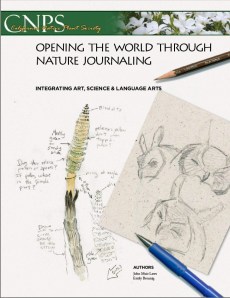
This question was posed to feature guest, John Muir Laws. In his reply, John refers to the matrix he created for the curriculum, Opening the World Through Nature Journaling. In this matrix, he lists each activity, the grade and age each activity was designed for, the length of time required to conduct each activity and special instructions. This matrix can be found on page 5 of the program John created with Emily Breunig and the California Native Plant Society.

Only four days remain to take advantage of the wonderful learning opportunity provided to us by John. Hopefully you have followed the conversation and have requested your free copy of Opening the World Through Nature Journaling.

Teachers, please share this opportunity with your colleagues!

So to get back to the question….

Do nature journaling activities work better with some age groups more than others?

Read John’s reply

Read Full Post »

You bet.

A reader shared this idea yesterday with naturalist and educator, John Muir Laws, and others during our on-going conversation about using journals as a teaching tool. Do you use cereal boxes to make journals too?

Catch up with the conversation and share your story here.

Read Full Post »

The month-long opportunity to discuss nature education and how to use drawing as a learning tool in the classroom has begun. Follow the stream of comments where the conversation is happening or view the latest comment in the Recent Comments box now located in the column at right.

John has started the conversation by asking…

    1) Are any teachers out there using nature sketchbooks in your classrooms? What has your experience been?

    2) Do you have any ideas to help motivate ourselves or our students to set aside time to sketch everyday?

Join the conversation…

Read Full Post »

A steward of the environment, especially California’s Sierra Nevada, John Muir Laws, has dedicated himself to revealing the natural world through art and science.

John (Jack) Laws has been an environmental educator for 30 years. He recently collaborated with the California Native Plant Society and with English instructor, Emily Breunig, to create a wonderful curriculum integrating art, science and the language arts.

I am thrilled to introduce John Muir Laws and Opening the World Through Nature Journaling, the Feature Curriculum for December.

John has kept a sketchbook since elementary school. Challenged by dyslexia, he found that keeping a journal was the easiest way to record his experiences. Drawing and sketching helped him see things he had never noticed before. John’s mom gave John his first sketchbook. One year during a family trip, John and his family met a woman who was keeping a wildflower sketchbook. John’s mom noticed how he followed this woman and her sketchbook throughout their trip. On the next family vacation, John’s mom gave him a sketchbook and colored pencils so he could document their vacation. Little did she know that years later, John would use sketchbooks as a teaching tool.

While working as a naturalist group leader at Walker Creek Ranch in northern California, John led activities designed to connect children to nature. He decided to incorporate journaling into his activities to help students slow down and focus in the same way his own journals helped him to slow down and become a better observer. He soon began to notice differences between his journaling audience and the groups of children who ran through the ranch without stopping to see what was really there. John began to expand upon his journaling exercises. The Marin County Outdoor School at Walker Creek Ranch became a great testing ground. It took about four years for John to develop his activities. He wrote up his observations, began sharing them with other naturalists and teachers, and over a period of 10-15 years, his activities were tested hundreds of times and refined. This collection of journaling exercises eventually became Opening the World Through Nature Journaling.

The response to Opening the World Through Nature Journaling has been “amazing”, according to John. He says “(the curriculum) has been well-adopted in California and across the country. Teachers get this is authentic student-driven education.”

While John was developing and testing journaling activities, he was also launching the program Following Muir’s Footsteps and working on his book, The Laws Field Guide to the Sierra Nevada (2007).

Following Muir’s Footsteps is a conservation project for schools in the Sierra Nevada region whose aim is to encourage local youth to become citizen stewards of the Sierra. Encompassing an eighteen-county area around the Sierra Nevada, Following Muir’s Footsteps connects youth to nature through firsthand experiences and journaling. Through this program, John provides in-service training for teachers about how to use field guides and how to use science journals in their classrooms. He also sponsors one mentor teacher from each school so they can attend the Sierra Nevada Teacher Institute, a summer program where teachers learn about the biodiversity of the Sierra Nevada. School libraries also benefit from this fantastic program. The library of each participating school receives 25 copies of The Laws Field Guide to the Sierra Nevada.

The idea to create his comprehensive field guide to the Sierra Nevada was hatched when John was in high school. One day, while hiking the John Muir Trail and juggling many field guides, he thought how wonderful it would be to have all of his field guides packaged into one portable book. By the time he finished high school, John says he could visualize the pages, the layout — everything. John’s grandmother encouraged him to begin working on his dream. At about this same time, he came across a poem by Mary Oliver called The Journey. The first line of this poem read:

One day, you finally knew what you had to do, and began.

So John quit his job and says he “filled my backpack with paper and granola.” He spent the next six years documenting the flora and fauna of the Sierra Nevada. In the early stages of this full-time project, he drew whatever he encountered. At the end, he went into the field with species lists. John says the last few species on his list were a particular challenge and that locating them was a true “scavenger hunt.”

How did John take on the expansive Sierra Nevada? He started at the lower elevations in the south and, as plants bloomed in the Spring, he followed the bloom hopping back and forth between the west side and the east side. Every 1-2 weeks, John hiked out to pick up fresh supplies, get more paper, bathe and shave.

In The Laws Field Guide to the Sierra Nevada, you will find descriptions of over 1700 species and 2,700 watercolor paintings. John drew each plant from life and each illustration was started and completed in the field. Illustrations of birds, insects and mammals began as quick gesture sketches in the field. They were then finished in the studio after a careful study of museum skins, reference materials, and the collections at the California Academy of Science.

When asked how it is he can make so many big things happen, John says none of his programs were launched as big complete packages. He explains, “It was an accumulation of a lot of little pieces coming together organically. This is what makes it possible to do something big.”


Ask The Artist with John Muir Laws

John received a Bachelor of Science in Conservation and Resource Studies at UC Berkeley and a Master of Science in Wildlife Biology at the University of Montana. He is also a graduate of the scientific illustration program founded at UC Santa Cruz, that is now taught at California State University Monterey Bay. In 2011, John received the TogetherGreen fellowship from Audubon/Toyota and this enabled him to deliver the Following Muir’s Footsteps program to 10 schools in the Sierra Nevada. This month, we have the extraordinary opportunity to discuss art, science and education with John.

To take advantage of this opportunity, post your questions or comments in the comment box below. John will respond to questions throughout the month of December.

Teachers, do you know of other teachers who might like to join in the conversation? Please send them the link to this article. The conversation will happen right here on this page.


Request a copy of Opening the World Through Nature Journaling

To request your own copy of the nature journal curriculum written by John Muir Laws and Emily Breunig in collaboration with the California Native Plant Society, click here.


Drawing Plants: Tutorials by John Muir Laws

John recently posted tutorials about how to draw plants on his website. These tutorials were created specifically for teachers. The demonstrations are easy for teachers to recreate in their own classrooms. Leaf and flower templates are available for download. View John’s instructional videos in the Nature Drawing section of his website.


Get “The Laws Field Guide to the Sierra Nevada”

Read Full Post »
Details about Cynthia Padilla’s new trip to Guatemala can be found below and at Classes Near You > Texas and Classes Near You > Guatemala:


Cynthia Padilla, Dallas

http://fruitflowerinsect.blogspot.com
Cynthia Padilla teaches painting and drawing classes at prestigious universities, major museums, arboreta, art societies across the US, Canada, Central America and internationally. She curates exhibitions, serves as a juror of exhibitions, lectures and conducts demonstrations, and leads painting retreats worldwide. Cynthia is also the founder of the Botanical Art & Naturalist Illustration group on Yahoo!

    Botanical Arts/ Nature Sketching the Tropical Flora and Fauna of Guatemala with Cynthia Padilla – October 27 – November 5, 2011. Central America, Guatamala – Antiqua. Join popular instructor Cynthia Padilla for a week submerged in the beauty of the tropical flora and fauna of Guatemala. Spend unhurried time, working en plein air, lulled by the gentle breezes of “the land of eternal spring.” Days begin with an introduction to materials and demonstration of technique. Participants are welcome to document whatever catches their eye and imagination — ancient structures, tropical landscapes, colorful markets.

    Class will be based in lovely Antigua, a delightful bougainvillea-draped town with an international ambiance of internet cafes, art galleries, artisan crafts and warmhearted, welcoming people.

    Participants will also head into the highlands where volcanoes rise out of early morning mist and spend 3 days on Lake Atitlan.

    Begin a lifelong habit of journaling in nature and return home with a collection of sketches, tiny vignettes, notes & notations, measurements and musings, and works of art ready to frame. All media and all levels welcome.

    Registration/Information: Liza Fourré, Director, Art Workshops in Guatemala, call 612-825-0747 or contact Liza Fourré, Director.

Read Full Post »

Animals are fun.

They engage us with their movements, have big round eyes, have cuddly fur and come in intriguing shapes, sizes and colors.

Plants, however, just sit there.

These truths, plus other interesting facts about how people perceive organisms are discussed by Petra Lindemann-Matthies in “Loveable” Mammals and “Lifeless” Plants: How Children’s Interest in Common Local Organisms Can Be Enhanced Through Observation of Nature.

Lindemann-Matthies evaluated a program created to enhance children’s knowledge of biodiversity. The program, Nature on the Way to School, was administered at 525 Swiss primary schools from March – June 1995 to celebrate the “European Year of Nature Conservation.” In her paper, Lindemann-Matthies makes the point that environmental education studies investigating student knowledge of the environment are different than educational studies in biodiversity focusing on “children’s direct observation and investigation of local wild plants and animals” (Lindemann-Matthies, 2005). Lindemann-Matthies states that the outcomes of biodiversity education have not been studied extensively and it is this topic that is the focus of her research.

Lindemann-Matthies (2005) says dedicated efforts to teach biodiversity to children must be taken to take advantage of young children’s interest in learning about living organisms. In her paper, she refers to biodiversity studies completed in Austria and Germany. In these studies, it was determined that incorporating outdoor experiences with classroom instruction was more effective at enhancing student awareness of local plant and animal species, than simply talking about local plants and animals in the classroom (Lindemann-Matthies, 2005).

The Nature on the Way to School program was created by the Swiss conservation organization Pro Natura. Classroom material and instruction was provided to teachers. Teachers ordering these materials were invited to take part in Lindemann-Matthies’ study. The program’s hands-on activities called upon students to engage in activities such as drawing plants and animals, caring for invertebrates like snails and earthworms in the classroom, and recording what was observed while walking to school (Lindemann-Matthies, 2005). Of the many classrooms in which this program was administered, Lindemann-Matthies evaluated the program’s effectiveness in classrooms where the teacher completed and returned the pre- and post-test questionnaire required for Lindemann-Matthies’ research. Her final study group was composed of 248 classrooms and over 4,000 students ages 8-16.

Research questions addressed by Lindemann-Matthies (2005) were:

  • Which plants and animals do children like best, and which organisms are especially valued on their way to school?
  • Did the educational program Nature on the Way to School change children’s preferences for species?
  • Did the age and sex of the children influence their preferences for species and did age and sex influence the effect of the program?


Results

When students were asked which plants and animals they liked best before participating in the Nature on the Way to School program, students listed garden plants or decorative plants such as roses, tulips and daffodils and few made reference to the local plants of Switzerland (Lindemann-Matthies, 2005). After the program, the number of students listing local plants (especially wildflowers) increased. The increase observed in the experimental group was significantly higher (11.4%) than in the control group (2.6%) (Lindemann-Matthies, 2005). When students were asked to name their favorite animals, students listed pets (especially cats, dogs and horses) more often than local Swiss animals prior to the study. After the study, students still listed pets more often than local animals (Lindemann-Matthies, 2005). When it came to plants, children’s preferences for plants were not influenced by sex or age (Lindemann-Matthies, 2005). This was in contrast to Lindemann-Matthies’ findings about preferences for animals where it seems more girls like pet animals and more boys like exotic animals (e.g., lions and tigers) and wild animals (e.g., squirrels and deer).

Lindenmann-Matthies (2005) observed that the plants and animals students claimed to appreciate the most were directly related to the plants and animals to which they were exposed. So if children were exposed mostly to garden variety plants, they referred to these plants more often when asked which plants they liked (or appreciated) the most.

Lindenmann-Matthies (2005) also observed a positive relationship between the number of program instruction hours received by students and their appreciation for the wild plants and animals of Switzerland. The more instruction students received, the more they demonstrated an appreciation for local flora and fauna. On average, teachers from the 248 participating classrooms spent 17 hours teaching the Nature on the Way to School program, with the actual hours of program instruction ranging from one hour to sixty hours across all classrooms (Lindemann-Matthies, 2005).

Teachers in 144 of the 248 classrooms incorporated the program’s Nature Gallery activity into their curriculum. This clever activity called upon students to serve as interpreters for their favorite local plant or animal. In this activity, students were asked to frame the plant or animal they liked best during their walk to school. More than 50% of the items framed by students were wild plants, followed by plants whose identification were unknown (16.2%), which was then followed by garden variety plants (15.5%) (Lindemann-Matthies, 2005). The wild animals framed by students were represented by anthills, spider webs and birds nests (13.7%) (Lindemann-Matthies, 2005). After framing their subject, students were encouraged to spend one week providing information about their subject to fellow students, to parents, to anyone walking by and in some cases, the media. Students had to explain why they chose their subject and while students cited many reasons for selecting their subject, most students chose to frame a subject because of its beauty (22.5%), “likeability” (20.2%) or some specific feature students found interesting (Lindemann-Matthies, 2005). The plant framed most often was a dandelion and Lindemann-Matthies (2005) reports that the students framing this plant tended to do so because it was “growing in unusual places.” Lindemann-Matthies states the Nature Gallery activity was the “highlight” of the Nature on the Way to School program.

Citing the observations above and many other observations described in her 22-page paper, Lindemann-Matthies (2005) concludes:

  • The Nature on the Way to School program was successful at making students more aware of the diverse number of plant and animals species in their local area.
  • There appears to be a strong association between awareness and preference. In this program, as students became more aware of local plants, their preference for local plants increased.
  • While student preference for pets did not change, their preference for pet animals decreased with the number of program instruction hours received. Lindemann-Matthies (2005) proposes that the average number of instruction hours received (17 hours) is not enough to increase student appreciation for local wild animals.
  • Even successful programs have sobering limitations. When students were asked what they would have liked to frame in a Nature Gallery if given a choice, students “still preferred ‘loveable’ animals, in particular mammals from countries other than Switzerland.”

To learn more about Lindemann-Matthies’ research, visit your local college library to pick-up a copy of this paper or purchase it online for $34.


Literature Cited

Lindemann-Matthies, Petra. 2005. “Loveable” mammals and “lifeless” plants: how children’s interest in common local organisms can be enhanced through observation of nature. International Journal of Science Education. 27(6): 655-677

Read Full Post »

« Newer Posts - Older Posts »