Feeds:
Posts
Comments

Archive for the ‘general botany’ Category

See what’s new at Classes Near You > Ireland!


Lismore Castle Arts

www.lismorecastlearts.ie
Located at Lismore Castle in Ireland, Lismore Castle Arts hosts exhibitions year-round in a state-of-the-art-gallery that was once the neglected west wing of the Castle. The gallery now showcases contemporary visual art, while paying respect to the castle’s long history.

    Botanical Illustration with Patrick O’Hara
    Tuesday, August 7, 2012
    10 AM – 4:30 PM
    Patrick O’Hara is a botanical artist who works with watercolor and porcelain structures. When creating his art, he takes special note of how plants grow and the relationships plants have with insects and other animals. In this one-day class, Patrick will lead participants on a walk through the garden to demonstrate how he documents plants in the field. Back in the classroom, Patrick will guide students as they work on individual projects. Cost: €50, Light lunch included. View Details/Register

    Patrick is currently painting California wildflowers on a commission through the Santa Barbara Botanic Garden. Readers in Europe can view and purchase Patrick’s wildflower paintings on his website. Readers in the U.S. can view and purchase Patrick’s paintings through the online store at the Santa Barbara Botanic Garden.

Read Full Post »

Here is only a hint of the botany and botanical art classes one can take at the North Carolina Botanical Garden.

See what’s new at Classes Near You > North Carolina:


North Carolina Botanical Garden

www.ncbg.unc.edu
Through the Garden’s courses in botany and botanical art, anyone interested in plants and how to draw and paint them will receive a well-rounded education enhancing their scientific understanding of plants, their knowledge of visual arts theory, and how to approach drawing and painting plant portraits. Upcoming botany and botanical art classes include:

  • Botany
    Saturday, August 4, 11, 18, 25, 2012; 9:15 AM – 1:15 PM.
  • Drawing for People Who Think They Can’t Draw
    Saturday, August 18, 2012; 1:00 – 4:30 PM.
  • Intro to Botanical Illustration
    Saturdays, August 25, 2012; 1:00 – 4:30 PM.
  • Beginning Drawing
    Mondays, August 27 and September 10, 17, 24, 2012; 1:00 – 4:30 PM.
  • Beginning Watercolor
    Tuesdays, September 4, 11, 18, 25, 2012; 1:00 – 4:30 PM.
  • Plant Ecology
    Wednesdays, September 5, 12, 19, 26, 2012; 9:30 AM – 12:30 PM.
  • Fall Leaves in Colored Pencil
    Saturday, September 8, 2012; 1:00 – 4:30 PM.
  • Field Sketching
    Mondays, October 1, 8, 15, 22, 2012; 1:00 – 4:30 PM.
  • Introduction to Mushrooms
    Wednesday, October 3 and Saturday, October 6, 2012.
  • Lichens
    Saturday, October 13, 2012; 9 AM – 3 PM.
  • Dendrology
    Wednesdays, October 31 and Nov. 7, 14, 28, 2012; 9:30 AM – 3:30 PM.
  • Flowering Plant Families
    Sundays, November 4, 11, 18 and December 2, 2012; 1:30 – 4:30 PM

View course schedule at North Carolina Botanical Garden

Read Full Post »

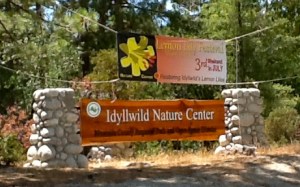
The 3rd Annual Lemon Lily Festival will be held in the mountain community of Idyllwild, CA this weekend. The festival brings attention to the small populations of the rare and uncommon Lemon Lily growing in moist areas of the San Jacinto and Santa Rosa mountains in southern California.

Education and restoration are the focus of the festival this year. Local botanists will lead nature walks on the hour from 10 AM to 4 PM on Saturday, July 21 and Sunday, July 22. There will be garden club tours, events occurring throughout the town of Idyllwild, and educational activities at the Idyllwild Nature Center.

ArtPlantae will be at the Idyllwild Nature Center this weekend from
9 AM – 4 PM on Saturday and Sunday.

Spend a lovely summer weekend in the mountains.

Join us at the Lemon Lily Festival!


Visit the Lemon Lily Festival

Read Full Post »

Today, featured artist Heeyoung Kim talks about her work in progress.


Heeyoung, since it is not always possible to document a plant’s life cycle in one season, I assume you must have paintings on hold. How many drawings or paintings do you have in-progress at any given time?


Heeyoung
:

Right now, 58 drawings and paintings are in progress.

Early spring flowers are very difficult to finish up as a serious painting. They bloom very early when the weather is still too severe for me to sit hours in the woods. Quite often we have snow which damages the fragile spring flowers, or shorten their blooming time. And too many flowers bloom all together, which makes me feel just hurried, but not doing a lot. So I have a lot of drawings started, but never have enough time to color them.

Mid-summer plants are also challenges. I have to stop going to the woods when it is too hot and too buggy and ticks are all around. When you find 7 ticks from your hair, you say, “Oh My God! Let’s stop!”

I am thrilled, though, thinking of the day when I finish all of them.


Do you have field projects in progress? Tell us what you’re working on!

Read Full Post »

Featured guest, Heeyoung Kim, shares how she collects field data:


After you locate a plant in the field, how do you approach recording the plant’s information? Do you begin with a written description of its identifying characteristics or do you prefer to think visually and create a sketch first?


Heeyoung
:

When I am introduced to a new plant either with help from my “plant scout” or through a book, I can usually see it from its blooming season. I do start sketching parts of the plant, but I prefer working with the whole composition after I see its full life cycle in the next year.

Both written and graphic records are essential for a proper description, I believe. I usually start measuring botanically distinctive features of the plant with the metric system first. I then draw them from different angles and in various stages with color notes or sample coloring with colored pencil or watercolor. I know we are used to inch and feet in America, but in most other countries they use the metric system and they require you to write scales in centimeters and millimeters when you do scientific illustration and write a plant legend. For color notes, sometimes I just write down the paint tube names I will probably use to paint the plant. I find this works very well for me, as I can directly envision the painting process while I am looking at the plant.

I record all of my notes on one large paper, which I always have with me whenever I go out for sketch.


Join this conversation already in progress

Read Full Post »

Artwork © Susan Brown Hardy. Image courtesy of Greg Bolosky.

Artist Susan Hardy Brown brings a fresh perspective to the important work performed in herbaria throughout the world. Using materials gathered from her work as a curatorial assistant at the Herbarium of the Arnold Arboretum, Brown captures plants and their diversity in paintings created using beeswax and resin — a technique called encaustic painting.

An exhibition of Brown’s work, Ex Herbario:
Recent Works by Susan Hardy Brown
, will be on view in the Hunnewell Building Lecture Hall at the Arnold Arboretum from July 14 – September 16, 2012.

Brown will discuss her work during Artist Talk: Susan Hardy Brown, a free lecture to be held on Thursday, September 13, 2012 from 7:00 – 8:30 PM. To attend this event, please register here.

The public will have another opportunity to meet Susan Hardy Brown during a special reception scheduled for Saturday, September 15 from 1-3 PM.

Harvard University’s Arnold Arboretum is a 265-acre living collection of trees, shrubs and woody vines. It is the oldest public arboretum in North America and is free and open to the public everyday. The Hunnewell Building Lecture Hall is in continuous use for classes and other events. Please check the current visiting hours of the Hunnewell Building and call (617) 384-5209 to confirm the exhibition will be available for viewing.


Related

Learn more about encaustic art. Visit International Encaustic Artists online.

Read Full Post »

Heeyoung Kim is a botanical artist whose illustrations and paintings of American prairie plants have graced posters, postcards and exhibition catalogs. Earlier this year, Heeyoung’s paintings of prairie plants were awarded a gold medal by the Royal Horticultural Society (RHS) in England. Heeyoung’s collection of paintings at the RHS show focused on the common, rare and endangered plants of the American prairie. Heeyoung explains why she is devoted to documenting these rapidly disappearing plants:

Since the late 1800s, the fertile tallgrass prairie has been converted into an intensive crop producing area. This region of the US is called America’s ‘breadbasket’ or ‘corn belt’. What was once the largest ecosystem of the American continent with a biodiversity rivaling the richest rainforests, has yielded to commercial agriculture leaving its flora and fauna in peril.

Heeyoung brings attention to the fragile state of America’s prairies by exhibiting her work in national and international exhibitions such as Losing Paradise? Endangered Plants Here and Around the World, a traveling exhibition by the American Society of Botanical Artists. Her award-winning RHS paintings were recently featured in a solo exhibition at Northbrook Library in Northbrook, IL.

Heeyoung began her botanical art career in January 2007. Before this time, painting was more of a recreational activity. When she first came to the U.S., she started painting with oil and colored pencil just to make friends and to learn English at the senior center where she volunteered. Then one day, after a couple of years of painting this way, she noticed that every single painting was a detailed floral painting. She began to think about painting flowers seriously, but didn’t know how to begin until she saw a magazine published by the Chicago Botanic Garden. “It mentioned something like ‘botanical art’, which I had never heard of in my life,” says Heeyoung.

So Heeyoung enrolled in Botanical Drawing 1 at the Chicago Botanic Garden and became a botanical artist the moment her instructor shared samples of botanical art with the class. Heeyoung says, “I felt like the drawings grabbed me right in the heart.”

After completing this class, she signed up for Botanical Drawing 2, Ink Drawing 1, Ink Drawing 2 and other classes offered through the botanical art certificate program at the Chicago Botanic Garden. Instead of pursuing a certificate in botanical art, Heeyoung decided to work on independent projects and to work with her instructor independently. The mentor who inspired her so much was Derek Norman, Vice President of the American Society of Botanical Artists. As Heeyoung explains, “I was with the right person from the beginning.”

During her first year of botanical painting, Heeyoung spent all of her available time at the Reed-Turner Nature Center in Long Grove, Illinois. Fascinated by the many beautiful woodland plants that grew “like magic in every moment, showing off their flowers and preparing for the next generation”, Heeyoung began to draw the different stages of plant development she observed. She did this without having any purpose in mind. “I just loved the changes,” she says.

Sometime later, Heeyoung became friends with Stephen Packard, the leader of a Chicago land volunteer team working to restore the tallgrass prairie. Heeyoung was surprised to learn that the tallgrass prairie is almost extinct and that there are experts and volunteers working tirelessly to preserve what remains of America’s prairies. These same experts and volunteers are also converting abandoned farmland back into prairie. Heeyoung explains that, while the conservation efforts are strong and steady, the public has no idea what is happening with the remnants of prairie located within their own neighborhoods. Upon learning this, Heeyoung knew that she could do something to change this.

I believe art is a great way to make connections with people and to inspire them to act. At this point my prairie project started. I changed my website domain to www.PrairiePlantArt.com, and started to focus on painting prairie plants from my long wishlist. When I had my first solo exhibition at Ryerson Woods Conservation Area last spring, I invited Stephen Packard to the opening reception and shared stories about prairie culture and restoration. That was an eye-opening moment to most of the 320 attendees.

I showed eight paintings from my prairie project at RHS London last March and twenty-six drawings and paintings at a local public library in May. When the art director of the library invited me to have a solo show there, I hesitated a little because I was concerned about possible damage to the artwork from heavy traffic, especially from the many children visitors. But then I thought that libraries can be the best place to get (the public’s) attention. So I accepted the offer gratefully. The result was fantastic. The best feedback was, ‘The whole town was in awe!’

Please join me in welcoming Heeyoung Kim as the Featured Artist for July!


Read Full Post »
« Newer Posts - Older Posts »