Feeds:
Posts
Comments

Archive for the ‘environmental education’ Category

Finding an answer to this question was the focus of a study created by
Elisabeth E. Schussler, Melanie A. Link-Perez, Kirk M. Weber and Vanessa H. Dollo. They reported their findings in Exploring Plant and Animal Content in Elementary Science Textbooks.

To determine how plants and animals were presented in nationally-distributed textbooks, they reviewed two sets of general science books — the Science series (2006) by Harcourt and the Science series (2005) by Macmillan McGraw-Hill. Schussler, et al. (2010) conducted a detailed analysis of the textbooks used in grades 1-5.

General science textbooks address concepts from many areas of science and this information is presented in many ways. Schussler, et al. (2010) studied only the life science units of each textbook and focused their analysis on the body of text within each section. They decided to leave sections of complementary information within each chapter (i.e., text boxes, special features, activities, chapter summary questions, etc.) out of their analysis. They searched specifically for plant-focused and animal-focused content to determine the following:

  • The number of sub-sections and pages of plant and animal content.
  • The number of plant and animal examples used in each text.
  • The number of plant and animal topics included in each text.

Here is a summary of what Schussler, et al. (2010) discovered:

  • In both textbook series, the number of sub-sections dedicated exclusively to non-human animals was greater than the number of sub-sections dedicated exclusively to plants. The number of content pages about animals was equal to the number of content pages about plants in the Harcourt series. In the Macmilian McGraw-Hill series, there were more animal pages than plant pages.
  • In both publisher’s textbooks, the number of animal examples used exceeded the number of plant examples used. The most repeated examples of plants in the Harcourt series were tree, grass, moss, pine and fern. In the Macmillian McGraw-Hill series, the most repeated examples of plants were tree, grass, corn, cactus and oak. The most repeated examples of animals were almost identical. They were bird, fish, insect, frog and deer. In the Harcourt series, snake tied with deer.
  • More animal-related topics were included in the textbooks than plant-related topics.

How did the research team sift though all that content and decide what was an animal-related topic and a plant-related topic?

The topic categories were identified after a careful analysis of the text. Schussler, et al. (2010) identified categories such as “seed germination”, “plant growth”, “reproduction”, and many others. After sorting through their list of categories, they came up with a list of topics that encompassed all the categories they identified. This final list addressed the following topics: Parts, Needs, Types, Growth, Reproduction, Uses, Adaptations, and Where Specimens Live (Schussler, et al., 2010). As far as plants were concerned, the topic “Plant Parts” received more attention than the topic of “Animal Parts” in both series. After this, though, content about animal needs, animal types, animal adaptations, etc. was more prevalent than the needs of plants, the types of plants growing on Earth, their adaptations and the landscapes they call home.

Schussler, et al. (2010) propose that textbooks may be contributing to the gap in knowledge observed in students when students are asked to name plants and animals. They also propose that textbooks may be contributing to students’ perception that plants are boring because plants are presented more as “parts” and not as living entities with needs, adaptations and all the rest.

Schussler, et al. (2010) recommend a thorough analysis of textbooks in all countries to find out if the differences they found in the Harcourt and Macmillian McGraw-Hill textbooks are present in other general science books. They also call upon botanists and all botany educators to use as many real world examples about plants as possible to encourage a comprehensive, big-picture view of plants.


Did You Know?


Literature Cited

Schussler, Elisabeth E. and Melanie A. Link-Perez, Kirk M. Weber, Vanessa H. Dollo. 2010. Exploring plant and animal content in elementary science textbooks. Journal of Biological Education. Vol. 44(3): 123-128.

Buy this article online from Taylor & Francis Online ($36) or visit the reference section at your local college library.
Read Full Post »

New courses for plant enthusiasts, botanists and botanical artists at
Classes Near You > England.


Field Studies Council

www.field-studies-council.org
Founded in 1943, the Field Studies Council provides learning opportunities about the environment for all ages and abilities. Visit their website to learn more about interdisciplinary fieldwork opportunities, classes for individuals and families, publications and profession development courses.

  • Botany Courses at FSC – Courses include studies of flowers, trees, grasses and grasslike plants, ferns, freshwater and wetland plants, lichens, fungi, general plants, mosses and liverworts.
    View Details/Register
  • Botanical Illustration with Kay Rees-Davies – February 24-26, 2012. Beginners and more experienced illustrators will receive individualized instruction about pencil drawing and color mixing (especially how to mix greens). Students will use watercolor and pencil as they learn techniques to paint studies of plants, fruit, flowers and foilage. View Details/Register
  • Drawing and Painting the Flora at Malham Tarn with Kate Houghton – May 18-21, 2012. This class is for anyone with an interest in documenting and painting native plants. Students will participate in exercises designed to increase speed and accuracy while working in the field. View course details and a description of the landscape at Malham Tarn here.
  • Botanical Illustration Using Colored Pencils with Janie Pirie
    June 22-24, 2012. Create rich, colorful botanical paintings without water! Students will learn how to use wax and oil-based colored pencils to created botanical drawings from one of the UKs leading colored pencil artists. View Details/Register
  • Introduction to Botanical Illustration with Lesley Smith
    July 6-8, 2012. Designed for experienced watercolor painters, this class is for painters who would like to learn about the techniques used by botanical illustrators. Drawing, composition, color mixing and color matching will be discussed. View Details/Register
  • Botanical Illustration and Painting with Kay Rees-Davies
    August 3-5, 2012. Beginners and more experienced artists will learn the botanical illustration and painting techniques necessary to create detailed studies of the plants of Snowdonia. View Details/Register
  • An Approach to Botanical Illustration: Drawing and Basic Watercolor Techniques with Rosie Martin – August 5-10, 2012. In this introductory course, students will study the stages of drawing and painting that result in a three-dimensional detailed plant portrait.
    View Details/Register
  • Botanical Illustration for More Experienced Painters with Jenny Jowett – August 13-20, 2012. The focus of this week-long class is to provide an environment for the exchange of ideas and techniques. Emphasis is on individual studies instead of formal group instruction.
    View Details/Register

Read Full Post »

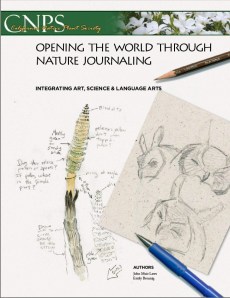
The month-long opportunity to discuss nature education and how to use drawing as a learning tool in the classroom has begun. Follow the stream of comments where the conversation is happening or view the latest comment in the Recent Comments box now located in the column at right.

John has started the conversation by asking…

    1) Are any teachers out there using nature sketchbooks in your classrooms? What has your experience been?

    2) Do you have any ideas to help motivate ourselves or our students to set aside time to sketch everyday?

Join the conversation…

Read Full Post »

Animals are fun.

They engage us with their movements, have big round eyes, have cuddly fur and come in intriguing shapes, sizes and colors.

Plants, however, just sit there.

These truths, plus other interesting facts about how people perceive organisms are discussed by Petra Lindemann-Matthies in “Loveable” Mammals and “Lifeless” Plants: How Children’s Interest in Common Local Organisms Can Be Enhanced Through Observation of Nature.

Lindemann-Matthies evaluated a program created to enhance children’s knowledge of biodiversity. The program, Nature on the Way to School, was administered at 525 Swiss primary schools from March – June 1995 to celebrate the “European Year of Nature Conservation.” In her paper, Lindemann-Matthies makes the point that environmental education studies investigating student knowledge of the environment are different than educational studies in biodiversity focusing on “children’s direct observation and investigation of local wild plants and animals” (Lindemann-Matthies, 2005). Lindemann-Matthies states that the outcomes of biodiversity education have not been studied extensively and it is this topic that is the focus of her research.

Lindemann-Matthies (2005) says dedicated efforts to teach biodiversity to children must be taken to take advantage of young children’s interest in learning about living organisms. In her paper, she refers to biodiversity studies completed in Austria and Germany. In these studies, it was determined that incorporating outdoor experiences with classroom instruction was more effective at enhancing student awareness of local plant and animal species, than simply talking about local plants and animals in the classroom (Lindemann-Matthies, 2005).

The Nature on the Way to School program was created by the Swiss conservation organization Pro Natura. Classroom material and instruction was provided to teachers. Teachers ordering these materials were invited to take part in Lindemann-Matthies’ study. The program’s hands-on activities called upon students to engage in activities such as drawing plants and animals, caring for invertebrates like snails and earthworms in the classroom, and recording what was observed while walking to school (Lindemann-Matthies, 2005). Of the many classrooms in which this program was administered, Lindemann-Matthies evaluated the program’s effectiveness in classrooms where the teacher completed and returned the pre- and post-test questionnaire required for Lindemann-Matthies’ research. Her final study group was composed of 248 classrooms and over 4,000 students ages 8-16.

Research questions addressed by Lindemann-Matthies (2005) were:

  • Which plants and animals do children like best, and which organisms are especially valued on their way to school?
  • Did the educational program Nature on the Way to School change children’s preferences for species?
  • Did the age and sex of the children influence their preferences for species and did age and sex influence the effect of the program?


Results

When students were asked which plants and animals they liked best before participating in the Nature on the Way to School program, students listed garden plants or decorative plants such as roses, tulips and daffodils and few made reference to the local plants of Switzerland (Lindemann-Matthies, 2005). After the program, the number of students listing local plants (especially wildflowers) increased. The increase observed in the experimental group was significantly higher (11.4%) than in the control group (2.6%) (Lindemann-Matthies, 2005). When students were asked to name their favorite animals, students listed pets (especially cats, dogs and horses) more often than local Swiss animals prior to the study. After the study, students still listed pets more often than local animals (Lindemann-Matthies, 2005). When it came to plants, children’s preferences for plants were not influenced by sex or age (Lindemann-Matthies, 2005). This was in contrast to Lindemann-Matthies’ findings about preferences for animals where it seems more girls like pet animals and more boys like exotic animals (e.g., lions and tigers) and wild animals (e.g., squirrels and deer).

Lindenmann-Matthies (2005) observed that the plants and animals students claimed to appreciate the most were directly related to the plants and animals to which they were exposed. So if children were exposed mostly to garden variety plants, they referred to these plants more often when asked which plants they liked (or appreciated) the most.

Lindenmann-Matthies (2005) also observed a positive relationship between the number of program instruction hours received by students and their appreciation for the wild plants and animals of Switzerland. The more instruction students received, the more they demonstrated an appreciation for local flora and fauna. On average, teachers from the 248 participating classrooms spent 17 hours teaching the Nature on the Way to School program, with the actual hours of program instruction ranging from one hour to sixty hours across all classrooms (Lindemann-Matthies, 2005).

Teachers in 144 of the 248 classrooms incorporated the program’s Nature Gallery activity into their curriculum. This clever activity called upon students to serve as interpreters for their favorite local plant or animal. In this activity, students were asked to frame the plant or animal they liked best during their walk to school. More than 50% of the items framed by students were wild plants, followed by plants whose identification were unknown (16.2%), which was then followed by garden variety plants (15.5%) (Lindemann-Matthies, 2005). The wild animals framed by students were represented by anthills, spider webs and birds nests (13.7%) (Lindemann-Matthies, 2005). After framing their subject, students were encouraged to spend one week providing information about their subject to fellow students, to parents, to anyone walking by and in some cases, the media. Students had to explain why they chose their subject and while students cited many reasons for selecting their subject, most students chose to frame a subject because of its beauty (22.5%), “likeability” (20.2%) or some specific feature students found interesting (Lindemann-Matthies, 2005). The plant framed most often was a dandelion and Lindemann-Matthies (2005) reports that the students framing this plant tended to do so because it was “growing in unusual places.” Lindemann-Matthies states the Nature Gallery activity was the “highlight” of the Nature on the Way to School program.

Citing the observations above and many other observations described in her 22-page paper, Lindemann-Matthies (2005) concludes:

  • The Nature on the Way to School program was successful at making students more aware of the diverse number of plant and animals species in their local area.
  • There appears to be a strong association between awareness and preference. In this program, as students became more aware of local plants, their preference for local plants increased.
  • While student preference for pets did not change, their preference for pet animals decreased with the number of program instruction hours received. Lindemann-Matthies (2005) proposes that the average number of instruction hours received (17 hours) is not enough to increase student appreciation for local wild animals.
  • Even successful programs have sobering limitations. When students were asked what they would have liked to frame in a Nature Gallery if given a choice, students “still preferred ‘loveable’ animals, in particular mammals from countries other than Switzerland.”

To learn more about Lindemann-Matthies’ research, visit your local college library to pick-up a copy of this paper or purchase it online for $34.


Literature Cited

Lindemann-Matthies, Petra. 2005. “Loveable” mammals and “lifeless” plants: how children’s interest in common local organisms can be enhanced through observation of nature. International Journal of Science Education. 27(6): 655-677

Read Full Post »

Welcome to EE Week 2011!

National Environmental Education Week (EE Week) is organized by the National Environmental Education Foundation to connect K-12 teachers and their students to environmental resources informing the public about environmental issues affecting all of us. ArtPlantae is proud to once again serve as a national partner for EE Week.

This year’s theme inspires us to discover our oceans and to become more aware of the many ways we are connected to them, even though we may live miles and miles away. This year, like last year, I have had the opportunity to work with enthusiastic individuals committed to helping ArtPlantae show connections between plants, art, and the theme for EE Week. Please join me in welcoming each contributor as they are introduced.

We will discuss several interesting topics this week and learn a lot.

Let’s begin!

Read Full Post »

A quick reminder that EE Week begins on Sunday and, like last year, I will post to this site everyday during EE Week. This means I will post daily through Saturday April 16, 2011.

This year’s EE Week theme is Ocean Connections. The generous and enthusiastic contributors to EE Week 2011 have made it possible to link plants, art, and the ocean in support of this year’s theme. I hope you enjoy learning from them as much as I have.

You are invited to participate in a live conversation with author Glynis Ridley on the Facebook page on April 16th. Glynis will discuss her new book, The Discovery of Jeanne Baret: A Story of Science, the High Seas, and the First Woman to Circumnavigate the Globe. The story of Jeanne Baret is fascinating and Glynis conducted several layers of research to piece together Baret’s story. You don’t want to miss this conversation. Mark your calendar and please join us on the Discussion page at 11 am (PST) / 2 pm (EST) on April 16.

If you’re in southern California, consider kicking off EE Week with ArtPlantae at the Spring Fair & Art Festival at Tucker Wildlife Sanctuary this weekend, April 9-10 (9 AM – 4 PM, daily). There will be live music, art & craft demonstrations, guided nature hikes, and more. Tucker Wildlife is operated by the College of Natural Sciences and Mathematics at California State University, Fullerton.

Can’t kick-off EE Week with a Spring festival? Then consider ending EE Week at the 25th Annual Avocado Festival in downtown Fallbrook in north San Diego County. ArtPlantae will on the Avenue of the Arts during this one-day festival occurring on Sunday April 17 from 9 AM – 5 PM. The Avocado Festival brings in about 70,000 people each year, so come early, bring your walking shoes, and your appetite!


And don’t forget your map…

Read Full Post »

The Botanical Capacity Assessment project identified the need for more botany instruction in the classroom and in college programs. Creating new courses is definitely an important step forward to ensure we can take part in the management of such issues as food security, sustainability, and biodiversity (Kramer & Havens, 2010). But how do you know students will want to take these courses, especially in light of research indicating that careers in natural resource management have very low appeal among high school seniors (Hager et al., 2007)?

Research intern and high school student Sarah Hager of the South Carolina Governor’s School for Science, and Mathematics (Hartsville, SC), professor Thomas Straka and research associate Heather Irwin, both from Clemson University in South Carolina, employed traditional research methods and social media savvy to answer a very important question…

What do teenagers think of environmental issues and natural resources management careers?

The Research Tool
Hager et al. (2007) created a survey format that would appeal to teenagers. Their survey was short and contained a mix of closed-ended questions, open-ended questions, and a list of environmental issues. They sent a draft of their survey to peers in the fields of forestry, natural resources, and environmental education. Feedback from these professionals helped to shape the final survey.


How They Got The Word Out

Hager et al. (2007) used Myspace to poll teenagers during summer vacation. Twenty surveys were sent to Myspace participants in each state (n=1,000). Hager et al. (2007) used the filtering capabilities of the social network to target 17-year old high school students across the nation. Random numbers were used to identify random zip codes within each state.


The Results

Of those polled, 14.8% responded (n=148). Sixty percent of the respondents were female and 80% of the respondents were college-bound. When presented with a list of environmental issues, more than half rated the issues as “somewhat important” (Hager et al., 2007). Respondents rated the loss of wildlife habitat, pollution, and sustainability as the most important environmental issues. Global warming, urban development, fragmentation, private property rights, and invasive species followed in the rankings.

Hager et al. (2007) included in their survey a component to evaluate student awareness of natural resource careers. Student awareness was measured by their ability to accurately define what each profession does for a living. Most students could define what soil & water conservationists, wildlife managers, foresters, and park rangers do in their respective professions. When asked if these professions appealed to them, respondents stated these professions did not appeal to them. Park ranger was the most attractive of the choices, with forester being the least attractive. Respondents thought being a forester would be “boring” and expressed sentiments such as “I don’t like bugs” or “I’m not interested” (Hager et al., 2007).


The Big Picture

While high school seniors seem to be interested in environmental issues and take part in environmental programs, they have little interest in pursing a career in natural resource management (Hager et al., 2007). Hager, Straka, and Irwin describe student interest in environmental issues as being a “popular interest” shaped by the media because most students reported that the media is their primary source of information about the environment. In response to this, Hager et al. (2007) recommends that careers in natural resource management are presented as options during career counseling in high school and that enhanced marketing efforts should be employed to make careers in natural resource management more appealing.

A thorough analysis of survey results and an explanation of how Myspace was used to conduct this survey is provided in Hager et al. (2007).

This article is available online from the Society of American Foresters ($29.50) or at a library near you (enter your location in the search field).


Literature Cited

Hager, Sarah, Thomas Straka, and Heather Irwin. 2007. What do teenagers think of environmental issues and natural resources management careers? Journal of Forestry 105(2): 95-98.

Kramer, Andrea and Kayri Havens. 2010. Assessing Botanical Capacity to Address Grand Challenges in the United States. A report by the Botanical Capacity Assessment Project. Website http://www.bgci.org/usa/bcap [accessed 26 January 2011].


Related Articles

Read Full Post »

« Newer Posts - Older Posts »