Feeds:
Posts
Comments

Archive for the ‘environmental education’ Category

Dear Friends,

I have a story and some resources to share to celebrate the publication of Storytelling to Accelerate Climate Solutions, especially the chapter about visual science communication.

I had the opportunity to work alongside and learn from visual science communicators Kalliopi Monoyios, Kirsten Carlson, Taina Litwak, and Fiona Martin. We collaborated on the chapter, Visuals as a Catalyst for Climate Science Communication. This chapter provides a historical overview of scientific illustration and what visual science communication looks like in formal and informal learning environments. I share this chapter here in case this topic is of interest. Published by Springer Nature, this chapter and the entire book are open-access and available for free.

Today’s story is about a Fibonacci-themed booth I created for the ideal Pi Day event. What made this the quintessential Pi Day event is that the date, March 14, 2015, matched the first five digits in Pi (3.1415). To make this day even more special, the STEM and career festival for students and families I participated in began at 9:52 AM (9-5-2 are the next three digits in Pi). Event organizers and exhibitors happily celebrated Pi Day by playing up 3.1415952.

Science, technology, engineering, and mathematics were well-represented on this day. Participating exhibitors were asked to include a career component with their planned exhibit. The tabletop activity I created for this event focused on the Fibonacci spiral. Visitors learned to identify Fibonacci spirals on pine cones, pineapples, and artichokes. The career I chose to highlight on this day was scientific illustration. During my activity, students learned how to see Fibonacci spirals and how knowing about these spirals helps scientific illustrators capture the patterns on objects where the spiral is observed.

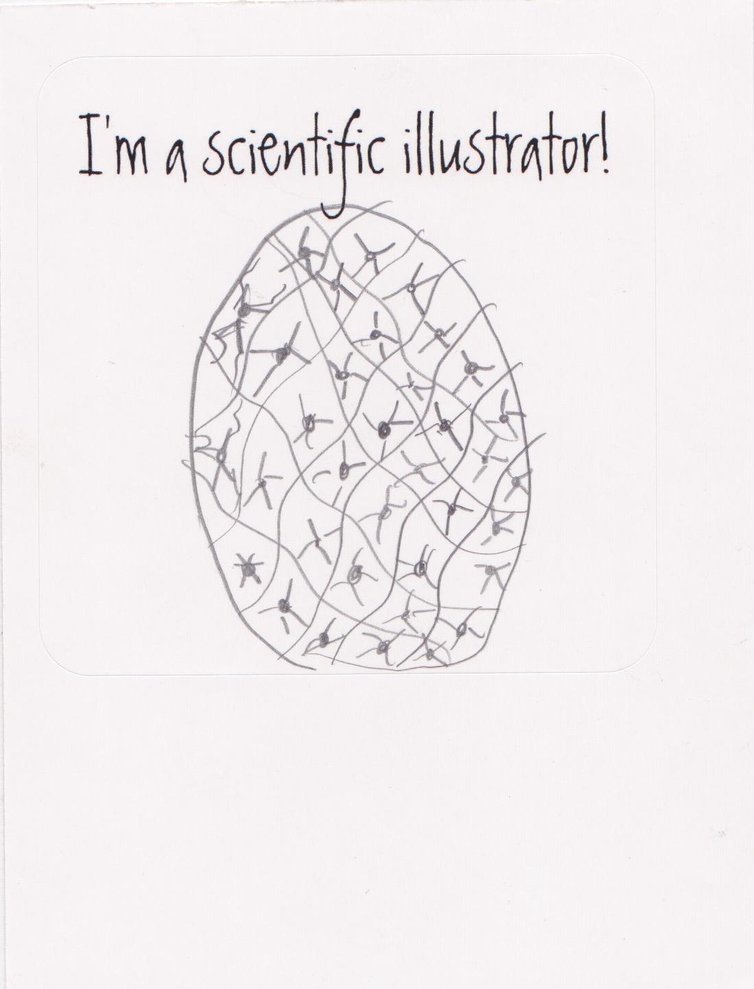
Instead of handing out sheets of paper, I gave each student a large sticker with “I’m a scientific illustrator!” printed across the top. Students attached the stickers to their shirts before moving on to the next booth. It was fun to see them visualize Fibonacci spirals on their stickers and then wear their illustrations (and new identity) around the festival. 
Fig. 1 – Example of a sticker designed by a student.
I share this story because it is a good example of how, through drawing, so much can be seen and understood. To learn more about visual science communication, I encourage you to see Chapter 11 in Storytelling to Accelerate Climate Solutions. You will learn so much from Kalliopi Monoyios, Kirsten Carlson, Taina Litwak, and Fiona Martin.

You can learn more about the history of Pi Day and how it became a national U.S. holiday here.

Before I go, allow me to share two additional resources with you.

The first resource is something I created for teachers in 2017. It is a single sheet of paper upon which you’ll find background information that will help you introduce the importance of seeing plants and set the stage for botanical drawing activities. This handout links to articles from this site. I’ve updated as many links as possible. Download Seeing Plants w/Sci-Art (PreK – Adult)

Now for that second resource…

While checking the links on the Seeing Plants handout, I came across a new paper about sketching plants. This paper by researcher Joonhyun Kim scientifically validates some of what has always been accepted — that drawing changes our emotional connection to the natural world.

What else did he find out?

Click here to download A Study on the Plant Sketching Practice for the Enhancement of People’s Intention for Pro-Environmental Behavior.

This paper is available for free.

Read Full Post »

One of the most visited sections of the ArtPlantae website was the “Classes Near You” section where I listed classes and travel experiences related to botany, botanical art, and natural history art. When I turned my attention to my current project in 2018, this section featured learning opportunities in eleven countries and 34 U.S. states. I loved highlighting these opportunities and the artists and educators who led them.

Last week, I launched a resource similar to the “Classes Near You” section. This time, this resource is a Calendar of Opportunity for anyone leading conversations and experiences strengthening environmental awareness. This includes YOU and the way you facilitate connections between people and plants.
There are no costs involved in adding your workshop to the new calendar. The calendar lives on the Lu.ma platform. You will need a Luma account (this is also free). You retain control of your listing and your audience. To have your event appear on the new calendar, all you need to do is select the TALATERRA calendar when creating your event. By doing so, your event will populate the calendar automatically and appear alongside events created by other independent professionals and organizations too. After the date and time of your event pass, your listing is removed from the calendar automatically. Here are clear step-by-step directions and a couple of helpful images.

If you have any questions, do not hesitate to contact me here. Please mention the ArtPlantae website in your message. I look forward to learning about your classes and the conversations you are leading.

Read Full Post »

Plant Prints & Earth Paintings
Tina Scopa
An Tobar
Isle of Mull, Scotland
March 3-30, 2018

This past summer we learned about edaphic plant art when we spoke with Scottish artist Tina Scopa. Working spontaneously with plants and soil, Tina gets plants to “draw” themselves in prints, photography, and ceramic work. Her current exhibition titled, Plant Prints & Earth Paintings, represents four years of exploring plants and soil. Images from this show are below.

During our conversation with Tina, we also learned she was working on her fine art degree at the Duncan of Jordanstone College of Art & Design at the University of Dundee. I am happy to share that Tina has almost completed her studies and is working on her degree show.

While we wait for her degree show, we can learn more about Tina’s practice and about what motivates her to create edaphic plant art by reading her paper about environmental art (also called land art or ecological art).

In a living understanding of nature, Tina asks the question:

    Can a contemporary art practice reconnect society to the “rhythms, sights, sounds, and scents of the natural world”?

To answer this question, Tina researched experiential knowledge and experiential understanding through art. If you have an interest in learning how art might be used in environmental education, you will enjoy Tina’s paper.

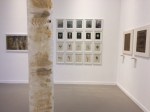
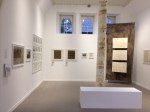
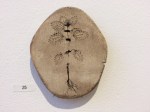
The exhibition Plant Prints & Earth Paintings is now on view at An Tobar on the Isle of Mull. Click on the first image to begin a tour of the exhibition.

All photos are courtesy of Tina Scopa.


Related

For the past fifteen years, I have encouraged an interest in plants through art, science, and interpretation as the full-time educator, bookseller, and editor at ArtPlantae. While art, science, and interpretation continue to be part of my practice, I am shifting my attention to issues related to the nature of work in informal environmental education.

My current project, The Freelance Condition & Lifelong Learning in Communities, is an investigation into the contributions informal educators make to lifelong learning. This research focuses specifically on the contributions of freelance informal educators who address plants, nature, and related topics in their work. I am focusing on freelance informal educators in particular because they are not bound to one location and have the opportunity to create change in many different settings.

Who are these freelance educators?

What do they do?

Where do they work?

How do they lead?

What do they need to be better leaders?

These are some of the questions I seek to answer.


WHY THIS MATTERS

Did you know the average American spends less than 5% of their life in the classroom (Falk & Dierking, 2010)?

Most learning throughout one’s life occurs outside of the classroom. This means that most people learn about plants, nature, and related topics outside of school. I suspect many people learn from independent professionals working in informal education. Where do they learn from these independent professionals? What do they learn? I hope to find answers to these questions.

If you are an independent professional whose work connects people with nature, please consider sharing your story. If you lead a program as an author, illustrator, poet, artist, photographer, basket weaver, book artist, scientist, designer, or interpreter in informal learning environments, please consider sharing your story.

Not sure if you are a “freelance informal educator”?

For this study, a “freelance informal educator” is defined as someone who does not receive income as an employee (W-2 income) for the programs, products, or learning experiences they create. Freelance educators, like other freelancers, work one project, one event, or one gig at a time. If this describes you, please consider sharing your story.

Over the years I have met many passionate, independent professionals who strive to connect people with nature through their work. I have often wondered how many other professionals like them (and me) are out there in the world. I have also wondered about how each educator contributes to the public’s understanding of nature. This survey represents the first step towards finding this out.

Are you a freelance informal educator whose work connects people with plants, nature, and related topics?

Share Your Story


Literature Cited

Falk, J.H., & Dierking, L.D. (2010). The 95 percent solution: School is not where most Americans learn most of their science. American Scientist, 98(6): 486-493

Read Full Post »

From The Huntington Library, Art Collections, and Botanical Gardens

Antonio García Cubas (1832–1912), agricultural map in Atlas pintoresco é historico de los Estados Unidos Mexicanos, (Picturesque and historical atlas of the United States of Mexico), Mexico City: Debray Sucesores, 1885, chromolithograph, 24 13/16 × 30 11/16 in. The Newberry Library, Chicago, Ayer 655.59.G2. Copyright © The Huntington


Visual Voyages:
Images of Latin American Nature from Columbus to Darwin

Huntington Library, Art Collections, and Botanical Gardens
MaryLou and George Boone Gallery
San Marino, CA
September 16, 2017 – January 8, 2018


Visual Voyages
looks at how indigenous peoples, Europeans, Spanish Americans, and individuals of mixed-race descent depicted natural phenomena for a range of purposes and from a variety of perspectives: artistic, cultural, religious, commercial, medical, and scientific. The exhibition examines the period that falls roughly between Christopher Columbus’s first voyage in 1492 and Charles Darwin’s publication of On the Origin of Species in 1859, a work based largely on Darwin’s own voyage to the region in the 1830s.

“Information and materials circulated at an unprecedented rate as people transformed their relationship to the natural world and to each other,” said Daniela Bleichmar, associate professor of art history and history at the University of Southern California (USC) and co-curator of the exhibition. “Images served not only as artistic objects of great beauty but also as a means of experiencing, understanding and possessing the natural world. These depictions circulated widely and allowed viewers—then and now—to embark on their own ‘visual voyages’.”

Bleichmar, who was born in Argentina and raised in Mexico, is an expert on the history of science, art, and cultural contact in the early modern period. Her publications include the prize-winning book Visible Empire: Botanical Expeditions and Visual Culture in the Hispanic Enlightenment (University of Chicago Press, 2012).

An exhibition catalog will be available beginning September 2017. Published by Yale University Press in association with The Huntington, the 240-page book contains 153 color illustrations ($50.00).

Visual Voyages is an international loan exhibition that is part of the Getty’s Pacific Standard Time: LA/LA initiative, an exploration of Latin American and Latino art involving more than 70 arts institutions across southern California. Gallery text will be in Spanish and English.


About The Huntington

The Huntington Library, Art Collections, and Botanical Gardens is a collections-based research and educational institution serving scholars and the general public. More information about The Huntington can be found online at huntington.org.


Several programs and exhibitions will be occur in conjunction with this exhibition. Artists, naturalists, and educators may be especially interest in:

    Visual Voyages in the Gardens
    Sept 16, 2017–Jan 8, 2018
    Throughout the Botanical Gardens
    Visitors can enrich their experience of “Visual Voyages” by strolling the botanical gardens in search of the real-life specimens of plants they have seen depicted in the gallery. Keep your eyes peeled for two dozen “Visual Voyages” signs, pointing to cacao, pineapple, tobacco, and other plants indigenous to Latin America.


    In Pursuit of Flora: 18th-Century: Botanical Drawings from The Huntington’s Art Collections

    Oct. 28, 2017 – Feb. 19, 2018
    Huntington Art Gallery, Works on Paper Room
    European exploration of other lands during the so-called Age of Discovery revealed a vast new world of plant life that required description, cataloging, and recording. By the 18th century, the practice of botanical illustration had become an essential tool in the study of natural history. From lusciously detailed drawings of fruit and flowers by Georg Dionysius Ehret (1708–1770), a collaborator of Swedish botanist Carl Linnaeus, to depictions of more exotic examples by Matilda Conyers (1753–1803), “In Pursuit of Flora” reveals 18th-century European appreciation for the beauty of the natural world.


    Free Talk and Book Signing

    The Invention of Nature: Alexander von Humboldt’s New World
    Oct. 15 (Sunday) 2:30 p.m.
    Rothenberg Hall
    Join best-selling author Andrea Wulf for a talk about the life of explorer, scientist, and early environmentalist Alexander von Humboldt (1769–1859), the subject of her most recent book, The Invention of Nature. Her talk will focus on Humboldt’s explorations of Latin America. No reservations required.


    Wark Lecture (Free)

    Seeing and Knowing: Visions of Latin American Nature, ca.1492–1859
    Oct. 16 (Monday) 7:30 p.m.
    Rothenberg Hall
    Historian Daniela Bleichmar, co-curator of the exhibition, discusses the surprising and little-known story of the pivotal role that Latin America played in the pursuit of science and art during the first global era. A book signing and coffee reception will follow the talk. No reservations required.


    Free Lecture

    Cochineal in the History of Art and Global Trade
    Dec. 10 (Sunday) 2:30 p.m.
    Rothenberg Hall
    Alejandro de Ávila Blomberg of the Oaxaca Ethnobotanical Garden and Oaxaca Textile Museum will explore the historical and cultural significance of this natural crimson dye. Used from antiquity, cochineal became Mexico’s second-most valued export after silver during the Spanish colonial period. No reservations required.


View all programs and additional images here

Read Full Post »

By The Hunt Institute for Botanical Documentation

Viburnum opulus, Guelder rose [Viburnum opulus Linnaeus, Caprifoliaceae], hand-colored micrograph on canvas by Rob Kesseler (1951–), 2008, reproduced by permission of the artist. This detail of a leaf shows the stellate hairs (110× magnification).

The Hunt Institute for Botanical Documentation presents “Worlds Within,” a
unique collaboration between the Hunt Institute (September 22 to December 15, 2017) and the Miller Gallery (September 23 to November 12, 2017). The two venues, at either end of the Carnegie Mellon University campus, are exhibiting botanical micrographs by British artist Rob Kesseler (1951-) alongside botanical wall charts from Carl Ignaz Leopold Kny’s (1841–1916) series “Botanische Wandtafeln” (Berlin, Paul Parey, 1874-1911).


Opening receptions

The opening receptions on Friday, September 22 are open to the public (5:00-7:00 p.m. at the Institute; 6:00-8:00 p.m. at the Miller Gallery). Rob Kesseler will be attending both receptions (5:00-6:00 p.m. at the Institute; 6:15-8:00 p.m. at the Miller Gallery).


Panel discussion

A panel discussion, “The artist in the lab, the scientist in the studio,” will be held on Thursday, September 28, 5:00-6:30 p.m. at the Frank-Ratchye STUDIO for Creative Inquiry, College of Fine Arts, Room CFA-111, Carnegie Mellon University. Rob Kesseler, “Worlds Within” artist, and Steve Tonsor, Director of Science and Research, Carnegie Museum of Natural History, and moderator Edith Doron, Mellon/ACLS Public Fellow, Senior Manager of Carnegie Nexus, Carnegie Museums of Pittsburgh will discuss the evolution of relationships between artists and scientists into research partnerships and will consider potential avenues for the intersections of these two disciplines in the future. This event is free and open to the public. For information, contact the STUDIO.

[Sclereids (support cells) in Fig. 1. Humulus lupulus Linnaeus, Cannabaceae; Fig. 2. Deutzia scabra Thunberg, Hydrangeaceae; Fig. 3. Nuphar lutea (Linnaeus) Smith, Nymphaeaceae], color lithograph by W. A. Meyn (fl.1874–1911), 81.5 × 66 cm, after an original by Carl Ignaz Leopold Kny (1841–1916) and C. Müller (fl.ca.1874–1911) for Kny, Botanische Wandtafeln (Berlin, Paul Parey, 1874–1911, pl. 7), HI Art accession no. 6699.007.


About the Hunt Institute for Botanical Documentation

The Hunt Institute for Botanical Documentation, a research division of Carnegie Mellon University, specializes in the history of botany and all aspects of plant science and serves the international scientific community through research and documentation. To this end, the Institute acquires and maintains authoritative collections of books, plant images, manuscripts, portraits and data files, and provides publications and other modes of information service. The Institute meets the reference needs of botanists, biologists, historians, conservationists, librarians, bibliographers and the public at large, especially those concerned with any aspect of the North American flora.


Related

Read Full Post »

Tina Scopa experiments with printing on a long piece of fabric. © Tina Scopa, all rights reserved.

Tina Scopa found a way to make plants draw themselves.

A biochemical engineer-turned-artist, Tina discovered that plants can ‘draw’ themselves after repeatedly experimenting with printmaking techniques. Her experimentation resulted in prints that evoke thought and emotion, and in prints that are surprisingly detailed representations of living plants.

Currently a student at Duncan of Jordanstone College of Art & Design in Dundee, Scotland, Tina brings attention not only to plants but to the soil in which plants grow. Because she includes both plants and soil in her work, she calls her work Edaphic Plant Art.

Please join me in welcoming Tina Scopa!


Edaphic
[ih-daf-ik]

Of or relating to the physical and chemical conditions of the soil, especially in relation to the plant and animal life it supports.

Dictionary.com


ArtPlantae
: Why edaphic art?

Tina Scopa: I started working with soil last year when I began a personal project not quite knowing what it was going to be about. I started drawing circles almost unconsciously and became curious about that act, wondering if it was, in fact, a very basic, primitive gesture that humans do instinctively. Exploring this idea of following intuitive, primitive impulses I was drawn to the earth and the desire to be outside and feel the earth. (I had an allotment at the time and was enjoying growing vegetables and working with the soil). Moving on to the work I was doing this year on a small, wild patch of ground I realised I wanted to know more about our knowledge of soil. I was fortunate enough to discover that a short soil science course was just about to begin within the geography department. It was there that I learned the term, edaphic I hadn’t heard this before and was intrigued by the word. I had been wondering how to label my work, thinking of land art, earth art, ecological art, botanical art. None of those descriptions really seemed to adequately define the work I was making, then the idea of ‘Edaphic Plant Art’ popped into my head and I knew that was what it was about.


AP
: I was looking at the photo of your exhibition studio space, specifically the grid of images. It looks like your photographs are ‘habitat’ shots, while your pigment prints, graphite prints, and ink prints each focus on a single element. How do you choose what to present in the prints you make? Do you have set ideas in mind or does the printing process dictate the type of prints you make?

TS: With this work you refer to I specifically wanted a view of the plant existing in its habitat. It was a very general image without focusing into it too much or making a very detailed image of the plant. The thinking behind this was to present an image of what we mostly overlook and don’t pay much attention to. By placing this image beside the detailed prints of the individual plant I wanted to say something like, ‘Wow look how beautiful that little plant is. Is that it growing in there?’. As for choosing what prints to present, my desire in this work was to present, for comparison, the different print techniques I had developed. I chose 5 plants to do this with – nettle, vetch, buttercup, yarrow, and grass. However, I felt the graphite prints of this work weren’t as refined as they could have been.


AP
: You also create ‘earth’ paintings and feature soil samples in your shows. What message do you hope to relay to visitors viewing your earth paintings and soil samples? How do you make sure this message gets across to them?

TS: I’ve already described how working with soil came about and initially I was thinking a lot about how we would have made paints from the earth pigments in the past. Now after learning more about soil science I have become aware that we are living in a time of depleted soils. The nutrient content of soils has dropped significantly in recent times and this is translated into the food grown in these soils with reduced nutrient content, impacting on our own health and nutrition. The depth of soils has dropped drastically with the use of liquid fertilisers and intensive, mechanised ploughing. I’ve learned that our soils really are in crisis and yet we are not generally aware of it at present. I haven’t yet conveyed this through the work other than talking about the significance of the ‘paintings’.

The other thing I realised through attending the soil science lectures was that although I am very interested in the soil and want to know more, most of the science left me disappointed. There’s a big focus on how to calculate the moisture content of soils because that is of economic importance. Yet what is it that I really want to know about soil? And how do I want to conduct a study of soil? These are questions I don’t yet know the answer too. It is definitely something more sensory, experiential, intuitive, perhaps even poetic.

I suppose one other thing that needs to be said on this topic is that when I began the soil work I had an almost reverential regard to it. It needed to be significant somehow so I selected soil from a site that had ancient standing stones. I dried it, ground it, and sieved it to create a very fine powder. I turned this into an oil paint and then worked with it to paint a torso-sized circle by hand that I refined and refined almost meditatively, hardly breathing. My intention was to repeat this on a much more refined and meticulously prepared gesso board using the earth from the wild flower patch. The earth painting from this patch was going to be done after all the plant prints. When I got to this point I discovered that this soil had in fact been brought in from a contractor and the plants themselves had been sown from a wildflower seed mix. (There was also an intact cobbled road underneath it all, I was told!). At the time this felt like a devastating and shocking discovery. It wasn’t at all this wild, unnoticed patch full of undiscovered beauty but a bought and managed piece of earth! Why did this seem so wrong to me? We have been managing the land for centuries, moving earth, buying and selling it and sowing seeds. This knowledge prevented me from the reverential painting I had initially intended and instead I rubbed this wet earth onto the board by hand. I then felt the need to do the same with a ‘healthier’ soil taken from another location where it had had time to develop. I presented these with soil samples in small porcelain cups I had made.

The other message I’d like to get across is just how awe inspiring the natural world is. The forms and colours of largely overlooked wild plants can reveal great beauty if we slow down and ‘tune in’ to notice this wonder. We can enrich our lives by holding these beautiful forms in reverence. We have lost so many of our natural meadows through intensive agriculture and through that I believe we’ve lost a beauty and experience that once nourished us.


AP
: In the article you wrote for the Living Field website, you state your interest in using your printing techniques as scientific tools. How do you envision your techniques contributing to the work of soil scientists, botanists, and others?

TS: What I can see with my prints is exactly where pigment is located within the structure of the plant. I can see where it begins and ends and can see even small areas of pigment. As far as I understand it, the scientific study of plant pigments removes leaves, for example, and grinds them to see the quantities of pigments by spectrophotometric means but doesn’t show the exact location within the plant. I would like to know more about this. One of the things I often see is a small area of blue pigment where the stem meets the root. I recently read that Theophrastus, a Greek who was the first to attempt to categorise plants believed that the soul of a plant was located where the stem meets the root. I love the idea that this blue pigment is the visualisation of the ‘soul of the plant’!

The other use I envision for my prints is akin to the traditional herbarium. Instead of using the dried, pressed plant I believe the print would provide an accurate (and beautiful) record of the plant.


AP
: Your pigment prints make me think of the books about flower pounding. Only your work is far more elegant and descriptive. How do you achieve such grace and detail in your prints?

TS: This is largely luck! Yet selecting the right plant at the right time and using the right pressure can make it into an art that relies on experiential knowledge. For every successful print, there are many disappointing results.


AP
: When you create your graphite and ink prints, are they the result of plants making direct contact with graphite and ink or do you prepare plates using material like ImagOn, for example?

TS: I wasn’t aware of ImagOn. The prints I make use the plant directly. I have also briefly tried some traditional zinc or steel plate etchings that used the plants directly. Some trials I did with photopolymer etching and waterless lithography used only the digital image of the plant, yet I prefer the textural quality my prints have through the use of the actual plant rather than a digital image.

I was recently part of a print exchange with Nova Scotia College of Art & Design in Canada. My own prints are all monoprints and in an attempt to produce a print run for this exchange I tried the waterless lithography technique with a digital image of one of my monoprints. I found the results very disappointing in comparison to my own. Admittedly it was my first attempt with this so they might have been improved. Later, finding out about the photopolymer etching technique and trying this out, I realised that this would probably have been more successful. (The work was shown from the 4-8th July this year in an exhibition entitled, ‘Resources’ at the Anna Leonowens Gallery in Halifax, Nova Scotia).

AP: The decision you made to present plant species observed in a small patch of grass made me think of the book series, One Small Square, which encourages children to study the diversity of life within one square foot. What suggestions do you have for classroom teachers and informal science educators who may want to use nature printing or flower pounding as a way to enhance student understanding of what they observe in a small square of garden, lawn, etc.?

TS: I love the idea of this series and again wasn’t aware of this. I run very simple workshops using spoons to press the plants. Children seem to love them and if reluctant adults can be persuaded to give it a go, they are usually hooked too. The wonder of seeing the plant pigments on the paper seems to fascinate and generates the desire to see ‘what that one looks like, and that one…’. There are lots of surprises – a pink flower might produce a purple or blue print, white flowers can print brown. The colours change too as the season changes. Seeing the beautiful forms and delicate colours of these little, overlooked weeds can bring a whole new relationship with the natural world. It can enhance weeding and turn something unwanted into something beautiful to marvel at. At an event recently I bumped into a parent who had previously attended a workshop. It was great to hear him tell me that although his children are very engaged with technology, since the workshop they’ve been having moments of putting down the iPads etc., running into the garden for weeds saying, ‘get the spoons’!


Readers
:
You are invited to ask Tina questions about her work, upcoming classes, and exhibitions. She will be available to take your questions through
Friday, July 28, 2017. Please enter your questions and comments below.


Take a Class

Tina’s classes are now posted at Classes Near You > Scotland.
Here are the learning opportunities Tina will lead next:


Tina Scopa, Edaphic Plant Art

http://tinascopa.wixsite.com/website
Tina is an artist with a particular focus on wild plants/weeds and soil and has coined the term, Edaphic Plant Art. She mostly works in plant printing and has developed a number of techniques where plants ‘draw’ themselves. Tina conducts
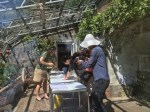
Tina Scopa prepares for her workshop. Image courtesy Tina Scopa.

plant printing workshops suitable for most ages and abilities, although some strength and dexterity are required. In the future, she plans to teach short courses about how people can learn about the world through a contemporary art practice.


Save These Dates!

Tina’s work will be on view in three upcoming exhibitions. Flyers for two of them are below. A third exhibition will open in December at the Dundee Botanic Garden.

Read Full Post »
Older Posts »