Feeds:
Posts
Comments

Archive for the ‘Education’ Category

An investigation into adolescents’ perceptions and experiences with nature revealed that some urban youth view nature as a threatening place. A place where crimes occur and where trees hide the activities of criminals.

Sound extreme?

Read on.

Arjen E. J. Wals provides extensive background into this observation and others in Nobody Planted it, it Just Grew! Young Adolescents’ Perceptions and Experiences of Nature in the Context of Urban Environmental Education.

The perception that nature is a threatening place was uncovered when Wals interviewed students from four classes at four different middle schools in and around Detroit, Michigan. Wals’ study included students from four different communities. The communities represented in this study include upper-class families whose children attend private schools, middle- and working-class families whose children attend suburban schools, and working-class and “out of work” families whose children attend schools in Detroit (Wals, 1994). The student populations at these schools ranged from almost all-white in the suburban schools to almost all-African-American in the Detroit schools. The locations of the schools ranged from a park-like setting for the private school to “a bunker in an urban war zone” (Wals, 1994) for one of the Detroit schools. The schools shared the same curriculum, however the Detroit schools were not as well equipped, had to spend time on safety issues, had to spend time performing tasks normally completed by parents and guardians and had to spend time teaching basic skills before students dropped out of school (Wals, 1994). This study included students who considered themselves fortunate to be living in safe neighborhoods and students who mostly used the outdoors “to get from one place to another” (Wals, 1994). For more information about the students and the urban environments involved in this project, read Wals (1994).

Arjen Wals created his study to investigate the following:

  • Did nature have a place in the lives of students?
  • How did students interact with nature?
  • Where did students experience nature in their respective urban environments?

Before we get too far along, I need to explain that Wals (1994) is an ethnographic-phenomenological study, not a statistical study. Phenomenological research investigates perceptions and experiences. While students from all four classes participated in the study, interviewed only 32 students. He chose eight students from each class and explains his sampling procedure in his paper.

Throughout the study, Wals was an active participant in classroom events. He observed student reactions to nature experiences, kept a research journal, interviewed students and reviewed their reflective journals (Wals, 1994).

What did he learn about students and their relationship with nature?

Wals (1994) found that students managed to build relationships with nature, regardless of their environment. He found that two themes emerged from student interviews and journals — how students define nature and how they experience nature.

Wals observed that students define nature as: flowers, animals, trees, alive, pure, peaceful, not human-made, freedom, solitude, self-supporting, wild, spontaneous (Wals, 1994).

He also observed that students experience nature as: entertainment, a challenging place, a place where time stands still, a threatening place, a background to other activities, a place for learning, a place to reflect, and as
a threatened place (Wals, 1994).

Excerpts from student interviews supporting the observations above can be reviewed in Wals (1994). Environmental education (EE) teachers will also be interested in the author’s comments about EE programs. Wals discusses his findings and the implications they have on environmental education. At the close of his paper, he suggests nature experiences teachers might want to try in their programs.

Nobody Planted it, it Just Grew! can be read online for free.


Literature Cited

Wals, Arjen E.J. 1994. Nobody planted it, it just grew! Young adolescents’ perceptions and experiences of nature in the context of urban environmental education. Children’s Environments. 11(3): 177-193


Also See

Read Full Post »

Bird Fest image The Santa Ana Watershed Association will host their annual Fall Festival of Birds next weekend at Chino Creek Wetlands and Educational Park. There will be bird-themed activities, exhibitors and a NestWatch Workshop. Come to the festival to learn more about the NestWatch citizen science program operated by the
Cornell Lab of Ornithology.

2013 Fall Festival of Birds
Saturday, November 2, 2013
10 AM to 2 PM


Directions to Chino Creek Wetlands

Read Full Post »

Please welcome the ART+BIO Collaborative to Classes Near You > Massachusetts!


ART+BIO Collaborative

www.artbiocollaborative.com
The ART+BIO Collaborative in Cambridge, MA fosters the integration of science, nature, and art through novel collaborations, research, and education. They design innovative art+science curriculum and turn public spaces into interactive learning environments.

    ISLAND LIFE: Tropical Field Studies of Art+Nature in Puerto Rico
    January 10-17, 2014

    Escape the cold winter to the Caribbean in this one-of-a-kind, art+nature immersion experience in Puerto Rico! Join instructors, Stephanie Dowdy-Nava and Saul S. Nava, for an artistic exploration of the diverse tropical wildlife from rainforest, mountain, beach and coastal environments. Through hands-on observation, artistic interpretation and various biological methods, participants will learn to utilize the natural habitat as a studio/lab to make informed art about tropical plants, animals, and nature.

    Cost: $1750 (before November 1, 2013)
    Cost: $1920 (after November 1, 2013)
    Registration Deadline: December 1, 2013

    View Details/Register

Read Full Post »

Jane LaFazio
janeville.blogspot.com
Jane is a mixed media artist and a member of the San Diego Sketchcrawl group. Jane teaches at conferences across the U.S. and leads classes in Italy and Greece too. In addition to sketching classes, Jane teaches workshops in collage, mixed media, and quilting. There are always many, many opportunities to learn from Jane in-person. Below is a short list of classes that may be of interest to you. To view all of Jane’s upcoming classes, see her teaching schedule online.

Also see this interview with Jane and her Ask The Artist Q&A with readers.

    Collage 101
    J & J Ranch
    Descanso, CA
    Saturday, November 9, 2013
    10 AM – 4 PM
    Need some inspiration for your sketchbook? Consider this introduction to collage. Get creative and learn how to play with scraps of paper, gesso, rosin paper and more. Cost: $100, includes materials
    View Details/Register


    Sketching and Watercolor in a Mixed Media Journal (Online)

    This class begin October 31, 2013. Add new dimensions to your illustrated journal by learning a new technique each week for the next six weeks. You’ll have a brand new journal and loads of inspiration to take you into the new year. This class is for students who have had some experience with drawing and watercolor. Sign up today. This class begins next week!
    Cost: $90 View Details/Register


    Sketching & Watercolor: Journal Style

    Six-week online class.
    Learn how to record your life, your summer vacation and other adventures using a loose and quick style of journaling. Participants in this online class will learn a new technique or subject each week and will receive links to supporting material. Communicate with fellow participants and see each others’ projects progress. Designed for beginners. This class will be offered again in January 2014. Cost: $85
    View Details


Plan Ahead to Learn from Jane in 2014

View teaching schedule for more information.

  • ArtWalk: San Diego – January 13-19, 2014
  • ArtWalk: Italy – May 24-30, 2014
  • ArtWalk: The French Riviera – June 1-7, 2014
  • Nature Journaling in Massachusetts – September 12-14, 2014

This information has also been posted to Classes Near You > Southern California.

Read Full Post »

New at Classes Near You > Minnesota!


Jack-in-the-Pulpit Studio

www.jackinthepulpit.com
This is the private studio of Mark Granlund. Classes in botanical and fine art are taught by Mark and guest instructors. Mark also teaches an online class. Find out how Mark developed his online botanical art class in this 2010 interview.

    Drawing: The Basic Elements (Online)
    Wednesdays, January 8-February 19, 2014
    6:30 – 9:00 PM
    Learn the basic elements of drawing in this six-week course. View details and register online. Cost: $165


    Drawing: The Basic Elements – for the Very Busy (online)

    This is the online edition of Drawing: The Basic Elements. This course begins on Friday, January 10, 2014. Participants will attend two studio sessions for critique and to share work. These sessions will occur on January 31, 2014 and February 21, 2014.


    Introduction to Botanical Watercolor

    Tuesdays, January 7 – February 18, 2014
    6:30 – 9:00 PM
    Participants will learn how to draw and paint botanical specimens. Discussion topics include color mixing, brushes, paper and paint. Cost: $165


    Trees in Ink: Pen and Brush

    Friday, February 28, 2014 (6:30 – 9:00 PM)
    Saturday, March 1, 2014 (12-3 PM)
    Learn how to capture the beauty and structure of winter trees in ink. Cost: $60

    View additional information, get materials list and register online at Jack-in-the-Pulpit Studio.

Read Full Post »

Encelia Train. © Mary-Austin Klein. All rights reserved.

Encelia Train. © Mary-Austin Klein. All rights reserved.

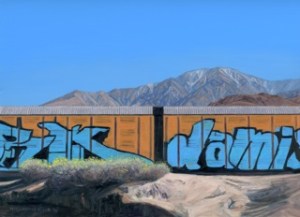
Mary-Austin Klein is known for her exquisite small-scale paintings of the California desert that capture the light conditions unique to California. In her current exhibition at the Theodore Payne Foundation, she brings attention to human encroachment on native plant environments and desert landscapes.

Mary-Austin Klein is the Theodore Payne Foundation’s fourth Aritst-in-Residence. During her residency, she traveled to locations in Central and Southern California to gather material for a series of oil paintings interpreting the infringement of man on the California landscape. Klein explains what motivates her to bring attention to this topic:

The ability to contain vast and deep landscapes into small, flat paintings makes me feel like a wrangler of space. The power to capture the magic of the California

Chuparosa Anza,© Mary-Austin Klein. All rights reserved.

Chuparosa Anza,© Mary-Austin Klein. All rights reserved.

desert and contain it within a frame is enthralling. It lets me transport the desert to others, sharing the beauty and promoting preservation of these vistas for future generations. Desert flora especially inspires me because of their toughness, resiliency and resourcefulness, when it comes to surviving the extreme conditions they call home.

The native Los Angeles artist has exhibited her work in galleries in Los Angeles, Pasadena, Laguna Beach, Santa Barbara and Joshua Tree. Her artwork and her advocacy efforts have been featured in The Guide to the Wild Mojave, a publication sponsored by the California Wilderness Coalition, as well as in The Desert Trail and LA Architect magazines.

Klein’s current exhibition, The Native Edge: Human Encroachment on Native Plant Environments, will be on view in the gallery at Theodore Payne through December 28, 2013.

Directions to Theodore Payne Foundation

Read Full Post »

MAKportraitforposter Oil Pastel Painting Workshop with Mary-Austin Klein
Theodore Payne Foundation
November 2, 2013
1:30 pm – 3:30 pm

Experience the technique of oil pastel painting and create an 11″ x 14″ still life of native flora on a gessoed panel. Play with color, brushwork and composition in this casual art workshop. No experience necessary!

Mary-Austin Klein is a Los Angeles-based painter whose small-scaled paintings document the natural landscapes and unique light of Southern California. She is the Theodore Payne Foundation’s 2013 Artist-in-Residence. An exhibition of her work is now on view in the gallery at the Theodore Payne Foundation in Sun Valley, CA.

Cost: $30 members, $40 non-members (includes materials fee)

For more information or to sign up, please contact Lili at 818-768-1802.
Online registration


About the Theodore Payne Foundation

The Theodore Payne Foundation for Wild Flowers and Native Plants, Inc., is a non-profit organization dedicated to helping others discover the beauty of California native plants. It is located north of Los Angeles in Sun Valley, CA.
www.theodorepayne.org

Read Full Post »

« Newer Posts - Older Posts »