Feeds:
Posts
Comments

Archive for the ‘Education’ Category

Updated at Classes Near You > California:


Donald Davidson
Botanical Illustrator for the Traveling Artist Wildflowers Project

www.nps.gov/plants/cw/watercolor/index.htm
A 2010 recipient of the “President’s Volunteer Service Award”; in recognition of his artistic contributions to the understanding of native flora in our National Parks, Donald Davidson has been teaching Botanical Illustration of Native Desert Flora at the Desert Studies Center at Soda Springs (Zzyzx, California) since 2005.

    Botanical Illustration of Native Desert Flora (Art X454.5)
    April 8-10, 2011; Friday (8 PM – 10 PM), Saturday (8 AM – 5 PM), Sunday (8 AM – 4 PM). As much “art for botanists” as “botany for artists,” this workshop takes place during the height of the desert blooming period, so look forward some very exciting plein-aire drawing and watercolor painting! All ability levels welcome – we’ll go over basics of line control, proportion, color and focusing/perception skills. Plant identification will be reinforced with detailed dissection work in a well equipped lab. This class will be taught at the Desert Studies Center at Soda Springs (3 hours from UCR). Register with UC Riverside Extension. Fee: $325; $305 each for couples and family members. $295 each with PINE discount. For more information, click on link or contact UCR Extension at (800) 442-4990.

Read Full Post »

Visit The Botany Studio

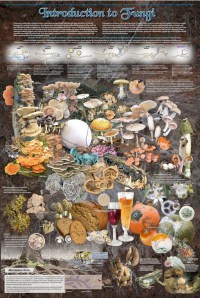
Kandis Elliot is the Senior Artist at the Botany Studio at the University of Wisconsin, Madison (UW). Kandis creates the stimulating educational posters The Studio publishes and distributes to educators all over the world. The poster Introduction to Fungi by Kandis and colleague Dr. Mo Fayyaz was recently awarded First Place for Informational Graphics in the eighth annual International Science & Engineering Visualization Challenge 2010 sponsored by the journal Science and the National Science Foundation.

Prior to her current position as Senior Artist, Kandis earned her BA (1970) and MS (1980) degrees at the UW, and worked as a faculty assistant in the Biology Core Curriculum, prepping labs and helping to teach courses in zoology, botany, physiology and other biological subjects. During those years, Kandis (one of those “artsy” kids in grade school) was often called on to illustrate lab manuals — thus giving her experience in, and a taste for, scientific illustration.

In 1988 Kandis earned an Associate Degree of Applied Arts at Madison’s tech school, where she developed skills in preparing graphics and text for publication. When Botany’s illustrator position opened, Kandis applied for the job at once, knowing that the computer age was dawning for scientific illustration, even though she did not yet use a computer for graphics. When she was hired as the new Senior Artist, Kandis marched into the Macintosh lab at UW-computing, held up a $100 bill and yelled, “who wants to teach me this stuff?” Four hours later she had the basics of Adobe Illustrator and the rest is history.

Kandis now specializes in scientific illustration, typesetting and design. She uses her computer savvy to create educational posters, brochures, books, journal figures and information graphics for professors, students, and the occasional private client.

Please welcome March Feature Artist, Kandis Elliot!


ARTPLANTAE: When was the Botany Studio established?

KANDIS ELLIOT: I gave the studio its name when I began working here in 1988. The UW was founded in 1848, when all “natural history” departments in higher-education institutions had artists on staff. Back then, illustrations were done in pen and ink. Now illustrations are done on a Mac using a Wacom tablet and photography is done with a digital camera.


AP: Are the posters created for a specific class on campus or are they always created for a broader audience?

KE: They are created primarily for our departmental use, but work for a general audience as well. When Dr. Mo Fayyaz, the UW-Botany Greenhouses and Garden Director, wanted signage he could use with school groups and that could also be used in the college classroom, we were off and running with colorful visual posters that had a bit of botany tucked in.

We only produce about one or two posters per year because we work on these projects on our free time. The posters are printed in the studio when ordered via our website. They are printed on heavy semigloss 260-lb. paper using archival pigmented inks. Since earning First Place for Informational Graphics, we have been swamped with orders. The Botany Studio is now setting up a credit-card webstore to get past the snailmail bottleneck.


AP: The Botany Studio posts an hourly rate for non-departmental projects. Does this mean instructors from outside the University of Wisconsin can work with the Botany Studio?

KE: Yes. We have done work for our Department of Natural Resources — our “fish and game” environmental agency. We’ve also done work for wildlife groups, prairie enthusiasts, and parents of Girl Scouts. All of these projects are done on our own time or the rare free time.


AP: How many hours of free time do you set aside for the posters?

KE: About one day per week. I work four days (I’m a part-time employee) and then spend one day working on outreach projects.


AP: How long does it take to take a poster from concept to finished product?

KE: The easy ones only take a month. “Fungi” took nearly 6 months, including my crash course in fungology.


AP: How do you make a scientific illustration?

KE: When dealing with living or preserved material, we start with digital photos and/or scans. These are either retouched for clarity or completely “repainted” in Photoshop to create a more stylized figure. Often I need to make a diagram or “cartoon” with copious labels to accompany the image so that parts of, say, a micrograph, can be identified. If I don’t have excellent reference material, I take some mind-reading pills and go the science fiction route. Of course, this sort of mojo has to be fussed up to; scientific journals will not accept photos adulterated in any way unless they are send as an “illustrative concept figure.”


AP: You compose books in the Botany Lab. What types of books do you create?

KE: Textbooks, field guides and more. For example, we created a field guide for the spring woodland wildflowers for the UW-Arboretum, going out and digitizing all the flowers as they came into bloom (what a way to make a living!). We went on to make a much larger guide to prairie plants. These books are sprinkled with nifty extra tidbits about various species and esoteric but cool stories known by our faculty and staff that are normally shared only with botany students.


AP: Which software programs do you use to create the posters?

KE: I use all Adobe products–industry standard, and required by the publishers with whom we work.


AP: Do you paint or draw in your spare time?

KE: What’s “spare time?” No, seriously, I used to paint portraits of folk’s pets in the 1960’s and charge $25 per painting. It helped pay my tuition back in those knee-jerk reactionary hippy days. Over the years my vision slowly circled the drain (I was stabbed in the eye with a busted bottle when I was a kid) and could do less and less handwork. However, a giant monitor and the Wacom tablet let me keep illustrating.


AP: Do you have any advice for botanical artists who want to learn how to draw on the computer?

KE: Learn the same way I did. Glom on to someone who does it and get a couple hours of basics. Then play with Photoshop — press all the buttons, see how long it takes to crash the computer, that sort of fun. When you get a little experience, a one-day class is useful for filling in the gaps.


AP: How does working on a tablet differ from working on pen and paper? What are botanical artists most likely to notice during the first two hours of working on a tablet?

KE:

  • You don’t need to apply nearly as much pressure with a stylus.
  • Lots of gee-whiz feedback. The look and color of a digital drawing are the same or better, given the millions of colors available, and the multitude of effects you can do.
  • You don’t experience the texture of a paper or canvas surface. You are able to draw on a tablet with your pen floating above the surface of the tablet.
  • You have to get used to working without turning your tablet like you may be accustomed to turning your paper.
  • Digital painting creates flat prints. The image may look great, but the physical texture of paper, canvas, paint gobs, etc., are absent. On the other hand, if you wish you had stopped painting 25 strokes ago, you can undo these 25 strokes in your History Palette. And let’s sing the praises of that “forgiveness of sins” button (CMD-Z or CTRL-Z)!
  • You have more options with a digitizing tablet. You are not stuck with a static drawing. Working with a digitizing tablet is much more satisfying for artists who want to work quickly, not inhale fumes, and like to try several variations without losing any of the stages.
  • And keep buying those lottery tickets so you can afford the loaded computer, tablet, camera and quality printer you’ll need for the perfect digital graphics experience.


Get Your Posters!

The Botany Studio has created ten beautiful and informative posters. Enlarged images of each poster can be viewed on the Studio’s website.


Ask The Artist with Kandis Elliot

Kandis will hold office hours this month. She will respond to readers’ questions and comments on March 4, 11, and 25. You are invited to post your questions in the comment box below and to follow the conversation as it progresses.

As always, you do not need to leave your full name. Your first name or a username will do.


What would you like to learn from Kandis?


Read Full Post »

Botanical Art Workshop with Linda Miller
The Elizabethan Gardens
www.elizabethangardens.org
April 28-30, 2011

Spend three enjoyable days drawing and painting the flora at The Elizabethan Garden on North Carolina’s Outer Banks. Learn the drawing skills, observation techniques, and watercolor techniques required to create a botanical painting. All levels of experience welcome!

© 2010 Linda Miller. All rights reserved


On the first day of class, students will take a walk through the garden, receive an introduction to plant morphology, and select their plant specimen. Students will then “discover” their wonderful specimen, leaf by leaf – petal by petal, and create a line drawing that will serve as the foundation for their painting. Students will work at their own pace while the instructor visits with each student individually. Instructor Linda Miller will demonstrate each drawing and painting technique.

For more information, contact The Elizabethan Gardens at (252) 473-3234.
The Elizabethan Gardens are located at 1411 National Park Drive, Manteo, North Carolina.

This information has been added to Classes Near You > North Carolina.

Read Full Post »

Now at Classes Near You > California:


Andie Thrams, Coloma, CA

Andie is a painter and book artist devoted to creative work in wild places.
Her work is widely exhibited and honored, and is held in many private and public collections. She is currently at work on two series, IN FORESTS and FIELD STUDIES. Her new website will be launched soon. View Andie’s 2011 IN FORESTS calendar on her Etsy page.

  • Spring Flora: Watercolors in the Garden – April 2 & 3, 2011.
    9:30 AM – 4:00 PM. Quickly capture gesture and form using watercolor, gouache, ink, and colored pencil. Classes can be taken separately as a one-day class. Cost: $100 per day members / $105 nonmembers. Tilden Regional Park Botanic Garden, Berkeley, CA. View course details and register.
  • Printers Night with Andie Thrams (Free event) – May 12, 2011. San Francisco Center for the Book, San Francisco, CA. Go to SFCB website
  • Transformation: The Journal into Artist’s Book. May 14-15, 2011. San Francisco Center for the Book, San Francisco, CA. Go to SFCB website
  • Summer Magic: Surface Design & Accordion Books. June 3-5, 2011. Santa Fe Book Arts Group, Santa Fe, NM. Go to SFBAG website
  • A Sense of Place: Art and Hiking Retreat – June 10-12, 2011. Awaken your senses on this weekend camping trip in Yosemite! Balanced Rock Foundation, Yosemite National Park, CA. Cost: $450. View details
  • Finding Your Colors (Color Mixing Mysteries Solved!) – June 23-24, 2011. Focus on the Book Arts Conference, Pacific University, Forest Grove, OR. Conference website
  • The Artist’s Journal – June 25-26, 2011. Focus on the Book Arts Conference, Pacific University, Forest Grove, OR Conference website
  • Book Arts for Kids – July 2-3, 2011; 10 AM – 4 PM. Use ink, watercolor, sticks, feathers, stones, reeds, pen, brush, crayon, and other objects to create book structures. Ages: 8 & up. Cost: $107. Sitka Center for Art & Ecology, Cascade Head, OR View details
  • Watercolors in the Wild – July 7-1-, 2011. Learn to paint in wild places through the creation of a series of outdoor studies. Cost: $390. Ages: 12 & up. Sitka Center for Art & Ecology, Cascade Head, OR
    View details
  • Field Studies: Sierra Flora & The Artist’s Book – July 20-24, 2011. Focused field study of plants and habitats in the Sierra Nevada. Supply lists, camping gear requirements are available online. Cost $370. San Francisco State University Field Camp, Sattley, CA. View course details and accommodations.
  • Ongoing: Private Art Instruction & Creativity Coaching
    Individually tailored instruction is available to a limited number of students. Lessons are conducted via email and/or in Andie’s studio or your workspace. Contact Andie Thrams.

Read Full Post »

Jeanne Debons Studio
Bend, Oregon

www.jeannedebons.com

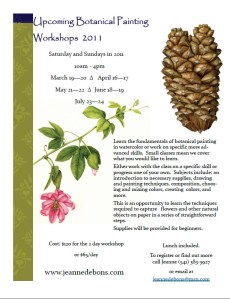
Two-Day Botanical Painting Workshop with Jeanne Debons

Learn the fundamentals of botanical painting in watercolor. Small class size ensures individualized attention. Supplies will be provided for beginners. Experienced students will work on more advanced skills. Drawing and painting techniques, color mixing, and composition will be discussed. Lunch is included for all students.

Saturdays & Sundays, choose from the following sessions:

  • March 19-20, 2011
  • April 16-17, 2011
  • May 22-22, 2011
  • June 18-19, 2011
  • July 23-24, 2011

Cost: $120 for a two-day workshop (or $65/day). Click here to download course flyer. This information has been added to Classes Near You > Oregon.

Read Full Post »

Now at Classes Near You > England:


The English Gardening School at Chelsea Wharf, London

www.englishgardeningschool.co.uk
Located in London, England, the English Garden School offers professional and amateur courses in garden design, practical horticulture, plants and planstmanship, and botanical painting.

The Botanical Painting Diploma course is comprised of three 10-week terms and one independent study project. Students meet once per week on Mondays from 10:30 AM – 3:15 PM. Homework is assigned weekly. Students are expected to allocate two days per week for homework. During the Spring Term, students are work on observation and drawing skills. Color mixing and watercolor washes are the focus of the Summer Term. In the Fall, students learn about composition, learn troubleshooting techniques, and refine their drawing skills. After completing all three terms, students work on a themed project and create five paintings around this theme. Students must complete their project within the year following the course in order to qualify for their diploma. View all program details
Short Courses are offered as an alternative to the Diploma program. Short courses are one- to ten-day classes scheduled from 10:30 AM – 3:30 PM. All courses include lunch.

  • Botanical Painting – Magnolias and Spring Blossoms with Gillian Barlow – April 7-8, 2011. Participants will study magnolia blossoms, buds, and bark while learning about drawing, composition, and watercolor techniques. Cost: £265 inclusive of VAT and light lunch. Register
  • Botanical Painting with Jenny Phillips – Intermediate/Advanced – May 27, 2011. Participants will apply drawing and painting techniques to create a small plant study. Jenny will enhance student understanding of what is required to achieve form and detail in lifelike botanical paintings. Plant material will be provided. Cost: £165 inclusive of VAT and light lunch. Limit: 16 students. Register
  • Botanical Painting – Leafy Textures – June 23, 2011. Gillian Barlow will demonstrate how to create a variety of surface textures with watercolor. Cost: £145 inclusive of VAT and light lunch. Register
  • First Steps in Botanical Painting with Elaine Searle – July 4 – 7, 2011. Learn the observation skills, drawing skills, and watercolor skills necessary to produce your first plant portrait. Designed specifically for beginners, Elaine takes the fear out of getting started. Cost: £480 inclusive of VAT and light lunch. Register

Read Full Post »

Now at Classes Near You for Texas, Montana, and California:


Mike Sibley Fine Art

www.sibleyfineart.com
Mike Sibley is the author of Drawing from Line to Life, an inspiring instructional book about creating realistic drawings in graphite. Here is your chance to learn from a Master!

  • Graphite Techniques – San Antonio, Texas. June 3-5, 2011. Sally Cheever Girl Scout Leadership Center. View details
  • Graphite Techniques – West Yellowstone, Montana. June 12-17, 2011. Holiday Inn West Yellowstone. View details
  • Graphite Techniques – Los Angeles, California. June 24-26, 2011. Torrance Airport Meeting Room (Zamperini Field). View details
  • Graphite Techniques with Mike Sibley – Look for Mike’s next online class at DrawSpace.com.

Read Full Post »

« Newer Posts - Older Posts »