Feeds:
Posts
Comments

Archive for the ‘Education’ Category

Jeanne Baret was born in 1740 to very poor parents living in an agricultural community in France. Earning money only when their labor was needed, Baret’s parents often did not have food for their small family. Young Jeanne was destined for a life of poverty and near starvation. However one day, she crossed paths with botanist Philibert Commerson.

Commerson was a young, over-confident botanist who became interested in the medicinal value of plants after he was bit by a rapid dog and monks nursed him back to health with their herbal remedies. When Baret and Commerson crossed paths that fateful day in the field, Jeanne was in her 20s and was a knowledgeable herb woman. She answered Commerson’s questions about medicinal plants and taught him what he wanted to know. Over time, a relationship developed and this relationship set the stage for an adventure neither could have ever imagined.

In 1765, Commerson was chosen to travel with Commander Louis-Antoine de Bougainville on an expedition that was to last three years. Jeanne joined the expedition not as Jeanne, but as “Jean”, Commerson’s young male assistant. Baret went to great lengths to hide her identity and to pull her share of the workload on the Etoile, a storeship measuring 102 feet long and 33 feet wide occupied by 116 men. She collected plants, animals, and documented specimens the way a field assistant should, in spite of growing curiosity about young Jean’s less than male-like male features.

Author Glynis Ridley tells the story of Commerson, Baret, and the famous philosophers and naturalists of the Enlightenment Period in a well-researched and captivating saga based on the handwritten journals of people who traveled with the expedition and on the published accounts of 18th-century naval officers. Ridley transports readers back to the 1700’s and through engaging storytelling, provides readers with insight into the harsh living conditions of the 18th-century and the unfortunate laws defining women and their roles in society. Through her well-documented tale about Bougainville’s expedition, Ridley is able to recreate the tension generated by the spice trade and competing European countries as they raced to establish colonies across the globe.

The Discovery of Jeanne Baret is a lesson in world history, geography, oceanography, anthropology, and botany that is not to be missed.


Author Event with Glynis Ridley

We owe much of our understanding about biodiversity to early explorers. Learn more about botanist and herb woman, Jeanne Baret, in a live conversation with author Glynis Ridley on Saturday April 16, 2011. This live one-hour event will occur in the Discussion forum on ArtPlantae’s Facebook page at 11 am PST / 2 pm EST. You’re all invited!

UPDATE (4/21/11): Read interview with Glynis Ridley

Read Full Post »

Welcome to EE Week 2011!

National Environmental Education Week (EE Week) is organized by the National Environmental Education Foundation to connect K-12 teachers and their students to environmental resources informing the public about environmental issues affecting all of us. ArtPlantae is proud to once again serve as a national partner for EE Week.

This year’s theme inspires us to discover our oceans and to become more aware of the many ways we are connected to them, even though we may live miles and miles away. This year, like last year, I have had the opportunity to work with enthusiastic individuals committed to helping ArtPlantae show connections between plants, art, and the theme for EE Week. Please join me in welcoming each contributor as they are introduced.

We will discuss several interesting topics this week and learn a lot.

Let’s begin!

Read Full Post »

Carol Creech of CCreech Studio is a part-time artist who works in pen & ink, colored pencil, and graphite. She is a member of the American Society of Botanical Artists and the Guild of Natural Science Illustrators. She is also a business woman and has generously offered to discuss her use of Zazzle.com, a service that enables designers to create one-of-a-kind products featuring their designs and artwork.

Please welcome Carol Creech!


ARTPLANTAE: Thank you for participating in a conversation about the business of art with ArtPlantae readers. How do you balance time spent on business-related activities with time spent drawing and painting?

CAROL CREECH: Hello and thanks for having me! To answer your question, it can be challenging to balance drawing time with business activities, especially when I am currently just working part-time. The To-Do list is long on both sides! But as much as I enjoy doing the artwork, it’s equally exciting to get things uploaded and “out there” on Zazzle. I have spent a good bit of time over the last few months getting my storefront up and running. Not only is my work available to the world at large, but I can order small quantities of my own products (note cards, or other items) to use as promotional donations locally, as well as personal gifts to family and friends. It’s a great tool.


AP: On your website, you show examples of the wonderful house portraits you have completed for homeowners. Do you create illustrations for commercial home builders as well? How long have you been illustrating homes?

CC: I have not ventured into illustrations for commercial home builders. The house portraits can be time consuming to do as I tend to be very detailed in my style. It’s what people love about them, and what I love to focus on when I draw them, but doing that on a regular basis would be more involved than I have time for at the moment.


AP: When creating your animal portraits, do you visit with the star subject for a while to get a sense of his/her personality (e.g., see camel)? How do you know when you’ve captured “personality” in a drawing?

CC: Interestingly, I usually create the animal portraits only from photographs. If I have a chance to take the photos myself (e.g., the camel) then I can tell when I have captured the right view of the animal for a good portrait. The key to any good animal portrait is usually the eyes. If you can render the eyes, which I always do first, and capture the essence of the animal there the rest of the portrait will fall into place.


AP: How did you learn about Zazzle.com? When did you open the CCreech Studio Store on Zazzle?

CC: I opened my store back in 2009, but just recently started working on building it up since last October. I had heard of Zazzle on one of the art lists I follow. I am embarrassed that I can’t remember which one! I did some additional research online, and it seemed like a good option. I had wanted to find a way to get good quality note cards of my work printed in small quantities, and I have to say that Zazzle’s cards are fantastic in their quality. I love how my artwork looks on them!


AP: You feature 23 product categories in your store. How many product categories are possible through Zazzle? How did you decide upon the product categories you have chosen?

CC: There are currently 45 product categories listed, but within each category there are often multiple options. For example, within the tote bag category you can choose from six different styles, and within each style, a variety of different colors. Plus, Zazzle is always coming up with more product categories, most recently adding keychains, necklaces and coasters. I decided on my product categories by choosing ones that I thought would look good with my drawings, many of which are botanical subjects. So, obvious products like cards, buttons, and stickers work well, but also items like aprons, mousepads, and letterhead. Bottom line is that you never know what might appeal to someone, so give it try and see how it looks!


AP: How many pieces of artwork have you used on Zazzle products?

CC: I think about 25. I also have done some simple enhancements by adding digital borders and backgrounds to a few pieces and that has been a great way to expand my offerings.


AP: What types of artwork works best on Zazzle products? Are there specific media or colors that reproduce better than others?

CC: So far, all of the media I have used seems to reproduce really well! I am a big fan of pen and ink and have been very pleased with how my ink and colored pencil combination drawings have reproduced. Although I have to say that the drawings using colored pencil alone look just as great! I think as long as you upload digital images that are of an appropriate resolution and make sure that they look good on the products you are designing, then you will be very happy with the results. One area that I am careful with is the T-shirt category as they have so many different color combinations available for customers. Some of my artwork only looks right on lighter colored shirts. Fortunately, Zazzle allows me to choose that as a limit, so I can assure that potential customers only see my work at it’s best.


AP: What types of plant images sell better — images more in line with traditional plant portraits or stylized botanical images?

CC: I know that Zazzle has many designers offering floral work, whether traditional photos, drawings or paintings, as well as stylized graphic designs of botanicals. I’m really not sure which sells better. I tend to prefer the traditional style and my work reflects that, so I am hoping that with some additional marketing I can draw in (no pun intended) people who appreciate the simple beauty of a single, well-drawn flower or plant. We shall see!


AP: Have you tried making prints or posters of your work? If so, how did your prints &/or posters turn out?

CC: I have not yet ventured into prints or posters. That is one of the things on my To-Do list! Zazzle does offer great quality prints and posters, so I’d like to explore that further.


AP: Is Zazzle easy to use? Briefly describe the designing process.

CC: Zazzle is very easy to use, in my experience. To start, you choose Create from the navigation bar at the top of the Zazzle page and follow the buttons and prompts to upload the image you want to use. There is a design view that lets you adjust the size of the image by reducing or enlarging it, dragging it around the product template until it fits properly. You can then choose to add text, customize font style and size, and even add background colors and borders, depending on the product. Then you can choose to order your product yourself, or post it for sale in the marketplace. When you post for sale, you select up to two subject categories, and add a title, descriptions and keywords so that potential customers can find your item. It’s surprisingly straightforward and easy to do.


AP: Does Zazzle allow sellers to keep selected items as on-site inventory so they can have products for sale at their studio for events such as studio tours?

CC: Absolutely! This is one of the things I love about Zazzle. You can order your own products, with a seller discount and possibly quantity discount depending on how much you order, and keep them in your studio or have them to sell at an art show, etc. I have ordered sets of my own note cards for blog giveaways as well as a couple of local fundraising events that I donated to recently. It’s a wonderful way to get high-quality products of your own work without having to invest in large print runs.

Thank you, Carol, for telling us about Zazzle and about your experiences with the service.
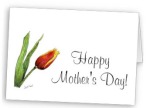

Would you like to ask Carol a question?
Please post your question below.

Click on the image to see Carol’s complete line of greeting cards.

Read Full Post »

A quick reminder that EE Week begins on Sunday and, like last year, I will post to this site everyday during EE Week. This means I will post daily through Saturday April 16, 2011.

This year’s EE Week theme is Ocean Connections. The generous and enthusiastic contributors to EE Week 2011 have made it possible to link plants, art, and the ocean in support of this year’s theme. I hope you enjoy learning from them as much as I have.

You are invited to participate in a live conversation with author Glynis Ridley on the Facebook page on April 16th. Glynis will discuss her new book, The Discovery of Jeanne Baret: A Story of Science, the High Seas, and the First Woman to Circumnavigate the Globe. The story of Jeanne Baret is fascinating and Glynis conducted several layers of research to piece together Baret’s story. You don’t want to miss this conversation. Mark your calendar and please join us on the Discussion page at 11 am (PST) / 2 pm (EST) on April 16.

If you’re in southern California, consider kicking off EE Week with ArtPlantae at the Spring Fair & Art Festival at Tucker Wildlife Sanctuary this weekend, April 9-10 (9 AM – 4 PM, daily). There will be live music, art & craft demonstrations, guided nature hikes, and more. Tucker Wildlife is operated by the College of Natural Sciences and Mathematics at California State University, Fullerton.

Can’t kick-off EE Week with a Spring festival? Then consider ending EE Week at the 25th Annual Avocado Festival in downtown Fallbrook in north San Diego County. ArtPlantae will on the Avenue of the Arts during this one-day festival occurring on Sunday April 17 from 9 AM – 5 PM. The Avocado Festival brings in about 70,000 people each year, so come early, bring your walking shoes, and your appetite!


And don’t forget your map…

Read Full Post »

More tips about how to draw leaves, plus new workshops through November 2011 have been posted by Marianne McPhie.

Here is what’s new at Classes Near You > England:


Marianne McPhie, Nottinghamshire

www.botanicalpaintingtoday.com
A full-time botanical artist and instructor, Marianne teaches throughout the UK and abroad. She has launched a new newsletter. Download the Easter issue of the newsletter Botanical Painting Today to read about her upcoming classes and to read the second installment of tips about how to draw and paint leaves.

  • Botanical Painting – May 10-12, 2011. Students choose their own subjects and what they would like to learn. Students have the option of completing this course as a 2-day or 3-day course.
  • Botanical Painting -June 14-16, 2011. Students choose their own subjects and what they would like to learn. Students have the option of completing this course as a 2-day or 3-day course.
  • Drawing & Composition – July 12-14, 2011. Learn how to measure, how to create perspective using scale and tone, and how to compose a plant portrait.
  • Botanical Painting – August 16-18, 2011. Students choose their own subjects and what they would like to learn. Students have the option of completing this course as a 2-day or 3-day course.
  • Botanical Painting – September 6-8, 2011. Students choose their own subjects and what they would like to learn. Students have the option of completing this course as a 2-day or 3-day course.
  • An Introduction to Botanical Painting – October 4-6, 2011. Learn the skills of observation, drawing, and painting. This class is for beginners or those who need a refresher course.
  • Drawing & Composition – November 1-3, 2011. Learn how to measure, how to create perspective using scale and tone, and how to compose a plant portrait.

Read Full Post »

Artist and teacher Wendy Hollender recently co-wrote a Op-Art piece for The New York Times with Mariellé Anzelone, an urban conservation biologist and the executive director of N.Y.C. Wildflower Week. Together they bring attention to the rapid disappearance of plants in New York City. Some of these plants vanished very recently.

Do you remember seeing them?

Read When New York City Bloomed


Also See

NYC Wildflower Week (May 6-15, 2011)
Botanical Drawing in Color

Read Full Post »

Example of a "vintage" photo transfer. © Val Webb

New classes for spring and summer have been announced at The Illustrated Garden!

Alabama artists are invited to join Val Webb and thousands of artists worldwide on Worldwide SketchCrawl Day. Local artists will gather at 5 Rivers Delta Resource Center on the Causeway on April 16 ( 9 AM – 3 PM). This is a free event and open to all artists. If you can’t make this event, stop the Earth Day Mobile Bay event near the Fairhope Pier on April 23 (10 AM – 6 PM). Val Webb will be at The Illustrated Garden’s booth drawing heirloom vegetables and handing out free seeds from Sustainable Seed Company.

Here is what’s new at Classes Near You for Alabama and Louisiana:

  • Draw and Paint Six Culinary Herbs – Saturday, April 30;
    10 AM – 4 PM. Learn the basic structure of a leaf, then put that knowledge to work as you create a color rendering of six culinary herbs in layered watercolor and colored pencil. No previous experience necessary, and all supplies are provided. Take home completed botanical art and six potted herb plants. Lunch will be at a nearby cafe in downtown Fairhope. This is a very limited small-group workshop, and it is expected to fill-up quickly.  Your registration fee must be received to reserve your spot. This class will be taught at Val’s studio in Fairhope, AL. Cost: $60 includes refreshments, all art supplies and six potted herb plants to take home. Contact Val Webb if you plan to participate.
  • Old and New: The Lost Art of Hand Lettering… and a New Way to Make “Vintage” Photo Transfers – Saturday, May 21; 10 AM – 3 PM.
    This is not calligraphy, but the “drawn letters” used by old-fashioned sign painters and type designers. Learn to adapt this method to label your botanical artwork or write beautifully in your sketchbook or art journal. Learn how to letter on curves, how to use perspective in your lettering, and how to design your own personal lettering style. After lunch in a nearby cafe, learn how to transfer photos. Val will show you how to transfer a vintage-looking image to paper, cloth or wood using butcher’s paper and acrylic medium. The original photo is not affected in any way, and the final product has a hauntingly ephemeral look that is quite beautiful. Plus, you will learn how to tint your transfer with watercolor for a more impressionistic result. This works especially well with old family photos and garden subjects.  Embellish a journal or family album, make truly lovely greeting cards, frame them as keepsakes or gifts — the possibilities go on and on.  Class size is limited. Early registration required. Cost: $60 includes refreshments and all art supplies, plus illustrated tutorial pages to take home. Contact Val Webb if you plan to participate.
  • Botanical Drawing in Pencil and Watercolor – Saturday, May 28;
    9 AM – 3 PM. Join Val for an intensive day of botanical drawing and watercolor at the New Orleans Botanical Garden, New Orleans, LA. With more than 2,000 varieties of plants from around the world to choose from, participants will create plant portraits using layers of graphite pencil and watercolor. This class will be held in the historic Garden Studies Center, a charming renovated 1930s potting shed that would look right at home in a Beatrix Potter story.  The day will begin with a detailed demonstration and some guided practice time before heading out into the gardens to draw and paint. This workshop is appropriate for ALL levels of art experience, and there is no supply list — all art supplies and materials (plus admission to the gardens) will be provided. Morning refreshments will be provided. Participants must bring their own lunch. Class size is limited. Early registration required. Cost: $120, includes refreshments and all art supplies. Contact Val Webb if you plan to participate. A detailed itinerary and information about a very reasonable and dog-friendly hotel in New Orleans is available upon request.
  • Botanical Drawing: Springtime in the South (daytime class) – Tuesdays, April 5 – May 9, 2011; 2 -5 PM (six weeks). Alabama’s botanical world gets all dressed up with the arrival of spring. Draw and paint Louisiana iris, native wildflowers, flowering bulbs and more, working from live specimens. Participants will use traditional scientific drawing methods to create realistic botanicals in pencil, ink, colored pencil and gouache. Learn in a relaxed, encouraging atmosphere. No experience necessary. Everything you need for this class will be provided. In addition to regular class meetings, participants have the opportunity to attend one optional weekend field sketching trip. Class size is limited. Early registration required. Cost: $140 includes art supplies. Contact Val Webb if you plan to participate. Location: Val’s studio in Fairhope, AL.
  • Botanical Drawing: Springtime in the South (evening class)
    Tuesdays, April 5 – May 23, 2011; 6:30 – 8:30 PM (eight weeks).
    Same course description as the daytime class. This class has been designed for people who need a class with evening hours. Cost: $140.
  • Every Picture Tells a Story: Illustrating Children’s Books
    Wednesdays, May 18 – July 6, 2011; 6:30 – 8:30 PM (eight weeks). 
    This lively, relaxed and encouraging course will cover character design, creative page layouts, how to draw for publication and how to use pictures to move a story forward. Have questions about submissions, copyright or publishing markets? We’ll cover those topics, too. Our drawing work will focus on depicting children and animals in action settings. ALL levels of art experience are welcome.  Class size is limited. Early registration required. Cost: $125 includes art supplies. Contact Val Webb if you plan to participate. Location: Val’s studio in Fairhope, AL.
  • Botanical Drawing: Tropical Summer (daytime class) – Thursdays, May 19 – June 23, 2011; 2-5 PM (six weeks).
    It’s the season of brilliant colors and unusual forms! Participants will use watercolor and colored pencil to create realistic renderings of summer plants including palms, succulents and tropical flowers. Butterflies and other insects associated with summer blooms will also be painted. In addition to regular class meetings, participants have the option of sketching one day in the field. No experience necessary. All art supplies are provided. Cost: $140 includes art supplies. Contact Val Webb if you plan to participate. Location: Val’s studio in West Mobile, AL.
  • Botanical Drawing: Tropical Summer (evening class) – Thursdays, May 19 – July 7, 2011; 6:30 – 8:30 PM (eight weeks).
    Same course description as the daytime class. This class has been designed for people who need a class with evening hours. Cost: $140.

Read Full Post »

« Newer Posts - Older Posts »