Feeds:
Posts
Comments

Archive for the ‘Education’ Category

Would you like to start your own illustrated diary?

Botanical artist and teacher, Nina Antze, will teach you how to start a nature journal using colored pencils. See her updated listing in Classes Near You > California:


Northern California


Nina Antze
Drawing Nature in Colored Pencil

www.pcquilt.com/botanicals.htm
Nina received a degree in Fine Art from San Francisco State University and a Certificate in Botanical Illustration from the botanical art program at the New York Botanical Garden. For more information about the classes below, contact Nina Antze or call (707) 237-7014. Nina’s teaching schedule can also be viewed on her website.

  • Nature Drawing Classes – Four Tuesdays, ongoing. 9AM – 12 PM. Learn to capture the forms and colors of nature at Sebastopol Center for the Arts in Sebastopol, CA. Cost: $89. Contact Nina Antze or
    call (707) 237-7014.
  • Drawing Autumn Leaves – Saturday November 12, 2011; 9 AM – 4 PM. Learn how to create the rich colors of Fall using colored pencils. Point Reyes National Seashore Association. Cost: $135 non-members, $115 PRNSA members. Register online.


Southern California

    Nature Drawing Classes – Learn to capture the forms and colors of nature at El Dorado Nature Center in Long Beach, CA (2nd Saturday of the month). Contact: (562) 570-1745

Read Full Post »

The botanical garden at UC Berkeley announces classes for the new year.

To view the Garden’s current list of classes, go to
Classes Near You > Northern California:


University of California Botanical Garden at Berkeley

http://botanicalgarden.berkeley.edu
This 34-acre garden was established in 1890 and is now a non-profit research garden and museum. The botanical art classes below are taught by Lee McCaffree and Catherine Watters. View a detailed schedule and register on the Garden’s website.

  • Makin’ Mead – Saturday, January 7, 2012; 2-4 PM. Turn honey into wine! Robert MacKimmie of City Bees will teach participants how to mix a gallon of mead to ferment at home. Yes, there will be samples and everyone goes home with recipes too. Registration is required. $50 non-members, $40 members. Space is limited. Register early.
  • Plants Illustrated Exhibition – January 14 – February 3, 2012;
    10 AM – 4 PM. The Garden is pleased to announce its third annual botanical art exhibition, Plants Illustrated. The exhibition, held in conjunction with the Northern California Society of Botanical Artists, invites viewers to explore the relationship between scientific study and fine art. The exhibit presents original artworks in watercolor, graphite, colored pencil and pen and ink and explores the many styles, forms and approaches unique to botanical art and illustration. Free with Garden admission.
  • Botanical Art Through the Ages – Friday, January 20, 2012;
    2:00 – 3:30 PM. Botanical artist Catherine Watters will discuss the rich history of botanical art. View prints, slides and other media. Learn about Pierre-Joseph Redoute´, Maria Sibylla Merian and significant historical events such as Tulipmania and the Age of Exploration. $10 non-members;
    $5 members, UCB students, staff and faculty.

Read Full Post »

Hazel West-Sherring’s enthusiasm for botanical art runs deep.

Her fervor for teaching others about plants and botanical art leaps out at you through the Internet. It is no wonder she has been awarded medals by the Royal Horticultural Society (RHS), has had her work shown in the Shirley Sherwood Gallery of Botanical Art at Kew, and has work in the permanent collections of the Hunt Institute for Botanical Documentation, the RHS Lindley Library, Royal Botanical Gardens Kew and the Highgrove Florilegium. Hazel is currently working on the Flora of Sissinghurst, a special solo project documenting 50 iconic plants representing the historically important gardens at Sissinghurst Castle, the ruin of an Elizabethan house. The project satisfying and entwining her two loves of gardens and plant portraiture.

Please welcome November feature artist, Hazel West-Sherring!


ArtPlantae
: Hazel, you mentioned that you strive to provide a “real botanical experience” for your students, one that extends far beyond the studio. How do you approach teaching botanical art?

Hazel West-Sherring
: Historically the botanical artist was an illustrator following the science-based traditions of plant hunting, plant identification and plant recording. Botanical artists today enjoy a wealth of plant accessibility and choice, their interests born primarily from an innate love of their own gardens and plants, or those encountered on their travels. Crucially for me, it is native plants and their habits, through the changing seasons.

To enjoy the “real botanical experience”, my classes work around the gardening year, embracing the seasonal changes to growth and habit of a plant in bud, flower or fruit. Concentrating on classic English garden plants, fruits and vegetables, I start with encouraging familiarisation of the chosen plant family. Understanding where and how the plant grows, is to really experience its character. (It is enormous fun sourcing and growing plants, and I usually have a nursery bed of raised seed, or bulbs, planted out in preparation for future courses!) Then a good deal of inspiring reference material is made available (selected images, books and prints), to review examples of what I and others have achieved in portraying similar plant specimens.

Essential familiarity and understanding of the botany of the plant, through microscope or simple dissection, aids good observational drawing and underpins a successful painting. Sketching the parts of a plant separately on a worksheet, looking at the leaf junctions, the reverse of a leaf or the flower in bud and mature form, promotes understanding. Observance of colour should be actively and enthusiastically explored, and the student is often challenged by introduction to a palette of colour perhaps previously overlooked. The extreme pleasure of recognising colours once seen, and capturing them in pigment, is another crucial part of the real botanical experience!

My passion for 18th century English landscape gardens, and the creation of our own small formal plot, inspires and underlines my own classic approach to plant portraiture. I enthusiastically encourage and support a student’s individual approach in portraying their chosen specimen, and guide them through good observational drawing practices and watercolour techniques. Welcoming and embracing students’ individual response to colour, habit, texture, or shape, through personal expression yet sound botanical observation, is key to my ultimate reward as a teacher.

I favour small groups and happily mix student abilities in my classes. I feel strongly that the botanical experience is open to all, and that students benefit greatly from sharing their individual achievements and by learning from others.


AP
: You are a prolific painter! Your dedication to botanical art shows through your paintings, which I am sure is the result of thousands of hours of work. How do you establish balance between being a prolific painter and an attentive teacher?

HWS
: I have been painting now for several years and a body of work has inevitably built, but slowly! Yes, the paintings do require much commitment of time to reach completion. Before the painting begins, I go through the stages described above. Many hours of plant sourcing and researching, perhaps several growing seasons, hours of study, preparatory drawing and colour referencing, and then final drawing, composition and painting. It is a slow process!

There is certainly a delicate balancing act to consider when programming my teaching courses through the year, and attempting to complete a collection of paintings, or a work to commission. I enthusiastically manage and share my combined passions since each aspect happily influences the other. Often on courses run from my studio, students’ presence during the development of a painting can be beneficial to both parties. I welcome their thoughts and comments, and they scrutinise the techniques I have employed! The combined passions for plants and gardens, and for painting and teaching good botanical art, culminate in the real botanical experience that I want to share.


AP
: Do you keep a sketchbook for casual thoughts and doodles?

HWS
: With reference to my finished paintings, there has always been a certain amount of preparatory drawing and colour work done on “worksheets”. Although rather time-consuming, these sheets contain as much information as possible to allow me to complete a painting confidently when the plant has long since withered. They are the nearest equivalent to a sketchbook, since they contain many experiments and colour trials, as well as rapidly observed plant features I want to include in a final drawing.


AP
: On your website, you describe the skills botanical watercolorists must possess to be successful. Describe what “meticulous brushwork” looks like.

HWS
: Yes, I do describe skills that would be beneficial to a budding botanical watercolourist, not to put them off necessarily, but to prepare them! I talk about some botanical knowledge being helpful, and a genuine interest in the colours and forms of nature. Since good observational drawing is required to underpin a painting, patience is essential. Watercolour techniques can be learnt with practice. Meticulous brushwork is the combination of right technique in the right place, resistance to over-painting, and seamless transitions of colour interchange or light and shade. Even with much practice and some degree of satisfaction in a finished painting, there might only be one small area of a painting that truly satisfies the quest for “meticulous brushwork”…..but it is what we strive to achieve in each of our paintings.


AP
: Also, what thought processes or actions are behind “clever color mixing”?

HWS
: Colour can be such a very personal thing…I argue constantly with my husband about the sea being green not blue! But understanding how pigments work is crucial…..whether a colour is cool or warm, transparent or opaque, the properties of single pigment against a mixed colour which may granulate and misbehave. Watercolour colour mixing need not be restricted to the palette either, since the effect of layering different colour washes can be stunning, and unexpected.

For my students to really enjoy watercolour in the fullest sense, I try to break down colour prejudices or pre-conceived ideas, encouraging them to see a fuller colour palette within the specimen. A simple example would be a lemon, which on closer inspection and reference to a colour chart, may be very much warmer in hue than presupposed. It may carry green or orange bias, with the possibility of turquoise or pale violet shadows.

When painting in watercolour, I always recommend that before the onset of the actual painting, a colour palette is considered and that single pigment and mixed colour swatches are made. If possible maintain the same yellows, reds or blues from mixed colours, that may appear elsewhere as single pigment. It brings a colour unity through the painting, and allows “spot” colours to really glow!


AP
: What’s in your palette?

HWS
: I unashamedly admit to a wide palette, mostly Winsor and Newton, with some very brazen colours. For example, because I adore the “wateriness” of watercolour, and favour layering of washes, I might suggest an initial underwash of quite an unexpected colour. Opera rose is a good example of a brazen colour, fabulously luminous under subsequent deep violet washes for a velvety deep blue iris. I favour pans, and the ones most used and with the holes in, are gamboge, prussian and burnt sienna!


AP
: What’s in your pencil box?

HWS
: My pencil box is very limited! My dividers, mechanical pencil and pen, grey putty rubber and an old glass handheld magnifier. My brushes are very limited too, miniature sables and the all important prolene mixing brush and separate flat lifting and blending brush.


AP
: As you know, readers are invited to ask featured guests questions. This time, let’s have the guest lead the conversation. What would you like to discuss with readers?

HWS
: I would like to discuss the enjoyment of botanical art in the round….the “real botanical experience”. I really do believe anyone can be helped through the drawing and painting experience to a worthy outcome. Perfection of the image is not necessarily the aim, thinking more broadly, it is the knowledge and experience shared in getting to know that particular plant. Students never look at their subject in the same way again, and once the wider world of colour has been recognised, the fun really starts!


Readers, what do you enjoy about botanical art?

  • If you draw &/or paint, why do you do it?
  • How has botanical art changed how you think about plants?
  • If you are an admirer of botanical art and do not draw or paint, what about botanical art appeals to you? Why are you drawn to this art form?

You are invited to share your thoughts and to ask Hazel questions about teaching and her art. Hazel will respond to all questions at one time.

Please send your questions or comments to Hazel before Friday, November 11, 2011 by sending them to education@artplantae.com or by using the comment box below. Your anonymous questions/comments will be forwarded to Hazel. Hazel’s replies will be posted on November 21, 2011.


UPDATE: Hazel Responds to Readers’ Questions


Also See

Read Full Post »

Cylburn Arboretum and the Natural History Society of Maryland will offer natural science illustration workshops this Fall.

See what’s new at Classes Near You > Maryland:


Cylburn Arboretum

http://cylburnassociation.org
The Cylburn Arboretum is the home of a post-Civil War estate built as a summer home for the President of Baltimore Chrome Works and his mother. Now a center for environmental education and horticulture, the Cylburn Arboretum hosts tours, events and activities for children and adults. The botanical art classes at Cylburn are taught by botanical artist, Molly O. Hoopes. Learn more about Molly in the ASBA Members’ Gallery.

  • Botanical Illustration Series – Thursdays, November 3, 10, 17, 2011; 6-9 PM. Traditional watercolor techniques, color theory, composition and plant morphology are the focus of this class. Participants will draw and paint berries, seeds and flowers. Greenhouse Classroom. Cost: $90 members, $120 non-members. To register, contact the Cylburn office at (410) 367-2217.


The Natural History Society of Maryland (NHSM)

http://www.marylandnature.org
Two classes about the plants and pollinators of Maryland will be offered. Classes will be taught at St. James Evangelical Lutheran Church, 8 West Overlea Ave, Baltimore, MD, 21206. Contact Linda Davis at (410) 252-4154.

    Botanical Illustration: Native Bees, Butterflies, and Wildflowers of Maryland
    Learn about Maryland’s important pollinators and how to identify them, while practicing traditional watercolor techniques. Participants will learn the traditional techniques of dry brush, wet-in-wet, wet-on-wet, and graded wash, while enhancing their skills of observation. Color theory and composition theory will be discussed. Honeybee morphology will be discussed using specimens from the Natural History Society of Maryland. Learn about pollinators and how they have been affected by climate change, pollution, and habitat loss. Participants have the option to contribute to a collection of watercolor illustrations—a ‘bee-ilegum’—to educate the public about native bees. Some drawing experience is helpful. Everyone is welcome.

    Workshop A (3-hr. classes) – Sundays, November 6, 13, 20 and December 4, 11, 18, 2011; 1-4 PM. Cost: $150, NHSM members; $180 non-members. Drop-in students: $30 per class meeting. Limit: 10 participants.

    Workshop B (4-hr. classes) – Thursdays, November 3, 10, 17 and December 1, 8, 15, 2011; 10 AM – 2 PM. No meeting on Thanksgiving. Cost: $200, NHSM members; $240 non-members. Drop-in students: $40 per class meeting. Limit: 10 participants.

    A reduced rate is available for college students and low-income attendees with a portfolio to show and proof of income. Contact Linda Davis for more information.

    To pay for the class, send a check or money order to:

    The Natural History Society of Maryland
    P.O. Box 18750
    6908 Belair Road
    Baltimore, MD 21206

    Please indicate if you are registering for Workshop A or Workshop B.

Materials List:

  • Kolinsky Sable or Windsor-Newton series 7 brush (or any natural sable brush that can be shaped into a sharp point when wet), size 0 or 00 and size 3 or 4. The larger one is for mixing paints and could be a less expensive style.
  • Palette paper (or paper palette), white plastic or ceramic palette with wells and a lid, if possible
  • Tracing paper or tracing vellum
  • Tubes of lightfast transparent artist-grade watercolors – suggested colors: Ultramarine blue, Cerulean blue, cobalt blue deep, Winsor blue (green shade), lemon yellow, yellow ochre, burnt umber, neutral, cadmium red, alizarin crimson, scarlet lake red
  • Syringe for squirting water
  • Mechanical pencil .005 with F or H leads
  • White eraser
  • Kneaded eraser
  • Any size block of Arches or Fabriano hot press watercolor paper
  • Desk lamp with full-spectrum bulb

Read Full Post »

Judging by the questions received from readers, there is a lot of interest in creating botanical note cards. This month’s group Q&A with the Birmingham Society of Botanical Artists (BSBA) focuses primarily on this topic. Today we’ll learn how BSBA members select an image for their cards, how they create a digital image of their artwork, how they create a layout for note cards and how they print their cards.

The conversation presented today is open to everyone, so please feel free to send in your comments or additional questions. Let’s keep the conversation going!

Thank you to readers who submitted questions. And many thanks to BSBA members who responded and to all BSBA members who are following this conversation ready to join in as the conversation develops.


Your Questions for the Birmingham Society of Botanical Artists
:

Read Full Post »

Rachel McMasters Miller Hunt (1882-1963) was passionate about plants, gardens, botany, books, the book arts and botanical art. In 1961, her personal collection of books, prints, drawings, watercolors, portraits, letters and manuscripts were donated to the Rachel McMasters Miller Hunt Botanical Library. This library would eventually become the Hunt Institute for Botanical Documentation at Carnegie Mellon University in Pittsburgh, Pennsylvania.

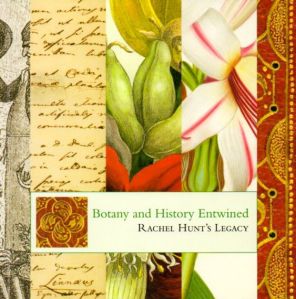
The book, Botany and History Entwined: Rachel Hunt’s Legacy is the exhibition catalog of the Institute’s current exhibition featuring items from Rachel Hunt’s original collection. The exhibition documents Rachel Hunt’s interests in books, the book arts and botany.

Authors Charlotte A. Tancin, Lugene B. Bruno, Angela L. Todd and Donald W. Brown tell the story of how a young Rachel McMasters Miller grew up to become a collector of herbals, botany books, botanical manuscripts and botanical art, and how her collecting was motivated by her interest in the role illustration played in communicating information about plants.

Through Hunt’s amazing collection, one can trace the history of botany and observe changes in how plant scholars made meaning. When explorers began to travel the world, they collected plants wherever they went and brought specimens back to Europe. This challenged scholars to reevaluate what they thought they knew about plants. Classification became a huge issue. Tancin et al. (2011) describe how scholars documented their new way of thinking in books and how the invention of the printing press and the increased availability of books led to increased networking among scholars. They also explain how the quality of book illustrations changed over time, changes that can be observed first-hand by anyone reading this wonderfully detailed exhibition catalog.

Included in the catalog is an image of the earliest printed book in Hunt’s original collection, Macer Floridus De Viribus Herbarum (1477), a medieval Latin poem about herbs. This image is joined by several images of herbals, floras and other books about plants. There is even a photograph of Rachel Hunt’s passport. This is a significant entry because Hunt did not only collect books, she retraced the footsteps of botanists and explorers and traveled to locations significant to botany’s history.

The significance of each botanical event documented in this book is made richer by the authors who provide interesting historical facts with each image. This catalog is highly recommend for anyone with an interest in botany, its history and how illustrations have been used to convey information about plants.

Botany and History Entwined: Rachel Hunt’s Legacy is available for purchase from the Hunt Institute for Botanical Documentation ($22). Visit the Hunt’s Publication page to download an order form.


Related

Read Full Post »

John James Audubon:
American Artist and Naturalist

Mobile Museum of Art
Mobile, AL
Oct. 14, 2011 – Jan. 8, 2012

View 80 original Audubon prints, including 64 of the original hand-colored Double Elephant Folio engravings from The Birds of America. Also see letters written by Audubon, rare books, photographs, and personal items from the John James Audubon Museum in Henderson, Kentucky.

This weekend, you will be able to learn from John James Audubon himself as author, naturalist, and storyteller Brian “Fox” Ellis portrays Audubon in several programs.

    Birding Hike and Gallery Talk
    Saturday, October 15, 2011; 9-11 AM. A unique bird-watching adventure begins in Langan Park and ends in the Museum galleries. Audubon will bring his paintings to life, giving insight into bird behavior and providing tips on becoming a better birder. Bring binoculars and dress for the weather.

    The Art of Storytelling and Interpretation
    Saturday, October 15, 2011; 1-3 PM. Learn how to create effective and memorable educational programs through storytelling and first-person monologues. Educators, docents, and naturalists will learn skills that can be used to interpret any kind of art, science or historical chapter.

    Adventures with Audubon
    Sunday, October 16, 2011; 1:30 PM. Learn about the natural history of North America as Audubon shares stories of his travels and what he saw in the early 1800s.

    Visit the museum’s website for information about workshops and lectures scheduled for November.


    Related

Read Full Post »

« Newer Posts - Older Posts »