Feeds:
Posts
Comments

Archive for the ‘drawing’ Category

Friend, Trudy. 2002. Drawing Problems and Solutions. David & Charles. ISBN: 9780715324035 ($22.99)
Feel the need to hide away and draw peacefully off in a corner somewhere? Be sure to take this book with you. You will learn a lot about sketching and drawing in pencil. This book is a must-have for any journaler’s backpack. Friend demonstrates how to use marks to create: trees & woodland, landscapes & skies, water in landscapes, buildings in landscapes, village houses & cottages, gardens, plants & flowers, vegetables, textures, pets, horses & ponies, and portraits.

Friend’s Drawing and Solutions books are very helpful because she takes the time to identify and explain common problems and presents a solution for each problem. When demonstrating how to draw leaves and stems, for example, she identifies the following as common problems:

  • No clear idea about how veins connect to the stem.
  • A lack of understanding of how much (or how little) of a leaf can be seen at certain angles.
  • A lack of understanding about how to place shadows.
  • The creation of shadows that do not follow a leaf’s form.
  • The creation of a stem that widens more dramatically than it does on the live specimen.

Other problems Friend addresses that pertain to botanical illustration include:

  • The placement of petals.
  • How to relate leaves to a stem.
  • Veins drawn as lines with no consideration for form.
  • Stems drawn at wrong angles.
  • The placement of buds and leaves without consideration of structure.
  • The placement of a leaf extending towards the viewer.
  • The placement of lines without regard to the relationship between negative and positive shapes.
  • Not using directional strokes to one’s advantage.
  • The hasty placement of lines to represent the gills of a mushroom.
  • The creation of line drawings in which tone was added without any consideration of form.

Drawing Problems and Solutions is available primarily as a used book.

Watch Trudy Friend at work!


Related

Investigating the Drawing Process

Read Full Post »

Questions to think about as you read about the research study below:

  • What are the most common drawing errors made by new botanical illustrators?
  • How do new botanical illustrators approach their drawing of plants? What is their strategy?


Studying the Cognitive Factors Involved in the Drawing Process

Susan B. Roth, a drawing instructor at Ohio State University, created an experiment to research the potential cause(s) behind the most common drawing errors she was observing in her classroom. Drawing (no pun intended) on her classroom observations and her previous research, she formulated the following hypothesis: Inaccurate perceptual analysis is the cause of drawing errors.

In her classroom, she observed the following errors repeatedly:

  1. Cubes drawn with the top face too large and in the shape of a square.
  2. Cylinders with the top face too large.
  3. Cubes drawn too wide.

To test her hypothesis that “the inability to translate a perceived three-dimensional image of an object into a two-dimensional drawn image” accounts for common drawing errors, she created an experiment enabling her to examine the relationship between drawing performance and the following factors: visual perception, drawing strategies, type of stimulus, “previous experience with visual studies”, and gender.

Students from different academic departments at Ohio State University were selected at random (n=27). Roth (1992) tested her hypothesis by administering standardized tests and taping each subject’s approach to drawing. Each subject created 10 drawings in response to different stimuli. Two drawings were created upon receiving a verbal command to draw a cube and a cylinder from memory. Eight drawings were created in response to observations made of “a three-dimensional cube, a distorted three-dimensional cube, a line drawing of a cube, a line drawing of a cube with shading added, a three-dimensional cylinder, a three-dimensional distorted cylinder, a line drawing of a cylinder, and a line drawing of a cylinder with shading added.” Drawing errors were recorded. Error type was also recorded. Errors were categorized on evaluation sheets specific to this study. Errors were arranged in a checklist containing phrases such as the image is too wide, the image is too deep, etc.

Roth (1992) found that the order in which lines were placed during the drawing process was not related to drawing performance. Roth observed that cube drawings (regardless of stimulus) contained more errors than cylinder drawings. The most common error was the “top face too large” error (Roth, 1992), followed by errors in drawing the appropriate width of an object, errors in drawing diverging lines, errors in drawing an object’s accurate height, and errors in drawing an object’s accurate depth. In her analysis of drawing performance and gender, Roth observed that male subjects had more experience with visual studies (e.g., shop classes, drafting classes, model building), than female subjects and suggests this might be the reason why the drawing performance of maie subjects was significantly different than that of female subjects.

Roth’s findings support her hypothesis. If the inability to translate the perceived three-dimensional image of an object into a two-dimensional drawn image accounts for common drawing errors, Roth suggests the implementation of the following instructional techniques in drawing:

  • Students must be taught how to view objects “as a collection of relationships between end points and other elements” instead of as a whole object.
  • Drawing instructors must enable the critical analysis of form, perhaps by using computerized instruction to help students see form and spatial relationships.


Today’s Questions
:

  • What are the most common drawing errors made by new botanical illustrators?
  • How do new botanical illustrators approach their drawing of plants? What is their strategy?


Literature Cited

Roth, S.K. 1992. An investigation into cognitive factors involved in the drawing process. Journal of Visual Literacy. 11(2):57-76.
Article available online in Vol. 11 (2). See Journal Archives.

Read Full Post »

Jackie Andrade of the School of Psychology at the University of Plymouth in the UK, wanted to know if doodling improves or hinders one’s attention to a primary task. To find out, she created a study in which 40 participants were asked to listen to a rambling telephone message about a planned birthday party. Participants were divided into two groups – a control group and a doodling group. The doodling group was placed into a “doodling condition” (Andrade, 2009) where they were given a pencil to shade squares and circles on a sheet of paper while listening to the phone message. The control group did not receive materials for doodling. All participants were asked to recall information about who would be attending the birthday party.

Andrade’s results indicate that doodlers recalled 29% more information than the participants in the control group. This study is the first test of the idea that doodling aids concentration. Andrade proposes that doodling may be enough of a stimulus to prevent boredom and reduce the likelihood of daydreaming.

To research these findings further, Andrade says additional research is necessary to understand boredom, daydreaming, and the activities that alleviate these conditions.


QUESTION TO YOU:
Do you doodle? If so, when do you doodle? (on the phone, in class, in front of the TV, etc.)


Literature Cited

Andrade, Jackie. 2009. What does doodling do? Applied Cognitive Psychology 24: 100-106. Published online 27 February 2009 in Wiley InterScience at Wiley.com. Purchase Article ($35)

Read Full Post »

artofbotanicaldrawing
What is well-conceived is clearly expressed.

— Agathe Ravet-Haevermans

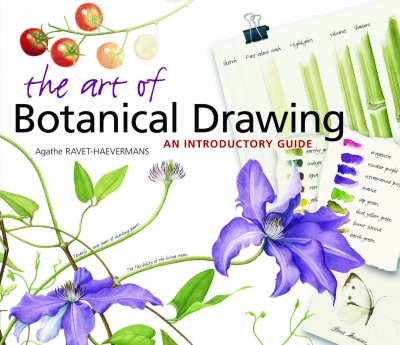
In The Art of Botanical Drawing: An Introductory Guide, Agathe Ravet-Haevermans provides a brief history of botanical art and interesting insight into how she and fellow scientific illustrators document plants at the Museum of Natural History in Paris. Beginners will find Ravet-Haevermans’ instructions easy to understand and they will appreciate her drawing and painting demonstrations which feature three different stages of development so beginners can observe how a technique is accomplished. All examples are executed gracefully and are sure to inspire new artists. This is a well-rounded portable gem of a book that fits easily into a backpack or small canvas bag.

Ravet-Haevermans addresses the following topics:

  • How to draw plants and how to capture their volumes and shadows on paper
  • How to mix colors and create gradations
  • How to reserve a light area and a highlight area
  • How to apply color
  • How to paint petals
  • Drawing and painting bark and storage organs
  • Drawing and painting stems and branches
  • Drawing and painting buds and leaves
  • Drawing and painting flower buds and flowers
  • Drawing and painting fruits and vegetables
  • Painting fruit and seeds

Ravet-Havermans also provides “how-to” examples for the following:

  • Garden Plants (poppy, Nasturtium, periwinkle, Agapanthus, Fuschia, Arisaema)
  • The Kitchen Garden (aubergine, Haricot/’Tongue of Fire’ beans, butternut squash, carrots)
  • Meadow Plants (grasses)
  • Forest Plants (mistletoe, holly, ferns, mushrooms)
  • The Botanical Garden (dried stalks, Arbutus, kiwi)
  • The Aquatic Garden (Equisetum, water hibiscus, lotus)
  • Succulents (melon cactus, Lithops, Gasteria)
  • Greenhouse Plants (Dendrobium, Venus flytrap, Cobra plant, Papyrus)
  • Field sketches and painting outdoors
  • Creating details such as skeletonized leaves, artichoke bracts, bamboo stalks, and the circles observed in the cross-section of onion slices
  • Water drops, insects, and eaten leaves

Get this book at your local independent bookstore.

Read Full Post »

Wendy Hollender will teach a three-day Spring workshop at Morven Museum & Garden April 17, 18 and 25. Class will be held from 10:00 AM – 3:00 PM each day. Please bring your own lunch. All questions should be directed to Michele Sheridan at msheridan@morven.org or to Wendy Hollender at wendyhollender@gmail.com.

Wendy Hollender is the Program Coordinator of the Botanical Art & Natural Science Illustration certificate program at the New York Botanical Garden and the author of Botanical Drawing: A Beginner’s Guide.

Read Full Post »

This new title has been released by the publisher and is now available for pre-order. All orders will be processed when our shipment arrives. Thank you for your interest in this title.

Click here to pre-order.

artofbotanicaldrawing

Read Full Post »


Julie Schneider Ljubenkov, Art Nature Education

www.artnatureeducation.com

  • Drawing Made Easy (Adults)
    Mira Costa College Community Services
    $90.00; Non-credit, adult course at the Oceanside Campus
    Wednesdays, April 1 to May 13th, 2009; 3:30 to 5:30 PM; Room 7053
    Students will practice the following: line drawing, shading, drawing from pictures, drawing from life, making your drawings look 3 dimensional. They will draw from a variety of subjects and will work primarily with colored pencils. Please bring the following materials to the first class: pencil with eraser and white paper (8-1/2″ x 11″). Bring a $3.00 materials fee to cover photocopying services. Repeat students welcome. Phone registration: (760) 795-6820. Online registration: Mira Costa Community Education. Or enroll in person at the Oceanside campus, Community Services. Email questions to commservices@miracosta.edu
  • Drawing Made Easy (Adults) (same as above)
    City of Escondido
    Mondays, April 6 to May 18th, 2009; 6:00 to 8:15 PM
    Repeat students welcome. Phone registration: 760-839-4691. Online registration: www.escondido.org/recreation. Or enroll in person at City Hall or the East Valley Community Center during business hours. Please register early to ensure the class is not cancelled due to low enrollment.
  • Beginning Watercolor: Focus on Flowers I
    Mira Costa College
    $109.00; Non-credit, adult course at the Oceanside Campus
    Wednesdays, April 1 to May 13th, 2009. Section #: 0103.21
    This course will cover all the basics needed to begin creating watercolor paintings of flowers. Class format consists of lecture, painting demonstrations, and individually supervised exercises. Students will learn how to create vibrant flower colors, how to draw flowers and foliage, how to mix hundreds of greens, and the 4 steps of composing a painting. Repeat students welcome. Phone registration: (760) 795-6820. Online registration: Mira Costa Community Education. Or enroll in person at the Oceanside or Cardiff campus. This course will not be offered again until next Spring 2010 – so enroll now!
  • Cartooning for Kids (Ages 8 to 13)
    City of Escondido, Community Services. East Valley Community Center
    $53.00
    Mondays, April 6th to May 18th; 4:00 to 5:00 PM
    Cartoons are fun to draw! This class will teach your child how to draw cartoons successfully. Exercises and projects will cover the following: line drawing, shading, caricature, action cartoons, facial expression, comic books, popular cartoon characters, and ultimately how to create your own cartoons. Phone registration: (760) 839-4691. To enroll by mail, pick up a Schedule of classes at any City facility or enroll in person at the City of Escondido Community Services, 201 N. Broadway, downtown Escondido. Information, registration forms and online registration at www.escondido.org/recreation.

Read Full Post »

« Newer Posts - Older Posts »