Feeds:
Posts
Comments

Archive for the ‘botany’ Category

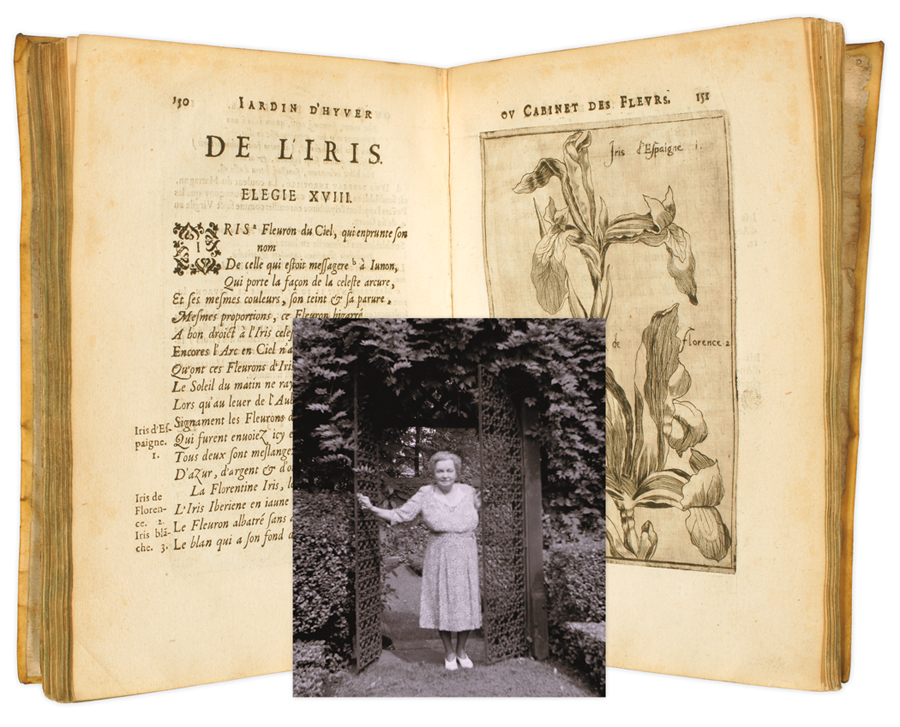
Bouquet of flowers, watercolor on vellum by Pierre-Joseph Redouté (1759–1840). This bouquet was painted by Pierre-Joseph Redouté in his final year and was acquired by Rachel Hunt in the last year of her life, capping a history of collecting Redouté items one at a time over decades, including portraits and handwritten letters. © Hunt Institute

In celebration of their 50th anniversary, the Hunt Institute for Botanical Documentation will present rare gems from the original collection of founder, Rachel McMasters Miller Hunt (1882–1963). Hunt’s early love of nature and books grew into a lifelong pursuit of rare or historical works about plants, gardens and botany. She became fascinated by the people associated with these books and also collected their portraits, letters, manuscripts and original artworks.

Dedicated in 1961, the Rachel McMasters Miller Hunt Botanical Library was envisioned as a research center focusing on the history of botany and the history of botanical publication and as a repository where her collections would be preserved, curated, augmented and made accessible to researchers. By 1971 the organization had so diversified that it was renamed Hunt Institute for Botanical Documentation with four programmatic departments of Archives, Art, Bibliography and the Library. In the last fifty years Rachel Hunt’s original collection has been substantially augmented in all four departments. In accordance with the Hunts’ original vision of a living collection with public availability, the Institute maintains a regular exhibition and publication program and accessibility for research on a variety of scientific and cultural subjects related to the plant sciences.

Beginning with Rachel Hunt’s early interest in books, bookbinding and collecting, the materials on display in this exhibition are divided by subject and reflect her interests in the history of the herbal, the development of gardens and garden plants, the foundation of botany as a science and the botanical discoveries made through travel and exploration. The exhibition concludes with the foundation of the Hunt Botanical Library, its evolution to Hunt Institute for Botanical Documentation and descriptions of key aspects of the four departments. A color-illustrated catalogue will accompany the exhibition.

Inset, Rachel Hunt standing at her garden gate at Elmhurt. Rachel Hunt purchased this early gardening manual at the first book sale that she attended. © Hunt Institute


Botany and History Entwined
Rachel Hunt’s Legacy

September 16 – December 15, 2011
Hunt Library,Carnegie Mellon University (5th floor)

Hours: Monday–Friday, 9 a.m.–noon and 1–5 p.m.; Sunday, 1–4 p.m. (except 20 and 24–27 November).

Admission: Free

(Note: Hours of operation are occasionally subject to change, please call or email before your visit to confirm their hours. For further information, contact the Hunt Institute at 412-268-2434.)

Read Full Post »

What began in 2006 with a preliminary call for entries to the membership of the American Society of Botanical Artists is culminating in the final showing of Losing Paradise? Endangered Plants Here and Around the World, a botanical art exhibition in the Shirley Sherwood Gallery of Botanical Art at the Royal Botanical Gardens, Kew in England. The exhibition opened this past weekend and is one of the integral elements of a larger exhibition, Plants in Peril.

The exhibition is comprised of a collection of 44 works of original art depicting threatened and endangered plants from North & South America, Europe, Asia, Africa and Australia.

Botanical artists, some of whom had depicted only garden varieties of familiar flowers, set out to increase public awareness about plants threatened with extinction. They learned of the various organizations that assess the conservation status of endangered plant species such as the International Union for the Conservation of Nature (IUCN), the world’s oldest and largest global environmental network which produces the Red List of Threatened Species, NatureServe which produces conservation status assessments in the U.S. and Canada, and the U.S. Fish & Wildlife Service which administers the Endangered Species Act of 1973. Artists formed collaborations with local scientists, conservation organizations, and botanical gardens that could provide guidance in locating and studying the plants whether they be in public collections or in the wild.

A catalog of the exhibition including images of the artwork, background information about each plant and the artists depicting them, as well as essays by leading plant scientists and conservationists, is available for sale at ArtPlantae Books.


Related Articles
:

Read Full Post »

Linnaeus described plants expertly. But could he draw?

Independent scholar, museum consultant and exhibition curator, Karen Reeds, takes a look at how Linnaeus described plants in When the Botanist Can’t Draw: The Case of Linnaeus.

Linnaeus studied botany during a time when botany instruction, as Reeds (2004) puts it, was very “show and tell.” A time when students had to compare a plant specimen to several illustrations to identify it because the written descriptions of plants were so unorganized (Reeds, 2010).

Linnaeus put an end to the cumbersome search for descriptive text when he created his classification system. He spent years writing descriptions of plants, documenting what he saw and then organizing this information in a systematic way. He valued descriptive text over illustrations (Reeds, 2004) and interestingly enough, this preference has put him in the hot seat, at least where his drawing abilities are concerned.

Linnaeus’ own sketches have received mixed reviews over the years. Some reviews have been more critical than others. According to Reeds (2004), Wilfrid Blunt (The Art of Botanical Illustration) has been very critical of Linnaeus’ drawings stating:

Matisse once said that his ambition was to draw like his little girl of five; Linnaeus achieved this effortlessly.

Other Linnaean scholars have been less critical.

Reeds (2004) suggests Linnaeus’ preference for words over illustrations was a combination of being on the receiving end of “show and tell” botany instruction as a student (after all, she says, he was a “pre-Linnaean” student of botany), his natural “strengths as a scientist”, and his personal struggles with drawing. Struggles that Reeds (2004) says are easy to see in his work.

Reeds (2004) says you can see “how well a drawing succeeds as description of an unfamiliar object” by copying it. When Reeds tried to copy some of Linnaeus’ drawings without referring to his written words, she found she often questioned the purpose of Linnaeus’ lines and couldn’t tell if a line was intended to show “volume, perspective, shading or texture” (Reeds, 2004).

Linneaus’ preference for descriptive text over illustrations is clear in Hortus Cliffortianus (1737), a book about the plant collection of George Clifford, a Dutch banker and director of the Dutch East India company. Clifford hired Linnaeus and artists to document his plants. Linnaeus’ descriptive text is the heart and soul of this book, while the plant portraits created by none other than botanical artist Georg Ehret and engraver Jan Vandelaar, were placed at the end of the book without an effective index linking the text to the engravings (Reeds, 2004). While Linnaeus admired the illustrations of his counterparts, he held firm in his opinion that pictures could never offer the level of information achievable with the written word stating, “I do not recommend drawings ….. for determining genera – in fact, I absolutely reject them” (Reeds, 2004). Linnaeus felt words were much more effective at describing plants and their unique qualities than illustrations.

What do you think?

For a more thorough analysis of Linnaeus’ notebooks and his thoughts about illustrations, see Reed (2004).


Literature Cited

Blunt, Wilfrid. 1993. The Art of Botanical Illustration. Antique Collectors Club. Revised and enlarged edition. (9781851491773)

Reeds, Karen. 2004. When the botanist can’t draw: the case of Linnaeus. Interdisciplinary Science Reviews. 29(3): 248-258. Web. [accessed 8 June 2011] <http://www.ingentaconnect.com/content/maney/isr/2004/00000029/00000003/art00005>

Read Full Post »

Visit The Botany Studio

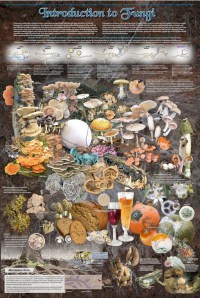
Kandis Elliot is the Senior Artist at the Botany Studio at the University of Wisconsin, Madison (UW). Kandis creates the stimulating educational posters The Studio publishes and distributes to educators all over the world. The poster Introduction to Fungi by Kandis and colleague Dr. Mo Fayyaz was recently awarded First Place for Informational Graphics in the eighth annual International Science & Engineering Visualization Challenge 2010 sponsored by the journal Science and the National Science Foundation.

Prior to her current position as Senior Artist, Kandis earned her BA (1970) and MS (1980) degrees at the UW, and worked as a faculty assistant in the Biology Core Curriculum, prepping labs and helping to teach courses in zoology, botany, physiology and other biological subjects. During those years, Kandis (one of those “artsy” kids in grade school) was often called on to illustrate lab manuals — thus giving her experience in, and a taste for, scientific illustration.

In 1988 Kandis earned an Associate Degree of Applied Arts at Madison’s tech school, where she developed skills in preparing graphics and text for publication. When Botany’s illustrator position opened, Kandis applied for the job at once, knowing that the computer age was dawning for scientific illustration, even though she did not yet use a computer for graphics. When she was hired as the new Senior Artist, Kandis marched into the Macintosh lab at UW-computing, held up a $100 bill and yelled, “who wants to teach me this stuff?” Four hours later she had the basics of Adobe Illustrator and the rest is history.

Kandis now specializes in scientific illustration, typesetting and design. She uses her computer savvy to create educational posters, brochures, books, journal figures and information graphics for professors, students, and the occasional private client.

Please welcome March Feature Artist, Kandis Elliot!


ARTPLANTAE: When was the Botany Studio established?

KANDIS ELLIOT: I gave the studio its name when I began working here in 1988. The UW was founded in 1848, when all “natural history” departments in higher-education institutions had artists on staff. Back then, illustrations were done in pen and ink. Now illustrations are done on a Mac using a Wacom tablet and photography is done with a digital camera.


AP: Are the posters created for a specific class on campus or are they always created for a broader audience?

KE: They are created primarily for our departmental use, but work for a general audience as well. When Dr. Mo Fayyaz, the UW-Botany Greenhouses and Garden Director, wanted signage he could use with school groups and that could also be used in the college classroom, we were off and running with colorful visual posters that had a bit of botany tucked in.

We only produce about one or two posters per year because we work on these projects on our free time. The posters are printed in the studio when ordered via our website. They are printed on heavy semigloss 260-lb. paper using archival pigmented inks. Since earning First Place for Informational Graphics, we have been swamped with orders. The Botany Studio is now setting up a credit-card webstore to get past the snailmail bottleneck.


AP: The Botany Studio posts an hourly rate for non-departmental projects. Does this mean instructors from outside the University of Wisconsin can work with the Botany Studio?

KE: Yes. We have done work for our Department of Natural Resources — our “fish and game” environmental agency. We’ve also done work for wildlife groups, prairie enthusiasts, and parents of Girl Scouts. All of these projects are done on our own time or the rare free time.


AP: How many hours of free time do you set aside for the posters?

KE: About one day per week. I work four days (I’m a part-time employee) and then spend one day working on outreach projects.


AP: How long does it take to take a poster from concept to finished product?

KE: The easy ones only take a month. “Fungi” took nearly 6 months, including my crash course in fungology.


AP: How do you make a scientific illustration?

KE: When dealing with living or preserved material, we start with digital photos and/or scans. These are either retouched for clarity or completely “repainted” in Photoshop to create a more stylized figure. Often I need to make a diagram or “cartoon” with copious labels to accompany the image so that parts of, say, a micrograph, can be identified. If I don’t have excellent reference material, I take some mind-reading pills and go the science fiction route. Of course, this sort of mojo has to be fussed up to; scientific journals will not accept photos adulterated in any way unless they are send as an “illustrative concept figure.”


AP: You compose books in the Botany Lab. What types of books do you create?

KE: Textbooks, field guides and more. For example, we created a field guide for the spring woodland wildflowers for the UW-Arboretum, going out and digitizing all the flowers as they came into bloom (what a way to make a living!). We went on to make a much larger guide to prairie plants. These books are sprinkled with nifty extra tidbits about various species and esoteric but cool stories known by our faculty and staff that are normally shared only with botany students.


AP: Which software programs do you use to create the posters?

KE: I use all Adobe products–industry standard, and required by the publishers with whom we work.


AP: Do you paint or draw in your spare time?

KE: What’s “spare time?” No, seriously, I used to paint portraits of folk’s pets in the 1960’s and charge $25 per painting. It helped pay my tuition back in those knee-jerk reactionary hippy days. Over the years my vision slowly circled the drain (I was stabbed in the eye with a busted bottle when I was a kid) and could do less and less handwork. However, a giant monitor and the Wacom tablet let me keep illustrating.


AP: Do you have any advice for botanical artists who want to learn how to draw on the computer?

KE: Learn the same way I did. Glom on to someone who does it and get a couple hours of basics. Then play with Photoshop — press all the buttons, see how long it takes to crash the computer, that sort of fun. When you get a little experience, a one-day class is useful for filling in the gaps.


AP: How does working on a tablet differ from working on pen and paper? What are botanical artists most likely to notice during the first two hours of working on a tablet?

KE:

  • You don’t need to apply nearly as much pressure with a stylus.
  • Lots of gee-whiz feedback. The look and color of a digital drawing are the same or better, given the millions of colors available, and the multitude of effects you can do.
  • You don’t experience the texture of a paper or canvas surface. You are able to draw on a tablet with your pen floating above the surface of the tablet.
  • You have to get used to working without turning your tablet like you may be accustomed to turning your paper.
  • Digital painting creates flat prints. The image may look great, but the physical texture of paper, canvas, paint gobs, etc., are absent. On the other hand, if you wish you had stopped painting 25 strokes ago, you can undo these 25 strokes in your History Palette. And let’s sing the praises of that “forgiveness of sins” button (CMD-Z or CTRL-Z)!
  • You have more options with a digitizing tablet. You are not stuck with a static drawing. Working with a digitizing tablet is much more satisfying for artists who want to work quickly, not inhale fumes, and like to try several variations without losing any of the stages.
  • And keep buying those lottery tickets so you can afford the loaded computer, tablet, camera and quality printer you’ll need for the perfect digital graphics experience.


Get Your Posters!

The Botany Studio has created ten beautiful and informative posters. Enlarged images of each poster can be viewed on the Studio’s website.


Ask The Artist with Kandis Elliot

Kandis will hold office hours this month. She will respond to readers’ questions and comments on March 4, 11, and 25. You are invited to post your questions in the comment box below and to follow the conversation as it progresses.

As always, you do not need to leave your full name. Your first name or a username will do.


What would you like to learn from Kandis?


Read Full Post »

It was a great idea. Biology professor, Lyn Baldwin, created an assignment requiring her second- and third-year botany students to create an illustrated journal in lab. Yet when students told her their new drawing requirement made them uncomfortable, she needed to find a way to make them more comfortable with the drawing process.

To ease her students’ concerns, Baldwin partnered with Ila Crawford, a colleague in the Department of Visual and Performing Arts at Thompson Rivers University in British Columbia, Canada. Together they created a drawing tutorial and blended it into Baldwin’s botany course.

To relieve students of any anxiety that may stem from their “limited visual ability” (Baldwin & Crawford, 2010), the journal was pitched as “an exercise book in which you must practice looking at plants and recording what it is you see” (Baldwin & Crawford, 2010).

The drawing tutorial Baldwin and Crawford designed became the focus of the first two lab meetings. In the first week of lab, students were introduced to drawing techniques and drawing materials. They learned how to draw from observation, practiced contour drawings, learned how to sight and measure, and were introduced to media such as watercolor and pen and ink.

During the second lab, students evaluated each others work and shared their experiences with the drawing process. Student comments provided instructors with the opportunity to reinforce concepts and techniques introduced during the first meeting.

From this point forward, students worked in their journals on a weekly basis during their 3-hour botany lab. Students were assured that the quality of their observations mattered more than the quality of their drawings. Student journals were assessed using a rubric addressing an entry’s completeness, its presentation, and aesthetics. Of the 10 points possible for each lab, completeness was worth 6 points, presentation was worth 3 points, and aesthetics was worth 1 point. The rubric is included in Baldwin & Crawford (2010).

At the end of the school term, students provided feedback about the drawing tutorial and the illustrated journal assignment. Student comments indicate:

  1. The journal assignment had a positive impact on learning.
  2. Students became more aware of the morphological features found in plants.
  3. Students became more aware of their own learning.
  4. Drawing taught students to see and understand plants in a new way.

The positive feedback from students convinced Baldwin & Crawford that illustrated learning journals can complement traditional science activities. They especially praise their effectiveness in challenging students to become active learners instead of passive learners. They do make a special point in saying, however, that to effectively integrate drawing activities into a botany lab, instructors must provide continuous feedback. Baldwin’s students felt continuous feedback about their performance was very important.

Baldwin and Crawford are continuing their research and are collaborating on a project that will “relate the type of entries (visual vs. verbal, informational vs. reflective) students make in their learning journals and their achievement” in class (Baldwin & Crawford, 2010). Achievement will be measured using grades earned on quizzes, exams, and writing assignments.


Literature Cited

Baldwin, Lyn and Ila Crawford. 2010. Art instruction in the botany lab: a collaborative approach. Journal of College Science Teaching, 40(2): 26-31.

A copy of this article can be purchased online from The National Science Teachers Association for 99¢.


You May Also Enjoy…

Read Full Post »

Last year we took a look at plant blindness — a phrase used to describe the observation that people are largely unaware of the plants in their surroundings. Botanical illiteracy is more than a topic botanists discuss over dinner. It is a subject with broad-reaching consequences. Dr. Gordon E. Uno of the University of Oklahoma outlines the consequences and offers solutions to this problem in Botanical literacy: What and how should students learn about plants? published in the American Journal of Botany. One of the issues Uno identifies is the fact that the plant sciences are taught less often in school. This contributes to a chain of events involving reductions in research, reductions in funding, fewer students majoring in botany, and fewer students pursuing graduate studies in the plant sciences (Uno, 2009). This paints a very bleak picture for the future. What could the future possibly look like in light of all of this?

Botanical Capacity Assessment Project
In 2009, the Chicago Botanic Garden, the U.S. office of Botanic Gardens Conservation International, and several partners launched a one-year project to assess the strengths and weaknesses of plant science education, research, and habitat management in the United States. A literature review was conducted and data collected from “non-profit organizations, university personnel, graduate students, and government employees involved in plant science research, education and/or natural resource management in the United States.” The findings published by this group are disturbing. Before we take a look at them, I need to explain the phrase “botanical capacity”.

What does “botanical capacity” mean? This phrase refers to all factors contributing to the support and advancement of plant science education, research, and management. Botanical capacity is necessary to enhance our understanding of the many roles plants play in our lives. Think beyond native plants and butterflies for a moment. Think food security, climate change, biodiversity, biofuel production, and sustainability. Without the botanical capacity to address these issues, we won’t be able to manage them.

What does a world without botanical capacity look like?
The way it looks right now. Here are some gaps in botanical capacity identified in the report:

  • Fewer botanical degree programs at colleges and universities.
  • A dramatic reduction in botany courses at colleges and universities.
  • A shortage of botanists at government agencies.
  • Applicants unable to apply for jobs as federal botanists because they cannot satisfy the requirement for 24 credit hours in botany.
  • The retirement of almost half of the U.S. workforce with botanical expertise within the next ten years.

For quick insight into this project and its findings, watch the short video of Marsh Sundberg’s poster presentation at Botany 2010. The Botany conference is the joint annual meeting of the American Bryological and Lichenological Society, the American Fern Society, the American Society of Plant Taxonomists, and the Botanical Society of America.

For a more detailed analysis, download the 102-page report of the Botanical Capacity Assessment Project. A summary of the report is also available.

Another presentation from Botany 2010 that may be of interest to you is Dr. Judy Skog’s presidential address about botany education in the 21st-century.


Literature Cited

Uno, Gordon E. 2009. Botanical literacy: What and how should students learn about plants? American Journal of Botany 96(10): 1753-1759. Download open access article   [Link updated 27 June 2024]

Read Full Post »

Gregor Mendel & His Peas

Gregor Mendel was a curious little boy. When he learned that growing two kinds of apple trees together made better fruit and that breeding sheep made thicker wool, he wanted to know how these results were possible. This curiosity lead to a lifetime of research that resulted in Mendel’s 8-year experiment with pea plants and his observations about how traits are passed from parents to offspring.

Gregor Mendel’s story is told by Cheryl Bardoe, Senior Project Manager of Exhibitions at The Field Museum in Chicago. Her book was published in conjunction with an exhibition the museum hosted over four years ago. The exhibition, Gregor Mendel: Planting the Seeds of Genetics, is still viewable online. Also online is the resource guide created specifically for Illinois teachers. This resource-rich guide has information and activities that can be incorporated into any biology classroom.

Bardoe provides young biologists with great insight into Mendel’s childhood and his life as a friar and a teacher. She also provides a succinct review of how genes are passed from parents to offspring. The colorful and lively illustrations of Jos. A. Smith complement her easy-to-follow explanation.

Gregor Mendel: The Friar Who Grew Peas is available at ArtPlantae Books.

Read Full Post »

« Newer Posts - Older Posts »