Feeds:
Posts
Comments

Archive for the ‘botany’ Category

We know people are more attracted to animals than they are to plants and that the reasons why are many. People like animals because they move, can interact, are furry, etc. Do plants have any appealing qualities? Is love at first sight possible with plants? Can interest in plants be encouraged?

In Increasing the Interest of Students in Plants, Jelka Strgar of the University of Ljubljana in Slovenia brings attention to the differences in how people notice plants and animals. She points out that animals have instant appeal, while plants tend to be appreciated only after they have been explained or shared via the “enthusiasm of a third party” (Strgar, 2007). Interested in measuring the effects of classroom instruction on student interest in plants, she created the experiment that is the focus of this post.

Knowing that people are more attracted to plants if they are pretty, useful, have interesting features, or engage in some type of interesting behavior, Strgar (2007) established a collection of interesting plant specimens for students (n=184, ages 9-23) to observe. Her collection was composed of plants with immediate eye-catching qualities and plants with qualities that were less obvious. Plants were labeled “A” through “H” and students were asked to record their interest in each plant using a 5-point scale. Students rated each specimen twice. Once when they first saw the plants and again after they had received information about each plant and had the opportunity to touch the plants and reflect on what they learned. Included in the collection were a peanut plant with fruit (Arachis hypogea), a pine cone from a Himalayan blue pine (Pinus wallichiana), the fruit of an Osage orange (Maclura pomifera), a sensitive plant (Mimosa pudica), green algae, an Alice Sundew plant (Drosera aliciae), a plastic artificial squash, and a water lettuce plant (Pistia stratiotes).

Strgar (2007) observed that plants students considered to be too common generated little interest. While plants of an unusual size or shape, plants that did something (i.e., float, move), and plants with appealing colors generated immediate interest, as did plants students had never seen before. Students found the Osage orange, water lettuce and cone of the Himalayan blue pine the most interesting on first sight. Student interest in the green algae, Alice Sundew plant, sensitive plant and artificial squash was moderate. The plant generating the least amount of interest at first sight was the peanut plant.

After teachers talked about each plant and students had the opportunity to touch the plants, Strgar (2007) found there was a statistically significant increase in interest in the Alice Sundew plant, the sensitive plant and the peanut plant. Interest levels in the Osage orange, water lettuce, cone of the Himalayan blue pine and green algae remained the same. The only specimen for which there was a statistically significant decrease in interest was the plastic squash.

Upon review of data and student comments, Strgar (2007) determined that two factors contributed to the observed increase in student interest in plants:

  • Teachers showing students how to look at plants in a new way.
  • The element of surprise experienced by students with respect to some of the specimens.

Strgar (2007) concluded that it is possible to increase student interest in plants at all levels of education if teachers serve as enthusiastic guides and if living plants are used as examples.


Literature Cited

Strgar, Jelka. 2007. Increasing the interest of students in plants. Journal of Biological Education. 42(1): 19-23. Winter 2007

Search your local college library for a copy of this article
Read Full Post »

Save 25% until October 7, 2011

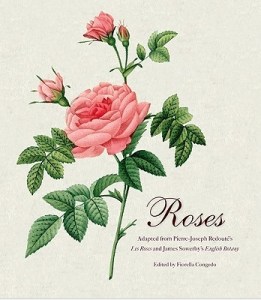
Roses
Pierre-Joseph Redouté
James Sowerby
$22.99

The paintings and drawings of botanical artist Pierre-Joseph Redouté (1759-1840) and naturalist/illustrator, James Sowerby (1757-1822), fill the pages of Roses, a collection of botanical art packaged neatly in a softcover book. One hundred fifty-nine of Redouté’s rose paintings and eighty-eight of Sowerby’s paintings/line drawings of plants in the Rosaceae (Rose Family) are featured. The plates are shown exactly as they were created. Descriptions of each rose can be found in the book’s index.

A DVD containing images from the book is included. Image files are in .jpg and .png format and can be viewed directly from the disc and in programs such as Adobe FreeHand, Photoshop, and Illustrator.

This new title is available at ArtPlantae Books for $17.24, 25% off the list price of $22.99. This special offer expires Friday, October 7, 2011.

Go to ArtPlantae Books to read more about this title.

Read Full Post »

The Making of a Botanist: Joseph Dalton Hooker, 1817-1911

Lloyd Library and Museum
www.lloydlibrary.org
Oct. 8 – Dec. 30, 2011

This special exhibition celebrates the famed 19th-century botanist and explorer, Joseph Dalton Hooker, and reveals how and why he became the great botanist that he was.

The son of William Jackson Hooker (confidant to Charles Darwin and former Director of the Royal Botanic Gardens, Kew), Joseph Dalton Hooker explored India and the Himalayas and made significant contributions to rhododendron and orchid research.

Throughout the exhibition, Hooker’s relationships with 19th-century naturalists such as Charles Darwin, Thomas Huxley, Alfred Russell Wallace, and Charles Lyell will be explored. Exhibition highlights include the first edition of Darwin’s On the Origin of Species by Means of Natural Selection (1859), Victoria regia, or the Great Water-Lily of South America (1847) by William Jackson Hooker, and The Rhododendrons of Sikkim-Himalaya (1849) by Joseph Dalton Hooker.

The opening reception will be held on Saturday, October 8, 2011 (4-7 PM). During the reception, Gene Kritsky, noted author and professor at the College of Mount St. Joseph, will speak about the relationship Joseph Dalton Hooker had with Charles Darwin. Kritsky’s presentation begins at 4:30 PM.

In November, Michael A. Flannery (Associate Director of Historic Collections at the University of Alabama, Birmingham and the former Director of the Lloyd Library & Museum), will discuss his new book, Alfred Russel Wallace: A Rediscovered Life. This special event will occur on November 30, 2011, from 7-9 PM and includes a coffee and dessert reception.

The Lloyd Library and Museum has designed a poster to commemorate the life and career of Joseph Dalton Hooker. Featuring one of the plants documented by Hooker while he was in India and the Himalayas, this poster is available exclusively at the museum store for $10 (click on image).

The Lloyd Library and Museum, located at 917 Plum Street in downtown Cincinnati, is a local and regional cultural treasure. The library was developed in the nineteenth century by the Lloyd brothers — John Uri, Curtis Gates, and Nelson Ashley – to provide reference sources for Lloyd Brothers Pharmacists, Inc., one of the leading pharmaceutical companies of the period. Today the library is recognized worldwide by the scientific community as a vital research center. The library holds, acquires, and provides access to both historic and current materials on the subjects of pharmacy, botany, horticulture, herbal and alternative medicine, pharmacognosy, and related topics. Although the library’s collections have a scientific focus, they also have relevance to humanities topics, such as the visual arts and foreign languages. The Lloyd is open to anyone with an interest in these topics. Free parking is available for patrons and visitors behind the library building. For more information, visit the Lloyd website at www.lloydlibrary.org.


Related

Read Full Post »

New ten-week programs announced at Classes Near You > Illinois:


Lillstreet Art Center

http://lillstreet.com

    Introduction to Botanical Art & Illustration I
    Mondays, September 19 – November 15, 2011; 10 AM – 1 PM. This class is designed for beginners/advanced beginners. Observation and research skills, basic drawing skills with black & white medium (graphite pencil and pen-and-ink) will be introduced along with brief botanical art history. In this ten-week class, students will also learn basic botany, which is essential for botanical artists to make their work botanically accurate. Precise reviews and critiques will follow every class and two independent projects will be completed by each student. Colored medium, watercolor and colored pencil will be introduced in Introduction to Botanical Art and Illustration II.

    For more information, contact instructor and botanical artist Heeyoung Kim at info@PrairiePlantArt.com. Learn more about Heeyoung and view her online gallery at www.PrairiePlantArt.com. To register for this class, contact the Lillstreet Art Center at (773) 769-4226 or register online. Cost: $320 members, $330 nonmembers

Read Full Post »

When we pick up a field guide, we make a lot of assumptions about its accuracy and take for granted it will tell us what we want to know. Even field guides we have never seen before seem familiar because they have that format we’ve come to expect — species names supported by descriptive text, backed up by an image confirming the accuracy of our observation.

Field guides are important tools and now that some come in e-book format, they are even easier to carry into the field.

Historians do not consider field guides to be scholarly texts, so the study of natural history books as identification tools has not been an area of special focus (Scharf, 2009). This makes Identification Keys, the “Natural Method,” and the Development of Plant Identification Manuals by Sara T. Scharf a particularly valuable reference.

It is easy to imagine modern botanical field guides evolving from early herbals, but according to Scharf (2009), herbals did not influence the development of field guides as much as the simpler, sparsely illustrated texts of the 18th century. These early texts lacked the visual appeal of herbals because botanists did not have money to hire illustrators (Scharf, 2009). Images created with woodcuts were too crude for botanists to use and copperplate engravings were too expensive, so Scharf (2009) says botanists had to make a choice — create illustrated books only the wealthy could afford or create instructional books in large quantities for amateurs and students and sell them at an affordable price. Botanists chose to create books for a general audience. What made these books predecessors to modern field guides was how they were organized.

Today we have the luxury of having botanists sort out a way for us to think about plants. But in the 18th century, the same level of organization did not exist. Plants were being discovered and described at a rapid pace and there were conflicting views about how plants should be organized (Scharf, 2009). Should they be organized in a “natural” way by grouping similar plants together or should an “artificial” organization be created by sorting specimens in some other way? Scharf (2009) tells interesting stories about several 18th-century botanists and the identification schemes they created. While these botanists made significant contributions to the field of botany, it was teachers in post-Revolutionary France who created the format of the modern field guide (Scharf, 2009). After the Revolution, botany became a required subject in school and teachers had to sort through existing identification systems to figure out how to satisfy this new requirement and how to teach botany to students who did not know Latin and whose lives had been interrupted by a revolution (Scharf, 2009). Seeing the flaws in each identification system, some teachers took it upon themselves to create books composed of a combination of systems that would be easy for students to use (Scharf, 2009). Their mixing of a dichotomous key (“artificial” system) with a broad grouping of similar plants (“natural” system) and an alphabetical index so users could look things up, laid the groundwork for the field guides we use today (Scharf, 2009).

The French were the first to create field guides for plants, with the first guide being created in 1803 by Canon Francois-Noel-Alexandre Dubois (Scharf, 2009). English botanists did not use field guides for another 20 years (Scharf, 2009). They were faithful to Linnaeus’ classification system and did not combine systems until after the death of Sir James Edward Smith, the President of the Linnaean Society in London and a staunch advocate for Linnaeus’ system (Scharf, 2009). It wasn’t until botanist John Lindley created introductory botany texts for his students that a “field guide” was written in English; they were normally written in Latin (Scharf, 2009). Lindley wrote his chapter about plant systematics using the format of French field guides and included a plant key, a section about plants arranged in the natural method, and an alphabetical index (Scharf, 2009).

To learn much more about the classification systems of 18th-century botanists, how each botanist contributed to the format of modern field guides, and how botanical field guides influenced guides to animals, obtain a copy of Identification Keys, the “Natural Method,” and the Development of Plant Identification Manuals at your local college library or purchase this paper online from the publisher ($34.95).


Literature Cited

Scharf, Sara T. 2009. Identification keys, the “natural method,” and the development of plant identification manuals. Journal of the History of Biology.
42: 73-117


Also See:

Read Full Post »

Now at Classes Near You > Iowa:


Brenton Arboretum, Dallas Center

www.thebrentonarboretum.org
The Brenton Arboretum is a 140-acre arboretum established in 1997 featuring 2,600 trees and shrubs. Most of the more than 175 species of trees and shrubs are organized by species to ease learning and to emphasize the importance of trees in our world. The event schedule for 2011 includes:

  • Those Amazing Plants – Saturday, July 23, 2011; 9 AM – 12 PM. Learn about the amazing lives of plants during this Botany 101 workshop with Tom Rosberg, botany professor at Drake University. Students will learn how to decipher plant names, how plants reproduce and other exciting topics! Pre-registration required. Cost: $5 members, $10 non-members. Fee can be paid on day of class. For more information, contact the Arboretum by email or call (515) 992-4211.
  • Leaf Collection Identification Workshop – Wednesday, September 21, 2011. Drop-in between 2:00- 4:30 PM
  • Make A Leaf Collection Book
    Saturday, September 21, 2011; 9-11 AM.
  • Second Annual Leaf Collection Exhibition
    Sunday, November 6, 2011; 1-3 PM.


You May Also Like:

    Botany for Gardeners

Read Full Post »

The last student to enroll into a degree program in botany enrolled at the University of Bristol in 2010. In the current directory of the Universities and Colleges Admissions Service (UCAS) (the organization that manages student applications to college courses in the UK), the listing for “Botany Degree” has disappeared. This prompted biologist, Dr. Sinéad Drea of the University of Leicester to write the essay, The End of the Botany Degree in the UK.

Dr. Drea explains that in recent years, the University of Reading and the University of Bristol were the only universities offering a degree in botany. The University of Reading, however, dropped their degree program three years ago and the last group of botany students graduated from the University of Reading this summer (Drea, 2011).

Why is this happening?

Dr. Drea reports that enrollment in plant science courses has decreased. She shares 2009 UCAS data showing that, out of a pool of 37,000 students, only 19 enrolled in botany courses, compared to the 15,000 who enrolled in psychology courses and the 1,400 who enrolled in zoology courses. Research suggests that course titles containing the words agriculture and plant may be part of the problem as they appear to have negative effects on enrollment (Stagg, et al. (2009), as cited in Drea, 2011). It has come to the point where Dr. Drea has contemplated baiting students using the words “genes”, “mutants” and “developmental mechanisms” in course titles instead of using “the ‘p’ word” (Drea, 2011). Low enrollment figures leads to fewer students taking Ph.D. positions in botany (Drea, 2011).

Another contributing factor may be the way botanists are labeled. Dr. Drea makes the excellent point that the label “taxonomist” does not provide any indication of the many disciplines to which botanists can contribute. Botanists do more than study ecology and conserve species, even though their job description usually makes reference only to these two fields (Stagg, et al. (2009), as cited in Drea, 2011).

Vocation or lucrative career? It could be that careers in conservation are seen more as vocations than money-making careers (Drea, 2011). The preoccupation college students have with employability may cause students to assume that a “botany degree is more risky” (Drea, 2011). Becoming a medical doctor has more appeal than becoming a doctor of plants and this line of thinking has data to support it. Drea (2011) cites the ROSE study (Jenkins and Pell, 2006), a science education study completed in the UK. ROSE researchers inquired about popular biology topics and found that 15 year-old girls rated curing cancer as a top topic, while placing plant-related subjects in their list of the Top 3 Least Popular Topics (Jenkins and Pell (2006) as cited in Drea, 2011). Boys placed plant-related subjects in their Top 10 list of least popular topics (Jenkins and Pell (2006) as cited in Drea, 2011).

Then, of course, there is the issue that people do not seem to be interested in plants. More can be read about this issue in previous articles about plant blindness and the long-term impacts of this condition.

To address the growing issue surrounding the decline of courses in plant science, Drea (2011) cites the need to incorporate plants as often as possible in units about general biology, to use more plant examples in class, and to emphasize the impact plants have on human survival.

Dr. Drea’s paper is available online for free. Click on the link below.


Literature Cited

  • Drea, Sinéad. 2011. The end of the botany degree in the UK. Bioscience Education. Volume 17 (June 2011). Web. http://www.bioscience.heacademy.ac.uk/journal/vol17/beej-17-2.pdf. [accessed 15 July 2011]
  • Stagg, P., M. Wahlberg, A. Laczik and P. Huddleston. 2009. The Uptake of Plant Sciences in the UK> A Research Project for the Gatsby Charitable Foundation. The Centre for Education and Industry, University of Warwick.
  • Jenkins, E.W. and R.G. Pell. 2006. The Relevance of Science Education Project (ROSE) in England: A Summary of Key Findings. Centre for Studies in Science and Mathematics Education, University of Leeds.


You May Also Like:

Why People Need Plants by Carlton Wood and Nicolette Habgood (2010).

    .

Read Full Post »

« Newer Posts - Older Posts »