Feeds:
Posts
Comments

Archive for the ‘botanical art’ Category

Botanical Art at
The Kampong

January 15-17, 2013
9:30 AM – 3:30 PM

Go to the tropics in January! Learn how to create field studies at The Kampong, home of the National Tropical Botanical Garden in Coconut Grove, Florida. Artist and teacher, Sarah Roche, will lead this special class that is a collaborative offering between The Kampong and the Friends of Wellesley College Botanic Gardens. Cost: $325 members, $400 nonmembers. Fee excludes travel, accommodations and food. Click on the image for more information.


Friends of Wellesley College Botanic Gardens

Certificate Program in Botanical Art and Illustration
www.wellesley.edu/wcbgfriends
This program offers several weekly and two- or three-day classes on botanical art and scientific illustration with Sarah Roche and Jeanne Kunze and and visiting instructors. The courses offered through this program cover all aspects of botanical art. Here is a peek at the 2012-2013 schedule:

  • Graphite Fundamentals: Basic Drawing Skills
  • Learning Botany by Drawing
  • Leaves 101
  • Plant Painting for the Petrified
  • Photoshop Demystified
  • Extreme Lumps and Bumps
  • smART Business
  • Colored Pencil Fundamentals

Download the 2012-2013 Course Schedule

This information has been added to the Classes Near You pages for Florida and Massachusetts.

Read Full Post »

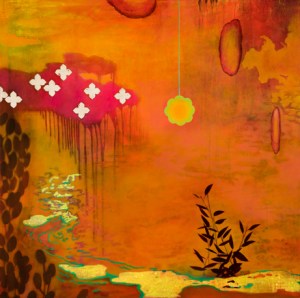
Divine Rain © Ruth Ava Lyons. All rights reserved

The Road Not Taken
Nature Art Gallery
North Carolina Museum of Natural Sciences
Raleigh, NC
October 5-28, 2012

Ruth Ava Lyons will be the Nature Art Gallery’s featured artist for October. Lyons’ oil paintings and an ongoing body of work inspired by her travels and field studies of oceans, wetlands, national forests and wildlife preserves will be featured in the exhibition, The Road Not Taken.

A Fulbright Fellow, Lyons has exhibited continuously since 1982 in group and solo shows nationwide. She has received several grants and awards, including one from the National Endowment for the Arts and two from the NC Arts Council, and has received Artist Residencies including her most recent residency at Everglades National Park (2011).

Meet Ruth Ava Lyons at the opening reception this Friday, October 5, from
6:30 PM to 9:00 PM.

The North Carolina Museum of Natural Sciences is located at 11 West Jones Street in downtown Raleigh (Directions/Map).

Hours: Monday-Saturday, 9 AM – 5 PM and Sunday 12-5 PM.

Admission: Free

Read Full Post »

Plant models by Gary Hoyle. All rights reserved

What is the first image to come to mind when you hear the word, diorama?

Do you see an open shoebox laying on its side containing a scene depicting life at one of California’s historic missions? How about a mountain scene? A desert scene perhaps?

While smaller and much simpler in construction, the classroom diorama is really no different from the dioramas seen in natural history museums. What they have in common, is they are all snapshots of life occurring at a site-specific location.

Dioramas were patented by Louis Daguerre in 1822 (Hoyle, 2008). Daguerre was a stage designer in the theatre and the inventor of the daguerreotype (Hoyle, 2008). Daguerre’s “stage window” (Hoyle, 2008) eventually evolved to become the nature scenes we know today.

These incredibly detailed landscape scenes are created by a dedicated team of curators, scientists, historians and artists who work together to connect the public to nature. Artists such as Gary Hoyle who specializes in creating representational work for museums.

How did Gary’s museum career get its start?

When Gary was ten years old, he saw his first wildlife diorama at the Museum of Science in Boston, Massachusetts. He says that after this visit, he became obsessed with creating environments for the clay animals he made as a young child. When he was fourteen, he was invited to watch Klir Beck, curator of the Maine State Museum, create the Black Bear Diorama. Sometime after this experience, he showed Beck his animal sculptures and, to his surprise, was invited to sculpt two box turtles for another exhibit. Months later, a 15-year old Gary presented the turtles to the Governor of Maine during a ceremony at the museum.

After high school, Gary studied biology instead of art because he had little interest in abstract art, which was the focus of art programs at the time. While he wanted to combine art and science in some way, Gary felt a burden to be practical because “the whole idea of having a profession in ‘diorama art’ seemed more like a childhood dream than anything remotely possible in the 1960s.” Because there were no scholarships and no way to create a degree with an interdisciplinary focus, Gary studied zoology at the University of Maine.

Years later while finishing up his degree and during his three years of teaching, Gary checked-in with the Maine State Museum periodically to see if they were hiring. In 1973, he was hired as a Research Associate in Natural History at the museum’s new home in the Maine State Cultural Building. Gary’s mentor for those first ten years was Fred Scherer. Scherer had retired from the American Museum of Natural History (AMNH) in New York and worked at the museum in Maine once per week as a museum consultant. Gary says Scherer taught him the techniques he learned as a preparator during his 38-year career at the AMNH. From Scherer, Gary learned how to make small plants, ledges, leaves and trees for the foregrounds of dioramas. He also learned some of the painting techniques Scherer had learned while working as a background painter for legendary artist James Perry Wilson. Gary says he still learns from Scherer, now 97, by phone and when he goes on walks. Gary says, “…when I walk in nature, (I) remember his advice.”

Gary’s first challenge in creating botanical specimens occurred after his mentor left the museum. While he had a good foundation in plant fabrication, this new project required Gary to create hundreds of berries, fruits, plant parts and life-like plant specimens for an exhibit about native American edible plants. Adding to this challenge was the size of his work space — a 12′ by 16′ lab at the museum. Gary says he had to do a lot of experimenting before he could even create his first plant specimen. At the time, there was only one other person in the US creating plant models in wax (Gary’s preferred medium because of its low toxicity). This other person was Dick Sheffield at the Museum of Science in Boston. Gary contacted Sheffield and Sheffield provided a lot of helpful advice about working with wax. Even with all of Sheffield’s generous advice, Gary said, “collecting, color noting, preserving, mold making, wax coloring, casting, fabricating and mounting consumed two years of my work days.”

Today Gary works as an exhibits consultant and a visual artist whose specialty is representational works for museums, corporations and individuals.

This month we have the unique opportunity to learn about plant models, exhibit design and dioramas from an expert with forty years experience in the museum field.

Please join me in welcoming Gary Hoyle, our featured guest for October.


Literature Cited

Hoyle, Gary. 2008. From theatrical illusion to ecological theater: The development of the classic wildlife diorama. Journal of the Guild of Natural Science Illustrators. Volume 40, Number 8.

Read Full Post »

Last month the nonprofit group Botanical Artists for Education & The Environment, announced that a copy of the hard-to-find and very expensive book, An Approach to Botanical Painting, will be raffled off on October 28. Proceeds from the raffle will be used to help cover the publication costs of their book, American Botanical Paintings: Native Plants of the Mid Atlantic.

Raffle tickets for a brand new, autographed copy of Anne-Marie and Donn Evans’ book can be purchased for $10. Interested parties can download a Raffle Ticket Order Form on the BAEE website.

Learn more about the BAEE book project

Read Full Post »

Artist Lala Ragimov has announced her new scientific illustration class for children and adults. This weekend class will be taught at Madrona Marsh, the last vernal marsh in Los Angeles County. See below for details.


Lala Ragimov

www.LalaRagimov.com
A Southern California artist who studies the techniques of Renaissance painters and uses these techniques in her work. Her work is currently on view in the solo exhibition, Envisioning the Natural World, at the Madrona Marsh Nature Center. Lala’s classes appeal to a general audience and can accommodate participants working on independent projects. Botanical artists are welcome! The classes below are taught at the Torrance Cultural Arts Center in Torrance, CA.

Adult Classes:

    Exploring Watercolor Techniques
    Thursdays, September 20 – November 29, 2012; 6:30 – 9:00 PM
    (no class Nov 22)
    Learn new techniques at each meeting. Students have the option of participating in the class project or working on their own. Cost: $135 Torrance residents ($150 non-residents). View Details/Register


    Fundamentals of Oil Painting

    Learn oil painting techniques and apply your new knowledge using still life sets or in your own independent project. Topics addressed include: color theory, composition, positive space and negative space. Two sections of this course are available. Cost per section: $135 Torrance residents, ($150 non-residents)

    Mondays, September 17 – November 26, 2012; 6:30 – 9:00 PM
    (no class Nov 12)
    View Details/Register for Monday option

    Tuesdays, September 18 – November 20; 9:30 AM – 12:00 PM
    View Details/Register for Tuesday option


    Learn to Draw and Sketch

    Tuesdays, September 18 – November 6, 2012; 12:30 – 2:30 PM.
    In this introductory course, participants will learn how to observe subjects. They will also learn about shading, composition, expression and style. Cost: $100 Torrance residents, ($110 non-residents)
    View Details/Register


Children’s Classes
:

    Drawing and Watercolour Painting (Ages 10-16)
    Young artists will work in pencil, pen, ink and watercolor while learning about perspective, shading and color. They will also draw and paint from life and imagination and learn the techniques of the Old Masters. Two sections of this course are available. Cost per section: $79 Torrance residents, ($89 non-residents)

    Fridays, September 21 – November 9, 2012; 4:00-5:30 PM
    View Details/Register for Friday option

    Saturdays, September 22 – November 10, 2012; 3:15-4:45 PM
    View Details/Register for Saturday option


    NEW!
    Botanical and Zoological Illustration
    Learn how to draw and paint the plants and animals at Madrona Marsh, the last surviving vernal marsh in Los Angeles County. In this Saturday morning program, participants will learn how to create botanical, ornithological and other scientific illustrations with the help of the artist Lala Ragimov. Basic drawing and watercolor supplies provided. Adults and children (9 years old and older) are welcome. Cost: $10 per class. Class dates are listed below. Each class meets from 10 AM – 12 PM.

    To register, contact Friends of Madrona Marsh at (310) 782-3989.
    Explore the Madrona Marsh online at www.friendsofmadronamarsh.com.

    Class Dates:
    Satuday, November 17, 2012
    Saturday, December 8, 2012
    Saturday, January 26, 2012
    Saturday, February 16, 2013
    Saturday, March 30, 2013
    Saturday, April 20, 2013

This information can also be found at Classes Near You > Southern California.

Read Full Post »

Natural Forms in Black, White & Gray

Learn how to capture Nature’s forms in black and white in this five-week class with Rose Pellicano.

Get the latest at Classes Near You > New York!


Rose Pellicano

Rose Pellicano’s career as a botanical artist spans 20 years. Her work has been exhibited widely and is in the permanent collection of the Hunt Institute for Botanical Documentation. Learn more about Rose by visiting her profile in the ASBA Members Gallery. Rose is represented by Susan Frei Nathan Fine Works on Paper, LLC in New Jersey.

    Drawing Flowers and Plants in Graphite
    Fridays, October 26 and November 2,9,16,30, 2012
    10 AM – 1 PM
    Learn the basics of drawing flowers and plants in graphite. Create the illusion of depth and three dimensionality to your drawing by learning to apply even gradations of values. This course is for beginning and intermediate students. Flowers will be provided. Cost: $205, plus $10 materials fee. Location: Southampton Cultural Center, www.scc-arts.org.

    To register, contact Kirsten Lonnie or call (631) 287-4377.

Read Full Post »

Seattle-area residents have many opportunities to learn botanical art!

Here is Kathleen McKeehan’s new teaching schedule:


Kathleen McKeehen, Scientific Illustrator

Kathleen is a teacher and freelance illustrator. Her work has appeared in Organic Gardening Magazine and The Herb Companion. View Kathleen’s artwork in the ASBA Members’ Gallery or at the Guild of Natural Science Illustrators’
Science-Art.com. Kathleen welcomes both beginners and advanced students to her classes.

    Studio Classes with Kathleen McKeehen
    Morning to early afternoon studio sessions are available on Wednesdays and possibly Tuesdays. For more information, please contact Kathleen.

    Botanical Watercolor – Mondays, October 1 – November 19, 2012; 7:00 – 9:30 PM. Poulsbo Parks & Recreation, www.cityofpoulsbo.com
    or 360-779-9898

    Botanical Drawing – Mondays, January 28 – March 18, 2013;
    7:00 – 9:30 PM (no class Feb 18). Poulsbo Parks & Recreation, www.cityofpoulsbo.com or 360-779-9898

    Botanical Watercolor – Thursdays, October 11 – November 15, 2012; 10 AM – 1 PM. Bloedel Reserve, Bainbridge Island, View Details/Register

    Botanical Drawing
    Fridays, January 18 – March 22, 2013; 9:30 AM – 12:30 PM
    Learn to draw botanical subjects with basic techniques of measurement, gesture sketching, and shading; class is good preparation for continuing with botanical painting or for drawing other non-botanical subjects. Repeat students can take on more complex subjects with supervision. Gage Academy, Seattle, www.gageacademy.org

    Botanical Watercolor
    Fridays, January 18 – March 22, 2013; 1:30-4:30 PM
    Winter subjects such as conifers & cones will be rendered using classic dry-brush and wash techniques; beginners will learn measurement, flat & graded washes, dry-brush–methods that produce a realistic and accurate rendering. Returning students will get additional practice in these techniques and can select subjects of their choice. (Those interested in expanding subjects to include natural history options such as feathers, skulls, shells, etc. will be able to do so.). Gage Academy, Seattle, www.gageacademy.org

    Botanical Watercolor
    Winslow Art Center, Bainbridge Island
    Check the schedule at Winslow Art Center for announcement about the dates and time for this class.


    Weekend Workshops
    :

    Botanical Watercolor Painting Conifer Cones
    February 9-10, 2013 (All Day)
    New students will learn basic dry brush watercolor techniques and work on a simple fir cone; students with some experience in the technique can tackle more complex cones. Gage Academy, Seattle, www.gageacademy.org

    Botanical Watercolor Edible Botanicals!
    March 2-3, 2013 (All Day)
    Students will learn basic techniques of dry brush and controlled washes to portray simple fruits or vegetables; students with some experience may select subjects of their choice and work under supervision to review and learn new skills. Gage Academy, Seattle, www.gageacademy.org

This information has also been posted to Classes Near You > Washington.

Read Full Post »

« Newer Posts - Older Posts »