Feeds:
Posts
Comments

Archive for the ‘botanical art’ Category

The Field Studies Council has announced the details of its 2013 course schedule.

Here is what’s new at Classes Near You > England!


Field Studies Council

www.field-studies-council.org
Founded in 1943, the Field Studies Council (FSC) provides learning opportunities about the environment for all ages and abilities. Visit their website to learn more about interdisciplinary fieldwork opportunities, classes for individuals and families, publications and profession development courses. Courses are held across the FSC network of UK Centers, from the Scottish Highlands to the south Devon coast. The extensive schedule of classes for 2013 includes:

Botany Courses – Courses include studies of flowers, trees, grasses and grass like plants, ferns, freshwater and wetland plants, lichens, fungi, general plants, mosses and liverworts. View Details/Register

Natural History Courses – Courses include studies of the natural world, birds and other animals, habitats and conservation. View Details/Register

Art Courses – Courses include painting, drawing, crafts (e.g. bookbinding), traditional skills (e.g., basketry), photography, archeology and botanical illustration. Below is a list of botanical illustration classes that will be offered next year. Click on the link below for complete details:

  • Botanical Illustration – March 2013
  • Botanical Illustration for Beginners – May 2013
  • Botanical Illustration Using Colored Pencils – June 2013
  • Botanical Illustration and Painting – July 2013
  • Botanical Illustration for More Experienced Painters – July 2013
  • Illustrating Birds, Bees and Butterflies – July 2013
  • Drawing and Painting the Flora at Malham Tarn – August 2013
  • An Approach to Botanical Illustration: Drawing and Basic Watercolor Techniques – August 2013
  • Botanical Illustration – August 2013
  • A Botany Workshop for Artists – August 2013
  • The Art of Botanical Illustration – August 2013
  • Botanical Illustration for Improvers – August 2013

View all details about FSC botanical illustration courses online.

Read Full Post »

The Eden Project in Cornwall, England announces a three-day drawing class with botanical artists Mally Francis and Ros Franklin.

Don’t miss the latest at Classes Near You > England:


The Eden Project

www.edenproject.com
Located in Cornwall, England, the Eden Project is a non-profit whose focus is connecting people to the natural world through educational programs, social programs, music and art. See how the Eden Project was transformed from a clay pit to an international institute for learning.

    Botanical Illustration
    March 15-17, 2013
    10 AM – 4 PM
    Introduction to botanical illustration for beginners and improvers. Tour the garden with Eden’s horticulturists and learn from botanical artists Mally Francis and Ros Franklin. Picnic lunch and refreshments included.
    Cost: £180 View Details/Register

Read Full Post »

Today Mariella Baldwin shares her thoughts about learning the botanical art.

As always, you are free to join the conversation at any time. Mariella will be taking questions the rest of this month.


ArtPlantae
:
You state that your primary objective for writing your book is to help build confidence with drawing and to create an enjoyable painting experience for anyone interested in botanical art. Drawing upon all of your years of experience explaining the drawing and painting process to beginners…

  • How do you think individuals new to botanical art learn drawing best?
  • How do you think individuals new to botanical art learn painting best?


Mariella
: The answer to both these questions is continual and ongoing practice. One never stops learning.

When it comes to drawing I recall a couple of sound pieces of advice I have gleaned over the years. “Draw what you see, not what you think you see”, and “If you haven’t drawn it, you haven’t seen it.” I would recommend drawing something every day – no matter how small – and make it simple. It is very easy to be carried away with the complexity of detail. It is easy to have a sketchbook and a pencil to hand at all times – they take up little room and are easily portable. I also recommend not using an eraser. Just drawing and making corrections as errors present themselves. Filling a page with loose sketches and gradually honing in on the subject makes for an interesting page. Any errors fade into the background as the page becomes an interesting study in itself – the demonstration of a learning process.


Mariella’s continues her discussion here…

Read Full Post »

How do you teach your students the importance of making detailed observations?

Do you use a single leaf? Leaves arranged along a stem? A single flower?

How long does it take you to make your point? To explain foreshortening?

Here is an activity to consider when the only message you want to get across is “look closely”.

In A Lemon of a Lesson, professor James Minogue shares how he uses lemons to teach elementary school students (grades 3-6) and his preservice teachers the value of looking closely. While lemons may appear to be only balls at first glance, Minogue (2008) demonstrates that they provide ample opportunity for students to make insightful observations, take measurements and even use a magnifying glass.

Minogue’s lesson in observation is comprised of six simple steps. They are:

  1. Choose a lemon from the bowl. Observe your lemon, record observations using words and a sketch.
  2. Take measurements using measuring tape and study your lemon using a magnifying lens. Record your observations.
  3. Return lemons to the bowl.
    (Note: After lemons have been returned, Minogue redistributes lemons to other areas of the classroom.)
  4. Look for your own lemon using the detailed and descriptive data you recorded.
  5. Look for a classmate’s lemon using their data. Discuss your selection with your classmate.
  6. Complete the post-activity worksheet.

Minogue (2008) conducts a post-activity discussion with students in which they share what made the search for a specific lemon easy and what made it difficult. He says during this discussion, students are quick to realize that “accurate measurements, careful sketches, and attention to distinguishing features” (Minogue, 2008) are key to making accurate observations.

Why does this lemon lesson work? Minogue (2008) explains this lesson is effective because when you ask students to study familiar objects, this opens their minds to new ways of seeing.

I am sure you already see how this activity can be applied to lessons about plant morphology and botanical art.

The worksheets Minogue uses in his activity are included with his paper. You can buy Minogue (2008) for 99¢ from the journal Science and Children.


Literature Cited

Minogue, James. 2008. A lemon of a lesson. Science and Children.
45(6): 25-27.

Read Full Post »

Our conversation with Mariella Baldwin continues…


ArtPlantae
:
I like that the images in your book come straight out of your sketchbooks and notes. They support what you describe in the text by showing each step of the painting process as a process and not as almost-finished polished paintings, like what is often seen in instructional books about watercolor, regardless of their subject matter. Why did you decide to use only pages from your personal notes?


Mariella
: I made the decision to use pages from my personal notes for a couple of reasons. Firstly, I believe they are helpful to come to understand that the finished painting doesn’t just happen due to the miracle of facility, but comes from minute observation and constantly referring to notes made whilst having access to a fresh plant specimen. Mistakes and corrections can be made in the sketchbook which also becomes a wonderful reference tool for future projects…

Read More

Read Full Post »

If you’re new to botanical art, you have many resources at your disposal to help you find your way. There are websites, tutorials, professional organizations, certificate programs, classes and of course, books! Many more than what existed 15 years ago. I have had the good fortune to share many books on this site and today I have the pleasure of sharing one more.

Botanical Painting by Mariella Baldwin is a rich resource for those who have a growing interest in learning how to paint plants.

In her introduction, Mariella explains she wrote her book to show people how to paint plants without fear. While she does not stress a technical, scientific approach to drawing and painting plants, Botanical Painting is definitely not a book about expressive flower painting. Far from it. It is a book about drawing with accuracy and painting for pleasure.

The thoughtful and patient conversation Mariella has with readers who lack prior painting experience made a big impression on me. Mariella clearly cares about connecting with her readers and provides confidence-building advice at just the right moments during the drawing and painting process. Always supportive, Mariella is respectful of the path each individual takes to a finished painting.

Novice botanical illustrators will appreciate Mariella’s thoughtful instruction about how to begin a

Click to enlarge, image courtesy Crowood Press

drawing. Through her guided instruction, beginners learn how to use graph paper to take measurements, how to create a mask around their work, how to approach investigative sketching and how to draw the form of their subject.

When it comes to painting, beginners are shown how to turn the painting process into manageable tasks. The instructions Mariella provides for her practice techniques are as clear as her instructions for the “official” painting steps she outlines. Throughout, photographs of her own sketches and painting studies support the written text.

Some of the topics Mariella addresses in her book are:

  • How to work with specific colors (white, yellow, orange, brown, red, pink, green, blue, purple, black and silver).
  • How to paint bi-colored flowers.
  • How to paint roots, bulbs, stems.
  • How to draw and paint leaves.
  • How to draw and paint leaf surfaces and textures.
  • How to draw and paint buds and flowers.

Click to enlarge, image courtesy Crowood Press

In a chapter both new painters and experienced painters will appreciate, Mariella reviews special techniques that will help them paint velvet flowers, hairs, bloom, cacti, sheen and shine on fruit, reflected light, aerial perspective, shadows and those ever-popular dewdrops.

Want to learn more about
Botanical Painting?


Let’s ask Mariella …

Read Full Post »

Andie Thrams
www.andiethrams.com
Andie is a painter and book artist devoted to creative work in wild places. She teaches in California, Oregon, Alaska and Hawaii. Her work is widely exhibited and honored, and is held in many private and public collections. Get the latest news about Andie’s popular classes on her website.

  • Accordion Color Book – November 24-25, 2012. San Francisco Center for the Book, San Francisco, CA. View Details/Register
  • Captured: Specimens in Contemporary Art
    Now thru November 18, 2012. The Bedford Gallery, Walnut Creek, CA. Info
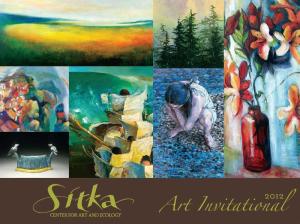
  • 19th Annual Sitka Art Invitational: Stories from Art and Nature
    November 10-11, 2012. Sitka Center for Art and Ecology, Otis, OR. Info
  • Field Notes: The Wild Book Show 2012
    November 16 – December 30, 2012. Artist books by Andie Thrams will be on view at Gallery Route One, Point Reyes Station, CA. Info
  • Big Island Retreat: Wild Art & Wild Yoga in Hawaii – March 2013. Kalani Honua, Hawaii. Download flyer
  • Private Creativity Coaching & Artist Mentoring
    In addition to the workshops listed here, Andie also works privately with a limited number of students. Contact Andie Thrams

This information has been updated at Classes Near You > Northern California. Exhibition information has been added to the “Exhibits to Visit” section.

Read Full Post »

« Newer Posts - Older Posts »