Feeds:
Posts
Comments

Archive for the ‘botanical art’ Category

In 1871 Marianne North, a forty-year old woman from a wealthy Victorian family, embarked on an adventure to paint the plants of the world. Even by today’s standards, North’s travels are an amazing accomplishment. You might think Marianne North is a one-of-a-kind wonder, however she shares the title of brave pioneering female naturalist with women such as Maria Sibylla Merian (1647-1717) who was one of the first to describe metamorphosis, and Jeanne Baret (1740-1807) who was the first woman to circumnavigate the globe and the herb woman whose expertise as a field botanist made her an invaluable asset to botanist Philibert Commerson during the Bougainville expedition (1765-1768).

Through her paintings, Marianne North made several contributions to the field of botany. This month we have the unique opportunity to learn more about Marianne North from Katie Zimmerman, a PhD candidate at the University of Cambridge whose research is dedicated to the work of this fearless naturalist and artist.

Please welcome Katie Zimmerman, the Featured Scholar for May!


About Katie Zimmerman

Katie is a PhD candidate at the University of Cambridge and an instructor at the University of Washington where she teaches courses in the history of science. She is broadly interested in the relationship between art and science, the geography of knowledge, and Victorian natural history. Before taking up her dissertation on Marianne North, Katie taught high school and university courses in Warsaw, Poland, worked at the National Museum of American History in Washington, DC, and earned her MA in the history of science at Oregon State. Katie lives in Seattle, WA with her husband, two children, and a dog named Huxley – all of whom greatly admire and appreciate the botanical wonderland produced by that rainy state.

Read Full Post »

Crop 2 Linda C Miller at York Hall Gallery Demonstration June 5 2011 Award-winning artist
Linda Miller will demonstrate how to create botanical portraits of garden treasures at The Gallery at York Hall in historic Yorktown, VA.

Watch Linda work and learn more about botanical art on Friday, May 3 and Saturday, May 4 from 10 AM – 4 PM.

This special event will be held in conjunction with Yorktown’s Hidden Treasures Garden Stroll in historic Yorktown Village. Visit some of Yorktown’s most beautiful private gardens and be inspired by the gardens and the two and three-dimensional art that will be on display. Plants will be available for purchase at Yorktown Baptist Church.

The garden tour costs $10 per person. Linda’s demonstration is free.
All are welcome!

View Details / Map

Read Full Post »

Yuka Saito's Spores Brooch and its plant life inspiration. Image courtesy of Peninsula School of Art.

Yuka Saito’s Spores Brooch and its plant life inspiration. Image courtesy of Peninsula School of Art.

The Nature of Jewelry: Botanical Design & Symbols
Peninsula School of Art
Fish Creek, WI
April 19 – July 13, 2013

Inspiration from plant life provides both lyrical and geometric design possibilities for 29 notable jewelry artists from throughout the United States, Ireland and Canada. Representing a range of today’s media and techniques, some of the works are also symbolic of the human experience – growth, femininity or even life itself. Artists display a sampling of process drawings and reference materials to trace the creative process for  their works. A retrospective of the jewelry of master silversmith and Peninsula School of Art instructor, Sylvia Youell, is also part of this exhibition.

The variety of work presented in The Nature of Jewelry is indicated by the following partial listing of artists: Paulette Werger (metals), Jeffrey Lloyd Dever (polymer clay), Sabrina Meyns (handmade paper and metal), Yuka Saito (polypropylene), and Annie Pennington (mixed media).

There will also be a representation of the jewelry created from real plant life from the Philadelphia Flower Show by Jane Kilduff.

View a slide show about this exhibition and download an exhibition catalog and a poster at the Peninsula School of Art.

Among the media that Sarah Hood uses to create her jewelry is model railroad landscape materials. Image courtesy of Peninsula School of Art.

Among the media that Sarah Hood uses to create her jewelry is model railroad landscape materials. Image courtesy of Peninsula School of Art.

Jeffrey Lloyd Dever polymer clay jewelry. Image courtesy of Peninsula School of Art.

Jeffrey Lloyd Dever polymer clay jewelry. Image courtesy of Peninsula School of Art.

Read Full Post »

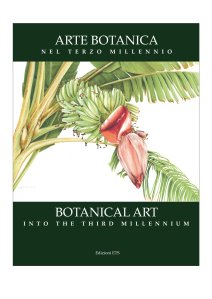
7c4d2e1f4ced43b38be5553328ec3e3b Botanical Art in the Third Millenium
Museo della Grafica
Pisa, Italy
April 20 – July 15, 2013

An exhibition of contemporary botanical art curated by Lucia Tongiorgi Tomasi and Alessandro Tosi. Now on view at Museo della Grafica, Palazzo Lanfranchi, Pisa.

Lucia Tongiorgi Tomasi and Alessandro Tosi co-edited Flora and Pomona: Horticulture in Drawings and Prints of the 16th-19th Centuries (1990).

Lucia Tongiorgi Tomasi is the author of
The Flowering of Florence: Botanical Art for the Medici (2002), as well as An Oak Spring Flora: Flower Illustration from the Fifteenth Century to the Present Time – A Selection of the Rare Books, Manuscripts and Works of Art in the Collection of Rachel Lambert Mellon (Vol 3) (1997).


Update 5/10/13
:
A reader has sent information about how to purchase the catalog from the publisher. Click on Come ordinare on the right side of the product page to view information about how to order the catalog. Then click on the English version of this page. The price of the catalog (EURO 29,75), together with shipping and dollar conversion, costs $59.14.

Read Full Post »

photo It’s busy here at ArtPlantae. Construction-related activities are interrupting the regular flow of things.

The online store will stay open, however online orders won’t be filled until Monday, May 6, 2013. My apologies for the inconvenience. Many thanks for your patience.

For uninterrupted shopping, please visit ArtPlantae at Aurea Vista in historic downtown Riverside, CA — especially this Thursday.

ArtPlantae’s Spring Cleaning Sale will begin during ArtsWalk on Thursday,
May 2, 2013 (6-9 pm). Enjoy a warm spring evening visiting local museums, galleries and local art studios. During ArtsWalk this month, there will also be a spring fashion show on the Main Street pedestrian mall celebrating the fashion and accessories available at downtown boutiques. The expected high for Thursday is 93 degrees, so plan for a wonderful, relaxing and warm ArtsWalk evening!


Aurea Vista is located at 3498 University Avenue in Riverside on the corner of Lemon and University. Hours: Closed Monday, Tuesday-Saturday (11-7), Sunday (11-5). Store hours are extended for Riverside’s monthly ArtsWalk and other special events.

Parking: Free customer parking is available across the street in the parking lot with the ballet mural. Aurea Vista customers can park in spaces #1-8 that face University Avenue. Street parking is free after 5 PM Monday-Friday. Street parking is free on Saturday and Sunday.

Read Full Post »

It’s Smithsonian Week in Riverside, CA and this week residents have the opportunity to learn from biologist David Wimpfheimer and scientific illustrator Alice Tangerini. The presentations below are being held in conjunction with the John Muir exhibition at the museum. All programs are free to the public.

Here is what’s coming to town this week:

    Treasures of Yosemite
    TODAY, April 24
    3-5 pm
    Learn about the origins of Yosemite National Park and current conservation efforts to preserve the park’s diverse plant and animal life.


    Botanical Illustration Demonstration

    Thursday, April 25, 2013
    3-5 pm
    Alice Tangerini is the scientific illustrator in the botany department at the Smithsonian National Museum of Natural History. Stop by the museum to meet with Alice and to learn how she creates illustrations for Smithsonian botanists.


    To Reach Perfection – The Challenge of Botanical Illustration

    Thursday, April 25, 2013
    7:00 – 8:30 pm
    During this evening presentation, Alice will discuss how her work as a scientific illustrator supports research about plant biodiversity and conservation.

Visit the Riverside Municipal Museum’s Smithsonian Week page for more information.


Related

Read Full Post »

The focus on technology, plants and art this month has been both fun and stressful. How does one even begin to blend a discipline as ancient, traditional, moving and beautiful as botanical art with the bells, whistles and modern-day graphics of technology?

My mind has traveled in all sorts of directions.

Apps are easy to think about. Which apps do you use?

“Go outside” my brain said. Think sun, fresh air. Think adventure.
Get that GPS article!

That “GPS article” I am referring to is Backyard Botany: Using GPS Technology in the Science Classroom by Ph.D. candidate Kathryn A. March.

In her article, March shares how she has used Global Positioning System (GPS) units to teach students about plants in informal settings. Her paper is fantastic and I recommend it highly.

March incorporates GPS technology in plant-based learning activities for middle and high school students. In her paper she explains how GPS activities can help teachers address Standards and how they can address issues related to plant blindness. The lesson plan in March (2012) is an activity that calls upon students to create a field guide to trees.

Educators are given all the information they need to conduct this activity themselves. March (2012) provides a list of materials and background information, recommends procedures, suggests an assessment tool, suggests an alternative activity if you can’t afford GPS units and suggests many alternative lesson ideas — one of which involves navigating students to plants so they can draw what they see.

To obtain a copy of March’s article, purchase a copy from JSTOR ($14)
or visit your local college library.


Literature Cited

March, Kathryn A. 2012. Backyard botany: Using GPS technology in the science classroom. The American Biology Teacher. 74(3): 172-177.


Do you use GPS technology in conjunction with botanical or scientific illustration? Tell us about your project in the Comment box below.


Related

Read Full Post »

« Newer Posts - Older Posts »