Feeds:
Posts
Comments

Archive for the ‘botanical art’ Category

Botanical Illustration Intensive Workshop
The National Tropical Botanical Garden on Kaua’I Hawaii

    February 2 – February 15, 2014 (Session 1)
    February 15 – 28, 2014 (Session 2)
    February 2 – February 28, 2014 (One-month Intensive)

    Time: 10 AM to 4 PM, daily

Study the fundamentals of botanical drawing using graphite pencil, colored pencils, watercolor pencils and watercolor. Drawing plants and flowers starts with observation.

Under the supervision of Wendy Hollender, illustrator, author, and instructor from The New York Botanical Garden, students will learn about plant structures and their importance through dissection and comparison.

Students will create detailed botanical drawings and sketchbook pages of flowering plants, fruits and seedpods, working directly from the wide variety of tropical plants growing at the National Tropical Botanical Garden (NTBG).

There will be opportunity to work on large compositions and detailed paintings for those staying the entire month. Lessons in composition will facilitate the development of larger compositions.

Participants will study historical botanical illustrations spanning four centuries as a way of understanding the tradition and techniques still in use today.

Dr. David Burney and other NTBG botanists will be available to help with understanding botany and other aspects of plant ecology.

This class is appropriate for advanced students as well as beginners because everyone works individually. No previous art background required.

Instructional classes will be conducted four days each week at The National Tropical Botanical Garden, with one day per week allotted for field trips or working in other locations on the island. Participants will have a large indoor-outdoor classroom for use, with time to draw outside anywhere in the garden.

Instructor is available in the classroom and does daily demonstrations. There will be a demonstration about drawing in the garden to introduce participants to techniques used when drawing outside. The weekends are free where by students can visit the island, relax at the beach or continue to draw in the garden classroom.

Workshop Fees:
Two-week workshop: $950 includes sumptuous fresh lunch on class days featuring local produce and tropical fruits. Other meals are not included with the exception of a once a week beach dinner barbeque.

Accommodations are available at the National Tropical Botanical Garden in shared housing for an unbeatable price or in nearby Kalaheo and Poipu or other locations in the area. For those staying in shared housing there is a kitchen for shared use. Bed and Breakfasts options are also available.

For additional information and to register, visit www.DrawingInColor.com or contact Wendy.

This information has been added to the Classes Near You sections for New York and Hawaii.
Read Full Post »

While at a science education conference, I learned about a resource that may interest you as you build that “big picture” about plants for students.

The Nutrients for Life Foundation is a nonprofit organization educating students and the public about the role fertilizers play in feeding the world. They created lesson plans for elementary, middle and high school students that can be used by classroom teachers and homeschool teachers. The foundation was created in 2004 by leaders in the fertilizer industry. According to the information in the Fall 2013 issue of Nutrients for Life, the Foundation’s magazine, representatives from the following companies serve as board members or as members on the advisory board: PotashCorp, Transammonia, The Fertilizer Institute, Intrepid Potash, Simplot, Koch Fertilizer LLC, Yara North America, Inc., The Mosaic Company, International Plant Nutrition Institute, Agium Inc., CF Industries, Inc., Florida Fertilzer & Agrichemical Association. The Foundation has regional representatives in Colorado, Louisiana, Nebraska, Iowa, Florida, Illinois and the Northwest. 

The Nutrients for Life Foundation’s campaign to educate the public about fertilizer is extensive. They have placed ads on trains, created recipe cards and have taken their message to the radio. They also sponsored a traveling exhibition about soil science that began its run at the Smithsonian’s Natural History Museum (July 19, 2008 – January 10, 2010).

The Foundation’s curriculum, Nourishing the Planet in the 21st Century, is aligned to state standards and is available for free online. When downloading the lessons for your grade level, select your state to download the proper curriculum. Downloadable materials include lesson plans, pre- and post-tests and supply lists. Posters, bookmarks and other materials can also be ordered at no charge.

Visit the Nutrients for Life website to learn more about their soil science curriculum. You can view videos complementing their curriculum on YouTube. Here is a link to a video about a seed sorting activity for elementary school students. When you visit YouTube directly, search for videos by “Nutrients4Life”.


Related

Read Full Post »

Botanical artist and botanical art collector, Tania Norris, has generously donated 41 rare books to The Getty Research Institute (GRI). The collection includes
Der Rupsen Begin (Birth of the Butterfly), a book published by Maria Sibylla Merian. Published in 1717, this book is the first book to depict insect metamorphosis and is one of the few surviving copies hand-colored by Merian’s daughter.

With the acquisition of the Tania Norris Collection of Rare Botanical Books,
The Getty Research Institute can provide future generations with a unique in-depth look at the history of botany and botanical art.

David Brafman, curator of rare books at the GRI, said “The Norris Collection offers inestimable rewards for scholars researching global botanical trade and the ensuing stimulus of cultural exchange to the trend of collecting curiosities spawned in Renaissance and Baroque European culture. Other books in the collection document the codependent progress of technologies in the history of medicine, pharmacology, and the color and textile industries from the sixteenth to nineteenth centuries. No less important are the opportunities to study the complex artistic relationship between physiognomy and ‘naturalism’ in visual representation, as well as developments in urban planning and landscape architecture. Ms. Norris’ generous donation enhances significantly GRI’s existing collections in such subjects and promises to transform the way art historians examine the past in the future.”

In particular, the unique hand-colored copy of Maria Sibylla Merian’s
Der Rupsen Begin (Birth of the Butterfly) from the Norris Collection will find a companion in the GRI vaults: Merian’s stunning Metamorphosis of the Insects of Surinam (1719), the self-published book which documented the watercolors, drawings, and scientific studies she executed and conducted while exploring the wildlife of the South American jungles. The GRI copy was featured prominently in the Getty Museum’s exhibition, Merian and Daughters, which celebrated the extraordinary pioneering contributions of the artist-naturalist, the first European woman to travel to America expressly for artistic purposes.

The Norris Collection will also prove an invaluable complement for research in landscape and still-life painting, as well as insights it will provide to conservators and conservation scientists about recipes and global trade in color-pigments and other preparations in the decorative arts.

In addition to being a botanical artist and collector, Tania Norris is a founding member of the Getty Research Institute Collections Council and also serves on the J. Paul Getty Museum Disegno Drawing Council and Paintings Conservation Council.

On the Getty accepting her books, Ms. Norris said:

It was one of the proudest moments of my life when the Getty Research Institute accepted my books for their library. I never collected expecting anyone else to think my books of interest. But now at the GRI, anyone can view them; some have been or will soon be in exhibitions and programs. More importantly, they will be preserved for generations to come.

Learn more about this wonderful contribution to botany and botanical art education at The Getty Research Institute.

Read Full Post »

The Landscape Architecture program at UCLA has opened registration for Scientific Illustration and Plant Identification. This class is an elective in the programs for Landscape Architecture and Horticulture and Gardening. It is offered through the UCLA Extension program.

Students will learn how to illustrate plants and identify plant characteristics while learning plant taxonomy and plant terminology. Course includes travel to nurseries and gardens in southern California.

Instructor: David Squires, landscape architect and principal of AROUNDYOU, Inc.

Cost: $485 (before 1/1/14); $534 (after 1/1/14)

Class begins on February 2, 2014 (4 meetings)

View Details/Register

Read Full Post »

The featured topic for November is Botany for All.

I know I spend a lot of time on botany resources for children. This month I am going to even it out some and bring attention to resources for teenagers, adults and families. We’ll begin the month with three wonderful resources that help children ages 3-8 learn about the life cycle of plants.

Also this month, you’ll notice a slight change to the publishing schedule. It will be lighter than normal and stay this way through December. I will continue to publish the teaching and learning column on Friday and will publish special features and other announcements when they are ready.

Thank you for being such dedicated readers, contributors and supporters of ArtPlantae.

Read Full Post »

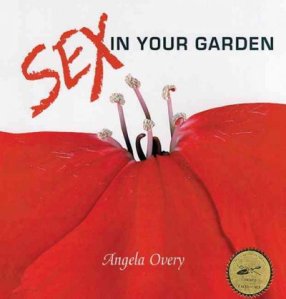
SexInYourGarden Plant reproduction can be as sensitive a topic as human reproduction.

This was made clear to me years ago at the, then, L.A. Garden Show when a gentleman disapproved of me displaying the book, Sex in Your Garden. He shook his head, made the “tisk, tisk, tisk” sounds and told me I shouldn’t have this book out on display. It was the word “sex” in the title that prompted his reaction. If you are unfamiliar with this book, it is a light-hearted and very anthropomorphic look at how plants attract pollinators. It contains text and images drawing similarities between how plants and humans call attention to themselves.

Even though it has been years, I always think of this gentleman when talking about flowers, fruit and reproduction. It is easy to talk about sperm, eggs, ovules and seeds when speaking with adults (although I usually have to give them a few moments to digest the fact that there are ovaries in their fruit bowl).

It is talking about plant reproduction with young audiences that always gets me thinking. What is saying too much?

If you’ve ever felt compelled to launch into an explanation of double fertilization while dissecting flowers with kids (even though you know you shouldn’t), here are some resources that may stop you from going over the cliff.

In How Do Apples Grow?, author Betsy Maestro and illustrator Guilio Maestro provide a comprehensive look at how buds on an apple tree develop, how the buds bloom and how flowers attract bees. They discuss flower anatomy, fruit development and explain what we’re eating when we eat an apple. They explain how apple trees make their own food and close their story where they began it — with flower buds on a bare apple tree. This life cycle book for botanists ages 5-9 addresses some big topics. Here is a list of vocabulary terms and concepts explained in this book:

  • leaf buds
  • flower buds
  • sepals
  • petals
  • stamen
  • pollen grains with male cells
  • pistil
  • ovary with female cells
  • pollination
  • fertilization
  • pollen tube germination
  • fruit development
  • seeds as fertilized female cells
  • photosynthesis
  • apple varieties

Maestro also touches upon seed dispersal and decomposition. The supporting watercolor illustrations by Guilio Maestro are colorful, labeled clearly and are easy to understand. Together Maestro and Maestro do a nice job of making flower development, pollination and fruit development very observable processes.

Just as Maestro makes fruit development observable, Helene J. Jordan brings seed germination and development out into the open in How a Seed Grows. The seed growing activity in her book enables students to see how seeds change beneath the soil and how seedlings grow above ground without investing in those growing chambers with the glass sides. Jordan’s clear instructions are supported by the informative gouache and colored pencil paintings by illustrator Loretta Krupinski. While Jordan’s book was written for children ages 4-8, the seed-growing exercise is appropriate for older children. It helps explain how seeds become plants and brings the life cycle of plants full circle. Plus it really lends itself to exercises related to botanical illustration.

Here is a list of vocabulary terms and concepts introduced in
How a Seed Grows:

  • seed
  • plant
  • tree
  • soil
  • watering for growth
  • writing numbers for identification
  • seed germination
  • roots
  • counting
  • leaves
  • soil
  • water
  • sun
  • photosynthesis

Jordan also includes directions to an experiment children can do to investigate the resources plants need to grow.

We can’t talk about seeds, flowers, pollinators and fruit development without showing how all these things are related. A great book that ties up all the loose ends is The Reason for a Flower by Ruth Heller. She introduces young readers to pollinators they might not normally consider and introduces them to wind pollination too. In her colorful 48-page book, she also introduces readers to seed pods, seed dispersal, herbivores, carnivorous plants, parasitic plants, angiosperms and familiar products derived from plants.

If you ever find yourself wondering “how much is too much?” when preparing an activity for young audiences, browse through children’s books about plants to get ideas about how to teach less, better.


Resources Cited

    • Heller, Ruth. 1999.

The Reason for a Flower

    • . New York: Penguin Putnam.

Jordan, Helen J. 1992. How a Seed Grows. New York: HarperCollins.

Maestro, Betsy. 1992. How Do Apples Grow?. New York: HarperCollins.


Also See

Botanical Illustration & Plant Morphology for Preschoolers

Read Full Post »

Looking for inspiration as yet another busy year comes to a close?

I recommend going to the Riverside Art Museum to view “52”, an exhibition about an artist’s exploration of the 52 Montezuma Bald Cypress trees at Fairmount Park in downtown Riverside.

Artist Sue Mitchell spent the 52 weeks between October 2012 and October 2013 studying these trees and creating solar etchings that capture their strong and elegant structure and beautifully textured bark. Her 52 etchings are presented in the Bobbie Powell Gallery. In the space next to her finished work, Sue shares her whirlwind year with museum visitors. She saved every piece of paper, rough sketch and many other mementos from her one-year sabbatical and posted them to the walls in chronological order. She even moved her home studio into this space and is working there during museum hours through November 22, 2013.

Sue refers to her sabbatical as her “Third Act” and says she began this journey to satisfy a growing need for a deeper sense of fulfillment and personal exploration, a need she shares with many Baby Boomers. Did you know that about 10,000 people a day will turn 65 during the next 19 years?

If you are looking for your own artistic outlet, visit “52” and talk with Sue about her artistic journey. Then visit the other exhibitions at the museum and be inspired even more.

And if you would like to learn more about the Montezuma Bald Cypress trees and study the beauty of their bark, here is a workshop that might be of interest to you:

    Botanical Drawing Workshop
    Saturday, November 16
    1:00 p.m. – 4:00 p.m.
    Instructor: Tania Marien
    Workshop fee: $30

    Learn more about the Montezuma Bald Cypress trees in Fairmount Park and observe their elegant structure and texture as presented by Sue Mitchell in the exhibition “52″. Transform your observations into a delicate bark drawing to serve as a reminder of Sue’s inspirational 52-week journey. Open to all who would like to take those first steps on a journey of their own.

    Please bring the following supplies with you:
    2-3 sheets of Strathmore Bristol Plate (paper)
    4B, 2B, H, 2H, and 4H drawing pencils

    Drawing Workshop hosted by the Riverside Art Museum.
    Please register for this workshop by calling RAM at 951-684-7111.
    Registration deadline is Wednesday, November 13.

Read Full Post »

« Newer Posts - Older Posts »