Feeds:
Posts
Comments

Archive for the ‘botanical art’ Category

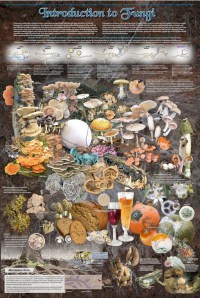
Readers posted great questions during the first week of Ask the Artist with Kandis Elliot. The current conversation is about drawing and digital technology, working with eye health challenges, and incorporating the award-winning poster, Introduction to Fungi, into a class about fermented foods.

Where do you want to take the conversation this week?

Post your comments and questions to Kandis today, then watch for Kandis’ replies during her office hours on Friday.

Read Full Post »

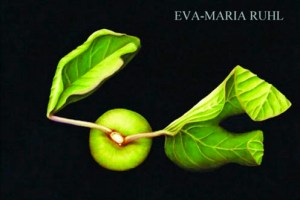
© Eva Maria Ruhl. All rights reserved

Eva Maria Ruhl’s painting of a baby fig has been selected as the promotional image for the current competition at Light, Space & Time, an online art gallery that hosts monthly themed exhibitions.

Light, Space & Time was created by photographer John R. Math to provide an online venue for artists to showcase their work. Each themed exhibition begins with a call for artists and is followed by a one month exhibition of the top five entries. The current theme is Botanicals. This competition is open to all artists, both amateur and professional. Only two-dimensional art is accepted. All entries are due by March 29, 2011. The work of selected artists will be featured at Light, Space & Tim
from April 1 – April 30, 2011.

Visit the Light, Space & Time website to learn how to submit work for the Botanicals exhibition and to read the official rules governing the gallery’s events. Please direct all questions to John R. Math.

Thank you to Eva for providing this information so other interested artists may participate.


You May Also Enjoy…

Read Full Post »

NEW! at Classes Near You > California:

Helen Shafer Garcia, Vista
http://www.helenshafergarcia.com
A garden illustrator for San Diego Home and Garden Magazine for 7 years, Helen is an avid gardener who manages a ½-acre garden filled with succulents and perennials. Helen teaches at the San Diego Botanic Garden, at artist retreats, and at conferences. Visit Helen’s website to view the many ways you can combine plants and art using watercolor, pastels, and mixed media.

  • Watercolor Basics – Mondays, March 28 – May 30, 2011; 1-4 PM. A class for first-time artists. Experience watercolor in a relaxed atmosphere. This class is more about process than creating a final project. Practice watercolor techniques, learn color theory and learn how to mix colors. Discover how to create surface textures too! Cost: $175. View details
  • Pastels: In the Studio and Plein Air – Wednesdays,
    March 30 – June 1, 2011; 1-4 PM. Investigate nature-inspired subjects, explore techniques, and learn drawing skills in a relaxed atmosphere. This weekly class combines studio time with painting outdoors at locations such as the Santa Rosa Plateau and Elfin Forest Reserve.
    Cost: $175. View details
  • Contemporary Book Arts: Embellished and Stitched – Thursdays, March 31 – June 2, 2011; 1-4 PM. Discover the art of bookmaking using contemporary mixed media techniques. Explore endless possibilities. A great way to re-purpose art papers, unresolved paintings, ephemera and other assorted nature-found objects. Cost: $175. View details
  • Tesoro del Corazon Mixed Media Retreat – April 13 – 20, 2011. Join Helen Shafer Garcia, Jane LaFazio, Laurie Mika, and Lynn Leahy for an incredible week of inspiration and art making in San Miguel de Allende, Mexico. View itinerary
  • Monotypes, Pastels and Paint – Wednesday, May 18, 2011;
    9 AM – 4 PM. Using nature as their inspiration, participants will create scrumptious textures and color patterns with this unique process that combines watercolor, pastels and hand pressed Monotype printmaking. This transparent watercolor printing technique lends itself to water drop textures and watercolor crayon calligraphy along with other textures that will be explored throughout the day. The printing process is user-friendly and not complicated. This process is made for quick, bold marks and details! These finished works have endless possibilities for book arts and collage techniques. This workshop will be taught at the CREATE Mixed Media Retreat, Costa Mesa, CA. Cost: $145 (plus $15 materials fee)
  • Batik Watermedia Bits – Wednesday, May 18, 2011; 6-9 PM. Explore a special watermedia batik technique on small bits of Masa rice paper. Participants will use a dropped-in color acrylic ink technique to draw vivid imagery, paint with watercolor, and dive into detail with colored pencils, ink lines and collage elements to embellish their creations. This workshop will be taught at the CREATE Mixed Media Retreat, Costa Mesa, CA.
    Cost: $75 (plus $8 materials fee)
  • Wrapped Bird Book Cover – Thursday, May 19, 2011; 6-9 PM. Create an extraordinary bird-shaped book cover with painted Tyvek papers and collage. Students will construct a hardboard wraparound cover with a textured and painted inner folder insert for journal notes, paintings, or other treasures. This workshop will be taught at the CREATE Mixed Media Retreat, Costa Mesa, CA. Cost: $75 (plus $8 materials fee)
  • Batik Tree of Life – Friday, May 20, 2011; 9 AM – 4 PM. Draw and paint plants, flowers, birds and more using a special batik technique with Masa paper. Make connections between plants, animals, and all living things. This workshop will be taught at the CREATE Mixed Media Retreat, Costa Mesa, CA. Cost: $145 (plus $12 materials fee)
  • Watercolor Basics – Mondays, September 12 – November 7, 2011;
    1-4 PM. A class for first-time artists. Experience watercolor in a relaxed atmosphere. This class is more about process than the creation of a final project. Practice watercolor techniques, learn color theory and learn how to mix colors. Discover how to create surface textures too! Cost: $175. View details
  • Pastels: In the Studio and Plein Air – Wednesdays, September 14 – November 9,
    2011; 1-4 PM. Investigate nature-inspired subjects, explore techniques, and learn drawing skills in a relaxed atmosphere. This weekly class combines studio time with painting outdoors at locations such as the Santa Rosa Plateau and Elfin Forest Reserve. Cost: $175. View details
  • Contemporary Book Arts: Embellished and Stitched – Thursdays, September 15 to November 10, 2011; 1-4 PM. Discover the art of bookmaking using contemporary mixed media techniques. Explore endless possibilities. A great way to re-purpose art papers, unresolved paintings, ephemera and other assorted nature-found objects. Cost: $175. View details

Read Full Post »

Do you teach botanical art classes in southern New Jersey?

An inquiry has been received about the availability of workshops and events in this area. If you teach in this area or are participating in a nearby exhibition or other related event, please submit workshop information &/or event information to education@artplantae.com. Workshops will be added to Classes Near You and announced on this site. Exhibitions will be added to Exhibits to Visit and will also be announced.

Please include the words NEW JERSEY in your subject line.

Thank you!

Read Full Post »

Visit The Botany Studio

Kandis Elliot is the Senior Artist at the Botany Studio at the University of Wisconsin, Madison (UW). Kandis creates the stimulating educational posters The Studio publishes and distributes to educators all over the world. The poster Introduction to Fungi by Kandis and colleague Dr. Mo Fayyaz was recently awarded First Place for Informational Graphics in the eighth annual International Science & Engineering Visualization Challenge 2010 sponsored by the journal Science and the National Science Foundation.

Prior to her current position as Senior Artist, Kandis earned her BA (1970) and MS (1980) degrees at the UW, and worked as a faculty assistant in the Biology Core Curriculum, prepping labs and helping to teach courses in zoology, botany, physiology and other biological subjects. During those years, Kandis (one of those “artsy” kids in grade school) was often called on to illustrate lab manuals — thus giving her experience in, and a taste for, scientific illustration.

In 1988 Kandis earned an Associate Degree of Applied Arts at Madison’s tech school, where she developed skills in preparing graphics and text for publication. When Botany’s illustrator position opened, Kandis applied for the job at once, knowing that the computer age was dawning for scientific illustration, even though she did not yet use a computer for graphics. When she was hired as the new Senior Artist, Kandis marched into the Macintosh lab at UW-computing, held up a $100 bill and yelled, “who wants to teach me this stuff?” Four hours later she had the basics of Adobe Illustrator and the rest is history.

Kandis now specializes in scientific illustration, typesetting and design. She uses her computer savvy to create educational posters, brochures, books, journal figures and information graphics for professors, students, and the occasional private client.

Please welcome March Feature Artist, Kandis Elliot!


ARTPLANTAE: When was the Botany Studio established?

KANDIS ELLIOT: I gave the studio its name when I began working here in 1988. The UW was founded in 1848, when all “natural history” departments in higher-education institutions had artists on staff. Back then, illustrations were done in pen and ink. Now illustrations are done on a Mac using a Wacom tablet and photography is done with a digital camera.


AP: Are the posters created for a specific class on campus or are they always created for a broader audience?

KE: They are created primarily for our departmental use, but work for a general audience as well. When Dr. Mo Fayyaz, the UW-Botany Greenhouses and Garden Director, wanted signage he could use with school groups and that could also be used in the college classroom, we were off and running with colorful visual posters that had a bit of botany tucked in.

We only produce about one or two posters per year because we work on these projects on our free time. The posters are printed in the studio when ordered via our website. They are printed on heavy semigloss 260-lb. paper using archival pigmented inks. Since earning First Place for Informational Graphics, we have been swamped with orders. The Botany Studio is now setting up a credit-card webstore to get past the snailmail bottleneck.


AP: The Botany Studio posts an hourly rate for non-departmental projects. Does this mean instructors from outside the University of Wisconsin can work with the Botany Studio?

KE: Yes. We have done work for our Department of Natural Resources — our “fish and game” environmental agency. We’ve also done work for wildlife groups, prairie enthusiasts, and parents of Girl Scouts. All of these projects are done on our own time or the rare free time.


AP: How many hours of free time do you set aside for the posters?

KE: About one day per week. I work four days (I’m a part-time employee) and then spend one day working on outreach projects.


AP: How long does it take to take a poster from concept to finished product?

KE: The easy ones only take a month. “Fungi” took nearly 6 months, including my crash course in fungology.


AP: How do you make a scientific illustration?

KE: When dealing with living or preserved material, we start with digital photos and/or scans. These are either retouched for clarity or completely “repainted” in Photoshop to create a more stylized figure. Often I need to make a diagram or “cartoon” with copious labels to accompany the image so that parts of, say, a micrograph, can be identified. If I don’t have excellent reference material, I take some mind-reading pills and go the science fiction route. Of course, this sort of mojo has to be fussed up to; scientific journals will not accept photos adulterated in any way unless they are send as an “illustrative concept figure.”


AP: You compose books in the Botany Lab. What types of books do you create?

KE: Textbooks, field guides and more. For example, we created a field guide for the spring woodland wildflowers for the UW-Arboretum, going out and digitizing all the flowers as they came into bloom (what a way to make a living!). We went on to make a much larger guide to prairie plants. These books are sprinkled with nifty extra tidbits about various species and esoteric but cool stories known by our faculty and staff that are normally shared only with botany students.


AP: Which software programs do you use to create the posters?

KE: I use all Adobe products–industry standard, and required by the publishers with whom we work.


AP: Do you paint or draw in your spare time?

KE: What’s “spare time?” No, seriously, I used to paint portraits of folk’s pets in the 1960’s and charge $25 per painting. It helped pay my tuition back in those knee-jerk reactionary hippy days. Over the years my vision slowly circled the drain (I was stabbed in the eye with a busted bottle when I was a kid) and could do less and less handwork. However, a giant monitor and the Wacom tablet let me keep illustrating.


AP: Do you have any advice for botanical artists who want to learn how to draw on the computer?

KE: Learn the same way I did. Glom on to someone who does it and get a couple hours of basics. Then play with Photoshop — press all the buttons, see how long it takes to crash the computer, that sort of fun. When you get a little experience, a one-day class is useful for filling in the gaps.


AP: How does working on a tablet differ from working on pen and paper? What are botanical artists most likely to notice during the first two hours of working on a tablet?

KE:

  • You don’t need to apply nearly as much pressure with a stylus.
  • Lots of gee-whiz feedback. The look and color of a digital drawing are the same or better, given the millions of colors available, and the multitude of effects you can do.
  • You don’t experience the texture of a paper or canvas surface. You are able to draw on a tablet with your pen floating above the surface of the tablet.
  • You have to get used to working without turning your tablet like you may be accustomed to turning your paper.
  • Digital painting creates flat prints. The image may look great, but the physical texture of paper, canvas, paint gobs, etc., are absent. On the other hand, if you wish you had stopped painting 25 strokes ago, you can undo these 25 strokes in your History Palette. And let’s sing the praises of that “forgiveness of sins” button (CMD-Z or CTRL-Z)!
  • You have more options with a digitizing tablet. You are not stuck with a static drawing. Working with a digitizing tablet is much more satisfying for artists who want to work quickly, not inhale fumes, and like to try several variations without losing any of the stages.
  • And keep buying those lottery tickets so you can afford the loaded computer, tablet, camera and quality printer you’ll need for the perfect digital graphics experience.


Get Your Posters!

The Botany Studio has created ten beautiful and informative posters. Enlarged images of each poster can be viewed on the Studio’s website.


Ask The Artist with Kandis Elliot

Kandis will hold office hours this month. She will respond to readers’ questions and comments on March 4, 11, and 25. You are invited to post your questions in the comment box below and to follow the conversation as it progresses.

As always, you do not need to leave your full name. Your first name or a username will do.


What would you like to learn from Kandis?


Read Full Post »
Botanical Art Workshop with Linda Miller
The Elizabethan Gardens
www.elizabethangardens.org
April 28-30, 2011

Spend three enjoyable days drawing and painting the flora at The Elizabethan Garden on North Carolina’s Outer Banks. Learn the drawing skills, observation techniques, and watercolor techniques required to create a botanical painting. All levels of experience welcome!

© 2010 Linda Miller. All rights reserved


On the first day of class, students will take a walk through the garden, receive an introduction to plant morphology, and select their plant specimen. Students will then “discover” their wonderful specimen, leaf by leaf – petal by petal, and create a line drawing that will serve as the foundation for their painting. Students will work at their own pace while the instructor visits with each student individually. Instructor Linda Miller will demonstrate each drawing and painting technique.

For more information, contact The Elizabethan Gardens at (252) 473-3234.
The Elizabethan Gardens are located at 1411 National Park Drive, Manteo, North Carolina.

This information has been added to Classes Near You > North Carolina.

Read Full Post »

Now at Classes Near You > California:


Andie Thrams, Coloma, CA

Andie is a painter and book artist devoted to creative work in wild places.
Her work is widely exhibited and honored, and is held in many private and public collections. She is currently at work on two series, IN FORESTS and FIELD STUDIES. Her new website will be launched soon. View Andie’s 2011 IN FORESTS calendar on her Etsy page.

  • Spring Flora: Watercolors in the Garden – April 2 & 3, 2011.
    9:30 AM – 4:00 PM. Quickly capture gesture and form using watercolor, gouache, ink, and colored pencil. Classes can be taken separately as a one-day class. Cost: $100 per day members / $105 nonmembers. Tilden Regional Park Botanic Garden, Berkeley, CA. View course details and register.
  • Printers Night with Andie Thrams (Free event) – May 12, 2011. San Francisco Center for the Book, San Francisco, CA. Go to SFCB website
  • Transformation: The Journal into Artist’s Book. May 14-15, 2011. San Francisco Center for the Book, San Francisco, CA. Go to SFCB website
  • Summer Magic: Surface Design & Accordion Books. June 3-5, 2011. Santa Fe Book Arts Group, Santa Fe, NM. Go to SFBAG website
  • A Sense of Place: Art and Hiking Retreat – June 10-12, 2011. Awaken your senses on this weekend camping trip in Yosemite! Balanced Rock Foundation, Yosemite National Park, CA. Cost: $450. View details
  • Finding Your Colors (Color Mixing Mysteries Solved!) – June 23-24, 2011. Focus on the Book Arts Conference, Pacific University, Forest Grove, OR. Conference website
  • The Artist’s Journal – June 25-26, 2011. Focus on the Book Arts Conference, Pacific University, Forest Grove, OR Conference website
  • Book Arts for Kids – July 2-3, 2011; 10 AM – 4 PM. Use ink, watercolor, sticks, feathers, stones, reeds, pen, brush, crayon, and other objects to create book structures. Ages: 8 & up. Cost: $107. Sitka Center for Art & Ecology, Cascade Head, OR View details
  • Watercolors in the Wild – July 7-1-, 2011. Learn to paint in wild places through the creation of a series of outdoor studies. Cost: $390. Ages: 12 & up. Sitka Center for Art & Ecology, Cascade Head, OR
    View details
  • Field Studies: Sierra Flora & The Artist’s Book – July 20-24, 2011. Focused field study of plants and habitats in the Sierra Nevada. Supply lists, camping gear requirements are available online. Cost $370. San Francisco State University Field Camp, Sattley, CA. View course details and accommodations.
  • Ongoing: Private Art Instruction & Creativity Coaching
    Individually tailored instruction is available to a limited number of students. Lessons are conducted via email and/or in Andie’s studio or your workspace. Contact Andie Thrams.

Read Full Post »

« Newer Posts - Older Posts »