Feeds:
Posts
Comments

Archive for the ‘book review’ Category

Wild in the City Wild in the City: Fauna and Flora of Colorado Urban Spaces
Heidi Snyder & Dorothy DePaulo
Big Earth Publishing
November 2015

Wild in the City is a new book by
Heidi Snyder and Dorothy DePaulo. It is an urban field guide to the sights and sounds of Colorado’s Front Range. For those of us who do not live in Colorado, it is a fine example of what an urban field guide can be.

What makes this book special are the everyday discoveries and surprises the authors share with readers. Without their personal comments, the 91 species descriptions would be similar to the kind of information we’re accustomed to seeing in field guides. Because Heidi and Dorothy share their experiences as city-dwelling naturalists, Wild in the City is more than a regional resource, it is an invitation to explore the suburbs.

Complementing the inviting text are the authors’ true-to-life colored pencil paintings. Both authors are signature members of the Colored Pencil Society of America and have exhibited their work in many international exhibitions. Their colored pencil paintings are so engaging, you feel as if you could fall into them. Wild in the City is not packaged with sound, but if it were, we would hear waves lapping at the edge of a stream, hear the splashing sound water makes when ducks swim and hear the rustling of wind through cattails. On page 103, we would definitely hear the song of the Black-capped Chickadee. It would sound something like this (click “Typical voice”).

Here is a small sample of the flora and fauna featured in Wild in the City, plus a small tantalizing fact about each plant and animal:

Cottonwood Tree
The “cotton” seed production of this species may become a new source of biofuel.

Ring-billed Gull
The plumage of this species was once used to make ladies’ hats.

Northern Leopard Frog & Water Lilies
This species of frog was once collected by the food industry (frog legs).

Northern Leopard Frog and Water Lilies, ©2015 Dorothy DePaulo, all rights reserved

Northern Leopard Frog and Water Lilies, ©2015 Dorothy DePaulo, all rights reserved

Quaking Aspen

The wood from this tree has been used to make chopsticks.

American Avocet
Day-old avocets can walk, swim and dive.

White Ash
A favorite wood to use for baseball bats.

Want to learn more?

Get Wild in the City!


You might also like:

The origin of botanical field guides


Note

In 2014 Dorothy DePaulo and Heidi Snyder were awarded the Julius I. Brown Grant by the American Society of Botanical Artists. Wild in the City: Fauna & Flora of Colorado Urban Spaces was made possible in part by a grant from the American Society of Botanical Artists. (More about ASBA grants)

Read Full Post »

TheFruitsWeEat It’s summertime!

Cherries, nectarines, peaches and apricots are in season and now available at local supermarkets and farmers markets.

Celebrate the fresh fruits of the season with the new book by author and illustrator Gail Gibbons. In this book, Gibbons introduces readers to fruit, how it grows, how fruit is harvested and how fruit arrives at the grocery store. Gibbons also touches upon the nutritious qualities of fruit and includes USDA recommendations for healthful eating.

Written for children ages 4-8, The Fruits We Eat is a balanced blend of themes related to botany, horticulture, gardening, and urban agriculture. Gibbons’ colorful illustrations and landscape scenes introduce readers to:

  • Trees
  • Plants, bushes and vines
  • The morphology of strawberries, raspberries, blueberries, pineapples, watermelon, grapes, apples, pears, cherries, peaches, lemons, and oranges
  • How pineapple plants, banana plants, and grapes grow
  • How fruit is harvested
  • How fruit travels from industrial farms to the grocery store

Gibbons also introduces readers to botanical terminology, as well as nutritional resources in the United States and Canada and includes Web addresses for further study.

If you are a long-time subscriber to ArtPlantae, you may remember reading about other books by Gail Gibbons at the former ArtPlantae Books, namely From Seed to Plant and Apples.

The Fruits We Eat is a colorful and informative introduction to the trees, bushes and vines producing some of our favorite fruit. It is also a nice introduction to the farm-to-store journey our food takes to the local grocer.


You May Also Like

Read Full Post »

WondersOfPlantKingdomIt’s Fascination of Plants Day!

Organized under the auspices of the European Plant Science Organisation, Fascination of Plants Day aims to encourage the public to become fascinated with plants and understand the important role plant science plays in the fields of agriculture, sustainability, horticulture, forestry, food, medicine and everyday life.

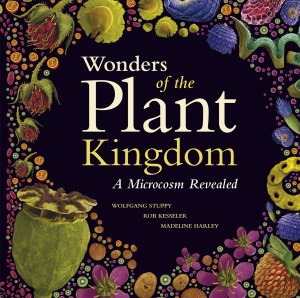
In celebration of the third anniversary of this global celebration, I would like to introduce you to a new book, Wonders of the Plant Kingdom, A Microcosm Revealed.

You may already be familiar with the other books by seed morphologist Wolfgang Stuppy, artist Rob Kesseler and pollen researcher Madeline Harley where they explore the world of plants through the scanning electron microscope (SEM). In their new book, the authors explore sexual reproduction in plants and explain the hidden processes and structures related to:

  • Pollen
  • Flower morphology
  • Double fertilization
  • Alternation of Generations
  • The difference between pollen, spores and seeds
  • Pollen grain morphology
  • Pollination Syndromes (i.e., pollination by wind, water, insects, other animals)
  • Fruit
  • Vegetables
  • Seed dispersal (wind, water, insects, other animals and explosive strategies)
  • The colors of fruits and seeds

The authors also include a section about art and botany.

Informative text and Kesseler’s color-coded images offer readers unique views of the plant world. This book has a definite “Wow” factor and is sure to engage any audience. To view examples of Kesseler’s work, visit his website, specifically his PHY-TOPIC gallery featuring SEM images of plants.

Published in February 2015, Wonders of the Plant Kingdom, A Microcosm Revealed can be purchased at an independent bookstore near you.


Literature Cited

Stuppy, Wolfgang and Rob Kesseler, Madeline Harley. 2014. Wonders of the Plant Kingdom, A Microcosm Revealed. Chicago, IL: University of Chicago Press

Read Full Post »

National Environmental Education Week begins today!

Educators are encouraged to visit the EE Week website and to take advantage of the resources available for their classrooms and programs.

This week we’ll highlight resources for artists, naturalists and educators. Some will come from the depths of ArtPlantae’s archives and others will be new resources to consider. Take, for example, the new book by paper engineer and book artist Shawn Sheehy.

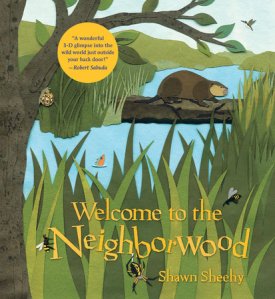
Last month Shawn published his first trade book, Welcome to the Neighborwood. This book is about animals and ecosystems found in many locations across the country. Children and adults will learn about land snails, hummingbirds, garden spiders, honeybees, Potter wasps, beavers and stickleback fish in the kind of grand pop-up style only Shawn can deliver.

Begin EE Week by taking a few moments to look inside Shawn’s new book and learn how Shawn created his book by watching the videos on his website.

Then take a trip to your local bookstore and treat yourself or your favorite young naturalist to Welcome to the Neighborwood!

Read Full Post »

ScienceWithPlants Science with Plants is a collection of hands-on activities about the structure and function of plants. The interdisciplinary activities in this book were created for children ages 8-12 and are a nice blend of art, math, ecology, gardening and of course, botany. You won’t need fancy supplies to complete these activities. Most of the items you’ll need are common household items. The major themes of Science with Plants are outlined below.

Here is a brief overview of what you’ll find in this 24-page book:

Seeds
Art Activity

    • : Keep a Nature Diary

Supplies Needed

    • : Beans, lentils, rice, a glass jar, bean seeds

Concepts Addressed

    • : Seed morphology, how to conduct an investigation, germination, phototropism (a plant’s growth response to light), gravitropism (a plant’s growth response to gravity)

Also See

    • :

A Seed is Sleepy


Growing Plants

Art Activity: Create a growth chart for nature diary
Supplies Needed: Bean plants
Other Subjects: Math, measuring
Concepts Addressed: Seedling morphology, plant structure and function, plant needs, data collection
Also See: Drawings reveal children’s conceptual knowledge of plant structure and function


Plants and Water

Art Activity: Entry into nature diary
Supplies Needed: Celery, ink, any potted plant, a plastic bag, small 2” plants, a large bottle (I think one of those clear plastic containers used for mixed nuts or jelly beans from warehouse stores would work well.)
Concepts Addressed: Water conduction, plant tissues, transpiration, introduction to the water cycle


Plants Use Light

Art Activity: Leaf Print
Supplies Needed: House plants, foil, paper, crayons
Concepts Addressed: Phototropism, photosynthesis, leaf shapes, plant identification
Also See:
Comic book about photosynthesis
The chemistry of plants


Flowers

Art Activity: Entry into nature diary
Supplies Needed: Roses, common flowering plants (e.g., tulip, daffodil, iris), magnifying glass (or try a magnifying glass app)
Concepts Addressed: Flower morphology, plant-pollinator relationships, pollination


Trees

Art Activity: Observing Trees
Supplies Needed: Tree(s) in the yard or neighborhood
Concepts Addressed: Tree growth, tree canopies, deciduous vs. evergreen
Also See: Why Would Anyone Cut a Tree Down?


New Plants from Old Plants

Art Activity: Entry into nature diary
Supplies Needed: Onions, amaryllis, carrot tops, beet tops
Concepts Addressed: Bulb morphology, forcing bulbs, vegetative propagation
Also See: How to create a themed plant display


Seed Dispersal

Art Activity: Entry into nature diary
Supplies Needed: Dirt, plastic bag, assorted examples of seeds and fruit types
Concept Addressed: Seed dispersal
Also See: Seed pod project by Anna Laurent


Plants & Soil

Art Activity: Entry into nature diary
Supplies Needed: Soil, a clear glass (or plastic) jar, water, leaf litter, a plastic bag
Concepts Addressed: Soil, decomposition
Also See: A Log’s Life and the work of scientific illustrator, Robin Brickman


Useful Plants

Art Activity: Entry into nature diary
Supplies Needed: Assorted plant material from the panty and refrigerator, cotton balls, newspaper
Concepts Addressed: Recycling, economic botany
Also See: Colorful Edibles

Author Helen Edom does a wonderful job of filling this book with practical learning experiences and clear instruction. She closes her book with a section titled, Notes for Parents and Teachers, in which she provides additional information to help parents and teachers answer questions that may come up during the activities.

Science with Plants is a nice addition to any home or classroom library and will provide hours of fun and thoughtful observation.

Available from your local independent bookstore. ($5.99)

Read Full Post »

Kids & Trees

What goes on inside cones? Where does fruit come from? How do trees eat and drink?

The answers to these questions can be found in this comprehensive resource created by Gina Ingoglia, the author of 80 children’s books, a landscape designer, and the vice president of the Brooklyn Botanic Garden Florilegium Society.

After introducing young naturalists (and their grown-ups) to tree biology and tree identification, Ingoglia profiles 33 trees that are easily observed in neighborhoods, botanical gardens, or the local arboretum. Each tree profile is composed of background information about a tree, its growth, and the proper pronunciation of its scientific name. Like the plant names in our pocket dictionary, each species name is written out phonetically. Tree profiles also include a whole plant illustration and illustrations of leaves, flowers, fruit, leaf buds, needles, bark, and branches. If a characteristic is important to a tree’s identification, Ingoglia includes an illustration of this characteristic. Grade: 3-4, Age: 8-9

Buy this book at your local independent bookstore.

First published at ArtPlantae Today on Dec. 16, 2010.

Read Full Post »

TheGoldenAgeOfBotanicalArt Drawing
Painting
Engraving
Coloring
Observing
Stippling

These are some of the techniques botanists and artists use to document plants. Each executed with a keen eye for observation and a steady hand. What we know about plants today would not be possible if it weren’t for the botanists, explorers, doctors, artists and observers who came before us. Many centuries before us.

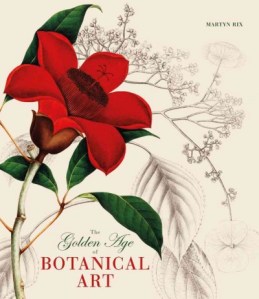
A new book about the contributions made by these passionate educators was finally released in the United States. The stories of these brave, creative and hard-working souls are shared in The Golden Age of Botanical Art, a wonderful history book by Martyn Rix that is sure to be enjoyed by anyone with an interest in natural history art.

This book is filled with fascinating history and stories about famous and not-so-famous people, many of whom I learned about for the first time. Rix cross-references people, places and events throughout his book and while this helps readers form a big picture of history, it makes summarizing a challenge.
Allow me to give you a quick tour of each section.

The Origins of Botanical Art

Learn why botanical illustrations were created. Also learn about ancient herbals, flower painting during the Renaissance, Leonardo di Vinci, Albrecht Durer, woodcuts, the Turkish Empire, English herbals and why the paintings of Jacopo Ligozzi (1547-1626) were better than anyone who came before him.


Seventeenth-Century Florilegia

Learn about the plants brought to Europe by travelers and naturalists and how the work of botanical illustrators contributed to the development of botany.


North American Plants

Learn about the introduction of North American plants into English gardens and learn about the work of artists and botanists such as John Tradescant the Younger, Mark Catesby, John and William Bartram, Andre & Francois Michaux, Georg Dionysius Ehret and Carl Linnaeus.


Travelers to the Levant

European interest in Asia and the Ottoman Empire is the focus of this section. Botanists and painters receiving special attention are Joseph Pitton de Tournefort, Claude Aubriet, John Sibthorp, and Maria Sibylla Merian.


The Exploration of Russia & Japan

Learn about botanical expeditions into Russia and Japan. View images from Flora Rossica, Flora Japonica and learn about a collection of paintings on vellum started by botanist and naturalist, Gaston d’Orleans.


Botany Bay & Beyond

Learn about expeditions into Australia, the work of artists Sydney Parkinson and Ferdinand Bauer and the scientific contributions of Sir Joseph Banks.


The Golden Age in England

Learn how the Royal Gardens at Kew began and view beautiful plant studies such as the study of Pinus larix by Ferdinand Bauer and the graceful Galeandra devoniana, an orchid by Miss Sarah Anne Drake who was John Lindley’s chief artist.


South American Adventures

Expeditions into Spain and the amazing collections of work produced from these expeditions are the focus of this section.


The Golden Age in France

Learn about Gerard van Spaendonck (Pierre-Joseph Redouté’s teacher), Redouté and Empress Josephine in this section.


Botanical and Horticultural Illustrated Journals

Learn about the history surrounding illustrated journals such as Curtis’s Botanical Magazine, The Botanical Register and others.


Early Chinese Plant Drawings

Learn about the type of botanical art created in China before the Europeans arrived.


The Company School in India

Learn about the work of Indian artists, English artists and the publications produced during the time when the East India Company controlled trade in the East Indies.


A New Era at Kew

More history about Kew and how this world-famous garden was established.


Victorian Travelers

An introduction to the botanical contributions made by artists Janet Hutton, Lt. General John Eyre, Charlotte Lugard, Charlotte Williams, Marianne North and Henry John Elwes.


Bringing China to Europe

This section is about the introduction of Chinese plants into European gardens.


The Flowers of War and Beyond

Rix discusses the history of botanical illustration during World War II. Learn what botanist Geoffrey Herklots did while in a Japanese prisoner-of-war camp and what Marianne North’s great nephew did after retiring as an Admiral from the Navy in 1960. Artists Margaret Mee, Barbara Everhard, Graham Stuart Thomas, Rory McEwen and Raymond Booth are also mentioned.

Rix closes his book discussing the work of contemporary botanical artists and by bringing attention to those making key contributions to the current renaissance of botanical art, namely instructor Anne Marie Evans and, of course, botanist and art collector Shirley Sherwood.

In the introduction to his book, Rix thinks aloud and wonders if what we are observing now in the world of botanical art is a new golden age. He explains that the period between 1750-1850 was considered a golden age because the demand for scientific information collided with the enthusiasm of wealthy patrons and with the availability of skilled artists capable of documenting new discoveries.

Today he wonders if the need to preserve disappearing habitat, combined with an abundance of botanical artists and the technological means to create botanical works faster and at a lower cost will create a new golden age even though there is a growing shortage of botanists.


What do you think?


Related

Darwin’s “The Origin of Species” to Become Illuminated Manuscript

Read Full Post »

« Newer Posts - Older Posts »