Feeds:
Posts
Comments

Archive for the ‘ArtPlantae Books’ Category

Save 25% until October 7, 2011

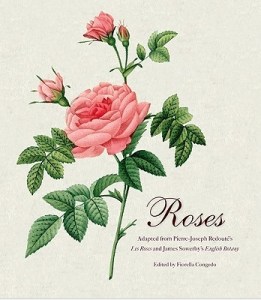
Roses
Pierre-Joseph Redouté
James Sowerby
$22.99

The paintings and drawings of botanical artist Pierre-Joseph Redouté (1759-1840) and naturalist/illustrator, James Sowerby (1757-1822), fill the pages of Roses, a collection of botanical art packaged neatly in a softcover book. One hundred fifty-nine of Redouté’s rose paintings and eighty-eight of Sowerby’s paintings/line drawings of plants in the Rosaceae (Rose Family) are featured. The plates are shown exactly as they were created. Descriptions of each rose can be found in the book’s index.

A DVD containing images from the book is included. Image files are in .jpg and .png format and can be viewed directly from the disc and in programs such as Adobe FreeHand, Photoshop, and Illustrator.

This new title is available at ArtPlantae Books for $17.24, 25% off the list price of $22.99. This special offer expires Friday, October 7, 2011.

Go to ArtPlantae Books to read more about this title.

Read Full Post »

You now have a new way to login to ArtPlantae Books when making a purchase or posting a comment about a book. Instead of using the username and password created for the store, you can sign-in using your Google account. Signing in with your Google account will save you time. Here’s how:

  • You no longer need to create an account at the store.
  • You no longer need to remember a separate username and password for the store’s website.
  • If you are already logged in on Google, simply click on the “Sign in with your Google Account!” link to login to the store.
  • Logging in with your Google account means you can purchase Google eBooks faster and easier (you can ignore the “Connect your Google Account” screen).

Of course, you can still use the username and password created for the store if you prefer. The choice is yours.

If you are new to ArtPlantae Books, stop by the website to visit this resource supporting our community of artists, naturalists and educators in their pursuit of knowledge about botanical illustration, botany, natural history, environmental education and art education. A large searchable database of 5 million titles connects this community to books, CDs, DVDs and Google eBooks in these and related disciplines.

In addition to connecting community members to a variety of resources, ArtPlantae also provides the following services for US-based schools and organizations:

  • Partner Fundraising – Looking for a way to raise money for your school or organization? Read about the ArtPlantae Affiliate Program to learn how you can bring the passion of independent bookstores into your own online community. Raise funds everyday, at anytime, and from anywhere!
  • In-store Fundraising – Arrange an online fundraising event through ArtPlantae Books. Create a “Shop & Earn” event and a percentage of sales will be donated to your school or organization. Contact us at books@artplantae.com for more information.
  • Corporate Sales – Save time and let us help you obtain the books you need for in-house training programs or special events. Contact ArtPlantae Books at books@artplantae.com and tell us what your needs are for your upcoming event.

To our new visitors, welcome to ArtPlantae!

To our loyal and enthusiastic community members, thank you for your continued support and feedback. Your comments are always welcome.

Read Full Post »

A few announcements today about the latest features at the bookstore…


Author Interviews

In celebration of the authors we’ve learned from (and those from whom we have yet to learn), a new feature has been added to the ArtPlantae Books website. See the section Artists We’ve Learned From in the left column. Conversations with authors will appear here. Today you will find past interviews with artist/co-author Libby Kyer (Today’s Botanical Artists) and scholar, Glynis Ridley (The Discovery of Jeanne Baret). This is just the first step towards making the new store a place for news and information. Your support of future events is appreciated. Please share them with friends and colleagues as they are announced.


Did you know…

You can leave Reader Comments at the new store? Whenever you see the phrase “Add new comment” below a title’s information, click on it and share your thoughts about a book with fellow readers. We would love to hear from you. On the store’s website, I suggest commenting on the bestseller, Fundamental Graphite Techniques by Katie Lee. Do you have anything you would like to share with readers about this book? Login and post your comments.


Promote Your Work

Do have create gift cards featuring your botanical artwork? Would you like to introduce your work to a new audience?

You are invited to promote your cards in the Art Gallery at ArtPlantae Books through our consignment program. To learn more about this opportunity, please click here to complete a short questionnaire. You will receive information about the ArtPlantae Consignment Program in the mail. Thank you.

Read Full Post »

PRESS RELEASE

Independent Bookstore ArtPlantae Books Selling Google eBooks™: “Cloud-Based” Library and Multi-Device Access Allow Indies to Compete in Growing eBook Business

June 8, 2011 – Customers and subscribers of ArtPlantae in Riverside, CA no longer have to choose between reading digital and supporting independent bookstores – ArtPlantae Books is now selling Google eBooks™ online. Google launched its e-book program on Monday, December 6, 2010, and is partnering with the American Booksellers Association so indie bookstores can provide an easy way for their customers to discover, read, and buy e-books at competitive prices.

“More and more consumers are buying e-readers and are looking to purchase e-books,” said ArtPlantae director, Tania Marien. “Google eBooks now allows us to remain the store of choice for our audience of teachers, artists and naturalists who are reading digital and utilizing technology in their classrooms and educational programs.”

“This partnership with Google allows independent bookstores that are our members to better compete with corporate retailers on selection, price, and convenience,” said ABA President Michael Tucker. “It levels the playing field.”

A Google eBook is a new form of cloud-based digital book that allows readers to access their libraries on almost any device from one single repository, regardless of where the e-book was purchased. Google is offering hundreds of thousands of titles for sale, ranging from new releases and bestsellers in every category to classics in the public domain.

Because Google eBooks work with myriad devices — tablets, smartphones, computers, even most e-ink devices — consumers are free to shop from a variety of retailers rather than being bound to one retailer. This opens up a wealth of indie recommendations and bestsellers to avid e-book readers.

In addition to e-books, readers can search through a database of five million titles of print books at ArtPlantae Books, peruse bestsellers, the Indie Next List, and a curated collection of resources about plants, botanical art, environmental education and natural history.


About ArtPlantae

ArtPlantae is a resource provider whose aim is to increase botanical literacy by encouraging an interest in plants and nature through illustration. Their educational website serves as a gathering place connecting artists, educators, and naturalists. Here you will find feature articles, interviews, interactive learning opportunities with artists and authors, and a weekly column about teaching and learning that explores the link between drawing and knowing.

ArtPlantae Books is an online independent bookstore complimenting the resources found at www.ArtPlantae.com. It serves a community of artists, naturalists and educators pursuing interests in botanical art, botany, environmental education, and natural science illustration.


Contact

Tania Marien
ArtPlantae LLC
ArtPlantae Books
(951) 776-4696
books@artplantae.com

Read Full Post »

High school teachers, Brian C. Dempsey and B.J. Betz, describe how they use drawing as a learning tool in Biological Drawing: A Scientific Tool for Learning. They observed that while a lot of time is spent drawing during a typical biology lab, biology instructors do not take the time to teach students how to draw. In response to this observation, they incorporated structured drawing activities into a biology class and successfully taught students how to observe, describe, and draw.


Overview

Dempsey and Betz taught introductory drawing techniques to students in a 9th-grade biology class to enhance their observation skills and to make them better learners. The drawing activities and homework exercises they created were administered over a five-day period. During this time, students participated in exercises addressing observation, drawing from memory, the recording of texture, contour drawing, and the drawing of negative space. Most exercises were completed as homework, while class time was spent conducting directed activities.

Detailed descriptions of each activity and illustrated examples are included in Dempsey & Betz (2001). Here is a quick look at the exercises students completed.

    Exercise 1: Observing & Describing
    Students were instructed to sit with their backs towards each other. Each student took turns describing an object from nature to their partner, who could not see the object being described. Students were required to incorporate art-related terms into their descriptions (e.g., form, value, and color). Prior to this activity, students received instruction about terms used by artists during the drawing process.

    Exercise 2: Drawing from Memory
    In this exercise, students studied an object given to them by their teacher. After studying the object for a while, they put the object away and drew it from memory.

    Exercise 3: Textures & Surfaces
    Students collected as many textured items as they could find in their natural environment. Their recorded observations and texture rubbings were used to create a master list of textures and to launch a discussion about observation skills.

    Exercise 4: Contour Drawing
    After observing a classroom demonstration, students were instructed to create a contour drawing of an object at home. The construction of a contour drawing required students to observe carefully and to draw slowly while drawing what they observed.

    Exercise 5: Negative Space Drawing
    Students learned what negative space was and how to observe it. They then practiced their negative drawing skills.

    Exercise 6: Color Blending & Shading Techniques
    This lesson was taught in the classroom. Students learned different shading techniques and learned how to mix and blend colors. The student handout for this exercise is included in Dempsey & Betz (2001).

To assess if students knew how to use contour drawing, negative space, shading, and color in a biological drawing, Dempsey & Betz created a two-part project requiring students to apply their new skills. The first project was a take-home project requiring students to complete a drawing of a plant growing around their house. Students were graded on their use of contour drawing and negative space, their use of color blending and shading, their attention to detail, and the correct identification of their plant specimen. Dempsey & Betz established grading criteria by which student drawings were assessed. Their rubric and a copy of the handout students received are included in their article.

The second part of the assessment project was conducted in the laboratory and required students to apply their drawing skills while observing and comparing insect-pollinated flowers to wind-pollinated flowers during two 50-minute class periods. A detailed description of this activity is included in Dempsy & Betz (2001).

Since this initial program was conducted, Dempsy & Betz have revised their technique as necessary. They have also incorporated drawing lessons into a unit about human anatomy. In this unit, students apply their drawing skills while learning about bones and the origin and insertion of muscles.

Getting Started
Dempsey & Betz (2001) recommend teachers read Drawing on the Right Side of the Brain by Betty Edwards, take introductory drawing classes, and collaborate with the art teacher at their school. I would like to add the following resources to their recommendation:

  • The Art of Botanical Drawing: An Introductory Guide ($19.95) by Agathe Ravet-Haevermans, scientific illustrator at the Museum of Natural History in Paris. Read about this informative sketchbook-style guide for beginners.
  • Botanical Drawing in Color: A Basic Guide to Mastering Realistic Form and Naturalistic Color ($24.99) by Wendy Hollender, botanical artist, author, and teacher. Read the review about this comprehensive guide.


Literature Cited

Dempsey, Brian C. and B.J. Betz. 2001. Biological drawing: a scientific tool for learning. American Biology Teacher 63(4): 271-279.

Search for The American Biology Teacher at a library near you (enter your location in the appropriate field).


Also See

Drawing with Graphite Eyes


How do you use drawing as a learning tool in your classroom?


Read Full Post »
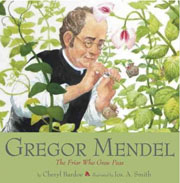
Gregor Mendel & His Peas

Gregor Mendel was a curious little boy. When he learned that growing two kinds of apple trees together made better fruit and that breeding sheep made thicker wool, he wanted to know how these results were possible. This curiosity lead to a lifetime of research that resulted in Mendel’s 8-year experiment with pea plants and his observations about how traits are passed from parents to offspring.

Gregor Mendel’s story is told by Cheryl Bardoe, Senior Project Manager of Exhibitions at The Field Museum in Chicago. Her book was published in conjunction with an exhibition the museum hosted over four years ago. The exhibition, Gregor Mendel: Planting the Seeds of Genetics, is still viewable online. Also online is the resource guide created specifically for Illinois teachers. This resource-rich guide has information and activities that can be incorporated into any biology classroom.

Bardoe provides young biologists with great insight into Mendel’s childhood and his life as a friar and a teacher. She also provides a succinct review of how genes are passed from parents to offspring. The colorful and lively illustrations of Jos. A. Smith complement her easy-to-follow explanation.

Gregor Mendel: The Friar Who Grew Peas is available at ArtPlantae Books.

Read Full Post »

ArtPlantae will take part in the following events. The literacy dinner is a ticketed event designed specifically for teachers and librarians. The family book festival and environmental education fair are open to the public.
Hope to see you there!


SCIBA Children’s Book & Literacy Dinner

SoCalBookScene.com
February 26, 2011
An annual event for teachers and librarians. This wildly popular event grows each year. Teachers and librarians get to know local booksellers and meet with authors and illustrators. Cost: $85 per person


5th Annual Family Festival of Books

Chino Fairgrounds (map)
February 27, 2011
9 AM – 3 PM
This event is open to the public and is the only event in the Inland Empire region of California bringing together families, books, authors, illustrators, and exhibitors dedicated to education.


32nd Annual Los Angeles Environmental Education Fair

Los Angeles County Arboretum & Botanic Garden
March 12, 2011
9 AM – 4 PM
For educators, students, parents, and others interested in the future of our planet. This year LAEEF has partnered with Jane Goodall’s Roots and Shoots, a program encouraging youth to create community-based service learning projects. There will be prize drawings for teachers and hands-on activities, tours, and nature games for children. Free with Arboretum admission (see prices and directions).

Read Full Post »

« Newer Posts - Older Posts »