Feeds:
Posts
Comments

Archive for the ‘ArtPlantae Books’ Category

flyerWeb_CoachellaWldflFest_Mar2013 It’s almost springtime.

This means it’s time to hit the road and get outside! Hope to see you out there.

Here is where ArtPlantae will be through April. More to come during summer.

    Coachella Valley
    Wildflower Festival

    Santa Rosa & San Jacinto Mountains National Monument
    Shuttle service from Hwy. 74
    Palm Desert, CA
    March 2, 2013
    9 AM – 4 PM
    More Info


    34th Annual Los Angeles Environmental Education Fair

    Los Angeles County Arboretum
    Arcadia,CA
    Ayres Hall
    March 9, 2013
    9 AM – 4 PM
    More Info


    WaterMiser Workshop

    Native Plants and Our Watershed
    Newport Beach Central Library
    Newport Beach, CA
    March 14, 2013
    6-8 PM
    More Info


    Banning Centennial Earth Day Celebration

    Free Native Plants Available
    Gilman Springs Historic Ranch & Wagon Museum
    Banning, CA
    April 13, 2013
    9 AM – 5 PM
    Watch for more information!


    6th Annual Earth Day Celebration

    Chino Creek Wetlands and Educational Park
    Chino, CA
    April 18, 2013
    4-7 PM
    Watch for more information!


    Wood Streets Green Team How-to-Garden Tour
    Riverside Community College EcoFestival

    Riverside, CA
    April 21, 2013
    EcoFestival (11 am – 2 pm)
    Garden Tour (11 am – 4 pm)
    Watch for more information!


    Earth Night in the Garden

    Western Municipal Water District
    Landscapes Southern California Style
    Riverside, CA
    April 22, 2013
    3-7 PM
    More Info

Do you live in southern California, specifically the Inland Empire?

You’re invited to join the mailing list or to follow this site by clicking on the “Follow” tab in your browser’s window. You can also follow ArtPlantae on Twitter and Facebook.

Read Full Post »

Anita Walsmit Sachs is the director of the art department and a scientific illustrator at the National Herbarium in the Netherlands at the University of Leiden. Ten years ago, Anita started teaching botanical art classes at the university’s botanical garden. During the next four years, enrollment in her classes grew. In 2006, Anita and some of her students formed the Dutch Society of Botanical Artists. Now 136 members strong, the Society will celebrate its seventh anniversary in April.

The focus of Anita’s work as a scientific illustrator is to visualize botanical information. Integrating information observed in dried plant specimens with the verbal instructions from botanists with whom she works, Anita creates line drawings in pen and ink that contain more information than could ever fit in a color photograph.

Please welcome Anita Walsmit Sachs, our special guest for January.

Read Full Post »

Now at ArtPlantae Books BOTANICALS: Environmental Expressions in Art, The Alissa and Isaac M. Sutton Collection is a look at the largest private collection of contemporary botanical paintings in the US. This exhibition of 54 paintings and drawings brings attention to plant life from all over the world and reflects Mr. Sutton’s appreciation for nature.

Curated by Alice Marcus Krieg and Susan Frei Nathan, BOTANICALS: Environmental Expressions in Art, The Alissa and Isaac M. Sutton Collection has been on view at The Hunt Institute for Botanical Documentation at Carnegie Mellon University (October 2009- June 2010), The New York Botanical Garden (September 2012 – March 2011), and The Woodson Art Museum, Wausau, WI (June 23 – August 28, 2012).

Learn more about the collection and view sample images from the catalog.

Visit ArtPlantae Books

Read Full Post »

Paper Engineering for Beginners

Following a recommendation from Shawn, I purchased Pop-Up Design and Paper Mechanics: How to Make Folding Paper Sculptures by Duncan Birmingham so that I could learn more about how pop-up books were constructed.

When I began to read this book, I became instantly intrigued by both the simplicity and the complexity of the engineering behind pop-ups. The word “engineering” is used because it’s the only word that really fits. Don’t be intimidated by the word, however. There are only three rules to pop-ups and these are explained in Birmingham’s book.

Birmingham reveals the science behind pop-up books very clearly. His instructions are supported by visuals, so it’s easy to follow the steps he describes. He tells you exactly where each fold needs to go.

Birmingham reviews foundation shapes, the “building blocks of pop-ups”, and provides very clear descriptions of 18 foundation shapes. He also explains nine building techniques that can be used to build a three-dimensional scene. Birmingham tells you when to cut away parts, when to stick pieces on, how to add extra creases, when to create multiple folds, how to create slots, how to bend planes, how to make straps, and how to make a pop-up interactive.

Included in this book are templates for 14 projects. The templates are in color so you can print them out as-is without investing in colored paper to create the elements of each structure. This is a huge plus for those just beginning to explore paper engineering.

Birmingham’s book is an interesting and enlightening introduction to pop-up structures.

So is it easy to build a pop-up scene?

No, not even close. To immerse yourself in the process and to receive guidance along the way, consider taking one of Shawn’s upcoming classes.

Pop-Up Design and Paper Mechanics: How to Make Folding Paper Sculptures is available at ArtPlantae Books.

Read Full Post »

Do you use an electric sharpener?

A wall sharpener?

A pocket knife?

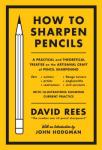
I know of one person who believes strongly that wooden pencils should only be sharpened by hand. For this reason, and because I like pencils myself, I could not resist reading the book How to Sharpen Pencils by David Rees.

Part humor and part reference,
How to Sharpen Pencils is an informative little book about the #2 pencil. Rees reviews the anatomy of a pencil, discusses different types of pencil sharpeners, and shows how to carve four different pencil points with a pocket knife. For the pencil enthusiast, Rees lists various pencil-related resources in the appendix of his book. One resource is his website, www.artisanalpencilsharpening.com. The other resources are about vintage pencils, antique pencils, pencil industry news and blogs written by pencil enthusiasts.

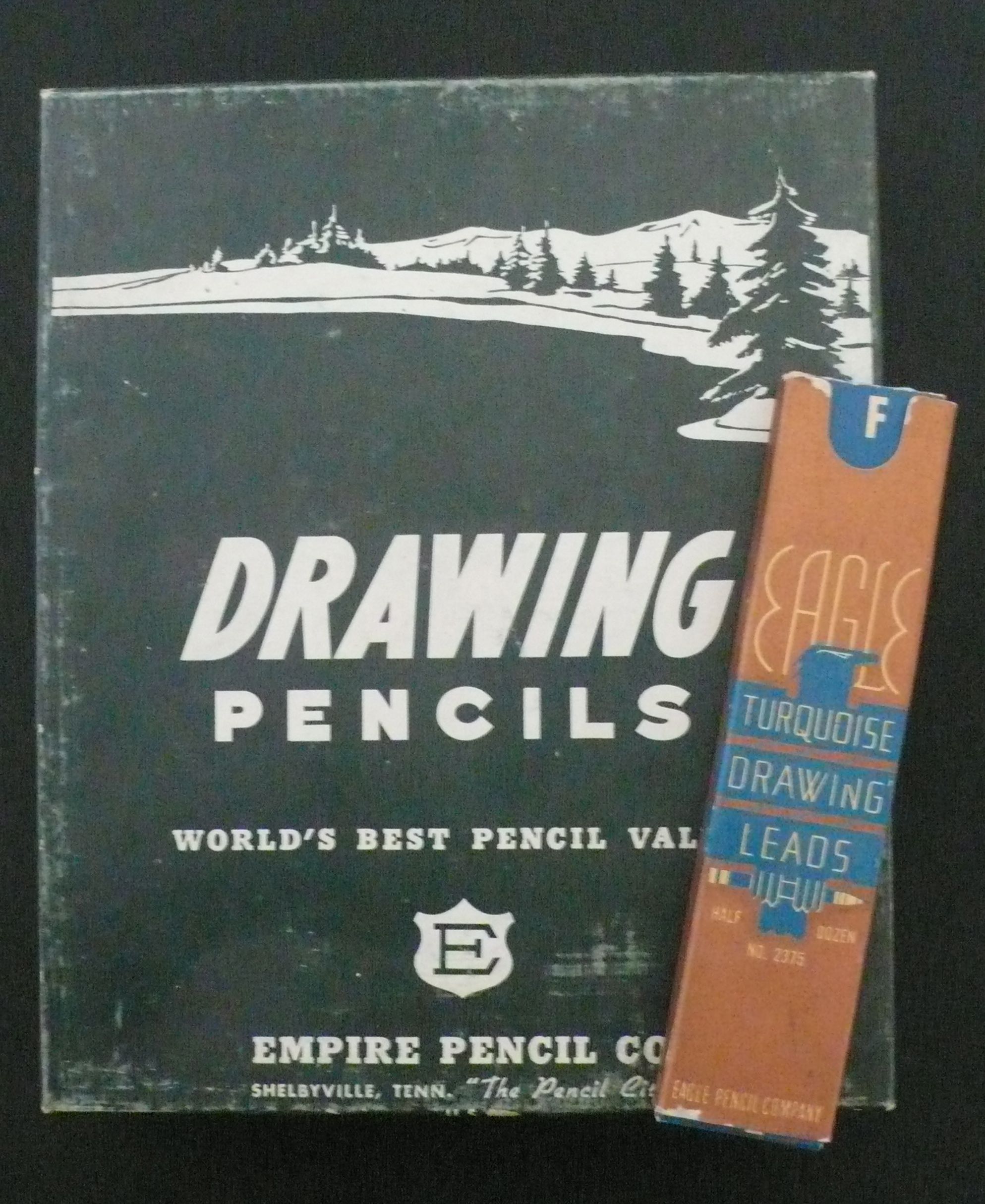
Because I have a thing for pencils (yes, those are my pencil boxes), I did not hesitate to ask David to sharpen an ArtPlantae pencil. I sent David one of my beautiful natural wood, unpainted pencils and a check for $15 so that my pencil could be sharpened with his pocket knife and so that I could include a photo with this post (David takes orders online).

Not too long afterwards, I received…

Pencil sharpened by David Rees.

… a note, a Certificate of Sharpening, the shavings from my pencil and a very sharp ArtPlantae pencil encased in a tube.

All now have a special place in my library.

Do you need your pencil sharpened?


How to Sharpen Pencils is available at ArtPlantae Books. Save 20% ($3.99)

Read Full Post »

Personalized event pages are now available at ArtPlantae Books!

Why create a page for your next event?

Creating a custom page for your next class, event, book club meeting or training workshop at ArtPlantae Books can benefit you or your organization in many ways. A custom event page will allow you to…

  • Distribute an event-specific link to your participants.
  • Make it easy for registered attendees to prepare for your event or class.
  • Connect registered attendees with not only required texts, but with suggested texts as well.
  • Take advantage of the millions of titles in all subject areas available at ArtPlantae Books.
  • Offer participants a coupon code specific to your event, so they can save money PLUS get free shipping on orders over $40!
  • Take advantage of special offers ArtPlantae can share as an affiliate in various programs.

Custom event pages are a great way to prepare participants for your next event or meeting.

If a personalized event page isn’t necessary for your situation, but you still want to direct others to relevant titles in your field, consider joining ArtPlantae’s affiliate program. As a program participant, you will be able to create links to specific titles, add these links to your website and earn a commission for each sale. Find out more on the ArtPlantae Affiliate Program webpage.

For more information, please contact ArtPlantae Books.


Related

Need books? Create a wish list at ArtPlantae Books.

Read Full Post »

Last week we learned how to conduct and record observations of plants in the field. Today we are treated to a reference serving as a fine example of how the life histories of plants can be written and, more importantly, introduced to a general audience.

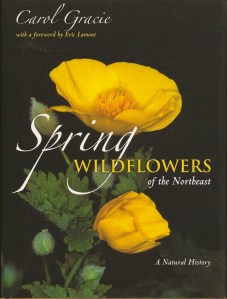
In Spring Wildflowers of the Northeast: A Natural History,
Carol Gracie shares the life histories of more than 30 spring-blooming plants growing in the northeastern United States. A seasoned writer, teacher and interpretative naturalist, Carol is able to “talk plants” to an audience whose interest may range from no interest at all to pure passion. The plant profiles Carol writes are more than a string of facts about a plant’s morphological parts and its dry taxonomic history. Each profile is a history lesson sprinkled with interesting insights into how plants work.

Using a friendly conversational tone, Carol touches upon complicated topics such as pollination ecology, species introduction, plant taxonomy, ethnobotany, horticulture, medicine and climate change without bogging readers down with the type of information that makes eyes glaze over. To maintain her easy-going storytelling approach, Carol chose not to clutter her profiles with references and footnotes. Instead, she waits until the end to cite her sources. She also went out of her way to keep her book free of the confusing technical jargon botanists speak. However, since some botanical terms cannot be translated into everyday English, Carol also provides a glossary of terms at the end of her book.

More than a guide to 30 popular plants of the northeast, this book is a guide to seeing. While reading Carol’s book, be prepared for your observation skills to improve without any effort on your part. This magical transformation occurs because of Carol’s detailed color photographs highlighting key characteristics of plants and the significant changes that occur during each plant’s life cycle. After viewing Carol’s 500+ images, you will discover you’ve developed a search image for the subtlest of details such as tiny persistent styles and the gentle arching of reflexed stamen.

I like Spring Wildflowers for several reasons. First, it doesn’t read like a textbook. It is easy to get lost in one plant profile after another. Second, it is a fascinating introduction to the plants of the northeastern US. Having lived around chaparral and coastal sage scrub all my life, there were plenty of opportunities to be surprised as I turned the pages of this book. What a treat to see the snowflake-looking flowers of the miterwort (Mitella diphylla) and its boat-shaped fruit. Not to mention the drama of an emerging skunk cabbage (Symplocarpus foetidus) and the intriguing morphology of featherfoil plants (Hottonia inflate).

What I like best about Spring Wildflowers is that it piqued my curiosity about East Coast plants. My fascination with plants and how they go about their business was greater at the bottom of page 233 than it was at the top of page 1. This is a good thing!

Published earlier this month, Spring Wildflowers is Carol’s most recent book. This book is recommended for teachers, naturalists and all plant enthusiasts in the northeastern US, armchair naturalists everywhere, and anyone striving to write interesting, easy-to-read plant profiles for a general audience.

Buy this book online from your local independent bookstore.


Literature Cited

Gracie, Carol. 2012. Spring Wildflowers of the Northeast: A Natural History. Princeton, NJ: Princeton University Press.


Related

Read Full Post »

« Newer Posts - Older Posts »