Feeds:
Posts
Comments

Archive for the ‘teaching & learning’ Category

When learning about the life cycle of any living thing, it helps to have real-life examples, or at least images, to guide you through each phase. Observing the entire life cycle of a plant can be a bit of a problem if you and your audience are bound to a classroom or a location void of plant life. How can you have engaging conversation about plant life cycles in these type of settings?

Elisabeth E. Schussler and Jeff Winslow have created a solution and have tested it in fourth-grade classrooms. Their solution is a drawing exercise that is both a hands-on activity and an assessment tool.

In Drawing on Students’ Knowledge, Schussler and Winslow explain how they created an activity for fourth-grade students that provides students with the opportunity to observe and document the life cycle of a plant.

Before Schussler and Winslow (2007) could engage students in learning about the stages of a plant’s life, they had to find out what students already knew about life cycles. They tapped into students’ prior knowledge of life cycles by reviewing the life cycle of frogs and butterflies. They then turned students’ attention to the plant they would study in class and asked them to draw a picture of what they thought the life cycle of their plant would look like. In their paper, Schussler and Winslow (2007) describe what they learned from the students. Through their botanical drawings, students demonstrated they understood that seeds became seedlings, that seedlings produced flowers, that plants produced seeds, that seeds were dispersed and that plants die. They also demonstrated a gap in their knowledge — specifically that they did not recognize that seeds came from fruit and that fruit came from flowers.

To conduct their 40-day study, Schussler and Winslow (2007) worked with students in nine 4th grade classrooms at two local elementary schools and collected pre- and post-assessment data from 81 of these students. Even though they designed the 40-day activity, Schussler and Winslow (2007) made only four visits to each classroom. Their involvement was limited to pre- and post-assessments of students’ knowledge about life cycles, instruction in how to plant and maintain Wisconsin Fast Plants (Brassica rapa), instruction in how to pollinate the plant specimens, and the collection of student data (Schussler and Winslow, 2007). The classroom teachers with whom they worked oversaw their students’ daily collection of data. Students collected data such as date of germination, plant height, leaf number, flower number, pollination, fertilization, number of seed pods and the number of seeds per pod.

Since student knowledge about plant life cycles was to be determined by the presence or absence of information in student drawings, Schussler and Winslow (2007) created a checklist to help them code information in each drawing. This checklist was used on pre-assessment drawings and on the post-assessment drawings students created on the last day of the project. The instructions for the post-assessment drawing were identical to the instructions given for the pre-assessment drawing (Schussler & Winslow, 2007).

Here is what Schussler and Winslow (2007) observed in students’ drawings after they had observed and documented the life cycle of Brassica rapa:

  • 65% of students drew fruit and seed pods in their second drawing. Only 4% of students included fruit or seed pods in their first drawing.
  • 33% of students drew cotyledons (seed leaves) in their second drawing. None of the students included seed leaves in their first drawing.
  • 40% of students correctly placed fruit in locations where a flower was once located. In the pre-assessment drawing, only 4% of students drew fruit where a flower had been. This change suggests that students learned the relationship between flowers and fruit.

Schussler and Winslow (2007) found the drawing activity to be a fun learning tool and an effective assessment tool. The most revealing discovery to come out of their research was that much of what the students learned about plants was learned without receiving any planned instruction. Teachers from participating classrooms were not required to present specific information about plant growth. What students learned about plant life cycles was learned through direct observation and data collection (Schussler & Winslow, 2007). The knowledge and insight gained by students through direct observation was consistent from class to class, suggesting to Schussler and Winslow (2007) that their hands-on growing activity and drawing assessment tool was effective in all settings, whether or not teachers presented additional information about plant growth to their students.

View the materials and methods used by Schussler and Winslow (2007), a copy of the checklist they used to evaluate drawings, and sample pre- and post-assessment drawings in Drawing on Students’ Knowledge, available online for free, available at the store of the National Science Teachers Association for 99¢, or in the January 2007 issue of Science and Children. Look for this issue in the reference section of your local college library.


Literature Cited

Schussler, Elisabeth and Jeff Winslow. 2007. Drawing on students’ knowledge. Science and Children. 44(5): 40-44.


Related

View the life cycle of Brassica rapa, the Wisconsin Fast Plant
Read Full Post »

In the 18th century, botany books were mostly written for a female audience. Women were encouraged to study botany as it was considered to be an acceptable activity for women. In Linnaeus in Letters and the Cultivation of the Female Mind: ‘Botany in an English Dress’, professor and 18th-century scholar, Sam George, discusses the feminization of botany in the 18th and 19th centuries.

During this time, authors wrote popular botany books for women. Botanists even got into the game and, as George (2005) describes it, “wooed female readers” by making analogies between flowers and the finer virtues of women. Flowers became symbols of innocence and all was beautiful and happy. That is, until Carl Linnaeus came along with his classification system and his discussion about the sexual parts of flowers.

Language likening botanical terms to human sexuality became an issue. George (2005) refers to two books published not too long after Linnaeus’ System Naturae (1735), that were some of the first to describe the sexual system to British readers. In Introduction to Botany (1760), author James Lee refers to male stamen as “husbands”, female pistils as “wives”, sexual union as “marriage”, flowers without stamen or pistils as “eunuchs” and the removal of anthers as “castration” (George, 2005). In Elements of Botany (1775) by Hugh Rose, the flower calyx is referred to as “the marriage bed”, the corolla as “the curtains” (George, 2005) and the metaphors go on and on.

Suddenly, it became controversial for a woman to study botany. Linnaeus was labeled by moralist Charles Alston as being “too smutty for British ears” and there were warnings that botanizing females were “indulging in acts of wanton titillation” (George, 2005). You can imagine the reaction of one Reverend Richard Polwhele when he saw boys and girls botanizing together (George, 2005)!

Fortunately, not everyone was appalled by the thought of women studying Linnaeus’ classification system. But this issue didn’t work itself out overnight. There was a lot of discussion about how women should learn about plants. George provides an interesting overview of the controversy as she explores how two proponents of botany education for women, Priscilla Wakefield and Jean-Jacques Rousseau, promoted botany as a worthwhile activity for ladies.

Both Wakefield and Rousseau emphasized the importance of Linnaeus’ classification system and how it can help the female mind make sense of the plant world. They thought the study of botany was a good way for women to learn how to be socialized in an ordered hierarchical system (George, 2005). Wakefield and Rousseau also agreed that learning about plants outdoors was better than learning about plants in isolation and only from books (George, 2005).

Although they may have agreed upon these points, the philosophies behind their respective positions varied.

Even though Wakefield was dedicated to the education of women, she stopped short of encouraging women to become all that they could become. She thought women should be educated according to their place in society and thought that women should not enter “masculine spheres” (George, 2005). She promoted botany as “an antidote to levity and idleness” (Wakefield (1818), as cited in George, 2005).

Rousseau’s view about women studying systematics was a little different. He saw the study of Linneaus’ classification system as “true” botany (George, 2005). Even so, he was more concerned that women use botany as way to observe and describe plants instead of using Linnaeus’ method to study botany seriously. He thought it was best for women to study plants outside because the study of “true” botany had to occur where plants existed in a natural undisturbed state. Uneducated women were thought to be closer to an undisturbed “state of nature” and so had “a special affinity” for plant exploration (George, 2005).

Although Wakefield’s and Rousseau’s thinking is backward and offensive today, they are credited with giving women access to botanical knowledge. George (2005) says that because of Wakefield and Rousseau, botany had become so feminized by the 19th century that it was considered to be “unmanly”.

To learn much more about this period of botany’s history, buy a copy of George (2005) from the British Journal for Eighteenth-Century Studies or read George’s paper online (accessed 16 December 2011).


Literature Cited

George, Sam. 2005. Linnaeus in letters and the cultivation of the female mind: “Botany in an English Dress”. British Journal for Eighteenth-Century Studies. 28(1): 1-18.


Related

Read Full Post »

Almost 100 years before the publication of the first text-based dichotomous key, an image-based dichotomous key was presented to the scholars of the Royal Society in London. The year was 1689.

The story behind this identification tool, its creator and the scientific community’s reaction to it, is the focus of Who Invented the Dichotomous Key? Richard Waller’s Watercolors of the Herbs of Britain by Lawrence R. Griffing.

Griffing provides fascinating insight into the history of the dichotomous key.

What is a dichotomous key, exactly?

It’s an identification tool. Think of it as a field guide’s more analytical cousin. You can’t flip though a key as casually as you can flip through an illustrated pocket field guide. Keys require users to sit down and observe a specimen carefully. The identification process requires the user to make a series of observations in a very methodical way and to choose between the presence or absence of a specific feature or to make “either/or observations” (Griffing, 2011) resulting in a user choosing one feature (or condition) over the other. This methodical dichotomous decision-making process leads a user through a key and eventually to a species description matching the specimen collected or observed by the key’s user.

Richard Waller’s idea for an image-based dichotomous key came from a suggestion he made to naturalist, John Ray, author of Historia Plantarum (1686). Waller suggested that Ray use images in his dichotomous tables to make plant identification easier for beginners (Griffing, 2011). Ray did not appreciate Waller’s suggestion, nor the implication that his descriptive text was not good enough (Griffing, 2011). Unaffected by Ray’s negative defensive reaction, Waller continued to build upon his idea for an image-based dichotomous key so that “one wholly ignorant in Plants may know how to find any unknown Plant” (Waller (1688), as cited in Griffing 2011).

Griffing (2011) goes into great detail about how Waller’s image key may have been constructed, using Waller’s own description of his key. Griffing (2011) includes in his paper, figures of tables Waller could have created using images from the archives of The Royal Society. How Waller actually assembled his images is not known.

Interestingly, Waller’s visual key did not receive broad support from his colleagues at The Royal Society. Griffing (2011) explains the lukewarm response Waller received could have been attributed to the fact that Waller was ahead of his time and that Waller was creating a tool to be used by beginners and herbalists, an audience quite different from the Society’s expert audience.

The botanical watercolor paintings of British grasses and wildflowers Waller used in his key can be viewed online as a Turning-the-Pages document on the website of The Royal Society. Waller’s plant studies feature paintings of whole plants accompanied by close-up studies of a plant’s unique characteristics. Waller completed his close-up studies in pencil. Look for them as you view Waller’s work. In his paper, Griffing (2011) makes reference to select paintings in the Turning-the-Pages document. You may want to view Waller’s paintings while reading Griffing’s article. Be advised that the page numbering is off between MS/131 and the online version (Griffing, 2011).

To learn more about Waller’s image-based dichotomous key, purchase Griffing’s article online from the American Journal of Botany for $7 or visit the periodicals section at your local college library.


Literature Cited

Griffing, Lawrence R. 2011. Who invented the dichotomous key? Richard Waller’s watercolors of the herbs of Britain. American Journal of Botany.
98(12): 1911-1923.
View abstract


Related

Read Full Post »

Art for conservation is Deborah Ross’ passion.

Deborah Ross is one of America’s leading wildlife artists and working in Africa has always been one of her dreams. In 1987, she had the opportunity to live her dream working as an illustrator for a baboon project. Deborah says she loved being in Africa. So much so, that she bought a big car and stayed for nine months. Deborah has returned to Africa every year since.

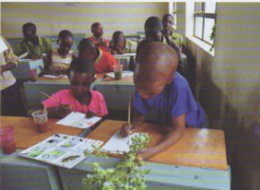
Adjacent to the baboon project where she worked, was the local elementary school. Wanting to give back to the community that has supported her and her work for many years, Deborah formed a painting club at the school. The objective of this club was not simply to offer afterschool activities. The “club” Deborah launched at Il Polei Elementary school was the Olcani Project. Through this project, Deborah taught the children how to paint and document local plants and animals. The painting club began with indoor activities, but soon moved outside of the classroom. With paint, brushes and paper in hand, students began to document the world around them. At first they documented each other, their families and stories about Maasai culture as told to them by their elders. Then they turned their attention to plants.

Photo courtesy of Deborah Ross.

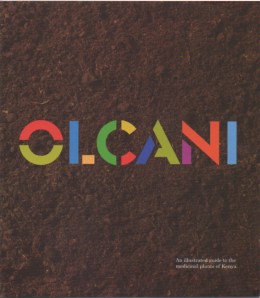
Field trips into the bush to learn about local medicinal plants were led by herbalist, Siranga Naimando. While Siranga explained how each plant was used, students painted what they saw in the field. This collective effort is at the heart of the Olcani Project. In the Olcani booklet published about this project, Siranga explains that the Maa word for medicine is olcani, the same word used for plant.

The Olcani Project is mostly a self-financed labor of love. Funds for the project come from what Deborah has earned illustrating a series of children’s books for UNICEF in Madagascar. A full-color booklet about the project has been produced by Deborah and designer Melanie McElduff. The booklet is an illustrated guide to 12 species of medicinal plants found in the Mukogodo region of Kenya. Each species description includes a color photograph, a plant’s scientific name, a plant’s Maasai name, a description about how it is used for medicinal purposes, and an area for users to write down notes. Included in this 26-page guide are 25 plant portraits painted by students, plus photographs of 18 Il Polei students proudly displaying a sample of their work. Funding for the printing of this beautiful guide came from Ideas That Matter, the grant program established by Sappi Fine Paper North America.

When she is not in Africa, Deborah keeps in touch with the students by cell phone. She trained a young local man to continue the watercolor workshops and Deborah says he is doing a fantastic job. Deborah sends paints and brushes to the school through a scientist working in Kenya and she sends books to Kenya with scientists five times per year.

Deborah will continue her work in the region next summer, this time in Madagascar. She has received a grant to lead watercolor workshops in this island country off the coast of Africa.

Visit Deborah’s website to learn more about her and to view a gallery of her work.

The Olcani Project will soon have its own website at www.olcani.com. The website will include features about each artist that will include samples of their work and a short bio. Watch for news about its official launch.

To request a copy of Olcani: An Illustrated Guide to the Medicinal Plants of Kenya, contact Deborah Ross. ($10, plus $5 shipping)


About the Mukogodo Region of Kenya

The Mukogodo region of Kenya has undergone rapid ecological and cultural degradation. A severe drought in 2009 all but eliminated the pastoralist community’s wealth (cattle and goats). The region’s indigenous knowledge is at risk of being lost as the region’s children face a different world than their parents knew. The need for conservation, conservation education and local empowerment in Kenya is extreme. The Mukogodo region is a focus point for the conservation work done by the African Conservation Fund.


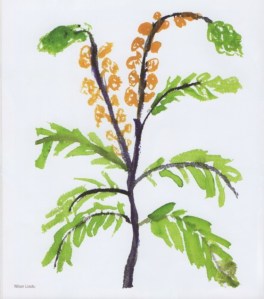
The Olcani Project’s illustrated field guide to medicinal plants blends botanical art with traditional field guide-style pages.

Osenetoi (Maa name), a remedy for malaria. Artist: Wilson Losotu

Field Guide Sample Page


Photos courtesy of Deborah Ross.

Read Full Post »

We have seen how hands-on activities and drawing activities can enhance student awareness and understanding about plants. Today we look at the effectiveness of an outdoor education program in Plants Have a Chance: Outdoor Educational Programmes Alter Students’ Knowledge and Attitudes Towards Plants.

Biologist Jana Fancovicova and ecologist, Pavol Prokop, wanted to know if plant-centered activities conducted in a nonformal environment would influence Slovakian students’ attitudes toward plants, as well as their knowledge of plants. The program they evaluated is a program that might be found at any nature preserve or nature center. Program participants were taken to a meadow where they learned about the meadow’s ecosystem and its plants. Program participants recorded their observations in a journal and discussed their observations with their instructors at the end of each session.

The participants in this study were 5th grade students, ages 10-11. The students were divided into two groups, each with 17 children. One group served as the control group and the other as the experimental group. When taken to the meadow, members of the control group did not receive any instruction and were allowed to play sports (Fancovicova & Prokop, 2011). Members of the experimental group, however, learned about the meadow’s ecology, its plants and its animals through activities lead by forest experts and a graduate student (Fancovicova & Prokop, 2011).

Students’ attitudes and knowledge towards plants was measured using the authors’ questionnaire composed of Likert-type questions. Students also completed open-ended questions, multiple-choice questions and even a drawing task requiring students to draw the meadow’s ecosystem. Students were asked to include plants, animals, soil and the sun in their drawing and Fancovicova and Prokop (2011) graded each child’s drawing by assigning 1 point for each component included in the meadow scene.

The research questions Fancovicova and Prokop (2011) wanted to investigate were:

  • Can an outdoor education program positively influence participants’ attitudes towards plants?
  • Can an outdoor education program positively influence participants’ knowledge about plants?
  • Does having a garden lead to having more positive attitudes about plants?
  • Will female participants acquire more knowledge of plants than male participants?
  • Will female participants have more positive attitudes towards plants than male participants?

A brief summary of Fancovicova and Prokop’s findings follows:

  • Outdoor education programs can positively influence participants’ attitudes towards plants. This appears to be the case even if the outdoor program is located on campus. Fancovicova and Prokop (2011) determined that expensive long-distance field trips are not necessary. They also found that their outdoor program not only changed students’ attitudes towards plants, but changed students’ appreciation for the subject of biology.
  • Outdoor education programs focused specifically on plants can positively influence participants’ knowledge of plants.
  • Having a garden is not necessarily linked to having more positive attitudes about plants. Fancovicova and Prokop (2011) suggest that a study of “active gardening” be conducted to evaluate possible links between garden ownership and one’s attitudes towards plants.
  • Female participants acquired more knowledge of plants than male participants, as was determined by their test scores.
  • Female participants’ attitudes towards plants were no different than the attitudes towards male participants.

Fancovicova and Prokop (2011) feel that to improve attitudes towards plants and to teach the value of plants, it is important to engage students in the active caring for plants, naming of plants and identification of plants. They encourage teachers to consider creating outdoor experiences on campus, as they found that travel to distant sites is not necessary. Fancovicova and Prokop (2011) recommend bringing live plants into the classroom and recommend teaching about plants using non-lecture techniques.

Fancovicova and Prokop’s detailed statistical analysis can be viewed in their article.


Literature Cited

Fancovicova, Jana & Pavol Prokop. 2011. Plants have a chance: outdoor educational programs alter students’ knowledge and attitudes towards plants. Environmental Education Research. 17(4): 537-551.

This article can be purchased online for $34 or obtained at your local library.

Read Full Post »

Which plants can you identify upon first glance? Are they plants from the nursery? From the florist? Are they native plants?

How did you come to know these plants?

Plants featured in an advertisement, a children’s book, or a lavish garden are more recognizable to the public than common wildflowers (Bebbington, 2005). To determine the extent to which this is the case, Anne Bebbington of the Field Studies Council created a survey to test the environmental knowledge of students taking field classes at a field center. Students’ environmental knowledge was assessed through an evaluation of their plant identification skills. Bebbington discusses her findings in The Ability of A-level Students to Name Plants.

From October 2003 through December 2004, Bebbington (2005) collected data from 925 participants. Her sample was composed of A-level biology students (i.e., college-bound high school students; n=812), graduates working on their certificate in education (n=92), and biology teachers (n=21). All participants were asked to identify ten common wildflower plants at the beginning of field courses they enrolled in at the Juniper Hall Field Centre located 25 miles outside of London. Each participant was handed a sheet featuring color illustrations of ten common plants. Participants wrote the names of plants next to the appropriate illustration. General terms like “daisy” and “violet” were accepted in lieu of exact common names or scientific names.

An evaluation of participants’ responses revealed that most A-level biology students could not identify more than three plants, that teacher education students did only slightly better than the A-level students, and that biology teachers were the most successful at identifying plants (Bebbington, 2005). Of the plants used in the exercise, the daisy plant was the most easily identified, followed by the foxglove and the primrose — a result Bebbington (2005) attributes more to participants’ personal experiences with these plants instead of anything they might have learned in school.

Bebbington’s conversations with students revealed that students did not think plant identification was a skill worth learning. Students said that naming organisms is “a job for specialists” (Bebbington, 2005). This type of thinking raises concern because students’ lack of interest in knowing the names of plants impacts their working knowledge of environmental issues.

Why does this indifference exist?

Bebbington (2005) points to the absence of botany education at all grade levels, along with less exposure to organismic biology (whole organism biology) as contributing factors. She shares the results of an interesting study revealing that eight year-old children could recognize more than half of the unnatural Pokemon types presented to them, but were less able to identify common wildlife types (Balmford et al., 2002 as cited in Bebbington (2005)). Societal issues such as safety concerns about being alone in natural areas is also cited by Bebbington (2005) as a possible contributing factor because concerns about safety may reduce one’s interest in natural history. Cultural differences, family income, family background and parents’ own outdoor experiences can also be factors (Bebbington, 2005).

Since recognizing local plants and animals is necessary to establish an environmentally literate citizenry, Bebbington (2005) proposes that primary teachers be encouraged to incorporate plant-related activities into their curriculum, that teachers be encouraged to provide more field experiences for their students, and that schools encourage students to take part in the informal science education programs provided by local organizations. The latter recommendation is inline with an observation made by Kramer and Havens (2010) in the Botanical Capacity Project about private sector programs filling-in gaps in botany education left open by academe.

To read Bebbington’s detailed assessment of her findings and to view a copy of the wildflower quiz she used, purchase The Ability of A-level Students to Name Plants online for $34 or conduct a search for this article at your local library.


Literature Cited

    Balmford, A., L. Clegg, T. Coulsen. and J. Taylor. 2002. Why conservationists should heed Pokemon. Science. 295(5564): 2367.

    Bebbington, Anne. 2005. The ability of A-level students to name plants. Journal of Biological Education. 39(2): 63-67.

    Kramer, Andrea and Kayri Havens. 2010. Assessing Botanical Capacity to Address Grand Challenges in the United States. A report by the Botanical Capacity Assessment Project. Website http://www.bgci.org/usa/bcap [accessed 4 November 2011].

Read Full Post »

We know people are more attracted to animals than they are to plants and that the reasons why are many. People like animals because they move, can interact, are furry, etc. Do plants have any appealing qualities? Is love at first sight possible with plants? Can interest in plants be encouraged?

In Increasing the Interest of Students in Plants, Jelka Strgar of the University of Ljubljana in Slovenia brings attention to the differences in how people notice plants and animals. She points out that animals have instant appeal, while plants tend to be appreciated only after they have been explained or shared via the “enthusiasm of a third party” (Strgar, 2007). Interested in measuring the effects of classroom instruction on student interest in plants, she created the experiment that is the focus of this post.

Knowing that people are more attracted to plants if they are pretty, useful, have interesting features, or engage in some type of interesting behavior, Strgar (2007) established a collection of interesting plant specimens for students (n=184, ages 9-23) to observe. Her collection was composed of plants with immediate eye-catching qualities and plants with qualities that were less obvious. Plants were labeled “A” through “H” and students were asked to record their interest in each plant using a 5-point scale. Students rated each specimen twice. Once when they first saw the plants and again after they had received information about each plant and had the opportunity to touch the plants and reflect on what they learned. Included in the collection were a peanut plant with fruit (Arachis hypogea), a pine cone from a Himalayan blue pine (Pinus wallichiana), the fruit of an Osage orange (Maclura pomifera), a sensitive plant (Mimosa pudica), green algae, an Alice Sundew plant (Drosera aliciae), a plastic artificial squash, and a water lettuce plant (Pistia stratiotes).

Strgar (2007) observed that plants students considered to be too common generated little interest. While plants of an unusual size or shape, plants that did something (i.e., float, move), and plants with appealing colors generated immediate interest, as did plants students had never seen before. Students found the Osage orange, water lettuce and cone of the Himalayan blue pine the most interesting on first sight. Student interest in the green algae, Alice Sundew plant, sensitive plant and artificial squash was moderate. The plant generating the least amount of interest at first sight was the peanut plant.

After teachers talked about each plant and students had the opportunity to touch the plants, Strgar (2007) found there was a statistically significant increase in interest in the Alice Sundew plant, the sensitive plant and the peanut plant. Interest levels in the Osage orange, water lettuce, cone of the Himalayan blue pine and green algae remained the same. The only specimen for which there was a statistically significant decrease in interest was the plastic squash.

Upon review of data and student comments, Strgar (2007) determined that two factors contributed to the observed increase in student interest in plants:

  • Teachers showing students how to look at plants in a new way.
  • The element of surprise experienced by students with respect to some of the specimens.

Strgar (2007) concluded that it is possible to increase student interest in plants at all levels of education if teachers serve as enthusiastic guides and if living plants are used as examples.


Literature Cited

Strgar, Jelka. 2007. Increasing the interest of students in plants. Journal of Biological Education. 42(1): 19-23. Winter 2007

Search your local college library for a copy of this article

Read Full Post »

« Newer Posts - Older Posts »