Feeds:
Posts
Comments

Archive for the ‘Science Library’ Category

The following guides have been added to Herbarium > Science Library > Plant Guides:


Chickering, Carol Rogers. 1973. Flowers of Guatamala. University of Oklahoma Press. ISBN: 080610813.
This book contains 50 color illustrations of Guatamalan plants from different regions. The climate belts of Guatamala and the readily visible plants of each belt are described. Chickering traveled throughout Guatamala and painted each plant on-site. The plants featured in this book are: Achimenes longiflora, Amoreuxia palmatifida, Aphelandra schiediana, Bixa orellana, Caesalpinia pulcherrima, Calliandra houstoniana, Canna edulis, Cassia indecora, Castilleja tenuifolia, Cattleya aurantiaca, Cestrum aurantiaca, Chiranthodendron pentadactylon, Cobaea villosa, Cochlospermum vitifolium, Cordia alba, Dahlia maxoni, Dahlia popenovii, Fuchsia splendens, Gliricidia sepium, Guiacum sanctum, Heliconia bibai, Ipomoea carnea, Jacobinia umbrosa, Kohleria elegans, Lobelia laxiflora, Lycaste virginalis alba, Malvaviscus arboreus, Odontoglossum grande, Oncidium splendidum, Petrea volubilis, Plumeria rubra, Portlandia platantha, Psittacanthus calyculatus, Quercus skinneri, Robinsonella cordata, Rondeletia cordata, Salvia wagneriana, Sprekelia formosissima, Tabebuia donnel-smithii, Tagetes spp., Tecoma stans, Tillandsia rodigueziana, Tithonia longiradiata, Triplaris melaenodendron, Weldenia candida, Wigandia kunthii, Yucca elephantipes, Zephyranthes brevipes, Zinnia elegans, Fuego bouquet.

Chickering’s work is included in the collection at the Hunt Institute for Botanical Documentation. She painted a collection of mariposa lilies for Rancho Santa Ana Botanical Garden and has exhibited her work at the California Academy of Sciences and Descanso Gardens. Chickering received a medal from the Garden Club of America for her work combining botany and art.
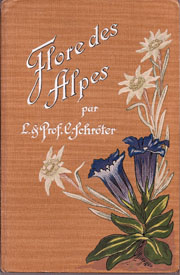

Schroter, Ludwig and Carl Schroter. (19??) Flore des Alpes
This field guide for tourists contains 207 flowering plants depicted in color and ten plants in black-and-white. Text is written in French, English, and German. This book is the 20th and 21st edition. The year of publication is unknown. Comparisons to other editions of this book place the publication date around 1910.


Yocom, Charles F. 1964. Shrubs of Crater Lake. Crater Lake Natural History Association.
While a ranger-naturalist at Crater Lake National Park during the summers of 1951 and 1952, Dr. Charles F. Yocom drew the shrubs growing in the park. This small and informative field guide contains descriptions of 81 of the park’s 103 shrubs. Fifty-four of the shrubs were illustrated by Yocom. Two herbs are also included in this book. This handy guide ends with a six-page glossary of botanical terms.


Gilmour, John. 1947. Wild Flowers of the Chalk. The King Penguin Books.
A small guide to the English Chalk and its common wildflowers. The author makes reference to the fact that this book is part of a series of small guides about plants growing on the lime soil of the Chalk Outcrop. Sixteen color plates are included in this book. They were created by Irene Hawkins and represent the following plants: Gentiana amarella and G. germanica, Polygala calcarea, Thymus serpyllum, Thymus serpyllum, Hippocrepis comosa, Asperula cynanchica, Filipendula hexapetala, Phyteuma tenerum, Scabiosa columbaria, Helianthemum nummularium, Anemone pulsatilla, Onobrychis viciifolia, Blackstonia perfoliata, Anacamptis pyramidalis, Ophrys apifera, Cephalanthera grandiflora, and Astragalus danicus.


Don’t miss…

All inclusive botany field trips to the Alps
Read Full Post »

I was across the room when I overheard a student say this to her study group in a busy non-majors biology lab I taught during grad school. Fifteen years later, I am still not sure what caught me off-guard the most — the surprised tone in which the question was asked or simply the question itself. My first reaction was to wonder how the student could have missed the fact that grasses are plants. Then I thought about it some more and thought about the ways she could not have known that grasses were part of the plant kingdom.

  • What if she had never plucked grass out of the lawn to see its roots?
  • What if she had never had to install sod in her backyard?
  • What if she had never seen her family lawn in an overgrown state and never had the opportunity to see inflorescences form?
  • What if her parents did not take her to nurseries and botanical gardens as often as my parents took me?

I think about this student’s question each time I see someone shrug their shoulders to express their indifference towards plants. I always wonder about the root cause of their indifference. Surely they have had at least one memorable experience involving plants. Haven’t they?

Children & Plants
In 2000 at the annual conference of the British Educational Research Association, Sue Dale Tunnicliffe presented the results of her study addressing children’s learning experiences looking at plants in a botanical garden. Tunnicliffe conducted her research at the Royal Botanical Gardens Kew. Conversations among students (mostly ages 7, 9 and 11), teachers, and other adults were recorded in front of plant exhibits. She observed that children comment on the most noticeable features of a plant and that plant functions (e.g., photosynthesis and seed development) receive very little attention. She also observed that if an animal entered into view, children quickly turned their attention to the animal. Interestingly, Tunnicliffe discovered students learn about plants from their family and that students do not think of school as a place to learn about plants. Students admit to learning little from books, but a lot from daily experiences involving plants.

The intricate results of Tunnicliffe’s work must be read in detail to be appreciated. Science educators and anyone who leads group tours at botanical gardens will find this article to be a helpful resource. By having insight into what students notice about plants, educators can create engaging lessons and memorable interactive experiences.


Literature Cited

Tunnicliffe, Sue Dale. 2000. Talking About Plants: Comments of Primary School Groups Looking at Plants as Exhibits in a Botanical Garden.
Paper presented at the British Educational Research Association Annual Conference, Cardiff University (September 7-10, 2000). Read article

Read Full Post »

Source: Clipart ETC

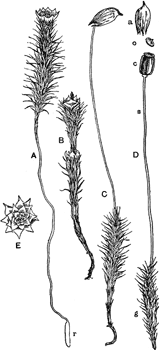
Robert Muma (1907-1993) became a natural science illustrator at a very early age. As a child, he was encouraged to draw all that he observed in nature. Not only did this make him a fine illustrator, but a fine biologist as well. His solid understanding of flora and fauna earned him a position as a scientific illustrator in the biology department at the University of Toronto. After retiring from careers in illustration and bookbinding, Muma turned his attention to mosses. He began to collect specimens and eventually wrote and illustrated A Graphic Guide to Ontario Mosses in 1985. This guide contains an overview of moss morphology, moss classification, and an illustrated guide to mosses organized by leaf arrangement, growth habit, and sporophyte type. Muma also organized the mosses of Ontario by habitat and provides a glossary of the generic names to Ontario mosses and includes Greek and Latin roots for each name. A short section about collecting and about moss gardening close this 28-page guide. Muma’s illustrations of mosses are both lively and delicate. To see additional examples of his artwork and to learn more about mosses, read Discovering The Mosses, an article he wrote in 1979 for Ontario Naturalist magazine. Here is a quick look at two illustrations in this article, which serves as a fine example of how art can be used to engage the public in the natural world.

Travel over to the World of Mosses and you will learn a lot about Robert Muma and his work. Muma’s field guide and reproductions of his original watercolor paintings are still available for all to admire, thanks to his son Walter Muma. Artwork is available as posters and as notecards.


Related Links
:

Read Full Post »

Illustrated Guide to Legumes

From the Herbarium
(see Science Library > Plant Guides) :

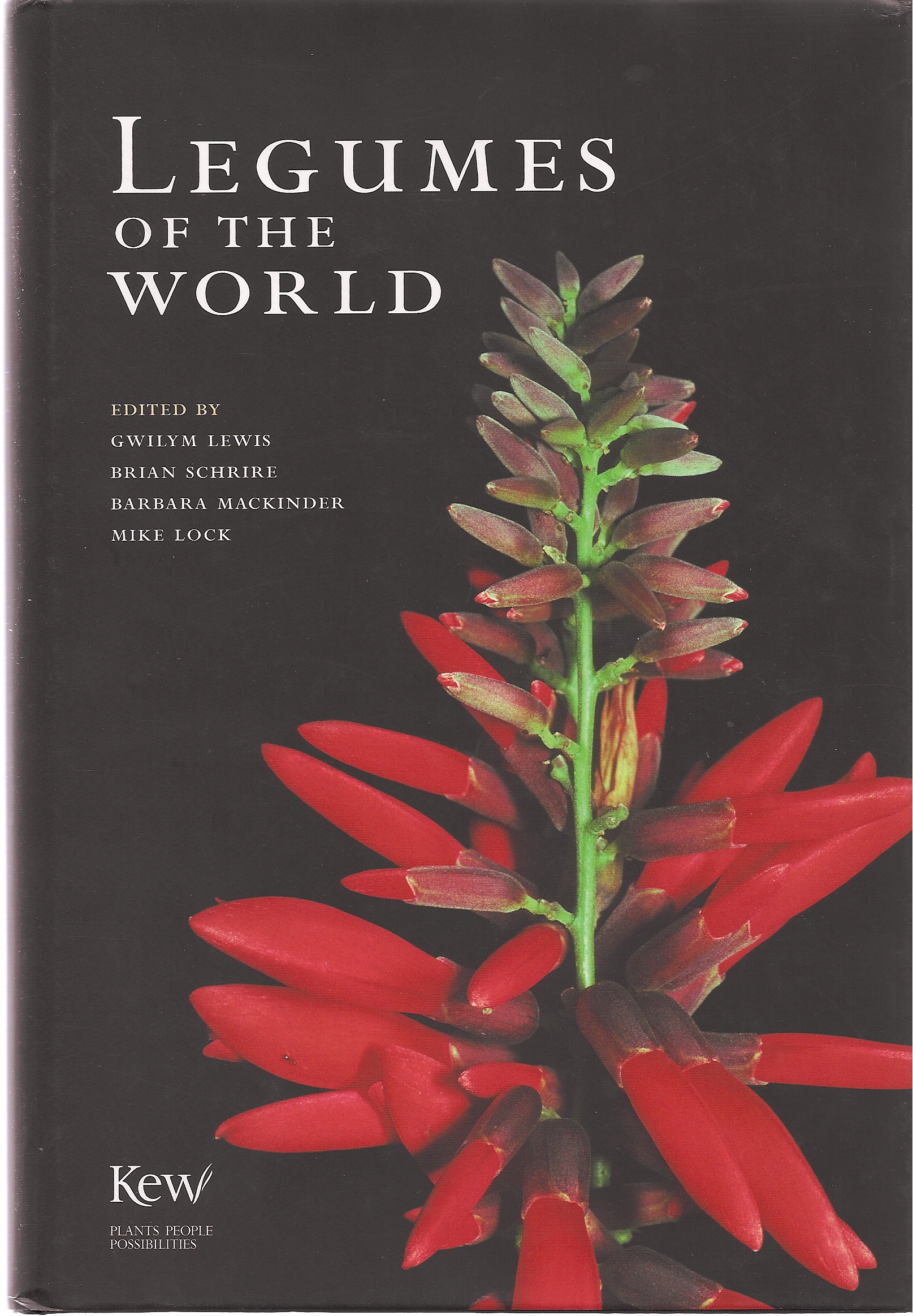
Gwilym, Lewis, Brian Schrire, Barbara Mackinder, and Mike Lock. 2005. Legumes of the World. The Royal Botanic Gardens, Kew.
ISBN: 9781900347808

The “book of books” where the pea family is concerned. Legumes have been a key area of research at Kew since 1855. They hold in their collection 726 of the 727 genera in the Leguminosae.

This book is a complete reference for both the botanical illustrator and plant enthusiast. The text for each genus is accompanied by color photographs, pen-and-ink line drawings, and the occasional watercolor painting. Legumes of the World is truly an illustrated reference. In addition to the wonderfully visual and descriptive text, readers will find the main characteristics of the three subfamilies in the Leguminosae compared side-by-side in an easily digestible table. A large section of this book is dedicated to the biogeography of this family. There is also a section in which the authors describe the economic importance of the legumes. The number of legume products found in food, drink, pharmaceuticals, biotechnology, manufacturing and many other industries is impressive. One can no longer be blind to the number of products derived from the third largest plant family on the planet.

This title is currently available overseas.
Cost: $109.20, plus international shipping.

ArtPlantae Disclosure Statement

Read Full Post »

Originally published in the February 2007 issue of Artists’ Botany, this article has been freshened up with updated links.

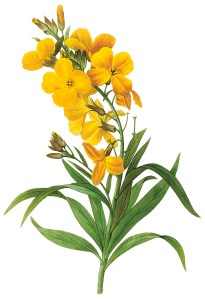
Cheiranthus flavus (Wallflower) by Pierre Joseph Redouté

Cheiranthus flavus (Wallflower) by Pierre Joseph Redouté

In publication since 1787, Curtis’s Botanical Magazine is best known in botanical art circles for the artwork contained within its pages. The artwork, however, should not overshadow the scientific information contained in each issue. Detailed descriptions of each featured plant are called “plant portraits.” Portraits can contain information about a plant’s cultivation, its taxonomic history, its historical uses, its habitat, its conservation status, plus a lot more. If you have not browsed through an issue of this journal, you can view article abstracts online. In the ArtPlantae Science Library, you will find the following issues: Volume 20 (2003) – Volume 25 (2008). Descriptions of the contents of each issue can be viewed in the Journals section of the Science Library.

The image of a wallflower is from Redouté Flowers and Fruits, a CD-ROM and book containing permission-free images.

Read Full Post »

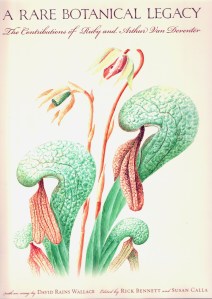
ARareBotanicalLegacy A Rare Botanical Legacy
Essay by David Rains Wallace, Edited by Rick Bennett and Susan Calla (2009)
$35, Hardcover

In 1936, a chance meeting with Willis Linn Jepson led to a 10-year collaboration between the renowned California botanist, an amateur botanist named Ruby Van Deventer who was on a mission to document the flora of Del Norte County. This book features 120 watercolor paintings of plants specific to Del Norte County and represents forty years of work completed Ruby and her artist husband, Arthur. Arthur painted plants while Ruby (and Jepson) busied themselves with describing the plants growing in this region of northern California. Arthur’s paintings are simple compared to the level of detail seen in contemporary botanical art, yet their simplicity does not take away from the fact that they served both Jepson and Ruby well and continue to serve as visual records of Del Norte plants. This book will appeal to anyone interested in botanical art history and to anyone interested in getting a glimpse into the behind-the-scenes work that went into creating California’s Jepson Manual.

FloweringPlantsFlowering Plants
Armen Takhtajan
$269, Hardcover
This title ships for FREE to U.S. addresses

Publisher’s Comments:
Armen Takhtajan is among the greatest authorities in the world on the evolution of plants. This book culminates almost sixty years of the scientist’s research of the origin and classification of the flowering plants. Flowering plants are divided into two classes: class Magnoliopsida (or Dicotyledons) includes 8 subclasses, 126 orders, c. 440 families, almost 10,500 genera, and no less than 195,000 species; and class Liliopsida (or Monocotyledons) includes 4 subclasses, 31 orders, 120 families, more than 3,000 genera, and about 65,000 species. This book contains a detailed description of plant orders and descriptive keys to plant families providing characteristic features of the families and their differences. This book will appeal to botanists and students working or studying at universities and botanical gardens.

These titles and more are available at ArtPlantae Books.

Read Full Post »

The comprehensive Orchids of Western Australia is the result of a 16-year effort by botanists Andrew Brown, Kingsley Dixon, and Stephen Hopper, and botanical artist Pat Dundas. All of the orchids of Western Australia are represented in this book.

Thirty-nine genera are described and each species of orchid was painted by artist Pat Dundas. The orchids of Western Australia are not the sturdy robust orchids usually portrayed in botanical paintings, so do not expect to see the typical Slipper Orchid or corsage cymbidium. The orchids of Australia’s South-West Region and Kimberly Region are slender, delicate, and can have spider-like willowy features. Dundas painted 185 paintings during the course of this project. A monumental task!

In addition to species descriptions, the authors include an introduction to the orchid family (ORCHIDACEAE) and a review of orchid morphology and how orchids are named by taxonomists. The distribution, flowering season, plant-pollinator interactions, and reproduction of Western Australian orchid species are also discussed. The examples of floral mimicry and sexual deception among this group of orchids are especially fascinating.

While the species described in this book are specific to Australia, the contribution Orchids of Western Australia makes to our knowledge of the orchid family is of significance to us all. This reference also serves as another example of how botanical illustration can contribute to our understanding and awareness of plants.


Orchids of Western Australia can be purchased at ArtPlantae Books. This is a special order item. ($80)

Read Full Post »

« Newer Posts - Older Posts »