Feeds:
Posts
Comments

Archive for the ‘general botany’ Category

Source: Clipart ETC

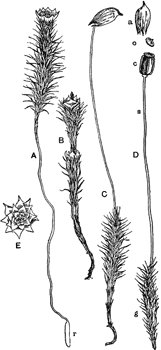
Robert Muma (1907-1993) became a natural science illustrator at a very early age. As a child, he was encouraged to draw all that he observed in nature. Not only did this make him a fine illustrator, but a fine biologist as well. His solid understanding of flora and fauna earned him a position as a scientific illustrator in the biology department at the University of Toronto. After retiring from careers in illustration and bookbinding, Muma turned his attention to mosses. He began to collect specimens and eventually wrote and illustrated A Graphic Guide to Ontario Mosses in 1985. This guide contains an overview of moss morphology, moss classification, and an illustrated guide to mosses organized by leaf arrangement, growth habit, and sporophyte type. Muma also organized the mosses of Ontario by habitat and provides a glossary of the generic names to Ontario mosses and includes Greek and Latin roots for each name. A short section about collecting and about moss gardening close this 28-page guide. Muma’s illustrations of mosses are both lively and delicate. To see additional examples of his artwork and to learn more about mosses, read Discovering The Mosses, an article he wrote in 1979 for Ontario Naturalist magazine. Here is a quick look at two illustrations in this article, which serves as a fine example of how art can be used to engage the public in the natural world.

Travel over to the World of Mosses and you will learn a lot about Robert Muma and his work. Muma’s field guide and reproductions of his original watercolor paintings are still available for all to admire, thanks to his son Walter Muma. Artwork is available as posters and as notecards.


Related Links
:

Read Full Post »

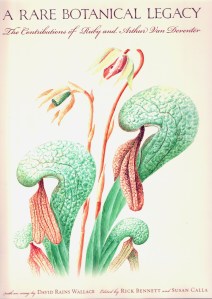
ARareBotanicalLegacy A Rare Botanical Legacy
Essay by David Rains Wallace, Edited by Rick Bennett and Susan Calla (2009)
$35, Hardcover

In 1936, a chance meeting with Willis Linn Jepson led to a 10-year collaboration between the renowned California botanist, an amateur botanist named Ruby Van Deventer who was on a mission to document the flora of Del Norte County. This book features 120 watercolor paintings of plants specific to Del Norte County and represents forty years of work completed Ruby and her artist husband, Arthur. Arthur painted plants while Ruby (and Jepson) busied themselves with describing the plants growing in this region of northern California. Arthur’s paintings are simple compared to the level of detail seen in contemporary botanical art, yet their simplicity does not take away from the fact that they served both Jepson and Ruby well and continue to serve as visual records of Del Norte plants. This book will appeal to anyone interested in botanical art history and to anyone interested in getting a glimpse into the behind-the-scenes work that went into creating California’s Jepson Manual.

FloweringPlantsFlowering Plants
Armen Takhtajan
$269, Hardcover
This title ships for FREE to U.S. addresses

Publisher’s Comments:
Armen Takhtajan is among the greatest authorities in the world on the evolution of plants. This book culminates almost sixty years of the scientist’s research of the origin and classification of the flowering plants. Flowering plants are divided into two classes: class Magnoliopsida (or Dicotyledons) includes 8 subclasses, 126 orders, c. 440 families, almost 10,500 genera, and no less than 195,000 species; and class Liliopsida (or Monocotyledons) includes 4 subclasses, 31 orders, 120 families, more than 3,000 genera, and about 65,000 species. This book contains a detailed description of plant orders and descriptive keys to plant families providing characteristic features of the families and their differences. This book will appeal to botanists and students working or studying at universities and botanical gardens.

These titles and more are available at ArtPlantae Books.

Read Full Post »
The comprehensive Orchids of Western Australia is the result of a 16-year effort by botanists Andrew Brown, Kingsley Dixon, and Stephen Hopper, and botanical artist Pat Dundas. All of the orchids of Western Australia are represented in this book.

Thirty-nine genera are described and each species of orchid was painted by artist Pat Dundas. The orchids of Western Australia are not the sturdy robust orchids usually portrayed in botanical paintings, so do not expect to see the typical Slipper Orchid or corsage cymbidium. The orchids of Australia’s South-West Region and Kimberly Region are slender, delicate, and can have spider-like willowy features. Dundas painted 185 paintings during the course of this project. A monumental task!

In addition to species descriptions, the authors include an introduction to the orchid family (ORCHIDACEAE) and a review of orchid morphology and how orchids are named by taxonomists. The distribution, flowering season, plant-pollinator interactions, and reproduction of Western Australian orchid species are also discussed. The examples of floral mimicry and sexual deception among this group of orchids are especially fascinating.

While the species described in this book are specific to Australia, the contribution Orchids of Western Australia makes to our knowledge of the orchid family is of significance to us all. This reference also serves as another example of how botanical illustration can contribute to our understanding and awareness of plants.


Orchids of Western Australia can be purchased at ArtPlantae Books. This is a special order item. ($80)

Read Full Post »

Helping you become better acquainted with the plants in your world has always been one of ArtPlantae’s objectives. One of the favorite topics around here is economic botany (i.e., the origin and domestication of plants). Always interesting, this subject defines the role plants play in our lives like no other subject. It is real-world, everyday, practical botany. We’re into that. This is why the economic botany category in the bookstore was renamed “Plants & YOU”. The phrase “economic botany” wasn’t particularly “everyday” and caused too many people to scratch their heads and ask, “What’s that?”

For your reading pleasure, the following titles have been added to the Plants & YOU category at ArtPlantae Books:

Food Chains: From Farmyard to Shopping Cart
Features case studies documenting the handling of food from farmyard to grocery store.

Potato: A History of the Propitious Esculent
Photojournalist, John Reader, traces this popular tuber from its domestication in Peru 8,000 years ago to its current status as the world’s fourth largest food crop.

FoodChainsFarmyardToCart Potato

Read Full Post »

In 1799, naturalist and scholar Alexander Von Humboldt embarked on a five-year expedition to explore the Americas. He was accompanied by Aimé Bonpland, a French botanist, and together they described the plants they observed during their journey. Their botanical findings have been described by H. Walter Lack in Alexander Von Humboldt: The Botanical Exploration of the Americas. This title was published in commemoration of the 150th anniversary of Von Humboldt’s death.

The Library of Congress has posted a webcast of a lecture about Alexander Von Humboldt, also in commemoration of his death. This presentation is 80 minutes in length and is worth every viewing minute. Von Humboldt was an accomplished researcher. He has been described as “the last universal scholar” in the natural sciences, meaning he was the last person to have command over the information in his fields of study. View “Alexander Von Humboldt in the United States, 1859-2009”.

If you don’t have 80 minutes to watch a video and would prefer to read a summary about Von Humboldt, view the summary posted on the website of Humboldt State University here.


Alexander Von Humboldt: The Botanical Exploration of the Americas is available at ArtPlantae Books.

Read Full Post »

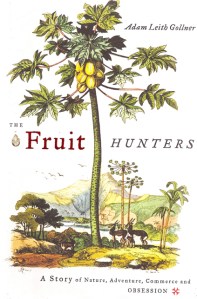
Most of us do not know a fruit hunter, much less a durianarian and their passion for durians. And what about fruitarians and their all-fruit diet? You might think you have very little in common with passionate individuals such as these, but you would be wrong. The common thread that ties us together is the global fruit industry and all its forms, from the produce section of markets to fruit drinks in the beverage aisle to agricultural checkpoints at airports and along highways. TheFruitHunters

Adam Leith Gollner traveled the world to interview fruit hunters, growers, enthusiasts, researchers, and vendors to explore the fruit industry. He explains how fruit makes it to our grocery store and why the selection of fruit at our local market is so uninspiring. He explains how the kiwi made it big and lets us in on fruit varieties that may become available in the near future. Gollner describes his encounters with fruit hunters so vividly, you will feel as if you experienced the “fruit underworld” yourself. To make the experience even more complete, Gollner has posted photos of his adventures online. View these photos after you have started to read The Fruit Hunters to help visualize the people and places described in the book.

Gollner is a writer who has written for The New York Times, Gourmet, Bon Appetit, and Good magazine. The Fruit Hunters is his first book.


Cover, paperback edition, 2013

Read Full Post »

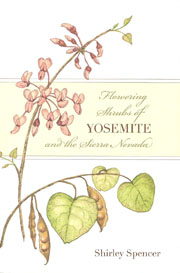
FloweringShrubsYosemite_smAuthor and artist, Shirley Spencer, has lived in the Sierra Nevada mountains for thirty years. An artist all her life, her passion for the flora of the Sierra Nevada mountains is captured in a new field guide featuring 40 flowering shrubs. Detailed descriptions of each shrub are paired with an original watercolor painting created by Spencer herself. This field guide also boasts a glossary, a section about plant morphology, and clear descriptions of each of the distribution areas found in Yosemite and the Sierra Nevada.

At 5″ x 7.5″, this handy guide is the perfect companion for botanical artists and plein air painters.

See this new title at ArtPlantae Books.

Read Full Post »

« Newer Posts - Older Posts »