Feeds:
Posts
Comments

Archive for the ‘botanical art’ Category

The following call for entries has been distributed by Wendy Hollender, Program Coordinator of the Botanical Art & Illustration Program at the New York Botanical Garden.


CALL FOR ENTRIES

The Art of Botanical Illustration Exhibition
October 8, 2009 – November 14, 2009
An Exhibition at The Rye Arts Center featuring the work of Students, faculty & alumni of the Botanical Art and Illustration Program of the New York Botanical Garden.

Address: The Rye Arts Center Gallery at 51 Milton Road, Rye, NY 10580

Eligibility: Students, faculty & alumni of the Botanical Art and Illustration Program of the New York Botanical Garden.

Subject: Botanical and natural science themes.

Media: All original two dimensional work is acceptable. No size limitation.

Submissions: Please submit your high resolution images (300dpi) in jpeg format, with image being no larger than 8×10”. A maximum of three images per artist will be accepted. Mail CD to Attn:

Emilia Del Peschio
The Rye Arts Center
51 Milton Road
Rye, NY 10580

or email to: artsprogramcoordinator@ryeartscenter.org. In the subject line, please write “Entry for Botanical Illustration Exhibition”.

Submission Deadline: September 1, 2009

Presentation: All works must be exhibition-ready (i.e. framed in a simple, appropriate manner and wired for hanging) in order to be accepted by RAC.

Notification: Artists will be notified by September 12th of the jury’s decision.

Sale of Work: If your work is for sale, RAC receives 30% of the sale price. Artwork may not be removed until the close of the exhibition. Only juried pieces will be displayed. Pricing should include frame.

Awards: Best in Show and Honorable Mentions will be designated.

Juried: This is a juried exhibition; only professional quality work will be accepted.

Entry Fee: $25.00, Please make check payable to The Rye Arts Center. The entry fee is non-refundable.

Jurors: Professional representatives from RAC & NYBG will jury entries for botanical and technical accuracy and artistic merit.

Location: The Rye Arts Center
Opening & Reception: A reception will be held at the Rye Arts Center, Thursday, October 8th, 2009 at 6:30-8:30 pm

Entry forms: Please visit www.ryeartscenter.org to download entry forms. Forms are also available at the RAC and at the Office of Continuing Education at the NYBG.

Contact: Emilia Del Peschio, Arts Program Coordinator at 914-967-0700 ext.33.
Email: artscoordinator@ryeartscenter.org
Read Full Post »

Botanical artist and instructor, Gwen Koths, will teach a four-week botanical painting course at Stone Turret Studio in Elkins Park, PA. Gwen is gathering 2-4 students interested in learning how to paint botanicals in a small group setting. This course will begin on Wednesday, June 4th. All details can be obtained here.

Gwen currently teaches botanical painting classes at the Pennsylvania Academy of Fine Arts in Philadephia.

See additional learning opportunities in Pennsylvania at Classes Near You > Pennsylvania.

Read Full Post »

Old Westbury Gardens, Westbury
www.oldwestburygardens.org
Registration: Paul Hunchak, (516) 333-0048

  • Introduction to Botanical Painting – Using a step-by-step method, botanical artist Rose Pellicano will teach the basic techniques of botanical painting in watercolor. Level: Beginners. July 13-17; 10 AM – 1 PM.
  • Botanical Painting – Botanical artist Rose Pellicano will teach advanced techniques of botanical painting. This class is designed for students who have completed introductory courses in botanical painting or who have prior experience. Level: Intermediate/Advanced. July 6-10; 10AM – 1PM.

View examples of Rose Pellicano’s artwork in the Member Gallery of the American Society of Botanical Artists.

These courses and more can be found in Classes Near You > New York.

Read Full Post »

artofbotanicaldrawing
What is well-conceived is clearly expressed.

— Agathe Ravet-Haevermans

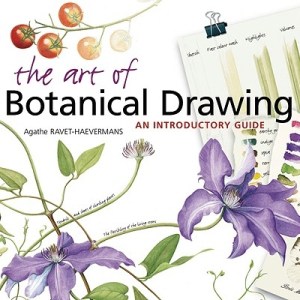
In The Art of Botanical Drawing: An Introductory Guide, Agathe Ravet-Haevermans provides a brief history of botanical art and interesting insight into how she and fellow scientific illustrators document plants at the Museum of Natural History in Paris. Beginners will find Ravet-Haevermans’ instructions easy to understand and they will appreciate her drawing and painting demonstrations which feature three different stages of development so beginners can observe how a technique is accomplished. All examples are executed gracefully and are sure to inspire new artists. This is a well-rounded portable gem of a book that fits easily into a backpack or small canvas bag.

Ravet-Haevermans addresses the following topics:

  • How to draw plants and how to capture their volumes and shadows on paper
  • How to mix colors and create gradations
  • How to reserve a light area and a highlight area
  • How to apply color
  • How to paint petals
  • Drawing and painting bark and storage organs
  • Drawing and painting stems and branches
  • Drawing and painting buds and leaves
  • Drawing and painting flower buds and flowers
  • Drawing and painting fruits and vegetables
  • Painting fruit and seeds

Ravet-Havermans also provides “how-to” examples for the following:

  • Garden Plants (poppy, Nasturtium, periwinkle, Agapanthus, Fuschia, Arisaema)
  • The Kitchen Garden (aubergine, Haricot/’Tongue of Fire’ beans, butternut squash, carrots)
  • Meadow Plants (grasses)
  • Forest Plants (mistletoe, holly, ferns, mushrooms)
  • The Botanical Garden (dried stalks, Arbutus, kiwi)
  • The Aquatic Garden (Equisetum, water hibiscus, lotus)
  • Succulents (melon cactus, Lithops, Gasteria)
  • Greenhouse Plants (Dendrobium, Venus flytrap, Cobra plant, Papyrus)
  • Field sketches and painting outdoors
  • Creating details such as skeletonized leaves, artichoke bracts, bamboo stalks, and the circles observed in the cross-section of onion slices
  • Water drops, insects, and eaten leaves

Get this book at your local independent bookstore.

Read Full Post »

A new page for Delaware has been added to the Classes Near You section. Award-winning artist Joan Frain teaches in Delaware and holds studio classes in Pennsylvania.


Joan Frain Studio

www.joanfrain.com
Joan Frain is a professional botanical illustrator and instructor. For over 30 years, Joan has taught in Pennsylvania and in Delaware. Her work can be viewed in galleries and online. Private instruction and pay-as-you-go classes are available. Upcoming classes include:

  • Native Plant Botanical Illustration Workshop – Mt. Cuba Center, Delaware; June 13
  • Botanical Illustration Classes – Center for the Creative Arts, Yorklyn, Delaware; Sept 2009 – May 2010

Read Full Post »

California artist Bonnie Born is currently exhibiting her work at the Thomas Moser Furniture Gallery at the Helms Bakery in Culver City. On view are California landscapes (oil) and botanical illustrations (watercolor). The botanical illustrations will be up through April 30th. The oils will be exhibited through the end of August. An artists reception is scheduled for the end of May.

Visit the Thomas Moser website for more information about the gallery and the Helms Bakery District.

Read Full Post »

You had the opportunity to ask Billy Showell any question you wanted and some of you took advantage of this special opportunity. Below are the questions that were submitted, as well as Billy’s replies.

Again, many thanks to Billy for sharing her expertise with us!

1. If parts of a white flower are on a white background, do you just leave it alone or outline it with a thin line?
I usually do a very soft midtone grey shadow that blends into the petal but it has to be very subtle so (I) use the wet-in-wet method.

2. Who makes the “cerulean blue hue” you use in your first book?
It is a Schminke colour, but you could replace it with Winsor blue tone from Winsor and Newton. I have done this recently to make it easier for students to get.

3. Have you ever tried water-based oil paint? If so, how do these paints perform?
No, but I do plan to go back to oils soon and will definitely give them a go. I will publish the results on my website when I do.

4. I find that I have little confidence when working in a classroom situation. I feel that I shouldn’t make mistakes and have to produce a masterpiece right away. Working alone is so much more relaxing for me. Have you heard similar comments from other students?
Yes. In those situations use the classroom as a chance to gather information and practice the advice given (and) take as many notes as you can so that you can relax at home and give the techniques a go without the pressure of the class surroundings.

5. Have you found any strategies for a workspace setup that helps prevent back and neck misery?
Mmm…. I don’t like to admit to it but, yes, one can get a stiff neck and shoulder. I try to break the day up so that I don’t sit rigid for too long. Make sure that you rotate your shoulders intermittently and stretch from time to time.

6. The DVD for your first book was fantastic. Will you be doing one for the new book?
Yes. It comes out next week and will be available from my website. It has four projects on it.

7. Do you think you will write a third book?
I am working on it as we speak. It will be on flowers again but there will be many more interesting varieties.

8. Would you ever consider teaching in the USA?
Yes, I am waiting to be invited I would love to come to the US as I have only been for one day many years ago.

9. When you first started painting, have you ever torn up your painting in disgust because nothing was working right?
I would always try and keep the part of the painting that worked and discard the rest, that way when I looked back I would only recall the successes not the failures. I used to store unfinished work but now just use the back of the paper for doodles or cartoons as coming back to very old work is a bit depressing and I often find that I have improved my painting technique in the interval.

10. What subject do you find most challenging to paint?
Multi-petaled flowers are the hardest things to paint, for example Chrysanthemums or Dahlias, just because the are so complicated. I much prefer flowers with large petals so that the watercolour process is free and uninhibited.


Related Links
:
Take a class with Billy Showell this summer!

Read Full Post »

« Newer Posts - Older Posts »